
The Truth About Crazy Anxiety Cures (Episode 141)
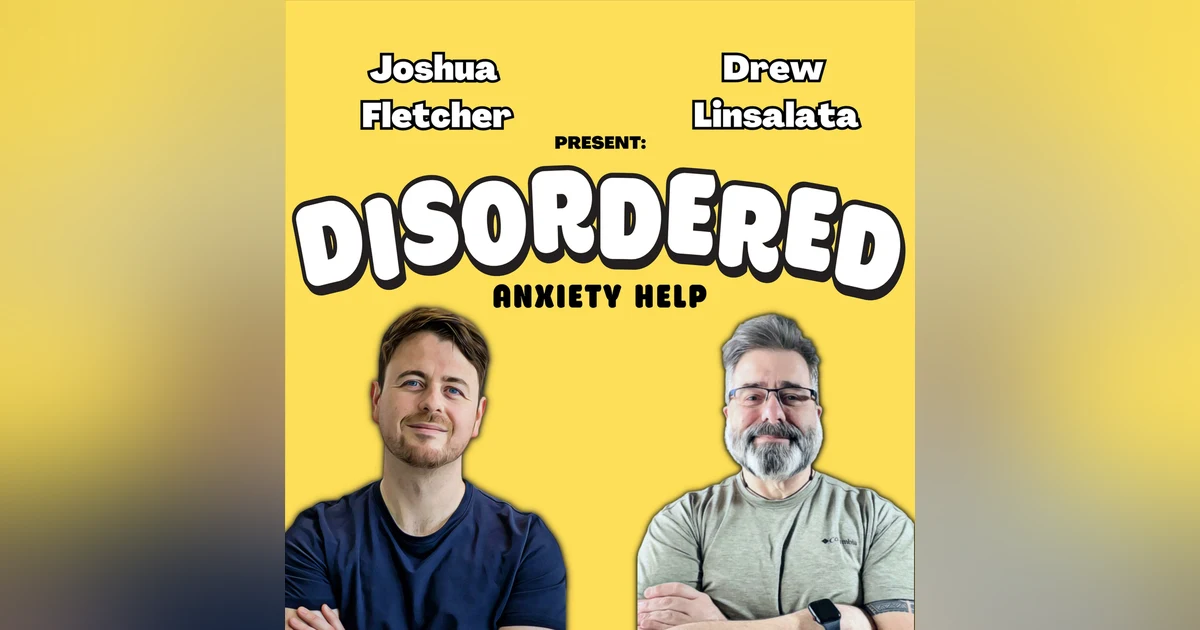


 Apple Podcasts
 Spotify
 YouTube
 Amazon Music
 iHeartRadio
 RSS Feed
 In this episode, Drew and Josh discuss the world of anxiety cures and the "miracle" solutions often marketed to those struggling with panic, OCD, and health anxiety. They share personal stories of the various methods they tried during their own recoveries and explain why many popular trends fail to provide long-term relief.
-
The Magnetism of the Miracle Cure: Why we are drawn to supplements like magnesium or specialized "breathing devices" when we are desperate to feel better.
-
Control vs. Acceptance: How many anxiety cures are actually just hidden control strategies that prevent true psychological flexibility.
-
The Reality of "Natural" Supplements: A look at the laxative effects of magnesium and the empty promises of "science-based" miracle powders.
-
The "Secret" Rituals: Why techniques like EFT tapping or specialized humming might feel helpful in the moment but often reinforce the idea that anxiety is a danger to be managed.
-
The Risks of "Gurus" and Online Cults: How to identify predatory marketing and why a "lived experience" qualification does not replace professional, evidence-based training.
The guys break down why the search for an external fix often leads to more discouragement. They discuss how true recovery is found in learning to tolerate and be with difficult internal experiences rather than trying to engineer them away with bracelets, essential oils, or "secret" techniques.
-
If a solution is marketed as a "miracle" or "what nobody tells you," be cautious.
-
Recovery is an internal process of building distress tolerance, not an external process of finding the right product.
-
Support people are there to cheer you on through the fear, not to keep you "safe" from a feeling.
About Disordered: Drew Linsalata and Joshua Fletcher are therapists and authors who have both recovered from severe anxiety disorders. They use evidence-based principles from ACT, CBT, and mindfulness to help you navigate your recovery journey without the empty promises of "magic" cures.
---
The Disordered Guide to Health Anxiety is now available. If you're struggling with health anxiety, this book is for you.
---
Want a way to ask questions about this episode or interact with other Disordered listeners? The Disordered app is nearing release! Visit our home page and get on our mailing list for more information..
---
Struggling with worry and rumination that you feel you can't stop or control? Check out Worry and Rumination Explained, a two hour pre-recorded workshop produced by Josh and Drew. The workshop takes a deep dive into the mechanics of worrying and ruminating, offering some helpful ways to approach the seemingly unsolvable problem of trying to solve seemingly unsolvable problems.
---
Disordered Roundtable is coming! Think of it as "Disordered Live", a way for members of our audience to spend time with us in an intimate virtual setting (attendance is limited) to engage in real time sharing and discussion on specific anxiety disorder and recovery topics. To be notified when new Disordered Roundtable sessions are scheduled, sign up for our email list using the form on this page.
Today we're going to talk about crazy anxiety cures. All the stuff that people have tried to fix their anxiety. What we believe to be the silly things in the wellness sphere. People being led down a path where they are promised that something is going to fix them, and then it doesn't because it was never going to fix them. And then they get more and more discouraged. Like nothing works for me. I'm screwed. I'm never going to get better.
SPEAKER_01You just want anything to feel better, whether it's for yourself, for loved ones, for your family, stuff like that.
SPEAKER_03The miracle of magnesium. Then I would put the magnesium powder in it, and I would force myself to choke down this god-awful hot beverage every day. And I would panic all day anyway.
SPEAKER_01I reduce my compulsion to one compulsion, my tapping ritual. I'm in the middle of a Nando looking like someone from Karate Kid 3. Like, what? You're gonna do in all this stuff. I'm like, dude, just just just to willfully tolerate it, man. I'll just talk to you, friends.
SPEAKER_03Welcome to Disordered. This is episode 141. Today we're gonna talk about crazy anxiety cures. And when we say crazy, we mean crazy. All the stuff that people have tried to fix their anxiety. And some of the stories are pretty funny. So we're gonna go through that. I am Drew Linsolata, one half of Disordered. I am a therapist that specializes in the treatment of anxiety and anxiety disorders, practicing in New York. I'm also a former sufferer of the things we talk about in this podcast, a three, four-time author. Sorry, we got a new book out, and uh psychoeducator, advocate, guy with microphones, social media dude. And uh yeah, about to have one of my favorite hours of the week recording with I'm Joshua Fletcher, also known as Anxiety Josh.
SPEAKER_01I'm a psychotherapist who specializes in the world of anxiety and anxiety disorders. I'm based in Manchester in the UK and a previous sufferer. Um, full disclaimer, we've actually been talking nonsense for like a whole hour before we even press record. So um yeah, well look, I'm looking forward to doing this today because I think it's an important subject, and we're gonna do it professionally and with some integrity.
SPEAKER_03Yeah. Before we get into it, here is a um we'll do it to it anyway before we get into it. But one of our that we share as a therapist and ethical practice is autonomy is so important to us, your autonomy. So we may touch on things that we will call crazy anxiety cures. If you think it's not crazy and you have gotten some benefit from something we talk about today, uh I'm a fan, then go with it, right? So we're not here to like shh you know poo-poo on anybody's beliefs, but if you feel like something is helping you, okay.
SPEAKER_01Well, that's very uh diplomatic of you. I'm more of the you need to get the credit for anxiety passing. I'm with you on that 100% and if anything other than you, which you deserve, you deserve that credit. You deserve it all. You are the coping technique, you do have the skills, you do have the tolerance levels, you do have the courage and bravery. You don't deserve to share that with magic, magical hacks techniques, and all the nonsense in the wellness sphere. Don't get me wrong, give credit to loved ones that have supported you and all that stuff. Absolutely. Yeah, nothing wrong with that. But we're talking about just the s what we believe to be the silly things in the wellness sphere.
SPEAKER_03You know, if you just like to do stuff like this to support your general health or wellness, then okay. But you know, we're just concerned. My concern is people being led down a path where they are promised that something is gonna fix them, and then it doesn't because it was never gonna fix them, and then they get more and more discouraged, like nothing works for me. I'm screwed, I'm never gonna get better. That's not a fair conclusion.
SPEAKER_01Which which is a place we've been in, that's why we're doing this. I've done it all, and I've worked with so many people that felt disheartened and they've parted with a lot of money and things like that. And yeah, but so yeah, it's more of like a just be careful. This episode's about be careful about the weird and wacky world of the wellness and anxiety recovery and air quotes out there, you know. I'm all about desensitization and using evidence-based practice.
SPEAKER_02I agree.
SPEAKER_01Um, this is what we're looking at. But yeah, let's play it anyway.
SPEAKER_03Yeah, let's start with that. It's always a good thing to do. So, which one should we do? How about we do this one? Because it's pretty solid.
SPEAKER_05Hi, Drew and Josh. It's Amy from South Wales. Feel free to use my name. Absolutely love the podcast, really loved the health anxiety book as well. It resonated so much with the case studies that you put in there. Uh, I'm currently eight months pregnant, which feels like one massive exposure therapy and a bunch of doing it anyways daily. Um, I'm dealing with all of the lovely symptoms that come with pregnancy from swollen ankles to swollen calves to muscle cramps to worrying about the baby to dealing with all of this and having health anxiety and resisting the urge to compulsively check and worry about it. Don't get me wrong, desensitization really isn't linear, and there's days where I'm not coping, and there's days where I'm coping a bit better. But I'm not letting Craig the critic dictate how well I'm doing at this. It also really resonated actually with the episode where you had a bunch of questions in because you were talking about how when you're so ill, you can't even be bothered to be anxious. That's honestly how I feel about childbirth. I'm anxious about all the symptoms I'm feeling now, but childbirth itself really doesn't scare me because I don't really have an option. I have to go through it. Uh, there's no way around it. And that's just the end of it. Thanks for everything you do. I really appreciate you guys. You've been pivotal in me understanding my health anxiety and compulsions.
SPEAKER_01Get in. That's so good. Uh, doing it anyway. Not not applying perfectionism to recovery, the um desensitization, things like that. You know, it's um whatever the journey is, um, you know, realizing that it's not linear and accepting all stay. Well done, Amy. And um, yeah, we we wish you all the best for the uh upcoming birth and things like that.
SPEAKER_03Absolutely. I love that. Like probably just too busy to be anxious. Yeah, childbirth is kind of a busy thing, I guess. It's probably gonna be the most important thing in the room, just saying. So love it. Good luck with that. Um, let's talk about crazy anxiety cures. Let's get into it. What's the crazy did you try who's going first? Did you did you try any that you oh yeah, or did you fall like prey to any of the like, oh, this is it, this is the thing that's gonna fix it.
SPEAKER_01I mean, they're not crazy when you don't know and you're not informed. I so I don't blame myself for this, don't blame anyone for doing stuff like this. You just want anything to feel better, whether it's for yourself, for loved ones, for your family, stuff like that. But honestly, I I used to walk around with you know, rescue remedy. Do you have rescue remedy? Yeah. Yeah, we have. I used to have like nine kilos of rescue remedy, you know, gob full of them, mashing them into my eyes, putting it everywhere. It's like, yeah, I need this, I need to do all of this, it'll go away. Yeah, um, there was um oh, there was just so many. There's just some the rescue remedy was one of the magnesium supplements. I oh, I remember having uh a tissue with loads of lavender oil on it, so I could just like looks like I was chloroforming myself. Just like, you know, just yeah, yeah, yeah. Yeah, doing that. Yeah. Um, and then I got caught, not in too much, but a lot of I hear a lot of people, particularly clients or people email, or they get caught in these recovery cults, which uh just you know, we guarantee results, you know. Come join our group and we guarantee results. And if you're not recovered, it's not because their approach is wrong, no, or not suitable or ground in any academia or any research. No, no, it's because you're doing it wrong. A hundred percent or yeah, I hear that all the time, and it's just like you know, anything with the word method, technique, yeah, these are all red flags, you know, like uh and the and the this wholehearted belief from the person, uh, or even the word recovery. You know, there's lots of groups out there with the word recovery, and whether it's anxiety recovery or obsessive compulsive disorder recovery and all this stuff, uh again, always, almost always round by someone with no qualifications, you know, lived experience is enough.
SPEAKER_02That's you know, it's a good idea.
SPEAKER_01And uh and it's and yeah, I've I've gone in out of intrigue over the last two years. I was well documented a few years ago going to some of these groups, and some of the stuff that's taught is just um crazy, I would say. Yeah, or completely warped or and stuff like that. And if anyone's listening to this and you know you're part of those groups and stuff, you might have met some good friends. You it might be nice to feel seen, but just be just be a bit careful, you know. And I I've I've spent a many hours in the practice unpicking unhelpful lessons. Um, me personally though, I'm so glad that I had an anxiety disorder before I had social media. Yeah, I hear you.
SPEAKER_03Uh I honestly I was magnesium, dude, for sure.
SPEAKER_01I mean, I remember reading what type of magnesium, though?
SPEAKER_03Well, it has to be natural calm. Do you guys have natural calm over there? Salad over there. It's called natural calm. It's a magnesium citrate, I believe, powder. It's it's pretty knock. It's a magnesium supplement, it's fine. So, like, I remember everybody that was when I was going through my antidepressant sort of discontinuation withdrawal, whatever, and I remember people constantly citing some article that was published called the miracle of magnesium. And if you want to talk about crazy cures for almost anything, if the word miracle is in the title, it's probably an issue. So, like, I I will give full credit. The magnesium people were not saying it. It was just some article that somebody, you know, it's one of those like studies that's very narrowly focused and suggests that magnesium may have this particular, and then the media grabs it and like, this just didn't magnesium fixes everything. Like your car will get better gas mileage and your wife will love you more. So it was cited as the miracle of magnesium, and I'm like, I need I clearly need this. Now, here is here is wisdom. No, that's fine. I mean, magnesium is a mineral we all need, like it's okay. But, you know, if one is good, two must be better. And magnesium, by the way, is a laxative. So for those of you watching at home, if you run out to get magnesium, tell us more about lax. More is not better. I can tell you from experience that more is from experience. More is not better. And I was in it was the forum I was in at the time, everybody was going through antidepositive. Oh my God, it became almost comical because somebody would jump on the magnesium train and a bunch of us would rush in and be like, do not overdo this or you will not leave your house for three days. And guess what? It didn't cure anything. Uh maybe it made me healthier. I hope it did. Anyway, I would take magnesium now, I guess, if I knew I needed it, but like it didn't cure anything. I would go to my office at the time where my office was, which I was panicking on the way to work every day. It was awful. And I would make I would have green decaf green tea with antioxidant. It was vile, absolutely like purple colored. I don't even know what was in it. Not even flavored. No, it was decaf antioxidant green tea because that has L-theanine in it, and that calms you down. And then I would put the magnesium powder in it, and I would force myself to choke down this god-awful hot beverage every day, and I would panic all day anyway. Oh my god. I remember that now. You made me thinking about it. It was like, ooh, it was taste terrible, awful. Fix nothing.
SPEAKER_01I I fix a damn thing. A memory now. I was trying to leave the house, do these things. I went to a Nando's. Did you have Nando's over in America? Oh, I don't think we have Nando's here.
SPEAKER_03What is Nando's?
SPEAKER_01Nando's is a huge like chicken restaurant chain over in the UK. Okay. I'm not sure, maybe other countries. Yeah. And I was in my EFT tapping phase of my life. And I'd memorized this tapping ritual that I saw on the internet. Nowhere. You have to say these mantras, and you have this thing where you, you know, you tap your head and you tap your cheeks and you tap your chin. Because these are meridian points. Yes. Apparently. And I'm tapping these things and I'm saying these things out loud. I was doing this in a Nandos to help calm me down. The irony is sometimes when I did tapping, this emotional freedom technique, it worked. Now, why do you think it worked, Drew?
SPEAKER_03Well, I would say it's probably a distraction or something else to if you're counting and like making sure you're doing the right procedure. Well, you're doing a thing. You're doing a task.
SPEAKER_01Literally, my attention was not ruminating. I was stopped compulsing. Well, I reduced my compulsion to one compulsion, which was my tapping ritual. Yeah. But it was my brain was going, where do I need to tap next? What do I need to say? Where am I tapping? Am I tapping right? What do I do next? How many, how much do I do that? And I did notice. It's not the claim is that it's releasing built-up, pepped up energy stored in meridian points, which, you know, if you believe that, that's cool. I'm not gonna, you know, pope all over it. But from my perspective, I was doing it because actually I'd stopped all of my other compulsions, like, am I getting worse? Is the anxiety? Where's the exits? Um, is the anxiety worse? What if this? And instead of just staring and locking in on in, you know, on thoughts and stuff like that, it was actually a ritual that was reduced my compulsions to one, which was the tapping itself. But the reason why I say it's weird and wacky and crazy is that I'm in the middle, middle of a Nando's looking like someone from Karate Kid 3, like what you know, doing all this stuff. I'm like, dude, just just just willfully tolerate it, man. I'll just talk to your friends. Like, you know, you're all good.
SPEAKER_03You know, what's the people would like, why is that a crazy? It made him feel better. Why is that crazy? Well, the problem with it is it's a control strategy. I'll I'll leave this down for later. But and then it becomes like, well, I when I tap, I feel better. So as soon as I feel bad, I must do this thing. When really you would have done just as well talking to your friend or concentrating on the chicken or or doing anything else. Like any task that was an attention move would have been as effective. Yeah.
SPEAKER_01And what happens when it doesn't work?
SPEAKER_03That's right. When you do a thing because it's supposedly a cure, it regulates you, it calmed you down, it manually turns on your vegan, whatever you think it does, then that becomes required. I have to do that thing when I feel bad. And then what do we create? The checking state. It's working this time, right? I don't know, I don't feel any different. Why isn't it working? Oh my god, and then you get to level 10 and it's all over. So and and you don't get the credit, right?
SPEAKER_01Your brain wires to think that the ritual was the thing that calmed you down.
SPEAKER_02Yeah.
SPEAKER_01Why is that bad? It's telling you one that anxiety is dangerous, yep, and it's not allowed. Two, you can't tolerate it, and the ritual is the only thing that stops you from doing it. Three, it's saying that anxiety reinforcing the the idea that anxiety and the threat response is a danger in itself. So, yeah, I get why people are like, no, I do it, it helps, it helps. You know, these are the same people in this wacky world that all right, you know, that immediately when they feel uncertain, they go to Chat GPT. It's like, yeah, but it helps. I'm like, well, it doesn't. It calms you in the moment, yeah. But what does help mean? Helps is you're you're eroding your distress tolerance, and we're bombarded with these therapy AI bots now, and we're talking about the crazy world of cures and all that. Yeah, non-sentient bots helping to calm us. You're not getting the credit, you're not enhancing your distress tolerance, your brain is not wiring to think that you can tolerate it. And what happens when I don't know, you're in the woods with no signal and your little bot isn't there to help calm you down, yeah, you're learning less, not more. You're chasing the short-term relief, you know. And I do I get a bit of flack for this, you know, like yeah, but if it's if even from therapists, but if it's helping them, I'm like, is it helping them? Yeah, you know, like if I'm anxious and I drink a beer, I feel great. Is that helping me? No, it is not helping me at all. Right. Um, and so I do get a bit kind of get a bit agitated by that.
SPEAKER_03Well, clearly we do the same thing. Like, so I'm certainly gonna agree with you. Like, we do a podcast together. What a surprise, Drew agrees with Josh, but it could create conditional okayness. Like, but yeah, like I need to satisfy this condition to be okay. I still can't handle my own internal states. I'm not okay. I'm not okay with how I feel. Thoughts, sensations, emotions, mm-mm, no good. I need Chat GPT or my magnesium supplement to get through that. What a terrible way to be human, right? Like, be human. Sometimes we feel things.
SPEAKER_01Yeah, yeah. And don't get me wrong, only for this, like if if you've got chronic conditions and you need medication and stuff, 100%. That's different. But when you're in a sensitized state, look at what you're doing that's maintaining a sensitized state. Um, do we have a question? Do we have an audio question?
SPEAKER_03We do have an audio question. Let me get back here, unmute this. It's a pretty good one. I'm gonna let you answer, by the way. Here we go. Oh, wait, I gotta mute this one too, or we're gonna have a problem.
SPEAKER_00Hello, my name is Matthew Gonzalez. Feel free to use my name. And I had two questions for you guys. First question is do y'all know Russell Kennedy? And how do y'all feel about his approach about anxiety recovery? And my second is I have anxiety right now, I suffer from, and right now I kind of got it under control, sort of. But every day I wake up anxious, and mainly it's about intrusive thoughts and death. It's the main thing, anyways, about me and leaving my kids and stuff like that. Uh, I was wondering what y'all did to combat those or negate those or help work with them. You know, try to get them under control. I love the podcast, guys. Keep doing what you're doing, you're doing great work. Thank y'all.
SPEAKER_03I'ma sit back and light a cigar and let Josh answer that first question.
SPEAKER_01Um, I think thanks for sharing that, first of all, uh Matthew. And uh what it sounds like if you're waking up with um existential dread, thoughts about death, rumination, and then the effects, the catastrophic thoughts that come with that, you know, that's very akin to like existential OCD, you know. Okay, I'm not diagnosing you over a podcast, but it's anyone with existential OCD and death OCD and stuff, it's very similar. It's a very similar pattern that people fall into. Um, and I think look at it from that lens of this is obsessive compulsive. So if you notice when you wake up first thing in the morning, checking how you feel, it's the checking state, as Drew mentioned before, and then the ruminative state. Oh, I've checked, I don't like how I feel, I'm gonna ruminate, I'm gonna, it feels safer. I have more of an illusion of control over these thoughts. If I'm staring at them all day, I'm keeping an eye on them. That was like me a lot of time. I'm keeping an eye on it, I need to do that. Um, and we're very internal, and for this, for a lot of anxiety disorders, it's about learning that it's okay to be external again. Uh, and I would um address that if that helps. Um, do I know the works of Russell Kennedy? Um, I did read the first 80 pages of his book, um, and I think it's it's a different approach to ours. Um I don't sense that he has any training in OCD or psychotherapy. Um I think some of the basis of what he does is about breathing into stored trauma in your body where there's no empirical evidence to suggest that that's a thing. Um and breathing into where he believes that all anxiety is because of unresolved trauma, which again, no evidence to back that up. Um, and so the limited stuff that I have read about him, I would be cautious, particularly if you have OCD, because OCD is about the complete, you know, unwillingness to be with uncertainty. And I think certain anxiety books in the wellness sphere are about get rid of a feeling. And then, you know, you know, if you listen to Drew and I, we're always about no, get good at being with the feeling you don't like, you know. Um, and I think some people can techniqueify that approach, you know. So if you sit there and take the afternoon off to sit and breathe into where you feel trauma in your body and have this all this somatic approach stuff. Um I think sometimes that can be compulsive and counterintuitive.
SPEAKER_02Yeah.
SPEAKER_01Um, also, I just, and it's only my personal opinion. I think when a book opens with, I went and did mushrooms and found the truth, but you don't have to, and I've come here to do all the hard work and tell you how to do it. It's a bit of a like a messiah complex, isn't it? Like, just come on, man. You know, you're not coming down from the mountain with two stone tablets telling us how to do it, dude. Like you did shrooms in a field, get over it. Anyway, there we go. Um, that's my two cents.
SPEAKER_03Oh, I think it it's fair, it's a fair assessment. You know, you know more of the content that he produced than I did, so I will trust what you say there. And I think, again, a crazy anxiety cure is today's topic. If any cure that is presented as the truth that only I know the the person who leads the community or the coach or whoever makes the supplement or is endorsing the supplement like or the technique, I have found this and no one else wants you to know about that. That is a crazy anxiety cure. Fight me. I I will die in that hill. There is no, you know, everybody, and you know what's so funny? We all want to believe in that, like, well, somebody, somebody accidentally discovered the sticky note. I know, but like, just because we want to believe that somebody accidentally or like discovered a secret cure that only he and and you are going to share doesn't mean that that is true. It it is a giant crazy anxiety curve red flag, for sure.
SPEAKER_01Yeah, yeah, absolutely. And and you've got to be careful as a not just of people, but in general. Like you be scrutinize people's uh um authority on this subject. So there are a lot of Anxiety groups out there where lived experience is the qualification. Yep. And to me, I'm thinking back there, right? If I'm I'm I'm going through an anxiety disorder. My friends don't get it, my family don't get it. I feel really lonely. Um when someone comes along and says, Listen, I know what it's like, you know, I make reels about that, and I can tap into your phenomenology, I can tap into your experience. Uh, and I do this too with my content, you know, just to help people feel seen. There's nothing wrong with that. And I think that's a good side of social media. But then look what's behind the Wizard of Odds is curtain. You know, often it's hard ticket sales. Pay this amount and we'll get you somewhere. Unethical promises about feeling better, joining communities where you're kind of always like compulsing together and reassurance seeking and stuff like that. Um, so just be careful of that. Also be aware of people abusing their titles. Some people are doctors because they have a PhD. Yeah. PhD in what?
SPEAKER_03Mathematics. Art history. Yeah.
SPEAKER_01Yeah. I'm I'm Dr. X and Y, and I'm here to help you with your anxiety disorder. What's your doctorate in? Nothing to do with anxiety disorder. So just be careful with that one.
SPEAKER_03Well, some of the worst, I'm gonna say the word grifters because I believe this to be trying that, but some of the biggest, most successful internet celebrities that are in the wellness grifting business use the title doctor, doctor of chiropractic. That's all I'm gonna say. Just look for that DC.
SPEAKER_01Uh elaborate, Drew.
SPEAKER_03Yeah, like I I'm sorry, I'm tired of seeing Dr. So-and-so, and they are just telling you the craziest and most insane, zero evidence, but it sounds right, and they they're a doctor, and it makes you feel hopeful and like this guy knows, and like this is gonna be it, and they they're just pushing emotion and fear buttons to get you to follow along. Yeah, that's always a little bit rough. You know what I think is a big crazy anxiety cure, if you will, it's not really a cure, but like what I did is a cure. That is not a cure. I will say often that yes, in the introduction of the podcast, I'll say I'm a former sufferer. It is the least of my qualifications. Of a list of qualifications, it is the one on the very bottom. It might help me understand your experience if you walk into my therapy room, and maybe we have commonality and it might make you trust me a little more. Fair enough. Like, I'll take it. It's a it's a leg up. But it is the least of my qualifications. A crazy anxiety cure is just do what I did. I did this, so you do that. But but that's not, I don't know, it's not working for me. Well, you're not doing it right, you're not listening enough. I'm trying to help you. The creator, the coach, the mentor breaks down in tears, a big emotional display on the big Zoom call, the coaching call. I do so much for this community. I don't understand why people are hating on me. And I know who you know who I'm talking about, because I have four of your people in my therapy practice that feed me that information. That is a crazy anxiety cure. What I did is not in a cure for you. It's just not. Sorry. Because you apply the principles to your own unique experience and it's going to look a little different than what I did and what Josh did.
SPEAKER_01So yeah, and like we often say, there's things that outside of an anxiety disorder, your anxiety disorder is not like there's things that contribute to stress and uncertainty. Like when I work with clients, yes, okay, the the presenting focus is, you know, I've got panic attacks, I've got intrusive thoughts, I've got all that. But then sometimes there's deeper layers to uncertainty. Your life matters, the stress in your life matters, you know, things like your your attachment matters, you're uh you're bringing the way you approach approach other problems in your life can overlap. It's nuanced because you are a unique individual. And again, just be very careful when people are like, I guarantee you results in three. I'm like, you're not selling me a carpet cleaner. This is a human being. Yeah, you are a human being. Yeah, you know, this is nuanced. Um, we'll rant a bit more, but let's hear more from the podcast. I'm bored of our ranting.
SPEAKER_03I hear you. I think one of the things is um, well, it in Matthew's question, which was really good questions, too. You know what I heard the theme of? Crazy anxiety cures. See, I like I slid that right in there. I knew sound that I began to do that. I enjoyed it. I was dancing along. Yeah, it's pretty good. It's a real banger. Uh got a written one.
SPEAKER_01Do you want to hear a written one? Oh, yeah, sure. Let's have it. Go for it. Okay, this is from Ruby. Uh hi guys, excuse my name. My name's Ruby, and I'm 18. I wanted to share it, did it anyway. Yeah. It's nothing huge, but for me it was very scary, and I'm proud of myself. Well, already this is going to be huge, regardless of what I'm about to read. I have GAD and struggle most with health anxiety. My biggest fear with anxiety is when I feel dizzy or lightheaded, and I feel as if I will fall down and pass out. I can relate to that. I have struggled with a for a year now with this fear. Recently, I started therapy for my anxiety, and they told me that I need to overcome this fear of being dizzy. They said we will stand up together and spin around and purposely get dizzy. This therapist sounds brilliant. It's called an interoceptive exposure to show me that I'm okay and I don't have to worry about it. I was so scared to try this and I would put it off for multiple sessions. Until last week. I was terrified, but I did it anyway, and it really has helped me to understand a little better that I'm not going to pass out or fall down and that I can carry on with my day whilst anxious, dizzy, whether I'm shopping or just simply walking somewhere. Now I'm pushing myself to stay outside whilst having this uncomfortable dizziness, and I'm trying to do lots of exposure to help this. I hope to fully believe I'll be okay whilst dizzy soon. Although I'm almost there. Thank you guys for everything you do. I still listen to your podcast every week and look forward to the next. Bye. Oh, Ruby. Love it.
SPEAKER_03That's not small. No, that's huge. Intentionally being dizzy and you're terrified of that, that is a big deal. Do not minimize that.
SPEAKER_01You're done. Yeah. Yeah. Doing the hard work. Yeah. You know, it's it's it's a hard sell, isn't it? Doing the hard work.
SPEAKER_03Oof. I I have people who put off their interoceptives. Like, we can do this. I don't know if I'm ready for that yet. All right, no problem. Well, when you're ready, we can use that, right?
SPEAKER_01So and you know how hard that was for Ruby because she's put off the sessions a few times, then she bit the bullet. Okay, let's go be dizzy. Yep. And she's taught the brain the amygdala. I know it's in here somewhere, right? Amygdala. Ruby's taught the amygdala that actually dizziness is not associated with imminent disaster. Uh, keep going. Well done. And give yourself a pat on the back. That isn't small, that's massive.
SPEAKER_03Yeah. You know what you learn about dizziness when you do that? I'm gonna get them all in. I'm gonna hit all the buttons today.
SPEAKER_01What are the crazy there must be there must be a lot of people?
SPEAKER_03Well, you know, it's interesting. They are all based on, and you know I threw Janet Jackson in earlier before we did the did it anyway. They're all based on control. Crazy anxiety cures are almost entirely based on control. I will give you a thing, an evid uh uh uh an object, and oh, I could talk about all the stuff. I know you get them too. All the offers we get for to like be brand ambassadors and like, oh, we want you to talk about this product. This is a revolutionary new product. They are all based on I can show you, I can control your feelings or your body. We can manually operate your feelings, your thoughts, and your body if you take this supplement or use this thing or wear this bracelet or use this special breathing thing or put a thing on your nose, like ever they're all based on control. So when somebody is telling you that if you do this, you will stop feeling that. Run. Sorry, run. You know, yeah, we do have some things. You're right. If you're in pain, you could take a painkiller and you probably won't be in pain. That is correct. But we do not necessarily have strategies that work perfectly, predictably, safely, and reliably to control bodily functions that are were designed to be outside of our control and for sure, thoughts and emotions. We do not have thought and emotion control techniques or devices. So don't buy any of those. I'm looking at pictures from my old Facebook group, and the Facebook group is not active anymore. Sorry guys, but I'm looking at What is active?
SPEAKER_01The disorder community. No, not yet, almost.
SPEAKER_03Pretty soon, very soon. But um, I see I'm looking at a picture right now. Somebody posted way back in 2021. Currently looking at all the shit I spent money on in the past that I thought was going to magically cure my anxiety. It's a picture of a weighted blanket, foaming bath, there's uh some sort of oil, essential oil, there's some sort of juice extract, there's uh ashwagonda. Like I have another person right on top of that who had like a closet full of supplements. I I used to have the Hawaiian anxiety bracelet people would email me weekly. Come on, like you'd be a great brand ambassador. Like, you clearly don't know anything about me. Like, I would roast your bracelet in front of a big audience. Do not send me a bracelet. There, they're yeah, yeah, it was it, it comes from Hawaii, and I love Hawaii, love the culture, awesome. But somehow they thought that that imbued their bracelets with some sort of thing that that fixed the anxiety problem. Love it.
SPEAKER_01I still have my teddy birth when I was three years old. It's called Jim Be. And it reminds me, it helps me tap into my inner child, which I like. And sometimes when I'm stressed or when I'm anxious about things that aren't the disordered state, just anxious about life. Sometimes I'll sit in my bed or whatever, and you know, I'll have Jim be the bear. And that is an anxiety support thing, isn't it? Yeah, but it's not for the obsessive, compulsive, fixated state. It's for okay, things are uncertain, and I'm comforting myself through the uncertainty. So, but then I get offered the all these things like these anxiety support teddies, you know, you squeeze it and then it regulates your nervous system. I'm like, no, no, no, nothing wrong with having comforts, and this is a really important point. Nothing wrong with having comforts to help you ride through the uncertainty, but when the comfort has the expectation to get rid of uncertainty and get rid of a feeling you don't like, that's when we're it's a very small, subtle but powerful difference, you know. Like we can get through this. I remember sitting on a plane, hating it, and I was sat next to oh, I can't remember her name, she was lovely. I wish I remembered her name. Really anxious, and we both looked at each other and we sat across from the aisle, and we both held each other's hand because we were scared. Yeah, but we were sit holding each other's hand through the uncertainty, right? While being scared, okay. Whilst being scared, I love stuff like that. There's a difference between stuff that helps your anxiety and gets rid of it. So if you need to, you know, be supported through it, definitely. Or you can join a cult, you know, just go and join an anxiety recovery cult, you know, and do all these things and pay pay the leader 300 pounds for a WhatsApp conversation for 20 minutes. You know who you are.
SPEAKER_03You know, I think um another crazy anxiety cure that nobody sells us, we often make up ourselves or safe people. There's a great parallel where you're saying Jimby the Bear, holding hands with somebody who's also scared not a flight because you're both nervous flyers. Love those things. Save people. The best use of a safe person is to not expect them to keep you safe. But I'm a huge fan of teaching like your support people, your friends, your family, your loved ones, to not try to fix your feelings or keep telling you that you're gonna be okay. Let them cheer for you while you work through the feeling. I know you're terrified right now, but I also know you can handle this. I'll hang out with you while you go through it. I know you can get through this. You're gonna get to the other side of this. Not you're okay, it's just anxiety, it's safe. I'll hug you, I'll take it, I'll take you to the hospital if you need to. So it's it's uh see the safe people are not a crazy anxiety cure, but safe people can be a great support while you learn to tolerate, navigate, accept, and like not fight. Not fight. So yeah, they're cheerleading you. Yeah, 100%. Cheerleaders are awesome. I fully support the use of cheerleaders when you need them. Nothing wrong with that.
SPEAKER_01Oh, go on to the crazy one. True story. I went on a fear of flying course. I was doing my exposures to go flying, and there was a fear of flying course run by EasyJet in the UK. You ever heard of EasyJet?
SPEAKER_03Yeah, I've heard EasyJet. Do they even have seats on those planes? Isn't that like a super good IU?
SPEAKER_01You gotta pay extra for the oxygen masks and uh seat belts. And um the EasyJet run one, and I'm gonna call them out straight out. Not EasyJet employed uh a hypnotist who will help you overcome your fear of flying. No, I just booked Tom because I wanted to do a practice flight for 30 minutes. And as I got there, true story, there's a huge queue of people. He went in front of everyone publicly. This one guy, I'm not, I think I can't remember his name, Lawrence Summit. And he he went through and ticked everyone who had completed his online course, and the people who hadn't logged on to his online course, i.e. me and ten others, um, he publicly said, and I still remember this, I was dumbfounded, in front of everyone in a busy airport, you've not done my online course. So when we're up in the air and you panic, I'm not gonna be able to help you. And I'm like, one, you're a dick. Yeah, and two, that's not proper exposure therapy because the people need to realize that they can tolerate it themselves. All you're doing there is showing everyone that you are the savior, that you're not gonna be on every person's flight, are you? Uh god forbid if he ends up sitting next to you on a flight. And um, and I just remember that, and I thought that is so unethical and so wrong. And then of the ten people he shamed and put doubt into their head, all ten of them didn't get on the flight.
SPEAKER_03Oh. How did that work out? Well, for him, it worked out fine because he can fill those seats with ten people who would pay, right?
SPEAKER_01It gets crazier as well. Very easy, Jet, this as we were waiting to go onto the plane, an assistant goes down the queue down the down the the queue of people waiting. Anxious people are already terrified, hearts pounding, whatever. Upselling them calming audios. You can buy a calming audio now for 30 pounds, 40, 50, 20 bucks.
SPEAKER_03Yeah.
SPEAKER_01You know, whereas like you're gonna do the exposure, and then they were upselling vulnerable people, like here's a relaxing stress believer, and all that, and they were just flying off. People paying extra 50 pounds, 80 pounds, whatever. Because, like, I know you've done the course, but you've not done the extra things to help you get through the flight. And I just remember that, and you know, pardon my French, but I was just like, F this, this is absolutely disgusting. Yeah, and that's a crazy, that's a crazy anxiety situation.
SPEAKER_03Yeah, 100%. And that is preying on the like, oh, but if I don't, uh you know, if you don't get it, I'm not gonna be able to help you. You know, that's FOMO. Like, yeah, but what if, oh, what if I need that? I I shouldn't pass up this opportunity to get something that can help me, right? Like, that's not cool. That is pressure selling and it's it's poking at your fear and your emotion. So okay.
SPEAKER_01And I'm I'm not being paid to do this. If you are in the UK and you want to do fear of flying stuff, do the British Airways one, they're better.
SPEAKER_03Yeah.
SPEAKER_01Uh they're really supportive, they're lovely. They're just like, Do you want to come on? You know, I'm anxious. And they're like, it's all right, I'll sit with you.
SPEAKER_03They have seats on their planes, oxygen masks, real aircraft. It's always easy jet and Ryan there. Those are the two that I always hear people making jokes at over there. Like, it's barely a plane. It's practical. No, no, no. It's like a school bus.
SPEAKER_01Nothing beats a jet to holiday, and it's just like a family of eight punching the crap out of each other's stuff.
SPEAKER_03It's a school bus with wings. That's really what it is in the end. You know, I it was just funny. I was looking through our guest pitches too. I get them for the anxious truth. We get them all the time for disordered. Some of the there are some crazy anxiety occurs in those in those guest pitches, too. Like, oh my goodness, I cannot tell you the number of emails I get every week where it's some hot podcast booking agent or a PR person or something, and they want to tell me about somebody who sometimes has the title doctor. Again, they don't say what kind of doctor, but and it's always some sort of crazy science, it's science-based. It ain't science at all. You can say anything, anything is science-based. This is based on science. I know this, your audience will love this because it's actually based on science. I'm like, what science is this based on? And it's always some crazy control strategy that like what you don't know is if you actually eat beets for four days in a row, it completely regulates your nervous system and like you'll never be anxious again. I'm like, get out of here. Like, I cannot block you fast enough.
SPEAKER_01Yeah, old Vegas nerf. How have we got that far without mentioning the city? Oh, the Vegas nerve stimulators.
SPEAKER_03Yeah, I get the Vegas nerve stimulators. Remember the one that was um, I don't remember the name of it anymore. It was huge for a while. And I know I saw people doing sponsored posts for it that are in our sort of space. The breathing thing, I don't remember the name of it. It was, again, science-based. It was sort of like a breathing device, and like you use this breathing device, and like very shortly, somehow, like all of your anxieties disappear. It's retrained. And speaking of breathing, I had another crazy anxiety cure, which was a book about breathing when I really needed it. Andrew Weil, I don't even know if Andrew Weil is still a thing anymore, but he was the guy that that put forth, I think in the early 2000s possibly, the whole breath work thing. I think he was one of the one of the leaders in that. And I did the whole one.
SPEAKER_01How we commodified breathing.
SPEAKER_03I don't know. He that it was, listen, I know a lot of people love breath work. If you're in the wellness community or you like to use breath work as part of maybe your mindfulness practice or just whatever, fine. But it was taken and like, but this is also this calms you down. This is your anxiety, it's because you don't, you've forgotten how to breathe the proper way, the sacred way. And I did all kinds of crazy hyperventilating, hold one nostril, blah, blah, blah. You know what? Again, like you're tapping, paying attention to counting a breath. Like I have to count, you have to count. Like, yeah, there's something to be said for that. There are times.
SPEAKER_01If you've got sensory motor OCD or air hunger, that's gonna do the that's gonna make it worse.
SPEAKER_03The air hunger eternal nope, didn't matter. But there was no caveat there. Like, hey, if you have sensory motor OCD, if you're an anxious person, if you deal with if you have breath sensitivity, you can't use this. No, it was a blanket statement, or at least people that were fans of it, of the breath work and that book. I think the book is called Breathing. It's still my Apple Books library. I should break it out and like have a laugh. But there were exercises that were absolutely not for a person with panic disorder and like somatic fixations. I tried it, it did not work well at all for me. The opposite. I would start to get lightheaded, and I'm like, ah, no more.
SPEAKER_01I can stop people commodifying meditation as well. My one of my favorite ever exposures I did was meditation. I came out of that sweating, yeah, tears in my eyes, shaking, tired, hungry. And I remember there, like the the the lead, the I forgot the name, but the person who does the leads the meditation looked at me and was like, Wow, you must have gone deep. And I was like, No. I have panic disorder and fear of sensations and raging OCD. For me, that was an hour of just not reacting to sensations and my fear and intrusive thoughts. I didn't go deep, I was just splashing my head against the surface until it was okay.
SPEAKER_02Yeah, yeah.
SPEAKER_01And I remember everyone else left feeling chill. I didn't have Craig the critic at this time. He'd have been like, you can't do this, blah blah blah blah blah blah. But then I was just like, no, this is my exposure.
SPEAKER_02Yeah.
SPEAKER_01And I and that was one of my favorite ones. Was meditation good for me that day? Did it work? Well, I left sweating, my heart was pounding. Yeah, it worked because I'd rewired my brain to show it that I could do it. Yeah, well. That is a good, good exposure. You know what? Taught my brain that that was okay.
SPEAKER_03I I think you're right. If you really want to see, and we're kind of running out of time, we'll wrap it up. But like, if you want to know if it's a crazy anxiety cure or not, in general, ask yourself what will this teach me? Will this teach me anything about myself, about the nature of my emotions, my thoughts, my anxiety, my capabilities? If it's not going to teach me anything, then at least from our theoretical orientation, there's a really good chance it's a crazy anxiety cure. What can I learn from this? Nothing. It just supposedly turns off my vagus, turns on my vagus nerve and turns off my amygdala. So I will learn nothing from that other than I need that and I should subscribe to it monthly.
SPEAKER_01Not cool. Do we do we have any did it anyways that show people not using crazy techniques and stuff like that?
SPEAKER_03We 100% do. Let's play one as as we sort of wrap up the episode. Let's do it.
SPEAKER_04Hi, Drew and Josh. My name's Marion, and I'm from Australia, and I just wanted to share a did it anyway with you guys. Christmas time is a bit hard for me because it's the anniversary of my dad's death. And particularly this year I struggled. I had some really bad health anxiety and OCD flares, which led to a pretty intense adrenaline rush a couple of days ago. Me and my husband love bird watching, so this morning he um suggested we go to this brand new park we've never been to before. And uh I just wanted to stay home and compulsed, but I was like, nope, let's go. So when we get there, we couldn't find parking, it's hot. I had, you know, Craig the critic telling me, Oh, you shouldn't have come out, like, you know, you've got to go back home. But I stuck with it. Uh I was getting berated with intrusive thoughts. Uh, had all these really unhelpful thoughts, and I just kept gently unhooking from them and Bringing my attention back to my husband and looking at the birds and the trees and the water. It definitely wasn't easy, but I made it through. I even stayed longer than I wanted to. And now that I'm back home, I'm glad I did it. So I just want to thank you guys so much for your podcast. You've helped me so much, and I'm sure you've helped so many others. So keep doing what you're doing. Thanks.
SPEAKER_02Love that.
SPEAKER_01Yeah, I got a big smile on my face. No magic techniques, nothing. Nope. Marion is the technique in doing what non-anxious Marion would do, values driven, spending time with my husband, doing what non-anxious Marion would do, spotting the birds in the trees, doing all that, nothing silly, not like me and Nando's tapping my face or getting a nice pack and whacking myself over the head with it. Just the hard, sticky work. And you can tell, but you know, she was uh kind of compelled to go and share that. So we that tells us that, you know, yeah, that worked. I it was a good thing. Going out and doing nothing worked.
SPEAKER_03Yeah. I I my love when she said, All I wanted to do is stay home and compulse. Wow, that's so accurate. Like that was so good. You know, but that's the crazy thing that an anxiety disorder will tell you to do. Stop and just do anything. Pay attention to this, feel better, fix it, run away from it, like engineer it. But what if I go bird watching? Because we like bird watching. What if I take the risk of I'll watch the birds instead of compulsing? And hey, look, it turned out all right. I didn't explode.
SPEAKER_01Really good. Thank you, Marion. And uh thank you, Drew. I think it was just important that when you just be careful when you're out there. I know it's like it's like a golden carrot, isn't it? When you're feeling uncertain, when you're feeling tired, when you're feeling frustrated, you're being compulsing, and someone offers you a very sparkly, you know, illusion of escape, just be very careful, you know, and don't stop making your whole life about anxiety, whether it's you know, desensitization, recovery content, or your phone pinging off three seconds every three seconds because of whatever. Don't make your life around anxiety. Remember, and I say this all the time don't expect anxiety to disappear when it's the most important thing in the room.
SPEAKER_03Yep. And if you have been chasing crazier anxiety curse, not your fault. We get it. We did it too. We've been saying we've been there, but I will I'll wrap it up by saying this if you have tried a million things and you have drawn the conclusion, I'm hopeless because nothing works. They were never gonna work. That was that's not a you problem. That was a them problem. So, like, they were never gonna work. So be careful about nothing works for me. Well, they were never gonna work. You were just trying things that were never gonna work. So it's okay. You can still do it. Yeah, yeah. I like that. Anyway, thanks for listening, guys. Appreciate it. If you're so inclined and you want to like send in a did anyway or whatever, go to disordered.fm. You can also hop on our mailing list so you can find out when we launch a disordered community app platform, whatever you want to call it.
SPEAKER_01We have all the right techniques and magic hacks to get rid of your anxiety.
SPEAKER_03That's right. If you don't join, you'll never get better. Now we're joking. Yeah, you'll never get better. We are joking. You could, you know what? All honesty, full disclosure, you could not join the community app, which by the way, mut pretty inexpensive, and you'd still get better. It's fine. Just listen to the podcast every Friday. It'd be all right.
SPEAKER_01Yeah, so most of the chair did it anyway.
SPEAKER_03Yeah, 100%. Be able to ask us about like what we talked about, you want to interact with us, that sort of stuff. It's just better than doing it in the freaking algorithmically driven we gotta dance for attention. Rather just talk to you guys on that. So anyway. Um, but yeah, otherwise pop on over, you know, send us a anyway, question or whatever. And uh thanks for listening along. Appreciate it.
SPEAKER_01Catch you soon. Thanks, Drew, and thank you. Catch you next Friday.
SPEAKER_03Yeah, we're out of the way.