
CBT For Anxiety Disorders Explained (Episode 172)
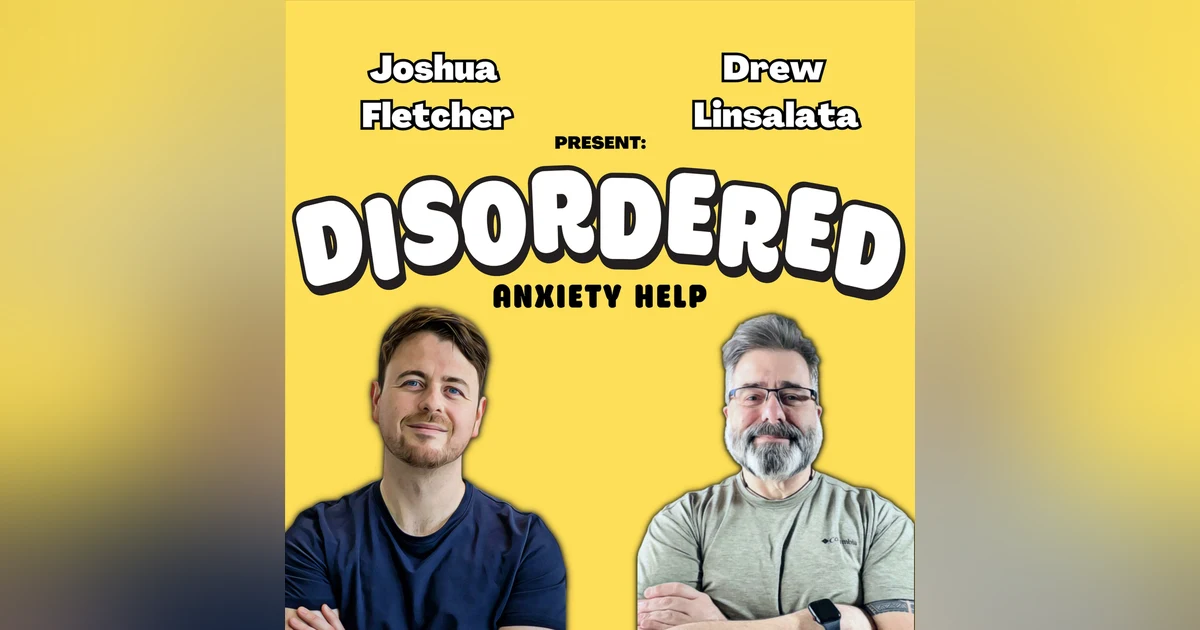

Send us Fan Mail "I tried CBT and it didn't work" is a lot like saying "I tried food and it didn't work." CBT is a massive umbrella, and what you actually got depends heavily on which version of it you were given. This week we break down what CBT for anxiety disorders actually looks like, from the older, content-driven approach built around thought challenging and thought replacement, to the third-wave, mindfulness and acceptance-based approach we rely on most, which is also CBT. We talk abou...

 Apple Podcasts
 Spotify
 YouTube
 Amazon Music
 iHeartRadio
 RSS Feed
 "I tried CBT and it didn't work" is a lot like saying "I tried food and it didn't work." CBT is a massive umbrella, and what you actually got depends heavily on which version of it you were given.
This week we break down what CBT for anxiety disorders actually looks like, from the older, content-driven approach built around thought challenging and thought replacement, to the third-wave, mindfulness and acceptance-based approach we rely on most, which is also CBT. We talk about why arguing someone out of a triggered state rarely works, where ERP, ACT, DBT, and metacognitive therapy all fit under the same umbrella, and what questions to ask a prospective therapist to find out what you're actually getting.
Plus Did It Anyway wins, including a solo trip to a music festival, an interoceptive exposure that turned into a massage, and studying through an OCD attack.
----
Want to talk about this episode, interact with us, and communicate with others that are sharing your experience? We're hanging out in the Disordered Community Space
https://disordered.fm/community
----
The Disordered Guide to Health Anxiety is available now:
https://www.disordered.fm/the-disordered-guide-to-health-anxiety/
---
Struggling with worry and rumination that you feel you can't stop or control? Check out Worry and Rumination Explained, a two hour pre-recorded workshop produced by Josh and Drew.
-----
Got questions or did it anyways to share? Send us an email or voicemail on our website.
---
Disclaimer: Disordered is not therapy or a replacement for therapy. Listening to Disordered does not create a therapeutic relationship between you and the hosts or guests of the podcast. Information here is provided for psychoeducational purposes. As always, please consult your mental health and/or medical care providers. If you are having a mental health crisis, always reach out immediately for in-person help.
---
Disordered Roundtable is coming! Think of it as "Disordered Live", a way for members of our audience to spend time with us in an intimate virtual setting (attendance is limited) to engage in real time sharing and discussion on specific anxiety disorder and recovery topics. To be notified when new Disordered Roundtable sessions are scheduled, sign up for our email list using the form on this page.
Good CBT for anxiety disorders can be really, really helpful. And that's what Drew and I often pull a lot from. But it's a massive umbrella. Yeah, it's like saying, Oh, I tried food, it didn't work for me. It's like, well, what did you eat?
Drew LinsalataYou know, that was very content-oriented. We're going to try to show you the folly of your ways in your thinking, that your thinking is irrational. Once we show you that your thinking is irrational, then you'll be better. But there was a lot of relapse, and a lot of people left therapy. And that's why we use the third wave now, which is not really content-driven. It's mindfulness and acceptance-based. But that's also CBT.
Josh FletcherI hate CBT. It doesn't help anyone. I use ACT, and I'm like, you do know that's CBT. Exposure response prevention.
Drew LinsalataExposure therapy is CBT. We're not going to try to prove to you that gravity will not turn off or that you're not having a heart attack. We can't.
Josh FletcherWelcome to Disordered. This is episode 172, entitled CBT for Anxiety Explained. A lot of you may have had CBT in the past with mixed results, some people with disdain, some people with oh, that was wonderful. But we're going to explain it today through the lens of working through anxiety disorders, namely, you know, panic, OCD, GAD, stuff like that, and what it kind of looks like. We did a similar episode about it a very long time ago, accordingly, you know what God therapy looks like, but we're going to specifically look at CBT today. If you don't know who I am, I'm Joshua Fletcher. I'm a psychotherapist trained in humanistic and CBT for anxiety disorders. I'm a previous sufferer. I've written books, I do podcasts, I prance around on social media, and I'm really passionate about talking about this on this wonderful podcast.
Drew LinsalataAnd I am joined by Drew Linsolata, the other half of Disordered. And you're right, I didn't know who you are. Thank you for introducing yourself. Uh I'm also a therapist that treats anxiety and anxiety disorders as a specialty, except I practice in New York. Uh, former suffer of the things we talk about here, same thing. Author, co-author. We wrote the disordered guide to health anxiety together. Guy with too many microphones and cameras. And uh yeah, one of my favorite uh hours of the week when we get to sit and do this, you and I and our live studio audience, which is always fun.
Josh FletcherYeah. Okay. Uh what inspired this is that uh and I think this mainly a lot of this affects people, uh particularly in the UK with the mental health IAP system and stuff. Is that um obviously the end the UK has NHS, so the first pot of call for a lot of people um is to go to the doctor uh if you've got anxiety or depression, things like that. And you you often refer to the IAP service and and you join a waiting list or whatever, and you get usually get referred um to CBT counselling for anxiety, for example, no matter how it presents. And the reason why CBT is um recommended is because CBT is a modality, has got you know the most measurable outcomes, stuff like that. Um because an advantage of CBT is you can use certain measurements, and you know, and they're not great, but you know, that they're they're they're there to justify why the government's gonna pay for it and and stuff like that. And I love elements of cognitive behavioral therapy for anxiety disorders, but because CBT is so massive, I think I really wanted to discuss here that if anyone's had CBT and gone, if you're ever someone who's gone, oh I tried CBT, we we it were enough. Like me, I said that. Yeah, I went to have uh NHS CBT three times, didn't do it, they didn't understand my anxiety disorder. A lot of it was just filling out GAD sevens and PhQ9 forms, and I didn't feel like there, I didn't feel like I was understood, but I wanted to do a very specific episode today. It's actually no, like good CBT for anxiety disorders, um, you know, can be really, really helpful, and that's what uh Drew and I often pull a lot from, but it's a massive umbrella. Oh, it's you know, it's like yeah, it's like saying, Oh, I tried food, it didn't work for me. It's like, well, what did you eat? You know, slimy carrots. Well, there we are then. You probably you know, try a different uh kind of approach, try a different food. So we're gonna look at that.
Drew LinsalataThat's good for emetophobia. We know that. Slimy carrots.
Josh FletcherYeah. Uh one of the community one of the community members has also said, I'm interested in ICBT, so Drew will uh share that. I will share some insight on that.
Drew LinsalataUh we have a person who said IA, the I guess that's IAPT, that's the app you're talking about. Gets you gets you on thought challenging about six years after you're referred. Um yeah. So I think one of the things about CBT, I mean, you know, the letters of themselves cognitive behavior, like it grows out of behaviorism from back in the like B.F. Skinner days, literally, or Pavlovian, you know, it is a growth outgrowth, and that's true. And then it's from the 60s, isn't it, 60s or 70s? Well, you know, you go all the way back to like Pavlov and his dogs, really. And then, yeah, the skinarian behaviorism in the 50s and 60s, and then then the cognitive part, the Aaron Bex and sorry, Albert Ellis. I know Albert Ellis was in there. And um you know, the cognitive part was okay, we're not like animals, we're not like dogs that just salivate when a bell rings because we have thinking and the thinking mediates our behavior. So we've got to put the thinking part in too. But like that CBT, which was really prevalent, that's like the second wave. You know, that was very content-oriented. We're going to try to show you the folly of your ways in your thinking, that your thinking is irrational. Once we show you that your thinking is irrational, then you'll be better. But there was a lot of relapse, and a lot of people left therapy. And even though it was most effective compared to other traditional talk therapy, it still had a really high relapse rate. And that's why we use the third wave now, which is not really content-driven. It's mindfulness and acceptance based. But that's also CBT, unless you're Adrian Wells, and he will throw hands at you if you call MCT CBT. He will it is not, he says.
Josh FletcherNo, it's mindful. I mean he invented. Same with the ICBT ground on it. This is completely new. It's completely different. Yeah, it's exactly right. Yeah, yeah, okay. Uh, but in in general, yeah, like it's really important, and a lot of traditional CBT that exists. So if you go to a CBT therapist now, this is why we always ask like, are you anxiety disorder informed? Or are you trained in types of CBT, particularly the latter one? So when we had Russ Harris on, you know, he does a lot of um third wave CBT. So ACT, acceptance and commitment therapy is CBT. A lot of people don't realize that. Yeah, yeah. You know, um, I literally see on forums of therapists like, I hate CBT, it doesn't help anyone. I use ACT, and I'm like, you do know that's CBT, right? And they're like just a later version, right?
Drew LinsalataExactly.
Josh FletcherYeah, just the later version, yeah. And the same with ER we turn on about ERP, ERP is CBT. Exposure response prevention, exposure therapy is CBT. You know, that's you know, if you're if your therapist is is got you inside going, no, challenge and replace thoughts that outside is scary and you'll have a heart attack. No, it's go out and find out.
Drew LinsalataYeah, it's really I and it's a rough sell. And I think one of the reasons that it is a hard sell. The the third wave that that Josh and I primarily relying on, and the people we travel with in the circles we're in, it is a really hard sell because we call them the third wave is based on acceptance and mindfulness, which is we're not gonna try to prove to you that gravity will not turn off or that you're not having a heart attack. We can't, like, even I, and I will argue anything for as long as it takes, like, you know, I don't have I'm not a quiet guy, but I often tell my clients, like, I can't, I will lose an argument with your irrational thoughts every time. So if you think that I'm going to, with my big voice, like win the argument and convince you finally, after years of thought challenging and thought records, that you're actually safe when you feel that you're not safe, I will lose that argument. I will lose.
Josh FletcherYeah, it never anticipated the Whitney Houston effect. This is what so anyone who's been my client in the past, or this and that, they're so annoyed. I caught the Whitney Houston effect.
Drew LinsalataI don't know this.
Josh FletcherIt's uh every time we get pulled into rumination, and because everyone who's anxious, OCD, agrophobia, um, they feel doubt. And then so they when they try to intellectualize or argue, all you hear is Whitney Houston going, How will I know? How will I know? How will I know? Well, um I'm sure if I go outside, uh, you know, I don't think I'll have a heart attack. But how will I know? Well, I th maybe I should go find out. Yeah, but it's risky and it's constant. So when you're if you're on the Whitney, how will I know if he really hates me? Um, then yeah, you've got the uh you don't get off that that carousel. Um but again, old school CBT would be like, well no, no, let's let's chase that thought, let's replace that thought, let's challenge it. Um I do like thought challenging, particularly around compassion and beliefs about the self. Sure. But uh thought challenging around what ifs in the future, I find just just just doesn't work.
Drew LinsalataI I agree. And I think thought challenging or thought replacing when somebody is in a highly triggered state, they are feeling that threat. It's urgent, it's overpowering. All of the buttons the alarms are going off, and it feels so real. Anybody listening to us or in the studio audience knows, but it feels so real, right? I get it. It feels uh like Whitney's on the call. Did you see that? Oh my god. I mean to put that in the soundboard. I gotta put I gotta put a Whitney in the soundboard. But uh I think when and everybody will say, like, yeah, but I I hear, I listened to you, yeah, but that was last week's episode, right? 171, the yeah, but but I so I listened to disordered, I would read the books, I get it, I work with my therapist, but when I but but when I panic, it all goes out the window, or but it feels so real. You can't thought replacement might be really logical. You get it when you're calm, but when you are triggered, nope, that part of your brain is having no part of that. It's like it shuts down the logical part. No, no, no, no. That doesn't get an input right now. So we we can't do it that way.
Josh FletcherYou just can't do it. Do we have any examples of community members or listeners who have taken on board the aspects of third-wave kind of CBT exposure therapy, willful tolerance?
Drew LinsalataAs a matter of fact, we do. So let's hear one. How's that?
SPEAKER_00Hi, Josh and Drew. Um, my name's Rachel. You can use my name. Um I'm from Liverpool in the UK. Um, first and foremost, I just want to say thank you so much for creating this podcast. Um, it makes myself and I'm sure many other people across the world not feel so alone and like like my brain is broken. Um yeah, so my did it anyway is about um doing things away from home and especially alone and doing things solo. I was I used to be okay with it for a period of time, and then I just got completely resensitized out of nowhere, and I've been trying to build up my courage again, and with the help of yourselves, I definitely have. And I've managed for my birthday weekend last weekend to go to London by myself, stay over, and go to a music festival that I wanted to go to. All I had in my head was just willful tolerance, do it anxious, do it anyway. And I did it, and I ended up having a really good time. I made friends there, and I've already booked my next solo trip, which I'm anxious about, but I'm gonna do it anyway. Thank you again.
Josh FletcherI love that. Well done, so good, and I hope you had a lovely birthday weekend. I was so so good. To go to London from Liverpool as well. It's really cool. Well done. Um, fun fact, I was in Liverpool last weekend at the Museum of Optical Illusions. It's a really, really good interoceptive exposure activity for particularly for people who have dementiaphobia or fear of going crazy. My favorite was when I said I spin span this machine, I think it's a famous one, and the circles go round and round and round, it looks really freaky. And then when you stare at it for like 30 seconds and look away, and your whole vision goes warpy. I'm like, if I could drag my DPDR clients through here.
SPEAKER_04There you go.
Josh FletcherYeah. And there was a maze of mirrors. So anyone with agrophobia, yeah, uh and on the owner everywhere you look at is just a you staring back at you. It's real freaky. And I was like, Yeah, I need to I need to drag all of my clients into the Museum of Optical Illusions. So um, that's your next exposure before your next holiday. Go and do everything at the Museum of Optical Illusions.
Drew LinsalataActually, that's pretty cool. And they those would be excellent exposures, right? So you know, but uh it in this scene, you know, uh if we tie it to the today's topic, like, well, how is that an example of like good CBT? Well, if you had waited, if that person had waited to thought challenge and thought replace and convince herself, I I I'm gonna see that, like, no, no, I actually can go. I'm sure I can go, and then I'll go. She would have never gone. So, like, I'm gonna go, even though when when she was able to say all that was in my head was willful tolerance. I don't think I should do this, and I know I'm gonna get triggered, but I'm gonna work through that feeling. That's it. That that's it. So that's the I understand my brain is telling me cognitive part, don't do this, but behavioral change, I'm gonna do it anyway, and that that's how I'm gonna feed better data back to the cognitive part of my brain. That's how we do it. Yeah, yeah.
Josh FletcherSo yeah, I'll put uh less uh we got a a lot of did it anyway sent in. Um keep them coming, disordered.fm. Yep, no, no matter how big or small you may perceive them. They're all big, but uh, I'm gonna read one out now before we bang on about CBT some more. Uh hi Drew, hi Josh. I am a longtime listener, although I haven't listened for a long time, which is great. Uh anyway, you guys are my heroes. Well, you need better heroes. Yeah. Don't flat yeah, don't flatter us too much. Five years ago, I thought I was a burden for this world with no hope, and now and now I am a successful self-employed woman again. It took a long, long time, and I'm still working through things, but without finding you guys, I don't know if I would still be here. One of the first things that drew me to your podcast, drew me to your podcast. Is that a play on words? That's really good. That drew me to your podcast was hearing the stories. It gave me hope and felt like this is the first thing that uh that people need in recovery. Sometimes when I catch myself spiraling, I find listening or reading a memoir story is really helpful to just give a boost. Do you guys have any book recommendations? Um, there's another paragraph, but yeah. I uh there's a yeah, I do have some book recommendations.
Drew LinsalataUh here we come.
Josh FletcherNo, no, it's fine. Uh my my did it anyway was buying myself some new equipment for work. Oh, I do have a book recommendation. Educated by Tara Westover. That was really cool.
Drew LinsalataThat's a great point.
Josh FletcherMy did it anyway was buying myself some new equipment for work. I have a lot of scarcity, self-worth, not wanting to be a burden relating fear, and spending money on things I need even when I have the means can be really hard. Oh God, you've got to be compassionate for yourself. Another did it anyway is that I'm also drinking coffee at 6 p.m. And I am prone to insomnia. Oh, I love this one. Or what I would call a fear of not being able to sleep, because if I can't sleep, I not be might not be as productive. And then Craig the critic will tell me I am a burden. Maybe have a show about the fear of being a burden. Well, we can do that in the future. For me, it's the one that kind of umbrellas them all, and I am sure I am not alone. Also, I don't recommend drinking coffee at 6 p.m. If you're struggling with insomnia, it took me a long time to get here. Thank you very much.
Drew LinsalataOh, really good.
Josh FletcherThey didn't give permission to use the name, but that was lovely.
Drew LinsalataYou know, sometimes the win, like, hey, I I need some gear for work and I and I can afford it, and I'm gonna do it, even though it feels like I'm not worth that. I shouldn't spend money on myself. That's that's a big deal. Take the win there, right? So the coffee coffee at 6 p.m.
Josh FletcherOne of the audience members says, Next time I'm in Liverpool to watch the amazing Alexander Isaac, I will go to that museum. Yeah, and you'll find Alexander Isaac in that museum because he's created the greatest illusion of them all that he's a good footballer.
Drew LinsalataUh next I had a feeling something that was coming. Uh, very good. Oh, look, look what that person did. I'm drinking, I fear not sleeping, and so I drink coffee at six o'clock. Like I'm I'm perfect. I'm going 100% into behavioral change to feed some new data back into the cognitive machine. In the in the old days, it would have been like, well, what is the data for and against you not sleeping? Or like how many times you had insomnia? Have you died yet? Let's look at the let's look at the the proof that that your fear is true. Yeah, that worked. You wouldn't have this problem, you wouldn't be sending it a date anyway.
Josh FletcherSo I also I often get my biggest fear of is not sleeping, and then I don't sleep, and then I panic more, and then I go crazy, and then I'm a burden, and blah, blah. I'm like, cool. Uh well, you know what tonight's homework is. Don't sleep. Don't sleep. Yeah, yeah.
Drew LinsalataHonestly, today, you know, we can do it.
Josh FletcherLet's see if all of that comes true. Yeah.
Drew LinsalataSo last night I slept less than maybe three. I mean, I have an old back injury from the gym and it flares up sometimes. I said, No sleep last night. Three hours and change, maybe if I'm lucky. I'm dragging ass today. Back in the day, that would have been exactly that. Like, I'm going to be anxious, it's going to send my anxiety through the roof. Yeah, I'm dragging, but I mean you can't tell. Only because I didn't I didn't have to challenge my thought. Well, what if I have a terrible, anxious day? Oh, but what if I have an amazing day? Replace the thought. No, that's like old school CBT. No, I just had to have terrible days and recognize that I can handle that. And so now I don't fear having a terrible day. I'm having one, but okay. So yeah, yeah, I get it. So very good. Excellent. Did it anyway? Yeah. What what were you taught in bad CBT, by the way?
Josh FletcherObviously, bad CBT, but I had visualization old school. Okay. Just sit visualize a place that can be that conform to CBT. Um you're doing doing like a visualization stuff. And don't get me wrong, that's okay for some people. Yeah. Not for what I was going through. You know, I needed the more third-wave CBT. I needed experience it, acceptance, commitment, rewire the brain. Also, really good CBT is the psychoeducation side. People don't forget, like, part of good third wave CBT is, you know, you you hear words like oh come on.
Drew LinsalataThis one.
Josh FletcherOkay, don't you? You need a 6 p.m. coffee. I really do. And uh, yeah, and and stuff like that. Like that, this is this is why you're doing it. That's what good CBT look like looks like. Um, and someone actually mentioned a lot in the audience, someone's reading a lot about iCBT, which what I like about ICBT is it's very psychoeducation heavy and looking at patents, stuff like that. I really like that. Yeah, um, I think the person in the audience misinterpreted that we didn't like. No, I I think I love I love all these different things, but you know, it has pros and cons. We've we just frown when we think like it's this new shiny golden nugget thing that that's never been discovered before. It's like kind of like a good third-wave CBT therapist is almost kind of already doing ICBT, really, if that makes sense.
Drew LinsalataYeah, we can talk about it for sure. I I've been talking about doing a workshop in the in the community app about ICBT for sure. I've been through two trainings on it. I I think I'm reasonably well versed on it. And you're right, the psychoeducation part is really big in traditional talk therapy. You know, like before we get started doing like really scary acceptance, mindfulness, exposure stuff, I'm gonna tell you what theory we're using and why it works and what evidence we have and why we should do this. And yes, it's gonna be really hard, and you've got to be kind and patient and compassionate, but this is why we do it, as opposed to all like analysis and you know, parts work and all that stuff. Like well, I'm going based on my opinion that your childhood must be the root cause of your problem. Some part of you. Sorry, IFS guys, but like uh you're fine. We just don't bring it in here. Like this, we can we give people a reasonable rationale for why you got to do scary things now, right? So I get it. Um if I'll talk about ICBT for a quick second because it's in the it's in the chat right now.
Josh FletcherYeah, well, what's ICBT? If you if people don't know what that is, it's it's it's an O C D treatment, isn't it?
Drew LinsalataIt's yeah, it's pri predominantly you know uh held up as a as an alternative to ERP. Although I don't get it. I I won't I won't recognize it to you. Uh so ICBT is is based it's inference-based CBT, and it's based on the idea that your OCD is driven, the doubt is obsessional doubt, and it's driven by inferential confusion, meaning your brain draws incorrect conclusions that that show up in the form of doubt. That's basically like identity doubt. You have a doubt that you will be the feared version of who you really are, and your brain takes perfectly good rules of logic but completely misapplies them. And it's like the elephant and the rider in the Righteous Mind. Yeah, in the righteous mind. Like, no, you've already decided that you fear this outcome, and then your brain uses rules of logic completely out of context and in the wrong way to prove that your fear is true. It's just looking for evidence that what it already decided is true is true in a nutshell. So yeah. And I love the inferential confusion model because it's a really great way to explain how you wound up, why it feels so real, why you keep making the same mistake, why you do your compulsions, why you do all that stuff. My my problem with the way ICBT is generally sold in social media circles, I have two problems. Number one, it gets sold as ERP is cruel, torturous like trauma. Tell me you don't know anything about ERP without telling me you don't know anything. Okay. And the second thing is this is the no exposure treatment. When I send you through these these modules that ICBT is a modulized, like manualized treatment, you're Obsession will just collapse. Your OCD will go away and there is no exposure.
Josh FletcherImpossible because you you can't rewire your brain without it being activated. You cannot rewire the threat response or the doubt response without it being activated. It's physiologically impossible.
Drew LinsalataWell, we have two problems here. When you push back on and listen, I I I appreciate all our colleagues and clinicians who find this to be useful too. And I think it is too in the psychoeducational phase. I use those principles all the time. Except when you say, Yeah, but there's no exposure, then suddenly what they're selling in the scroll as the no exposure kind OCD treatment is like, well, no, we like them both. We use them both. Well, then stop selling it as no exposure because it's a little bit disingenuous. And the other thing, there's like the same five people researching it. And when we waited for the ICBT groundbreaking study, like it's coming, it's coming, it's coming, they didn't even compare it to ERP. There was no ERP control group. They used some of the CBT, like from the old school MBSR, like the big study that everybody was waiting for. This is the one that's gonna show that it's effective.
Josh FletcherYeah. It is really interesting, though. It is cool. Like I do, you know, we do we do like it, we don't do that, but it's just you've got to be careful with in in the anxiety disorder community. There's always the idea of someone dangling a big shiny golden carrot is gonna be already skew your expectations of what it's gonna be. You know, you had it for many things, and and you take it, it's something from each modality, but also the psychoeducation side of things is just really important. Like the basics, you know, like your brain learns from experiential learning. You know, your threat response, the very thing that that you're trying to turn off, learns from you teaching it. You know, uh looking stuff down, and it's a bit like I I'm glad people get passionate about new approaches, new modalities, stuff like that. But people got passionate about polyvagal theory, and look where that got us.
SPEAKER_04Right.
Josh FletcherNo way it's helped people in people in anxiety disorder communities actually regress sometimes because I did. It certainly made me feel worse, you know. So it's just a bit like take what you need from it. I really enjoy aspects of it. Um, but again, it's just a part of CBT that falls under that umbrella, you know, and and take what you need, yeah, just like visualization, just like ERP, just like stuff like that. Yeah, it's okay, you know, like just like um acceptance commitment therapy, thought challenging, stuff like that. Like I was gonna ask you actually, let's let's let's let's have some more did it anyways. And I was gonna ask you about when thought challenging stuff's actually helpful. When when's like traditional CBT actually helpful for for people in our community?
Drew LinsalataUh well, how about I'll answer that and then we'll do a did it anyway. I agree with you. I think it's really helpful when when we can see patterns of like your self-image is I'm weak, I'm horrible, I'm a burden, I'm unlovable, I'm less than I can't be kind to myself in a way. Yeah, thought challenging that. Well, wait a minute, but there's that narrative again, or there's that story again. Like, and the only thing that I might say is in that situation, it seems like common sense. If you you are my client and you keep coming back to like, yeah, but I'm so, you know, I I'm ruining everybody's day. I'm I'm I'm a drag, like I'm the worst member of my family, I'm not fulfilling my role. And I try to get you to challenge that thought. Yes, I want you to challenge the thought. But I think where you and I start to break off from the old school is I want you to challenge it with your behavior. So thought challenging is still real. That's a crappy thought. That's a that's a stinking, that's thinking thinking and all the old school CBT stuff, right? But if I try to tell you, no, Josh, you're amazing, you're not hearing it anyway. Like, great, I'll be nice to you, but I am if you say it if you're not sure.
Josh FletcherRight.
Drew LinsalataSo I think it's kind of tough. It's one of those things like, well, okay, you have to recognize that that isn't really rational thinking. There's no evidence that shows other than somebody once told you that you suck, who was important to you, and that got imprinted on you, or whatever you want to say. But uh, we're gonna challenge it by acting like you're not, and let's see what happens.
Josh FletcherSo but you can have those, that's where you merged some therapies as well, so CBT, stuff like that. Like the really good did it any way we had before, like um you know, I'm a burden or revolves around a burden. I would sit just in the therapy room and be like, sure. Let's really unpick that. Where's where on earth did you learn? Where does it I'm challenging this? Where's where where's oh oh I'm hearing that oh, actually, your your caregivers and parents had no tolerance for your emotions.
unknownRight.
Josh FletcherIn fact, when you were upset, it made them upset. So, but as a parent, whose responsibility is it? Okay, so now we've done that. Who's where who's the burden? What what does your thoughts say? How would you challenge that? Yeah, would you say that's the burden? I like that in therapy, because then when you go and next time you're anxious and you've been doing that kind of stuff in therapy, it's like, actually no, maybe me being anxious on this public transport isn't me being the burden anymore. What if that's not true?
Drew LinsalataYeah, I guess if it gives us enough uh enough juice, if you will, in that sort of like talking phase to inform, well, what if I experiment? What if that's not true? What if I act like that's actually not true? Maybe it would maybe I should have never learned that. All right, cool, then we're winning, right? Um even the the the stuff like visualization. Uh I can we use visualization. I use visualization. Sometimes there are exposures that you can't do practically in the actual world. So we can use visualization, except the difference is in the old days you might use visualization like, okay, Josh, I know you're really afraid to drive right public transport. So I want you to visualize an amazing, it's beautiful, the sun is out, you're talking football with the name with the guy you just met on the on the train, you're happy, you're calm. It's like it, you know, oh what if it's horrible? Oh, but what if it's wonderful? Like in the old school, we try to visualize a good outcome. No, no, no. I actually want you to visualize the shitty outcome and get really upset about that and see that, like, oh, wait, even if I imagine like I have a meltdown on the bus, okay, I can that's all right. That I can handle that. So it's really weird, right? Yeah, turns that stuff upside down. Let's let's have a did it anyway. Yep. Uh, you want to do how about we do an audio one? Got another really good one that I think is worth it. Let's do it.
SPEAKER_01Hi, my name's Laura. You can use my name. I just wanted to send over a little bit of it anyway, which will really hopefully kind of encourage those of you that suffer with um specifically panic disorder DPDR. Um I have been doing it anyway now consistently for about three to four months, and I'm really noticing the changes. Still feeling anxious, but the anxiety isn't bothering me. It's not increasing my panic as much as it was. So my um a little bit for me. Um the down half a massage and because I've got a social massage. And I have the option to have a 30-minute and twenty-minute massage, and I just thought of my brain. And she sat me down on the chair, and it's just one of the rubbish, and facing the chair with the mirror. So I was forced for 30 minutes. Didn't have to sort of close my eyes, but I chose to stare in the mirror for often on half an hour, which as we know is you know it's pretty funny if you suffer with DR looking in mirrors and not recognizing yourself, it's gonna be really scary. Um, all the while getting a massive feed and stuff into that massive touch chair. And in the end, I actually probably felt the most relaxed that I have in a long, long time. So you can absolutely do it anyway. Keep doing the hard things, it does pay off. And thanks guys, um, to Drew and Josh, who has been um just a fundamental positive and plus in my recovery. You guys are amazing.
SPEAKER_04Thanks.
Drew LinsalataThought challenging, right? I heard the thought. Only do the 20-minute massage.
Josh FletcherI can recognize it as yeah. And there's another good one in there, interoceptive exposure, but you did it your own interoceptive exposure. Well done, Laura. She's like, oh yeah, all right, I'm gonna get I'm doing an exposure. Then she Billy maze it. Can we have a Billy Maze? Yeah, he's in here somewhere. He doesn't get played enough.
SPEAKER_04But I'm not done yet.
Josh FletcherUm okay, I'm getting a master. I might as well just stare in the mirror and do my interoceptive exposure, which again is experiential learning, but that's third wave CBT, it's exposure therapy, it's stuff like that. And and you go through it and you can hear it even in your voice. And you did it. That's super duper. I love that. You did your own kind of third wave CBT. Yeah, and then you felt good, and you've noticed over months that it's helping. So well done. I think that's that's really, really lovely. I I I like that. Just no, I'm gonna keep ramping it up. I've noticed my thoughts that want safety, but I'm gonna go and do the the opposite. I yeah, I'm really, really happy with that. Well done.
SPEAKER_04Yeah.
Drew LinsalataWe're talking about, you know, CBT is applied most effectively in 2026 for anxiety disorders. Good CBT for anxiety disorders feels really risky and reckless. Now, you know, as your therapist, I know it's not, but it will feel to you like it, like when you did your work and I did my work to get better, like what we were doing probably felt really risky and reckless. We're not trying to use cognitive restructuring and some of those old techniques to prove that it's not reckless so that we can do the thing. No, no, we're doing the reckless thing to learn that it was never reckless. So that's what makes it a hard sell. Somebody in our studio audience you know talked about that. Like, and we can uh we can appreciate that. Like, yeah, I know, I hear you, this all makes sense, but but when you're in the middle of it, it's a it's a bitter, yeah, it's a hard pill to swallow to say that like I have to accept these scary sensations and I don't have to fight them and I I have to let them happen and not run for them. I know that's what makes it such a hard sell. And I think it's what makes things like cognitive restructuring uh more attractive. If you give an anxious person, if you give enough an agoraphobic the choice between like doing a thought worksheet to get better or actually going to the supermarket to get better, I'm gonna pick the thought worksheet for sure.
Josh FletcherYeah, I'm gonna pick the worksheet.
Drew LinsalataAnd as it turns out, it in the counseling and and you know, there there's research on therapy, which is really fascinating, counseling literature. Even therapists who understand that exposure is the most effective way will pick the cognitive restructuring because they don't they feel uncomfortable when the client isn't comfortable.
Josh FletcherNo, we're we're going to the supermarket.
Drew LinsalataOh no. Oh, yeah. What's wrong with us, dude? Like, no, no, I want you to be triggered. I'm not, we're not gonna just do the easy part.
Josh FletcherBut good CBT therapist and you know, people like Kim Quinlan does this all the time. You see good CBT therapists, like they'll sing your intrusive thoughts out loud with you, they'll get you spinning on chairs, they'll make fake vomit for you to do metaphobia stuff, they'll do all this stuff, all the things that you know, how do I get rid of this feeling? No, you know, and that's probably a bit different from the first uh kind of stuff there.
SPEAKER_04A little bit.
Josh FletcherUm yeah, but it's um it's it's you know that that's what it can look like. Uh I wanted to talk a bit about uh like you know, good and bad or appropriate CBT, subjective units of distress, suds, rate your anxiety out of one to ten. I did write this in my old books, but I didn't realize it was more for the panic agrophobia crowd, not the OCD crowd. Where you know it's good to rate your anxiety out of ten so you can see that it undulates, goes up, it goes down, it comes, always comes down, always goes up, always comes down. But then sometimes you can you don't want to misuse it.
SPEAKER_04Yeah.
Josh FletcherLike just always measuring how you feel is like, well, actually, yeah, non-anxious you wouldn't be doing that, and there's not really an acceptance and a commitment. But I think initially it's good just to to show you that anxiety goes up and up and down. Um, and I think yeah, that that's something that I hear you can be used for good and bad in seabeds.
Drew LinsalataWhen I learned DRP, they they did teach the use of suds, that's true. But uh and I tend to modify it. I will just say, well, tell me if it changes, you know. Uh yeah, I don't I'm not gonna say tell me if it goes down, just like tell me if you notice a changing is what I'm gonna use. But I think suds is fine, but you're right. And in now we run a danger. We have to almost explain, like, yeah, but we only want to use it during the exposure. You can't walk around all day like rating your anxiety. Although I have had people who were told walk around all day and write down the number of how you feel. I don't know how that happened.
Josh FletcherI've done that as a previous sufferer, yeah. Yeah, and and like it doesn't, but because anxiety OCD is a doubt response. Yeah, I had all these graphs of the uh anxiety goes up, it goes down, it goes up, it goes down, it goes up, it goes down, like every other person's. But because it's OCD, it's like, well, what if this is the time it doesn't come down?
unknownRight.
Josh FletcherSo I'm compulsively scanning how I feel. Yeah, it was crazy. So you're gonna be very careful using suds.
Drew LinsalataSometimes that gets used as part of like uh sometimes in old school CBT you're taught to use like thought records. Well, write down what you were thinking. That's that old ABC model, right? We don't really use the ABC model in practice anymore. Like, well, write down what thought you had, and then and then what was that suds number? Like, how did that go? So all day long, all you're trying to do is find the triggers so that the next step is we try to dismantle the trigger. No, no, no, no. I'm not gonna dismantle the trigger anymore. So that's old school, also, and it's not terribly effective. I mean, you might be able to use some of that when we're building an exposure hierarchy. You might spend a week or two doing that. Like, tell me what triggered you so that we know what we're targeting, but we're targeting the state, not the trigger. Anyway, I don't want to get too much into it.
Josh FletcherYeah, no, here's a did it anyway from my side. This is from mana. You ready? Yep, let's have it. Um hi Josh and Drew. I want to share a did it anyway. I'm struggling with intense OCD on my own. You know I love an OCD did it anyway. I'm struggling with intense O C D on my own and doing recovery on my own right now. And today I had a huge OCD attack or anxiety attack, but I tried my best and felt the emotion, felt the anxiety, and tried to refocus on studying. I managed to study well and actually comprehend what I'm learning. I also let myself cry and felt it all of my emotions and went back to continue what I wanted to do. I did all the skills, I tried to practice them as much as I can, but my brain is screaming at me right now that I didn't do enough. I didn't do it perfectly, even though I know I'm doing what I can and doing my best at the moment. But my brain is still making me feel like I gotta do more. I'm not doing the exposure perfectly, but I'm deciding right now to stop giving these thoughts attention and get back into the present moment. Also, my did it anyway is sending this message to you guys. I'm having anxiety as I'm writing this to you, and a lot of intrusive thoughts that makes me feel uncomfortable and like I should not send it. But I'm gonna let it all be there and send this anyway with all the typos. Yeah, there are a few to be fair. Uh if there's okay. If there is any, thank you. And yes, you can say my name. Mana, well done.
Drew LinsalataOh, very good. Round of applause. Just sending that in, right? Ooh, what if there are typos? What if I didn't type, you know, what if I wrote it wrong? What if I look silly? That's a big deal.
Josh FletcherPerfect, well done. I love the noticing of thoughts in that, though. It's so good, wasn't it? Yeah. I noticed that, I've noticed the critic. Am I doing it perfectly? And then there was that detachment. Yeah. No, I'm not going to engage with that.
Drew LinsalataBrilliant. Well done, mana. The cognitive part, the C part of CBT in our context, there's that mindfulness. You're seeing it there. That's why we say mindfulness and acceptance. I need to be able to watch the gears turning. Oh, yeah, there's that thought again about I'm not safe. There's the thought to only take the 20-minute massage instead of the 30. If you can't see it, if you can't see the gear turn, you just automatically jump directly to the content, meaning, I'm gonna panic and I'm gonna run off this table. So there is no question, I take the 20, or don't go at all. So everybody, these guys are you're killing it, guys. Really good.
Josh FletcherAlso, we haven't even uh mentioned the other branches of CBT. We've got this far in mindfulness-based CBT. Yeah, MBC that is a good example of mindfulness-based CBT.
SPEAKER_04Yeah, yeah.
Josh FletcherAnd compassion focused therapy, where we had Dr. Elaine Beaumont on and stuff, and challenging those things.
SPEAKER_04Sure.
Josh FletcherThey all fall under CBT too. So the next time you're like, oh, I tried CBT, it didn't work. You just tried the oysters. Go back and try the fries.
Drew LinsalataOoh, now I want fries. I would totally eat fries right now. Um somebody just asked about DBT. Somebody in the chat also asked about uh is there a form of CBT more appropriate for GAD? I joked about Adrian Wells saying that MCT is not CBT. Fine. He invented it, I'll go with that. I'm a huge fan of MCT in GAD. It has great empirical support. It it literally targets the exact mechanism that you find that keeps GAD alive. So, yeah, metacognitive therapy, big fan. We had Rihanna on uh talking about she works a lot with GAD. Yeah, awesome. Uh and somebody just asked, what do you think? DBT is a form of dialectical behavior therapy, is a form of CBT. It was invented by Marshall Lenahan. That's used a lot in people, you know, where we have emotional regulation, not nervous system regulation. Sometimes we can use regulation. People have a hard time kind of getting through their emotions, get water. People in crisis as well. Absolutely. Yeah, DBT is great for that. That's a form of CBT.
Josh FletcherAnd honestly, we're using a little bit of it, kicked off with it. That I'm like, stop using ice cubes to calm your anxiety, but well, in DBT, we actually use it. Yeah, I don't mean like in crisis situations, people with complex needs. Use anything to calm them down. That's fine. Exactly. I'm talking about people worrying in the supermarket, is that's not the same. Yeah, you know, that's exactly right.
Drew LinsalataAlthough, even then, like, you know, remember, there's no, and this is when I get on my social media soapbox, like where we try to like make everything a mic drop and everything is black and white, there's a definite answer in the in the scroll because you can't be nuanced. There are times, even in OCD treatment, even in anxiety disorder treatment, if it's appropriate, you might introduce some of those DBT techniques. If a person just can't seem to access these states, we might use those, but that's going to be very, very, very specific, right? So you can't just say no, we never ever do it. It's rare, but it might be used. And, you know, uh, but yeah, DBT. I'm a I'm a fan. It has its has its applications.
unknownRumination.
Josh FletcherRumination focused therapy. That's by uh Michael Greenberg, isn't it? I've not read too much about that, but my colleague says it's it's decent. Have you read it?
Drew LinsalataYeah, I've read a little bit of it. Uh I mean, you know, he kind of staked that claim of the ground that like I have solved rumination, only I know a little bit of that. Like, you know, he doesn't he's not terribly active anymore with that stuff. But honestly, I find that MCT is a much better old.
Josh FletcherWe invited him on this podcast years ago, but he I think he was a bit.
Drew LinsalataYeah, I think he's kind of disengaged with that sort of stuff. Yeah. Um that's fine, not a bad guy. It's not harmful or anything, but I I tend to steer a little bit more toward MCT, which is really rumination focused in a way. You know, uh like rumination-focused therapy was a lot about like, oh, just you're ruminating, stop. Okay, yeah, really? Cool.
Josh FletcherTo be honest, it sounds a lot like my practice.
Drew LinsalataYeah, yeah, just stop. That's that old Bob Newhart.
Josh FletcherThe old the old sign I had ABR on my wall. Anything but rumination. Anything but rumination. But what do I do? Anything. Don't let me tap the sign.
Drew LinsalataLiterally anything. And in MCT, that behavioral activation is really a little bit more, and you get a little more in depth with like how do you recognize that the CAS has been activated? That's how you know you're ruminating. Because a lot of people don't even know they're doing it. So, like, you're ruminating, stop it. Yeah, cool. But like many people don't even know that they're ruminating, they think they're problem solving. No, no, no, no. We learn to recognize the signs that the cognitive attentional syndrome has been activated. How do you know that you're not problem solving, you're ruminating? Oh, there were physical signs, there were emotional signs. I I get feel get worse instead of better. Like, I feel like I can't control this. After two hours, I wish I would be able to stop. Ah, okay, now we can look to work on that. So MCT in the chat is metacognitive therapy. Yep. Um, anyway. What else? Anything else about CBT? CBT things are good source.
Josh FletcherWhat tips would you give for someone looking for maybe personal therapy? And they're like, I've heard CBT is good, I've heard these two chat. What are some questions you can take to a prospective therapist about how they would work?
Drew LinsalataIt's a good question because and I it speaks directly to the thing that I know we hear all of us, you, me, Kim, anybody who works like us, hears it every day. We're not special, we're not heroes, but anxiety disorder and OCD specialists are rare. We are hard to find that shit.
Josh FletcherYou should have seen me play Halo last night.
Drew LinsalataTotal hero level shit, right there. Legend stuff.
Josh FletcherThe shoulders are still hurting from carrying the tea.
Drew LinsalataYeah, wow. Still knackered from that. Uh we are hard to find. So when you're uh to me, when people say, How do I know? I would look for some of the professional affiliations that they hold. If they are, if they are in the ACBS, the Associate Association for Contextual Behavioral Science, that's an act person. Like, go get them. If they belong to the ADAA, if they belong to the IOCDF. When you go here in the US, psychology today is the main directory for therapists. Everybody's going to say CBT. Every therapist will say CBT, and every therapist will say anxiety and depression. So, like, no, I want you to be a little bit more specific.
Josh FletcherAnd that's why you can ask, yes. You know, I am looking for something for um anxiety, depression. I've I've listened to his podcast and I'm I'm looking around like the third-wave CBT stuff. Do you do act? Are you aware of OCD? Yeah, are you trained in ERP? Uh, or if you're not, are you aware of it? Do you work with that? Do you work do exposure therapy? Yeah, do you do interoceptive exposure? Will you support me in that stuff? You know, um, will you do things? Yeah, I mean, that's what I would ask. But then again, you might go to therapy for other reasons. Yeah, actually. Actually, no, I I'm fine with the exposures, I just can't internalize them. So maybe like what kind of CBT do you do? Oh, actually, I focus on compassion-focused therapy.
SPEAKER_04Sure.
Josh FletcherWell, then that would be great. Because you're doing all the exposure, you're doing well, but you just can't seem to internalize it. Then yeah, you'd look at that. Or maybe you're not even ready to do those things. Maybe you're just like, you know what, this sucks, I'm grieved. I'm divorced, someone died, I lost my job. I just want to talk about that for a bit. By all means, do. I even do that in my practice. You know what? Just park the exposures for now. Let's just chill out. Let's have a look. Let's get that off your chest. You know, it's all good.
Drew LinsalataI have a client right now, and she she's very open about talking about it. So I, you know, this is fine. I mean, Clerk certainly wouldn't identify anybody, but we parked exposures for a good six months because of that exact thing. She had years and years and years of exposure marigron learning nothing and like, oh, we gotta we gotta look at that. There was other stuff that had to be worked on.
Josh FletcherOther stuff.
Drew LinsalataDon't worry about it. You don't have to do any exposures right now. The other thing I might suggest, if you're looking for an anxiety OCD specialist, I think it's okay. If somebody comes to me and says, I I don't want do not ask me about my childhood. I've already talked about that. Now I'm gonna look sideways because that stuff might come up anyway. And if it comes up, fine. But uh it's okay, I think, to ask a therapist. If I said, Josh, I want to hire you, I want to be one of your therapy clients, I'm really not interested in digging into my childhood or or healing or or or pain or trauma or I I want to do exposures and acceptance. I'm guessing you would say, okay, cool. But if that stuff needs to we can talk about that too. So if you take that to a prospective therapist and they want to tell you, well, you know, we kind of got to get to the root cause. I like to do parts work. I'm a big fan of like you know, childhood trauma. But I might say, well, thanks for your time, but you're not for me. Like your therapist wants you need that person to say, okay, if that's what you want to do, that where I because I know you can get better that way. If the other stuff needs to come up, we can talk about that too.
Josh FletcherYeah. Yeah. And these are just our opinions, but I agree with Drew and stuff. And don't get me wrong, I've I've gone through childhood trauma stuff like that, but separate to this. Right. Separate to this. Right. Also, that's a really good t-shirt um suggestion. Big fan of childhood trauma.
Drew LinsalataThat'll be the first thing in the disordered merch shop. We still don't have merch, but maybe that's it. That should start it. Big fan of childhood trauma. Huge, huge fan. No one would get that. We would be run out of dodge instantaneously. You guys are selling childhood drama fan club t-shirts. What's up with that? Uh it is confusing. Someone in the chat just said it. It is very confusing. 100%. I get that. But it's okay to ask, what training do you have? You know, uh honestly, even in the US, I might say, well, okay, you do CBT. Well, what training do you have? If all they can tell you is like I did a pessy, you know, four-hour CBT class. No, that's not what we're not at.
Josh FletcherHere's a nice comment from the from the uh community, someone in the chat. I like this to end the episode. I'm like, at the beginning, my therapist mentioned getting to the root cause, but she meant the root cause of why I hate anxiety and those anxious feelings, so she could give me exposures that would relate to that.
Drew LinsalataOh, I love that. That's so nuanced, right? So you know what? I love thank you for that comment. Because if I hear root cause, I'm instantly I got my yeah, no, but that's good.
Josh FletcherI was saying uh your therapist sounds good. Like, okay, let's have a look. What's the root? What's the problem? Oh, the root is you don't like those feelings.
Drew LinsalataWell, yeah, like you know, when we're building exposure high in OCD treatment, even in ERP, it's like, well, we're gonna drill down to the core fear, but that's not root, core fear is not root cause, so just be careful of that too.
Josh FletcherBut uh yeah, exactly. That's true. Uh, if you would like um to leave us a message or voice note, you can do that. Disordered.fm. Uh if you want to read a great book on health anxiety, you can read The Disordered Guide to Health Anxiety by Disordered Press, and that is on uh Amazon. Uh, if you want to join the community, be part of the audience, come and join the workshops, access a load of old workshops and articles and chat to the community. Sherry Did It Anyways, you can do that as the Disordered Community app. Um what else? Oh, book recommendations from the Did It Anyway sender inner. Uh Drew and I are both written books. If you like narrative stuff, I've got books same time next week. And how does that make you feel? Um, and then Drew's got The Anxious Truth and 7% Slower. Uh, he also writes Smut under a different different I'll never tell you that name.
Drew LinsalataFunny story, I was asked to read Smut. This stupid radio, the stupid radio voice of mine. I had people all they wanted me to read their audiobooks. They didn't, you don't have to use your name. They just wanted me to narrate the smut books.
Josh FletcherYour voice is so distinct, man. I know. I'm like, no, I can't. I mean, no judgment.
Drew LinsalataIf you can read SMUT if you want, I don't care. I'm a we're all adults here, but like, no, I gotta pass on that one. Thanks anyway. It's all good. Anyway, guys, thanks for hanging out. We'll do it again next week.
Josh FletcherYeah, catch you soon, guys. All right, see ya.