
Health Anxiety (Episode 017)

 Apple Podcasts
 Spotify
 YouTube
 Amazon Music
 iHeartRadio
 RSS Feed
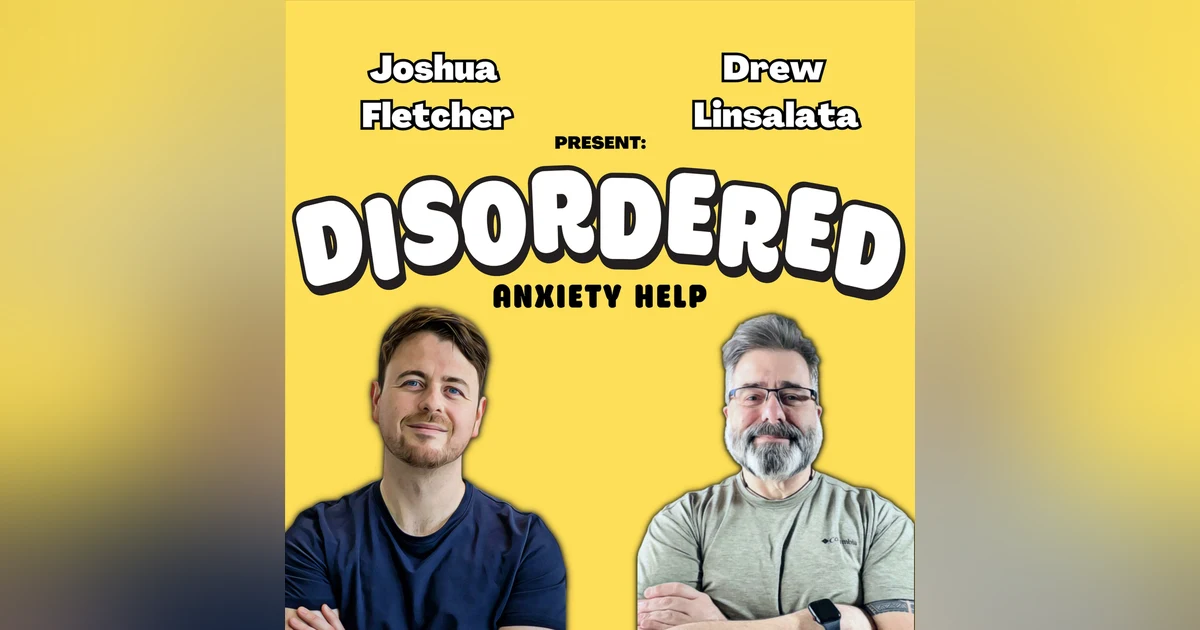
 This week on Disordered, Drew and Josh tackle the topic of health anxiety. Health anxiety is an obsession with one's physical or mental health that drives a continuous series of compulsions designed to soothe the fear, uncertainty, and worry about well-being and safety.
The episode covers intolerance of uncertainty, repetitive compulsive checking and seeking of reassurance, and how leaning into probability and reality rather than fear is the way out. As usual, the guys share some of their own personal struggles with health anxiety, along with a healthy serving of compassion, humor, and professional expertise.
-----
Want to ask us questions, share your wins, or get more information about Josh, Drew, and the Disordered podcast? Visit us on the web at https://disordered.fm
----
Disclaimer: Disordered is not therapy or a replacement for therapy. Listening to Disordered does not create a therapeutic relationship between you and the hosts of the podcast. Information here is provided for psychoeducational purposes. As always, when you have questions about your own well-being, please consult your mental health and/or medical care providers. If you are having a mental health crisis, always reach out immediately for in-person help.
---
Disordered Roundtable is coming! Think of it as "Disordered Live", a way for members of our audience to spend time with us in an intimate virtual setting (attendance is limited) to engage in real time sharing and discussion on specific anxiety disorder and recovery topics. To be notified when new Disordered Roundtable sessions are scheduled, sign up for our email list using the form on this page.
You know you've got health anxiety when a headache becomes a brain tune.
SPEAKER_01I find that health anxiety in the work that you and I do, like on social media in that community, is the most stubborn thing I come across on the daily. It's an instantaneous engagement with a health crisis that may or may not actually exist. Health anxiety is often an obsession. Yeah, but the odds aren't zero. And if the odds aren't zero, health anxiety is nope. Uh-uh. Gotta stay involved with this.
SPEAKER_03When the doctor says you're fine, and then you go home and you start the cycle again, so that I can feel like I have the illusion of 100% certainty that I am okay. Well, the doctor said you're okay.
SPEAKER_01Yeah, well, if you could believe that, you would have not gone to the 10th doctor. Welcome to Disordered. This is episode 17 entitled Health Anxiety. Short and sweet, it says it. I'm Drew Linsolata, co-host of Disordered. I am a graduate student in clinical mental health counseling and a therapist in training in the United States, New York specifically.
SPEAKER_03And I'm Joshua Fletcher, also known as Anxiety Josh, and I'm a psychotherapist who specializes in anxiety disorders based in the UK.
SPEAKER_01Hey Josh, welcome back.
SPEAKER_03Hi Drew, how are you doing? Um this is a topic that we often get asked about. Oh yeah. Daily. Yeah, daily. So we thought let's let's do an episode on it.
unknownWhy not?
SPEAKER_01Yeah, I think so. Let's talk about uh what is health anxiety? Where is it c is it an anxiety disorder?
SPEAKER_03Health anxiety is yeah, it's something I've experienced um a lot and and acutely. Uh it was enmeshed with my panic disorder and OCD many years ago. Um and will rear its head now and then um as part of um OCD that wants to come knocking. Yeah, um interestingly, it wasn't that long ago that health anxiety got moved to a branch of OCD as part of the the DSM 5, I think, isn't it? Or is the nice guidelines um because of the obsessive and compulsive nature of how um it presents, which we'll talk to you in a bit. Did you ever get health anxiety, Drew?
SPEAKER_01Um, I don't think I would have met the diagnostic criteria for health anxiety as it stands now, like officially. But um, you know, I so much of my fears were health related, but the difference was, and I think it's important to point this out, people who are interpret anxiety symptoms as dangers to their health, that's a different thing. That was my thing. But that's not really health anxiety. Uh, you know, you fear for your health when you're anxious because you think the symptoms of panic or a heart attack or a stroke, that isn't really what we're talking about today. I mean, it's part of it, but um Yeah.
SPEAKER_03Well, they overlap. Yeah, they do. They they they overlap, and sometimes you can misinterpret the symptoms of stress and anxiety as something catastrophic. Right, right. For me, um, you know you've got health anxiety when you know a headache becomes a brain tumor. You know that health anxiety when that muscle twitch or numbness is a neurological disorder where it's the first step part of your demise.
SPEAKER_02Yep.
SPEAKER_03You know, you know you've got health anxiety when that skipped beat, that ectopic beat that you've probably had all your life, suddenly it's become magnified and the first sign of your heart about to explode. Yeah. Um, you know you've got health anxiety when anything, anything new, anything alien, is then misinterpreted through the lens of threat, through the lens of anxiety, and it feels like the worst case scenario is there. Suddenly, probability goes out the window, and this probably, most likely, statistically overwhelmingly in your favor, benign symptom is now suddenly a thing that can, you know, the first sign of our demise.
SPEAKER_01Yeah, I would think you you know you have health anxiety when you treat every health concern like it's a thing that's happening right now that you can somehow fix or prevent or or treat. Uh if I people with health anxiety, I find will immediately go from I'm worried that I have this problem, even though I have no evidence of that, or I have a you know, a particular issue in my body that I'm going to interpret as this horrible health catastrophe. And now I'm going to actually interact with that to treat it as if I do have that, or I can prevent it somehow by Googling and asking doctors and getting tests. So it's an instantaneous engagement with a health crisis that may or may not actually exist. That's a really good indicator that you got health anxiety.
SPEAKER_03Yeah, definitely. And I some I mean someone who struggled with it really badly in the past. Um, and this is why it's a branch of OCD and because of the obsessive and compulsive nature of the condition. Yeah. Health anxiety is often an obsession. So you could be out at a meal with your family and everyone's talking, but your brain's still ruminating and dwelling on the fact that that cough could be something serious. You know, maybe you felt a bit dizzy before, you know, and a bit sensitive to light. So you think, oh, I'm now obsessing about that as a symptom. Yeah. You mentioned probability before. That's a big thing. Yeah. Yeah, yeah. Health anxiety and and mental health anxiety is involved in that too. So people would what you know, it's always nine times out of ten people with health anxiety. It's cancer, it's cancer, it's something incurable. Um, despite actually, you know, statistically, now more people kind of beat cancer than they than they don't, but that doesn't matter with health anxiety because all you hear is I'm I'm degrading, I'm you know I'm going directly towards the grave at a very quickly, quick pace. Um, and no, actually not. You know, that's um usually not the case at all.
SPEAKER_01I think But it doesn't matter though. It's not when you say it's not the case at all, when you say that's the obsession, the health anxiety will answer, yeah, but yeah, but it's always yeah, but like okay, well, yeah, cancer treatment is getting better and and statistics are on our side in many instances, but the odds aren't zero. And if the odds aren't zero or a hundred percent that you're okay, health anxieties, nope, uh-uh, gotta stay involved with this till we get to a hundred percent certainty.
SPEAKER_03Yeah, and naturally, as with humans, you want a hundred percent well, you want assurances that you're okay, so that's why we go to the doctor, right? But lots of people with health anxiety will go to the doctor, and you know it's become health anxiety and obsessive and compulsive when the doctor says you're fine, and then you go home and you start the cycle again of but what if I'm not fine? What if the doctor missed something? Right, what if that symptom because doctors do miss stuff? Oh, but maybe I should keep an eye on myself, maybe I should troll forums, maybe I should go on WebMD, maybe I should find the person online with the exact same presentation as me, down to age, hair colour, preferences in pizza, yeah, so that I can feel like I have the illusion of a hundred percent certainty that I am okay, yeah, even though the overwhelming probability is in my favor. I know, I've done it, I've had it. Uh, I used to compulsively and obsessively um weigh myself because I thought I was losing weight and stuff like that. And the thing is with health anxiety, like with any theme of kind of OCD or any obsessional anxiety, is that it thrives on compulsions. Yeah. Now, Drew, let's remind our listeners what is a compulsion?
SPEAKER_01Well, the compulsion is, you know, you can think of it as a ritual. In many cases, it's a ritualized behavior, but it's the thing that's designed to decrease your level of distress in the moment. So I feel a very high level of distress because I'm concerned about this health-related issue that I'm obsessed with. And if I Google today or I ask someone, if I ask my partner, do I look pale? And your partner says, No, that's a compulsion because you do it again and again and again, and it makes you feel better for a little bit until the cycle kicks in again. The compulsion is designed to, as a relief, it's a release valve. It's like a pressure valve that makes you feel a little better for a short amount of time.
SPEAKER_02Yep.
SPEAKER_01Yeah, they don't last long.
SPEAKER_03Yeah, they don't last. Absolutely. Um, lots of comp most common compulsions of health anxiety is checking, body scanning. And I don't mean the body scanning in the sense of, you know, this is a mindful body scan. No, welcome to my YouTube channel. Right. No, it's uh it's a body scan as in is there a danger there, is there a danger there, is there a danger there, is there a danger there? Yep. Um, yeah, checking people who worry about kind of skin cancer and stuff, you know, they're checking compulsively, drawing lines around freckles and skin marks and tags just to see if they kind of grow and stuff, but that compulsion, you know, it's okay to check and stuff now and then for assurances, but when people are stuck in the cycle of compulsive reassurance, particularly with health anxiety, um, this is what keeps that threat response on. Yeah, and who's the leader of the threat response, Drew? Amygdala. Exactly. Um, and that's what see we're getting we're getting really good at this now.
SPEAKER_01This is this is professional high-end professional podcasting, yeah, yeah.
SPEAKER_03And um and that's what it is, it's the obsessive compulsions. The the the key here, and what clicked for me for health anxiety, is I will look at this situation when my threat response has calmed. Yeah, yeah, because I will see it with more clarity, I will see it with the probability that my rational brain would see it as. However, and this is really important if you struggle with health anxiety, if you keep compulsing to chase short-term relief, you will keep that threat response on, and therefore you will not see the situation for the clarity that it should be, yeah, because the compulsions from chasing short-term relief keeps the threat response on, and so therefore, you're never taking off the lenses of threat, and that's why people can be stuck in with health anxiety for a long time. Yeah, but if you find that if you leave it alone, let the threat response be there without compulsing, without seeking reassurance, without ringing the doctor for the 30th time that week, without going back through your saved bookmarks in Google because those articles once helped you feel safe. Yep, you will start to calm it down and see it with clarity. I look, yeah, I look back at my old themes now, my old health anxiety themes, and I'm like, it doesn't bother me anymore. But these were stuff, this was stuff that kept me up for months.
SPEAKER_01But you know, only that experience of like, well, let me wait until I'm in a little bit less of an urgent state or a frantic state. That's really hard to do because that frantic state is screaming, you fix this, take action right now. This is really important. But that's the only way that you learn to like your sort of risk management math, your life math goes back into a little bit more of a normal place where we all are. I don't know that I don't have cancer right now. I don't know that. I'm sure enough, but I actually don't know. And if I had health anxiety, that statement of reality that says I don't know for sure that I don't have cancer would drive me. It's always interesting to see too that the compulsion isn't necessarily always um, let me make sure I'm safe. Sometimes the compulsion goes the other way. Let me find all the examples of medical gaslighting and when the doctors were wrong. And it's interesting because sometimes that obsession wants to justify itself. Like, look, look at all these news stories about when doctors missed the diagnosis and the poor person passed away. I see that, you know, maybe not as much as the safety-seeking compulsion, but the let me prove that my fear is justified compulsion is really powerful too.
SPEAKER_03Absolutely. And it's the same with with mental health anxiety as well. A lot of the at the at the core of many anxiety disorders, the the core fear is what if I lose control, what if I go crazy, what if I can't handle it? Um health anxiety and mental health anxiety. So this is like what if I develop a condition or a brain condition that affects how I think. Yeah. Maybe, you know, maybe like paranoid, you know, severe, untreatable, paranoid schizophrenia or something like that. Untreated, not untreatable, but untreated paranoid schizophrenia. Uh uh, or or what if I start hearing voices that scare me and stuff like that? What if I get I don't like to equate the word crazy with these people because they're not, you know, I know many work with many people and friends and stuff, but to someone who is has mental health anxiety, they would perceive that as a step towards them losing control. When actually, no, that's not true. Yeah, and that could become an obsession as well, and and we obsess because we just need to know.
SPEAKER_01Yeah, and and that I find that health anxiety in the work that you and I do, like on social media in that community, is the most stubborn thing I come across on the daily, because it is somewhat rooted in the fact that yeah, so human beings develop health problems. There are diseases, there are injuries, the people die. That's true. And I find that it's so stubborn because no matter what you do, and this is what kind of puts it in that OCD world, that health anxiety will always want to argue. So even when people with health anxiety will come to someone like me or you online and ask that question and get a little bit of feedback on it, and 35 to 40 percent of the time will immediately respond in the comment section, but I can't take that chance. But what happens when it is, but what about when but you know, but I have kids at home, I can't take that risk that I'm sick and I don't know it. So it will constantly you'll seek help with it, and then the health anxiety itself will negate the help almost right away. Boom. But what about, but what about but what about this? But you miss that.
SPEAKER_03So what about what about sunshine?
SPEAKER_01Yeah. What about rain? Sorry. It's okay. It could be particularly hideous insidious, I think, for people because they don't want to do that. They don't want they're it's ruining their lives in many instances, but they don't want to be that way, but they feel stuck like they can't get out of the cycle.
SPEAKER_03Well, again, reference Sally, Winston, Mikey, Steve, and stuff. A sentence that stuck with me is that anxiety, the threat response, hates any threat to hypervigilance. Yes. So actually, health anxiety is a state of hypervigilance, and so yes, someone can come along and give you some temporary relief, but that's a threat to hypervigilance. Yeah, you know. Um, and so it's got to the point when with my health anxiety, I just say to people like to my partner and friends, don't give me reassurance. I have to, I am practicing the willful tolerance of uncertainty. Yeah, because it's back, because we love this, and we're obsessed with it. Because, yes, the willful tolerance of uncertainty is that, but also for me, there's a slightly different approach with health anxiety, is that I'm leaning into the overwhelming probability here.
SPEAKER_01You have to. The only thing you can do, but even though the fear is telling you not to do that, that's too much of a risk.
SPEAKER_03It's too much of a risk, but also the fear is driven by lots of core fears too. If you really dig down for a lot of people with health anxiety, what they actually fear is how they cope in that situation, and I found this is really common. So if you really dig deep with some people, it's like, yeah, but I I can't imagine being in the hospital in the CT scanner and having this Medicaid. I can't imagine I wouldn't cope with that.
SPEAKER_02Yeah, yeah.
SPEAKER_03Yeah, it's like, how do you know? And actually, humans have a remarkable ability to habituate.
SPEAKER_01I I use the uh the example all the time. In that situation, prisoners of war will will leave that ordeal and say, it kind of became my normal. People who are incarcerated adapt to that. So, like the unthinkable things, you're right, human beings are incredibly resilient and adaptable, but that core belief of I can't cope sometimes is greater than the core, than the fear of it will kill me. It's not so much that it'll kill me, it'll be that I have to go through medical tests and I'm gonna be scared and I'll be uncertain, and I can't handle that.
SPEAKER_03Yeah, yeah. I remember I remember working with someone a while about years ago, and they were really petrified of having this surgery. Um, and it turns out the surgery didn't go as well as they'd liked. Yeah, they had to go back to surgery too a couple times, but they were surprised by the fact that they could tolerate the sedation, they could tolerate the surgery, and by the time they did, and and it's amazing because they spent a whole year counting down, ruminating, and suffering a lot in the rumination and the obsessions and the compulsions. But actually, when it came down to the surgery, it wasn't so bad, right? Um it wasn't so bad. Also, interestingly, and I'll just get the get the research up on this. Um anticipatory anxiety actually originates from a different part of the brain than situational anxiety, which should explain why you hate queuing for the roller coaster but love being on it. Oh, I find that fascinating.
SPEAKER_01Yeah, that's so interesting. That's functional MRI studies, probably, different part of your brain.
SPEAKER_03Yeah, we'll get some nerd on to tell us something about that. I can't wait for that. Super interesting.
SPEAKER_01Yeah, we have um so if people are invariably it's gonna come down to okay, but what do I do about this? So, should we go to our question? We like to answer questions on the podcast. You can go to disordered.fm and send us an email or a voicemail. We have a voicemail today, we're gonna play that. Often listening to the voicemails. I know they're so exciting when we get voicemail. We do listen to them, by the way. We hear them, so and we see your messages. So uh, should we play our question? Because it leads into like, what would I do about this? Let's do it. Go for it. All right, here we go.
SPEAKER_00So um I'm a parent of a teenager with health anxiety, um, and she is experiencing some very real physical symptoms such as headaches and dizziness, which obviously she feels are related to a very serious illness. Um, I guess my question is how do I as a parent help her manage her anxiety and sort of de-escalate those fears whilst at the same time recognising that people with health anxiety still do get ill? Um, and if your child had a persistent headache for three months, you would want um healthcare professionals to investigate it. So it's it's difficult. I'm sort of treading a middle line at the moment, um, but not not really sure how to manage it. And so any advice would be very welcomed. Thank you.
SPEAKER_01That's a great question.
SPEAKER_03That's a good question. Uh I can hear anxiety from both is my understanding that the worry is about the daughter's health.
SPEAKER_01Yeah, in this situation, it's her daughter that's struggling with the health anxiety, but it's applicable whether it would be her or her daughter. But I do, I mean, as a parent, I get that. That would be how do I handle this with my kids?
SPEAKER_03So it sounds like both people both of them are struggling with health anxiety.
SPEAKER_01Yeah, and I think one of the interesting parts of that question were like her daughter is legitimately having these chronic headaches for quite a long period of time, which is is it a degree of uncertainty and unknown about her health? So it is based in some reality for sure.
SPEAKER_03It is, and this is the difference. So, first of all, thank you for sharing that and coming on to onto the podcast to share that uh voice note. Um, I can relate to it. I had a headache for about four or five months. Um because, like any simple common symptom of anxiety, um, they're self-perpetuating. So it's a bit like you know, if I have a headache and I worry about a headache, I'm gonna then that's gonna cause me stress, my posture is gonna change, the muscles on the back and in the back of my neck and head are gonna constrict, as well as my shoulder, uh, shoulder blades, my chest, and all these muscles are gonna be so sore. Uh yeah, and I had a headache, I had this tight band feeling around my head, honestly, for about four months. Um, thought it must be something horrendous because who has a headache for four months? But if it's in, you know, lots of anxious headaches actually drive off tension. Sure. Yeah, um, and you can have tangent headaches for a long time. I'm not saying this is what your daughter has, but I'm saying it's very common, yeah, particularly in anxious people with health anxiety and and panic and people who fixate on how they feel all day. Same with heart palpitations. If you worry about heart palpitations, guess what? That was me. You're gonna notice, you know, yeah, exactly. That was me. Oh no, and you're scanning for heart palpitations all day. Yeah, yeah, guess what? Yeah, you know. I had the same. If you're what if you're scared about your digestion messing up, and you know, you know, if what if I have irregular stools and have frequent urination, yeah, it's gonna happen. Yeah, you know, I'm worried I might frequently urinate. Well, you're gonna frequently urinate because you're aware, loads of them. I'm worried about chest pain, still headaches is one of them. Obviously, seek assurances that it's okay, and if your daughter's at the tests and stuff, if it's okay to lean into the 99% to go with the health professionals and say, actually, well, my daughter is anxious, this is a very common symptom. We're now going to practice the over tolerance of uncertainty. Yeah, yeah, it's also as we get calmer, you might notice that the headaches do too. Yeah. Not that we should be compulsively checking to see if the if the headaches have gone.
SPEAKER_01Yeah, and I think in that situation, it's um with healthing. Anxiety is tricky sometimes, especially when, oh, there is an actual symptom occurring in my body. There is. And I think in this one, you have to reconnect to like, okay, it's okay to be asking doctors to ex to look at these recurring headaches. There's nothing wrong with that. That's not a crime. It's not you doing anything wrong. But if this test comes back with nothing, and this one comes back with nothing, and the sometimes you have to fall back on, like Josh said before, the probability, which is in this moment, if I can return to this moment, I have a headache, I'm uncomfortable, but but I can't find no one outside of me can find a medical emergency right now. And we're looking and looking, we can't find it. So the best I can do in this moment, if I go back to the sort of mindful momentary living thing, is I can I can be uncomfortable, but I can try to disengage from my emergency mode, my urgency, the frantic need to try to figure this out. And what if I just let it be for the next hour and see how that goes? That's a reasonable way to try to approach this an hour at a time when you're dealing with health anxiety.
SPEAKER_03Yeah, for me, it was it was the practicing the not the non-engagement, but also kind of assuring myself that the obvious answer here is pretty much in front of me. Yeah. If I'm anxious 12 hours a day, and anxiety has profound physical symptoms, I'm gonna just apportion this to anxiety for the week. Yep, and see where we can see where we're and see where I'm at. This is this is obviously an anxious headache, you know, and again, anxiety symptoms are perpetuating. Uh this again, disclaimer, is after you've you've you've had things done, uh and stuff like that. Because I did I did it with my heart, same thing, I had heart palpitations. I went and had an ECG and they're like, Yeah, you got ectopic beats, but you know, you you're anxious, that's what your heart does. You're alright, your heart's healthy. Okay, so next time I have the the you know, I have two choices then. I could go home and go, Yeah, but what if they miss something? What if there's a a new fatal heart defect that is only in me, you know, uh and stuff, and I could keep ruminating, scanning, googling, trying to find the exact carbon replica of me online to tell me I'm okay and safe. Or I can be like they've heart experts have literally just said this is it. My doubt response wants me to search for the 0.001% extra reassurance. I'm just gonna apportion this to anxiety now and carry on.
SPEAKER_01Yeah, excuse me, let me translate not equals zero for those of us in the United States. So just not dot not not zero point zero zero. I had to translate for a second.
SPEAKER_03I can't wait to get an golden eagle soundbite and just play it.
SPEAKER_01We are transatlantic here, so we have to make sure that we do that. But I I think the other thing here is in that moment where you you decided like, well, I'm gonna have to, I'm gonna have to put my faith into these four cardiologists that have told me that my my heart is fine. And in this situation, you know, we've had 16 doctors check out these headaches and can't find anything. That will feel so wrong to do in that moment. It's not easy to do. And you your brain will not be convinced that the doctors are right. They say it still won't be. So you're literally denying that screaming from your health anxiety. No, keep checking, they're wrong. Something could be wrong. This is you can't just let this be for an hour. You gotta keep working on it. So I think it will feel really wrong, but it is the outcome of that experience, like, oh, look, I'm still here in an hour. I'm still here next week, I'm still here that you know. All right, and you start to see different possibilities. Only those experiences, I think, where you stop the the the fighting and you stop the digging and you stop the I must fix this. That's the only thing that ultimately does convince your brain that, like, oh, all right, I'm probably overestimating the risk here. Uh-huh. There's no other way to do it. You know words will will convince it. Well, the doctor said you're okay. Yeah, well, if you could believe that, you would have not gone to the 10th doctor. So we get that. You're gonna have to roll the dice. In your head, you're rolling the dice, taking a huge risk. Only taking the huge risk teaches you that it wasn't as big a risk as you thought.
SPEAKER_03Yeah, and again, giving allowing that time, yeah. When you leave it without compulsing, without trying to immediately intervene, the threat response then thinks it isn't being helpful, which is what we want. Yeah, and then you'll start to see it with clarity. Sorry. You know, and most people with health anxiety would have obsessed about something previously that they no longer obsess about. And if this is you, I invite you to think about this. Like actually, I used to Google for months and months about this certain symptom, but I don't do that anymore. Yeah, because the threat response has moved on to another symptom. Now I invite you to think about that symptom that you used to Google about. How do you feel about it when you think about it now? No, probably nothing because your threat response isn't activated. Yeah. So you're not gonna follow it up with a lot more compulsions and reassurance seeking. Yeah, that threat response, that feeling of urgency will calm down when you leave it alone. And it is okay to form a belief and start to strengthen a belief that okay, this is okay. It's just a weird thing my body's doing. Yeah, you know, it doesn't mean it's catastrophic.
SPEAKER_01But what I find is I'm sorry, that's interesting about that is over time, like for instance, the the fear of a heart attack, which was one of my things, um, you know, more in the heat of the moment, but I now I'm in a situation where I do understand that humans do have heart attacks. I get that. Like I I recognize that that is a fact of life. People sometimes die of a heart attack, but I don't automatically treat it like I'm having one now. That's the difference. It's not like, oh, somehow your brain will realize that you're perfectly safe. No, your brain will understand that, like, well, I I can never be perfectly safe, but I can be safe enough right now. And that's what you're aiming for with health anxiety. Yeah.
SPEAKER_03And and to address the question the parent side from that question as well, is that what you're juggling there is is quite a difficult kind of triangle of emotions, isn't it? You've got your daughter's doubts, you've got your own doubts, and then you've got the kind of responsibility and guilt that comes with the parent. Yeah. But it if the stakes here are so high, is it okay to leave this alone? What if you know, what if on the very small chance that there is something wrong with my daughter and and and it was I wasn't there to do it. Well, first of all, if you're thinking that, you know, just scrap that, you obviously care a lot and you're doing the most you can. Right. But also consider that this could, you know, it sounds a lot like health anxiety, that does thrive off attention, compulsions, and immediate kind of intervention with your behaviour. And so therefore, it's okay to try the other as well without feeling like you're a bad parent, all this and that. Sounds like you've done your due diligence and got you know got the right people involved. Um, it's always okay to ask for a second opinion and stuff if you have got that doubt to seek assurance. But if you're onto the you know, specialist number 15 and they're all saying the same thing, yeah. It's then uh walked into compulsive reassurance. Drew, what would you say the difference is between assurance and compulsive reassurance?
SPEAKER_01Well, uh assurance is useful, like all human beings seek assurance and then we use it, we incorporate it. We're able to take the assurance and use it to change our our behavior, or we it changes our the lens we're looking through. Compulsive reassurance seeking uh doesn't make any changes, it only provides temporary relief, but then that you'll ask for it again in in an hour or a day or a week. So that that's the tough part. I think in this situation, as a parent, I would say the fact that this person is even asking the question tells me that you're you're doing the things already. You're doing all the mom things, like you've gotten checked out, and you're starting to have that doubt of like, well, we can't find anything wrong here. So, you know, what do I do with the anxiety part of that? I think it indicates like you're really you're taking all the right steps, probably. If I had to tell one of my daughters what to do in the situation, I would probably address the I know that this feels really urgent right now, but I'm with you and I'm also have eyes on it. And we've seen these three doctors, and it seems like you're okay right now. So let's see if we can work together on just sort of being afraid more productively for now. I know you can handle that, and let's see what happens tomorrow. Let's revisit this tomorrow. Let's try and be as normal as we can today while you have a headache. I'm right with you here, and you know, let's see how we can build those sort of muscles, those navigation muscles together. That's what I would probably say. Take the urgency out of it. I like how she said the word de-escalate. That's how you de-escalate. Let's stop treating it like it's urgent today. How about we try that?
SPEAKER_03Yeah, I like that. And also framing what the aim is here. You're on a hamster wheel, you're in a cycle, you're on a hamster wheel, and it's getting faster and faster. Yeah. And that's what's making you feel doubt and making you feel scared is that the intensity of the hamster wheel. What you've got to learn to do now is the brake cycle and slow down the hamster wheel. And looking at what your our own behaviors are doing that's maintaining the intensity and the speed. Oh, I'm really milking this analogy here. Yeah, but that's okay though.
SPEAKER_01Yeah, and I would say, you know, like, yeah, we're gonna put the brakes on the hamster wheel, which is really hard because it feels like the exact wrong thing to do, but it's actually the right thing to do.
SPEAKER_03So yeah, yeah, but it's my daughter, but this is my love, but it's me, but I'm a mum, but I'm someone who's responsible. It's it's reckless and irresponsible for me not to give this all of my attention because the stakes and the catastrophe would be so monumental. Yep. Actually, no, no, yeah, that's true.
SPEAKER_01And in this situation, there's a person, there's a parent helping the the their child with with a health situation, but then it's the person themselves. Sometimes the parent is the one with the health anxiety, and that is one of the most common arguments I hear in favor of the fear. But you don't understand. I have kids at home, so I hear what you're saying, Drew. I hear what you're saying, Josh, but I can't take that kind of risk. And so sometimes I'll always say, like, okay, well, you you have a right to choose that. If you feel like that makes you a better parent, then you can do that. But it's really hard. No, but in a way, but I yeah, I I guess it does sound a little bit smarter, but you can do it that way. Well, no, certainly not, but like, but it's hard to ask for, but what do I do about this? And then immediately let the the OCD part of it say, Okay, thanks for that advice. Let me tell you why I can't take it. Okay, I will respect that.
SPEAKER_03And I can and I can relate to that so much. It feels real. This is the thing, and this is with all OCD anxiety disorder stuff, it feels real. Yeah, you know, uh it's and this is really important. Just because it feels real doesn't mean it is, and actually overwhelmingly probably isn't. You know, can I give you a hundred percent reassurance that it's okay, it's just anxiety? No. Can I invite you to lean into the overwhelming probability that it's probably alright? Yes, I can. And if you are someone who has developed something, you know, and you are a bit poorly at the moment and you have developed something that you're going through, does it mean that you won't be able to cope and you can't tolerate that and all that? Yes, you can. Does it mean that the end of it is gonna be awful? No, you know? Can I a hundred percent reassure you that the end of it you know it isn't gonna do that? No, I can't. But you probability is pretty much on your side all the time, and it's okay to lean into that.
SPEAKER_02Yeah.
SPEAKER_03I talk with someone as someone who's lost people, and I I have the saying I have people like, you know, yeah, but Josh, you don't know it's so dangerous. I was like, I do know what it's like, you know, and I've said to people here, you know, I had to look after my brother who passed away, who was he was a kid, you know, and and he passed away from something incredibly rare. And my father passed away from something incredibly rare when we were young. So, what do you think my OCD and anxiety uses when it wants me to be out? Well, it can happen, and not only can it happen, it can happen in your sphere. Your very genetics has done it. So don't think that you're safe from it. Uh but I'm like, no, it's okay, but I still have the overwhelming probability. It's okay to practice my willful tolerance because it's no like waking up and compulsively jumping on that hamster wheel and perpetuating because it doesn't feel very nice. It's okay to leave it alone.
SPEAKER_01Yeah. I think it's uh you know, the other only other thing that I would add to that for sure is the the recognition that sometimes to me health anxiety is also the angriest anxiety. I don't mean people that have it are angry, but the disorder itself can be can be really angry because I've also often been and and and you said before, like you had to tell the people in your life, please don't give me reassurance, don't and don't indulge me when I get into this. Just leave me be and let me work on work through it. Often when I'm asked about health anxiety, and the best I can do for you is to give you a confident look in your eyes and a shrug of my shoulders. Like you're I know I'm I'm confident in your safety, I'm confident in the odds for you. So I'm gonna try and show that to you. Health anxiety gets very angry at that.
SPEAKER_03And you need and go talk about getting the credit. Yeah, you need to be the one. Yep, yep. So when when I don't engage with you, it's got to be you coming to that conclusion yourself through your lack of safety behavior or compulsive behaviors.
SPEAKER_01But notice when the anxiety will start kicking and screaming, get really angry. This is a medical thing, this is real. Hearts do have heart attacks, and people do get cancer. You're gaslighting me, you're dismissing me, you're not supporting me. It it'll get it gets really, really angry sometimes.
SPEAKER_03That's a good that's a good one. Yeah, it will try and use that. Oh, yeah. And and and you're scary. Uh Drew, hit the music. It's time for a game show.
SPEAKER_01It's time for a game show. We haven't done a game show in a long time, so let's do one.
SPEAKER_03Let's do it. Let's hit that royalty-free music. We love royalty that we can't get sued for.
SPEAKER_01This is a banger, this one.
SPEAKER_03Uh, welcome to a round of but what about? Um, I'm gonna present a common symptom, and Drew is going to present the most catastrophic version of that symptom. Are you ready, Drew?
SPEAKER_01Let's do it.
SPEAKER_03Let's play the prize is a toaster. Okay. Yeah, it's a toaster. Um, yeah. It comes with a d CD inside. Oh no. Now I have to edit again. Well, I wasn't I wasn't criticizing it comes with a CD. Okay, fine. You know, I'm sure he's a great guy. Anyway, uh, here we go. Question number one. Hmm, I have a slight headache. What could that be?
SPEAKER_01Yeah, that's a brain tumor. It's like clearly a brain tumor.
SPEAKER_03Question number two. I haven't gone for a bowel movement in four days. Oh, that's stomach cancer. Question number three. I felt slightly dizzy and lopsided when walking to work. That's probably another brain tumor. Okay. Um Question number five. I woke up and could still hear the voices from my dreams.
SPEAKER_01Oh, that's clearly a psychosis of some kind. That's psychotic break.
SPEAKER_03I'm in just psychotic break, yeah. Um I can feel my heart number six. I can feel my heart pumping in my throat.
SPEAKER_01I'm sorry, that's an anger.
SPEAKER_03Number seven, this is good, he's doing well, he's doing well, he's on his on to the toast that he's good. Uh question number eight. Uh and if you get this right, you get a copy of his latest book. Um again, just no comment. Just I have it, and I'm just gonna give it to Thank you.
SPEAKER_01Alright, I'm gonna get hard in this question then. Okay.
SPEAKER_03Uh there's pressure under my ribs. Oh that big.
SPEAKER_01Yeah, that's having a heart attack. No doubt.
SPEAKER_03Oh, interesting, because I had that one and I always thought uh I've got like some kind of growing tumor under the heart attack. I'm taking heart attack for 100.
SPEAKER_01Yeah, yeah. Oh, that's good, though, that's good, good.
SPEAKER_03Uh, I'm seeing weird things floating in my eyes.
SPEAKER_01That's probably me going blind, macular degeneration, all the eye things I can think of.
SPEAKER_03Um, I've noticed that after the gym my calf started twitching.
SPEAKER_01Oh, I probably have MS. That's multiple sclerosis for sure.
SPEAKER_03Yeah, yeah, MS, ALS, Gary's disease. I got it. Yeah, yeah, yeah. Yeah, that's cool. I've noticed white spots under my fingernails. Oh, that is most likely a cancer of some kind. It's always cancer. Yeah, there's some of that. Um my tongue!
SPEAKER_01It's completely white. Oh, geez, that's probably an infectious disease of some kind that we haven't discovered yet that's gonna kill me. Yeah, yeah. My eyes have started watering for no reason. Yeah, well, same thing. I I I probably have COVID-19 and I'm gonna die.
SPEAKER_03Oh, I've listened to the anxious truth.
SPEAKER_01And then the next we actually ran out of music.
SPEAKER_03That's fine. Okay, well done. You have won you have won um the toaster with them. I won the toaster and and also uh Charles' um latest book. And a um, yeah, and um, oh, and you've also won uh the book um available at all good online operators. Um it's really good. Um I've not read it.
SPEAKER_01Okay. I'm not paying for shipping, by the way. If you're sending that stuff from the UK, you gotta pay for the shipping.
SPEAKER_03Okay, no worries. Well done, Drew. Round of applause from my studio audience, please.
SPEAKER_01Thank you, everybody. Thank you, thank you. That's the studio audience. All right, well done. If you guys saw the video, I know we don't do video yet, but you would see what was going on here.
SPEAKER_03Anyway. Oh, we cannot end an episode without some did it anyway. So you're sending them in and disordered.fm. I've got one straight away here. I'm aware of the time. Um here we go. Here's my did it anyway. This was sent in a disordered.fm. I've had panic disorder and a rare neurological disorder called visual snow syndrome that affects my eyesight and turn me very housebound and always tired. I've struggled with fatigue with it all, but decided to go to the Himalayas and take on a seven-day trek in the mountains, reaching a height of 4,500 meters. I've had migraines and the shakes from anxiety, as I have health anxiety, and being out in the middle of nowhere is like a no. Anyway, I did it anyway. I climbed to the top and saw Anapona, the fishtail, and other beautiful mountains at sunset. I'll never forget my experience, and it's kept me going to just do stuff anyway. Wow. I hadn't read that beforehand, and that was just getting better and better.
SPEAKER_01Yeah, yeah. I was 14,000 feet up on a mountain. That's amazing.
SPEAKER_03That is incredible. I mean, crave critics there, like telling everyone else, why aren't you up the Himalayas? But that was a that's incredible, like well done, particularly with that as well. That's just brilliant. Well done. I can't I want to say your name, but I'm not because you didn't tell me to do it. Yeah, exactly. That is an epic did it anyway. Yeah, that's so good. And I have another one. Can I share? Yeah, yeah, bring it. Uh a quick one, just a nice one. I love these ones. Um went shopping for clothes for my son today without taking any calming medication. It was hard, but I did it, and I think we had a nice slash normal time together. Take that anxiety.
SPEAKER_01Yes, I love it. I love when they get all superhero y screw you anxiety.
SPEAKER_03I love that as well. I love it. Studio audience, what do you think? 100%. Everybody's in on that for sure. Super.
SPEAKER_01Yeah, studio audiences out in for it. Let me throw one out really quickly before we run out of time, which we've already done. But I think it illustrates the fact that there's the epic did it anyway, of climbing the freaking Himalayas. Like that's crazy good. What these count too. This person, I won't go through the whole thing because it's a bit of a long thing. This person has always wanted to get involved in their community and sort of give it back to the community and do good things in their community, but anxiety has been a problem. She says that she decided instead of just reading about the community garden on Facebook posts, she would get involved. And she just went to her first meeting, did her first shift of the community garden. She tried, I tried to find every reason to cancel. I finally got the courage to walk out that door. I went with anxiety in hand and mingled with complete strangers doing things that most definitely would raise my heart rate. Terrified, like shaking, and sweating, I did it anyway. I met some wonderful people, and by the time I left, I felt exhausted physically, but mentally, I was elated. That's a great story.
SPEAKER_03I love that. What nice self-compassion as well. Right. Um, that's really lovely. And yeah, plant a few radishes and some vegetables and plant. Oh, that's lovely. I love a community center. There's one near me, community guard. Oh, yeah, love that, and that is just as good. Yeah, I think this because it's it's the fear that we're facing. Yep. And and you've all done it brilliantly, whether it's buying clothes for your lad, yeah, you know, planting some veggies, literally climbing. Climbing minimal layers. Uh incredible. Or go or just, you know, doing something new. Well done. We know we love that stuff. Keep sending them in. Very good. Come find us on social media if you want. Um Anxiety Josh and Drew is the anxious truth. Yeah. And we'll catch you next time.
SPEAKER_01Very good, guys. See you later. Hey, it's Drew. Thanks for joining us for this episode of Disordered. Josh and I both hope that you're finding it helpful in some way. For more information about Josh or me or the Disordered Podcast, find us on the web at disordered.fm. That's disordered.fm. Hop on over and find links to our social media platforms, join our mailing list so we can let you know when new podcast episodes are available, and we'll send you easy ways to ask us questions and share your wins so we can answer questions on the air and share your successes with the community. And if you're listening to the podcast on Apple Podcasts or Spotify or any platform that lets you rate a review, do us a favor and leave us a five-star rating and maybe write a review if you're digging disordered. It really helps us out and we appreciate that. Thanks again for coming by, and we'll see you in the next episode.