
Intrusive Thoughts ... Just Thoughts? (Episode 11)


 Apple Podcasts
 Spotify
 YouTube
 Amazon Music
 iHeartRadio
 RSS Feed
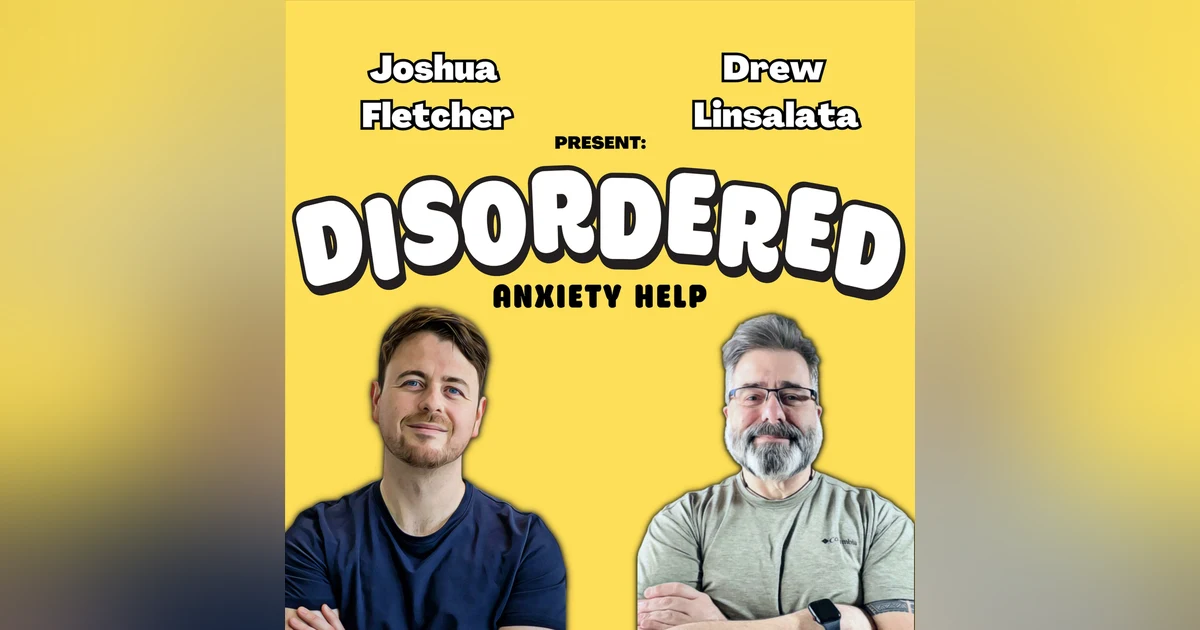
 This week on Disordered, Josh and Drew discuss scary, unwanted, recurring, intrusive thoughts that can frighten us and trigger high levels of anxiety and discomfort. The guys talk about the many different themes that intrusive thoughts cover including thoughts about harm, sexuality and sexual orientation, relationships, health, death, and existential issues. While intrusive thoughts are usually associated with OCD, they are generally present for almost anyone that struggles with any anxiety disorder.
This episode also examines the idea that "thoughts are just thoughts", which is true, but doesn't really accurately validate the intense anxiety and threat response that so many unwanted intrusive thoughts can trigger. Josh and Drew also discuss the idea that you cannot decide to not have thoughts, and that having disturbing or scary thoughts does not mean you are broken or a horrible person, even when the thoughts themselves are telling you that.
-----
Want to ask us questions, share your wins, or get more information about Josh, Drew, and the Disordered podcast?
Visit us on the web at https://disordered.fm
----
Disclaimer: Disordered is not therapy or a replacement for therapy. Listening to Disordered does not create a therapeutic relationship between you and the hosts of the podcast. Information here is provided for psychoeducational purposes. As always, when you have questions about your own well-being, please consult your mental health and/or medical care providers. If you are having a mental health crisis, always reach out immediately for in-person help.
---
Disordered Roundtable is coming! Think of it as "Disordered Live", a way for members of our audience to spend time with us in an intimate virtual setting (attendance is limited) to engage in real time sharing and discussion on specific anxiety disorder and recovery topics. To be notified when new Disordered Roundtable sessions are scheduled, sign up for our email list using the form on this page.
So the brain needs to flip through, you know, a bit like a picture book. Brain kind of does that with a spectrum of all the probabilities and the outcomes of a certain event.
SPEAKER_02Or we would be on the roofs of the buildings, and it'd be like, you could just jump right off there right now. You know that, right?
SPEAKER_01And I'm like, yeah, I know. It's really weird. These intrusive thoughts, as you know, come become really, really sticky.
SPEAKER_02Oh, yeah. Then then things went off the rails for me. I had intrusive thoughts. They were always about death and existential themes. I also had health-based intrusive thoughts. Those were the two main themes for me, and they would just repeat again and again and again.
SPEAKER_01It's almost cliche now, isn't it? Thoughts are just thoughts. Well, actually, some thoughts do stand out above others, but some thoughts just evoke an anxious response, a threat response. Welcome to Disordered. This episode is called Intrusive Thoughts, Just Thoughts. Um, we're going to be talking about some weird and funky thoughts today. Um, taboo thoughts. My name is Joshua Fletcher, also known as Anxiety Josh, and I'm a psychotherapist based in the UK.
SPEAKER_02I am Drew Linsolata. I am a therapist in training and a graduate student in the United States, uh, an author and a podcaster on the subject of anxiety and anxiety disorders. Welcome to episode 11. Let's do it. You ever had intrusive thoughts, Drew? Oh, I I had more intrusive thoughts than I could shake a stick at. And I you know what? I have them now. Only my very first intrusive thought that I ever really remember that I had. Go on. I was uh this was before I developed an anxiety disorder, but I was working, uh I I have a my undergraduate degree many years ago as an architecture, actually, and I was working in construction management for this very large company here at Long Island, and we were looking at the electrical substation that was in one of the big industrial buildings. It's huge voltages, like to kill you dead quick. And we were standing like six feet away from this open switch gear. It's open, the safeties are off. But that's okay. Like we're in a cage. Normally people aren't allowed there, but we're working on this project together, and I was six or seven feet away from them. I'm standing next to this guy I used to work with Dennis, who's the nicest guy, and you could hear the humming on the bus bars. There's so much current going through these things. And I'm I'm looking at him, and he turns around, looks at me, goes, I know what you're thinking. And I'm like, You do, don't you? And he's like, Yeah, you can just reach out and touch that thing right now, couldn't you? And I'm like, it's right there. I could just grab it. And uh I remember having that thought, and but of course, it was it was just a funny thing. We laughed about it. He's like, Yeah, I thought I think that too. Or we would be on the roofs of the buildings, and he'd be like, You could just jump right off there right now. You know that, right?
SPEAKER_01And I'm like, Yeah, I know, it's really weird. It's a common one that, isn't it? It's uh I think a lot of people I always describe intrusive thoughts as part of of the rationalization process. You need to the brain needs to flip through, you know, a bit like a picture book. Remember those flip books where you know how how how old movies are made and things like that? Um the brain kind of does that with a spectrum of all the probab probabilities and the outcomes of a certain event. And so it's very healthy to have a thought like, you know, what if I'm jump off this bridge, you know, what if I punch my boss and lose control, you know? Um, what if I pick up that dog feces and put it in my mouth? You know, what if I hurt that child? What if I do all these things? And and for a lot of everyone has these thoughts, but for people with anxiety, with sensitized nervous systems, and those with a disposition, uh predisposition to OCD, these intrusive thoughts, as you know, come become really, really sticky. Now, what you described there was, you know, I could I could touch touch this a thousand, a hundred thousand volt thing or whatever. Yeah, 13,000 volts, yeah. 13,000, yeah. You could have touched that and and fried yourself. Yep. Um, but were you still dwelling on that later on in the day? Probably not.
SPEAKER_02No, no, it was over in 45 seconds. We laughed, and that was the end. Have you ever had a sticky intrusive thought? Oh, yeah. Then then things went off the rails for me. And you know, we've talked about this, our experiences, and I developed an anxiety disorder that lasted for a very long time, and I had intrusive thoughts. They were they had generally had very specific themes, they were always about death and existential themes, um for the most part. And then I I also had health-based, I guess, uh intrusive thoughts. But uh, those were the two main themes for me, and they would just repeat again and again and again and again. It was it was no fun.
SPEAKER_01Yeah, like it it's it's interesting because I I'm I'm glad we're doing this episode, it's really important. Um I'm very passionate when we say you know, everyone does experience intrusive thoughts, yeah. Um, but for some people, the only difference is that their bodily reaction to thoughts, not personal reaction, it's not you choosing to react, to have that emotional reaction to it. But for some people, the threat response loves to kick off. Uh on one end, you've got someone who'll have an intrusive thought and a threat response will kick in, and then it may die down again and it's fine. And on the other end of the spectrum, you've got people with OCD. Um, I never say I'm over OCD because last time I kind of said that I had a theme six months later. But in general, I don't really struggle too much with OCD anymore. Um, but on one end of the of the spectrum, you know, you've got OCD where this thought activates the sympathetic nervous system and the threat response so fast and with such vigour that it it's nigh impossible to kind of dismiss this thought as something that that can you know to something to leave alone. Because whilst one person might have a thought about, you know, what if I push my child into a river, some people might be able to laugh at that. Whereas someone else, with their threat response kicking off, what if I push my child into a river? Oh my god, the stakes are so high in that. Oh my god, and now I feel a bit a little bit less in control because my threat response has gone off. But what if it does happen? Oh, now I need a hundred percent reassurance that it won't. Yeah, yeah. And that's when it can start becoming sticky.
SPEAKER_02Oh, yeah, it gets really sticky. Uh it's interesting because I used to have um, I would have, I mean, I it's it's super common, you know, we got to talk about this sort of stuff, but I would have suicidal ideation. I didn't want to. I had the fear that I might decide to hurt myself, even though I desperately didn't want to do that. And that thought got very sticky for me for a long time. And it was very triggering. The minute I would even begin to think about that, my body would go into overdrive, which made it feel like I was losing control, which made it feel more likely that that thought would actually somehow magically come true, which it never did, of course. But yeah, that's a that's a tough experience to live through for sure. That's a sticky one. I hear that quite a lot.
SPEAKER_01Very what what if what if I get, you know, what if I'm rapidly declining and I'm getting really depressed and then I lose control.
SPEAKER_02Yeah.
SPEAKER_01Um, a lot uh the core fear and a lot of intrusive thoughts are what if I lose control and can't or what if this gets to a point where I can't handle it? Yeah. Uh so I struggle with existential ones. Um I have um one of my main OCD themes was linked to health anxiety, but it's like, what if I am slowly degrading to the point where you know where I'm withering away. And and so that was that was actually a big sticky theme for me, uh, to the point where I was weighing myself around about 50-60 times a day compulsively, because that's part of the OCD. Yep. Um yeah, but then that there's other intrusive thoughts you can have as well. A common one I have in here, and I'm gonna address this very quickly. Um, intrusive thoughts always kind of thrive in the taboo in in stuff that you wouldn't dare bring up in a conversation. So you might have intrusive thoughts, sexual intrusive thoughts about your family. Um I certainly have sexual intrusive thoughts about your family, Drew. Um Wow, this got dark quick. Yeah, uh, you might have horrible uh thoughts about uh minors, you might uh have horrible thoughts about people that well, things that aren't human. Um and they're shocking in nature, um, and so for some people they stick. And I'll say this very early on because there's something I'm very passionate about. Intrusive thoughts thrive because they're the opposite of who you are, yeah. Uh, and this also applies to, and I always never forget these people. There's people out there who struggle with real event OCD. So they'd have they'd have done something in the past. They're like, yeah, but mine actually happened. It's like, yeah, and it's sticking around and thriving. This intrusive memory. Intrusive thoughts can be intrusive memories come hand in hand. And it's sticking around and thriving because it's the opposite of who you are. Yeah. You know, you know, do you you know, and and often people with real event, you know, they find it very difficult to forgive themselves, they're hounded by guilt and stuff. Um, and that's another thing intrusive thoughts can do as well. Not only does it give you anxiety and fear and it has all your attention, intrusive thoughts and OCD will weaponize guilt. Yeah, and shame. And shame, yeah. Yeah. To just just in an attempt to grab all your attention.
SPEAKER_02I I think, you know, and it those are universal experiences, I think, for all human beings. We've all done things in our past that we're not proud of, or that maybe we regret that we have done. And we all mem sometimes we remember those things. And yeah, I can feel really bad for a couple of minutes that like, oh, I really wish I hadn't done that. But then for some folks, it does, it just sticks and then it hangs around. So that's the difference between wow, I I did a really crappy thing once when I was 17, and I wish I hadn't done that, and I wish I could fix it for anybody that that I offended or whatever. But for people that get stuck with that, it's like it's happening again and again and again. I'm a terrible person now because of that thing that happened 10 years ago. So that's the difference, generally speaking. Yeah, yeah.
SPEAKER_01Can we introduce Craig the Critic?
SPEAKER_02We can introduce Craig the Critic. He's always hanging around. I hope I do this right. Ready? He's always hanging around. No, I hit the wrong button. I hit the I hit this button, right?
SPEAKER_01Still, but but amygdala is appropriate here.
SPEAKER_02Yeah, it certainly is, but it's Craig the Critic.
SPEAKER_01Craig the critic, and this is what Craig the Critic loves using intrusive thoughts because intrusive thoughts often attack your your your moralistic standpoint, your your principles, it will attack what you stand for, it will attack what you love the most. And Craig the Critic loves using intrusive thoughts, and if you don't understand thoughts for what they are, just thoughts a lot of the time, you know, but because certain certain thoughts have a very loud attention-seeking threat response going off because the social stakes are high, Craig the Critic will use this. You know, he'll what what would he say, Drew?
SPEAKER_02Oh, well, I think, you know, in that situation, it depends on what what the theme particularly is. But Craig the critic will often just say, Well, but for like with the real event people, you know, something you're guilty over. No, that did happen. It did happen. It's not just a thought, it did happen. Or even the fact that you're thinking that, even if it's not a real event, even just a thought that you have something taboo, like you were talking about, or forbidden. Just the fact that you're thinking that probably means that deep underneath you're a horrible person that really wants that. That's like one of his favorite things to say.
SPEAKER_01Oh, yeah. Yeah, tell you what, other else Craig likes critic likes to say is um people have sexual intrusive thoughts. Now, this is very important. Lots of people have sexual intrusive thoughts, um, and they're intrusive because you don't want them. Right. However, there is a mammalian part of your brain that goes along your side, your reptilian part of your brain. And if you think about kind of anything sexual for a while, regardless of what it, even if it's in its just basic form, you'll have something called a groinal response uh in both men and women or whatever gender you identify as, and you will have a groin response where you may become physically aroused by that. Does that mean that you are a horrible, weird, pervert person, freak, whatever? No. It's just that the brain, if you flash something in front of it for a long time, particularly it's sexual in nature, yeah, it will prepare just in case that that you know there's something, there's the old school mammalian part of our brain that's doing it. Yeah, that often gets conflated with our thinking brain, our rational brain, our super ego, whatever you want to call it. And Craig the Critic will use that as evidence. He'll say, see, look, you know, that that horrible thought you've had, you're actually kind of enjoying it there, aren't you? No, you can become aroused and not be enjoying something. It's the the groinal response is not, does not go hand in hand with enjoyment. And that's really important to know.
SPEAKER_02Yeah, and that's a tough one, I think, because the stigma that comes along with those sort of sexually taboo thoughts or forbidden thoughts that so many people struggle with. Uh, I remember posting about that probably two years ago on Instagram. And oh my goodness, the avalanche in the comment section was was difficult. Now, for me, it was fine. I'm the guy making the content, it doesn't bother me. For for the people who needed to see that, that was difficult because people rushed in immediately with instantaneous anybody who has any sexual thought about a child or an animal should be immediately castrated and stoned or put to death. Like it was nasty in the comment section. So and I think that inner voice, that critical voice, will latch on to that too, for sure.
SPEAKER_01And yet the people who struggle with these thoughts, well, they struggle because they don't want them, right? Exactly.
SPEAKER_02And you try to explain that somehow, yeah.
SPEAKER_01Yeah, uh, and you can't stop thoughts either. You like you can have any thought. Yeah, you know, like I say to Drew, like, don't think of a giraffe, and there he is. Yeah, you know, he's you know, he's got there with a necktie. Where does the necktie go on a giraffe? Does it go right at the top or at the bottom of the neck? I'm going bottom. You have to think of it top just weird. Yeah, but at the same time, if you were face to face with the giraffe and the necktie was down anyway, sure. Um, yeah, intrusive thoughts. What's some other common intrusive thoughts? There's lots of them are sexual, lots of them, you know, um to do with harm. Harm to others, harm to yourself, harm to society. And harm to self. A lot of postpartum mothers get um intrusive thoughts about harming their children.
SPEAKER_02Yeah, yeah, or even doubting the relationship between you and your child, or in that respect, not even in the postpartum sense, just in the relationship sense. There are a lot of intrusive thoughts that form around relationship and love and attachment. And like, what if I don't actually love my partner? What if I just think I do? Or what if they don't really love me and they're just pretending to? Like, and those get sticky really hard.
SPEAKER_01Yeah, and at the and at the extreme end, you get people with like relationship OCD. Yeah. Um, and then branches of that are stuff like um sexuality, OCD, gender, sexual orientation, gender OCD, yeah. And it's always it's almost never about kind of the your your kind of viewpoint uh where it stands with you morally, it's just wanting a hundred percent certainty.
SPEAKER_02Yeah.
SPEAKER_01Uh, and that's what intrusive thoughts do. It'll convince you that the only way out is to have 100% certainty on something. Yeah. Whereas we preach willful tolerance here, the willful tolerance of uncertainty. Oh, uh, and that's the best retort.
SPEAKER_02Yeah, and it probably leads us into the whole, like, you know, our clickbait title, intrusive thoughts, dot dot dot, just thoughts. Well, you know, we've talked now for 10, 15 minutes about how powerful and compelling they are and how you'll want to dig into them and try to prove them wrong. And you'll hear people like us say all the time, well, a thought is just a thought. But given how powerful it feels and how urgent it feels, is it really just a thought? How can that even be? How can I willfully tolerate something as horrible as that? Like these are the things that I think make it difficult for people to embrace that concept that a thought could be just a thought.
SPEAKER_01Yeah. And I think I think this is where we can kind of challenge those. We were talking before, Han, we can challenge like these they're almost it's almost cliche now, isn't it? Yeah. You know, thoughts are just thoughts. Well, actually, some thoughts do stand out above others. You get interesting thoughts, you get frightening thoughts, you get dull thoughts, you get bizarre thoughts. And yes, they all fall under the same umbrella, but some thoughts just evoke an anxious response, a threat response. Does that mean, Drew, that it's any more important than thinking about breakfast?
SPEAKER_02No, it doesn't. And I and I often use silly analogies, like there's no difference between you know, a thought about that and a thought about a peanut butter sandwich. I I use that one a lot, which seems dismissive, and a lot of people will be like, that I don't get that. That can't possibly be. How could it be the same? I would argue that they are, but I understand why people would say that no, they're not. That's not the same thing. How could you say it's not the same thing?
SPEAKER_01Yeah, well, because one does evoke an extremely strong response.
SPEAKER_02Right.
SPEAKER_01The thought itself is separate. So if we're taking a metacognitive point of view, yeah, thoughts can be categorized all as thoughts. Um, and some evoke different feelings into us. It's up to us, again, from a top-down metacognitive way, to decide whether or not a thought is important, not the anxious responses. Because you could have an intrusive sticky thought just coincidentally. I the amount of people with like I work with OCD who develop a new theme, they'll get just a random thought watching a movie. You know, what if I go insane? But actually, over the last few weeks, they've been stressed, they've had a load of things going on, they've been processing stuff, maybe they're grieving, whatever. And then just coincidentally, at that time, um, that intrusive thought, the threat response decided that that thought was the proverbial straw that broke camel's back, and therefore it starts a cycle of obsessive compulsive behaviours. Yeah. Um, usually find as well uh that is that people get intrusive thoughts around big media coverage uh events. Uh in the UK, there was some really tragic stories about kidnap, and I must have had hundreds of requests about um not only like kidnap OCD, but like just obsessive stuff about that, about the intrusive nature of of losing control, things like that. Yeah. Um, because it I do believe it they it goes hand in hand in with stress, your threat response, how your threat response responds to intrusive thoughts, because you'll have some days where you'll have loads of intrusive thoughts and they just bounce off you, who cares? Yeah, and some days they will, you know, the threat response will will bounce off. I was gonna say the word latch, but it's overly used by some unethical OCD practitioners out there. Yeah. So I'm not gonna use the word latch.
SPEAKER_02No, you're right, they'll hang around, you know, they'll just get sticky and sort of hang around, which is true. And I think that, but and it's interesting because the very same type of thought on one day that doesn't have much effect is it dismissed. Yeah, that thought's is just a thought. You can you can buy into that a thought as a thought on that day, but when there's a big response emotionally, physically to that thought, then you can you no longer you you abandon your belief in that. Oh, this can't just be a thought because I feel, I feel this response to this thought. And I think the other thing that makes it difficult for people to buy into the idea that a thought is just a thought is just the way we're socialized about thoughts and the messages we hear all the time about thoughts. They're windows into the soul, they represent your dreams, they represent who you really are, they're your inner, you know, child speaking to you sometimes, but not automatically always.
SPEAKER_01That's isn't um we'll have to we'll talk about that at some point on the pot on the podcast, you know, intuition versus yeah, you know, threat restaurants, when to tune in, when not to tune in.
SPEAKER_02Or a lot of sell a lot of help and even mental health advice gets focuses on changing your thoughts, you know, negative thoughts. It's it always comes back to those negative thoughts. And then if anyone's if everyone's important message also, like how can you say it's just a thought when so-and-so, I'm not gonna name names, tell me that I, you know, I have to start to choose my thoughts more carefully.
SPEAKER_01Yeah, the good vibes owl only morons, you know, like stuff like it's like no, actually, like all thoughts are welcome here. With the irony is that you're more likely to have yeah, nicer thoughts when you allow all the thoughts in. Yeah, yeah. Because if you st if you start banishing and repressing bad thoughts, they're just gonna come back scarier and stronger. Because you're teaching the amygdala. Here he is.
SPEAKER_02It's Craig the crit. That was I knew I was going for Craig that time. A five-star podcast is uh and uh with professionals. I really do have to label them.
SPEAKER_01I really uh the amygdala is always watching what you're doing in response to what it suggests is a threat. Um, if you react like, nah man, I'm cool. It's like, all right. But if you're like, oh my god, what if that is true? Yeah, you know, this is why people who they may get an intrusive thought. About um uh the plug sparking and they burn down the house. So you get people with obsessive, compulsive behaviors unplugging everything before they go to sleep, you know, making sure and checking plugs and stuff like that. Right. You know, uh you this is why you get people with intrusive thoughts about oh, what if I poison my a loved one or my baby? Well, I'll make sure that everything is super duper clean, uh including my hands to the point where they're blistered. Um, I remember I I had permission from a very old client actually, um, not their age, just it was a while ago we worked together. They were 134. Um, and they we we were doing like an exposure in a supermarket, um, not exposing our genitals or anything like that, just uh a night uh uh constant behavioral exposure. Yeah, that's that's terrible. And we went to um the bleach aisle because this person in particular struggles with intrusive thoughts around poisoning and bleach. And part of the exposure was to buy a bottle of bleach and keep it in the bag with the food. Not directly like content, but you know, it's in the same bag as as the food. Don't dip your rock in the bleach, but yeah. Yeah, and cook a meal for m for me and and them.
SPEAKER_02Yeah.
SPEAKER_01And we did, you know, and they're like, Yeah, but you're eating it, but what if the bleach, you know, contaminate? I was like, the bleach has got triple sealed, you know, it's not on the outside, it's fine. And even if it was, you know, we've made eggs or whatever, and it's not contaminated that. But they're like, you know, and and it felt like life and death because the threat response will make you feel life and feel like it's like life and death. Yeah. And that was a that was a form of exposure where you know they the client was like, Well, well, actually, I feel more confident to do that now, you know. But that's how convincing, how convincing can the threat response be, Drew?
SPEAKER_02Incredibly convincing. And that exercise that you take a client through is really an exercise in in letting reality reinforce the idea that that thought really is just a thought. Even though the response was so powerful and that person was so afraid and feeling it so strongly, that experience says, Oh, look, I felt it really strongly, but it still was in the end just a thought. My reaction to it and the way I felt because of that thought wasn't an indicator of it being anything more than it is, which I think is hard for people to get. And that's why those experiential things are so important. You never really get your brain around. Nobody get nobody wakes up this morning, and nobody woke up this morning in the OCD community and said, Oh, hey, my thoughts are just thoughts, cool, all good. And then they're all happy. It doesn't happen that way. You might not you might get it, but until you have those experiences, it's really hard to actually live that way.
unknownYeah.
SPEAKER_01Remember that the threat response, its whole purpose is to make you doubt because when you doubt, you give it focus. You'll probably hear that phrase thousands of times in this podcast. You know, uh oh, it's you know, the whole point of the anxious response, the threat response is to make you doubt because when you doubt, you give it focus. Uh, and it will use anything to give you that doubt. Uh, I remember uh when reading Overcoming Unwanted Intrusive Thoughts by Marty Seif and Sally Winston. We highly recommend that's a disordered recommendation. Uh they talk about this concept of high stakes. You know, you never really get um intrusive thoughts about, you know, I never get intrusive thoughts about Halle Berry turning up to my house, you know, with a million dollars to give me. No, that that never happens. Um but because there's no real high stakes in that. But I do get high stakes in sense that, oh my god, you know, what if I do want to harm my niece? Or what if I do uh another common one, just turn my car into the central embankment of the highway and and cause stuff, you know? Yeah. Um, what if I do because the stakes are high, and this is why intrusive thoughts uh can become sticky because the stakes are high. Are the stakes so high? Is it worth me turning my attention away? Because if I turn my attention away this once from this intrusive thought and it becomes true, and I've missed something, those stakes are way too high, and I've got to live for the consequences of that. When obviously it's nonsense, it's just a it's just a th a message from your threat response, but it's very important that it was like it'll always remember is high stakes that keeps your attention, it uses that against you.
SPEAKER_02Yeah, and I think it's interesting because everybody would probably agree that the thought that, oh, I could just turn my car, Bill Burr, the comedian, does a funny bit about that. Like, you know, you're driving down the road, your hands at 12 o'clock, nothing. Just gotta just turn your hand to like one o'clock on the steering wheel and you're on the news. You know, you plow through the the sidewalk full of people with your car intentionally, nobody knows why he did it. And it's a good point. But I think the difference becomes everyone knows that's high stakes. Yes, if somebody were to if you decided to just steer your car into a supermarket full of people, it would be a terrible thing. That is high stakes, we all agree. I don't know why I'm laughing. No, but you know why? I'll tell you why. I'm about to tell you why. The difference is if you are if that's not an intrusive, sticky, unwanted thought that hangs around and elicits that big response, it's absurdity for the person who is suffering as because that's an intrusive thought, it's danger. So we all have the same thought, but for some of us it's absurdity and humor, and we giggle at it and and comedians make fun of it. Whereas for people who are dealing with that sticky mind kind of thing, it becomes danger. Absurdity becomes danger. So uh it's a it's the same exact thought, right? It's interpreted two different ways based on the state of your mind at the time, I guess.
SPEAKER_01Yeah, absolutely. And and it's not we're uh again, we're really compassionate here. We're not Craig the critic, we don't like him. But not your fault if you're reacting. And I say you, it's not your fault that your uh threat response reacts before you because the amegdula is faster than your thinking brain. What is your responsibility is what you do afterwards with your behavior, which is super important.
SPEAKER_02And that's where you mentioned the doubt. You will doubt. It's not a failure to doubt, to have doubt. The the issue is what do you do with the doubt? So when that threat response creates that doubt, but what about what if this time it really happens? That's a normal that's not your fault for thinking that it's gonna happen.
SPEAKER_01Plenty of other intrusive thought. We could probably get some OCD experts on as well to talk through at some point. But the you know, the the any more common intrusive thoughts for like for people listening that you hear, um they often thrive in the bizarre and the absurd. Yeah, can you think of any more, Drew?
SPEAKER_02I mean, there's there's thousands of there's the yeah, we could go on for hours and hours. One of the uh common ones, the poisoning, not that you'll accidentally poison people, but that you will be poisoned. What or or you've suddenly developed an allergy? That's a that's more common than I would think now that I think about that. I've been eating peanuts my whole life, but last week I decided I might have a peanut allergy. Or like avocado is one that all of a sudden, maybe because avocados got popular in the last 10 years, I hear about you know avocado allergies that don't exist weekly now. People are struggling to eat avocados, they love them, but they become afraid of eating because what if I do maybe I'm allergic to them now?
SPEAKER_01Yeah, yeah, yeah, yeah. So, uh yeah, um common ones, intrusive thoughts about um nausea, the emetophobes, you know, anything that they ingest or do, you know, they have intrusive thoughts about um vomit all the time, whether it's the embarrassment or just the sensation of it.
SPEAKER_02I think like uh socially based intrusive thoughts, people who leave every social interaction just racked with a constant hamster wheel of replaying the conversation and judging that that person probably thinks I'm strange, that person thinks I'm weird, that person doesn't like me, they hate me. This is why I saw those looks, I see those thoughts all the time. That gets super sticky.
SPEAKER_01Yeah, they can get sticky. Um, and the main you know, we mentioned OCD, but one of the worst things that you can do in response to all these intrusive thoughts is one of the main compulsions in OCD, which is rumination. You know, we've got to stop the the silly stereotypes surrounding um OCD, particularly a pure row OCD, um, you know, where it's people like you know who wash their hands constantly, don't get wrong, they exist. Um people who like things tidy. Actually, no, most you know the majority of people with OCD will their main compulsion is rumination. Where they'll just go over and over and over and ruminate and ruminate and ruminate and ruminate and go over scenarios and scenarios and scenarios, all the while the amygdala is looking there, going, Well, this must be important because you spent four hours thinking about it. Yeah, so we better keep sounding alarms every time that comes up. Yes, yes. That that was a big one for me to learn in my recovery, uh, Drew, was like actually rumination's not thinking. It is a kind of thing, but it's more of a behavior.
SPEAKER_02Yeah, it to me it's it's a protective be or it's an attempt to be protective, at least. I can I can shield myself against bad outcomes or change things, or it's protective. But um, yeah. Yeah. And I in the end, like the bottom line is you know, these are all reasons to understand why you might have a hard time accepting that a thought is just a thought, but it really is. But these are the these are the reasons why that might not resonate for you. Yeah. Or especially when the chips are down in a in a high stakes, high pressure, high anxiety situation. People will say all the time, how many times have you heard this one, Josh? It goes out the window. When when I'm really anxious, it all goes out the window. And this is why, because you just feel so strongly.
SPEAKER_01Yeah, absolutely. Yeah, and it's that's the threat response doing what it's supposed to do as well. Yeah. Uh we'll speak more about intrusive thoughts, uh, maybe uh at a later time. Uh they'll always come back up and uh, like I said, we'll get like different experts on and stuff. Uh, but we also like to conclude each episode with um answering a question and sharing some some wins from the community. Um, by the way, thank you so much for um the response we've had so far. Um what episode is this through 11? Yeah. Um at the time of recording this, we only released five. We've had some lovely responses. Um, if you want to come and have your voice on the on the podcast, you can drop a voicemail at disordered.fm. Um, or you can just send in some questions or read them out. Uh, or you can share you did it anyways on there. Um, we don't mind. Um also big thank you for the um Apple and Spotify reviews and the ones on on the pod page website as well. We really appreciate that. Um, but yeah, Drew, do we have any any questions?
SPEAKER_02Should we do a question? Yeah, let's do a question first. So, this question, we're never gonna name names. If you want us to say your name, because I don't know, maybe you want to, that's totally cool. Say that in the message. Otherwise, we're not gonna say your name. Yeah so this person asked us about somatization disorder. Do you guys know anything about somatization disorder? Um she was diagnosed with it nine years ago. She was going through a very stressful time. Amazing. We just talked about that, right? Um, she's suffering with breathlessness, she has no physical problem, but she's really focused on how her body feels all the time. So, what is somatization disorder?
SPEAKER_01Uh I mean, we had this chat beforehand, didn't we? And uh I I I personally don't see a difference between somaticization disorder and uh somatic OCD. Yeah, it's it's an obsession, a bodily focused obsession with usually with normal um semi-controllable um bodily functions like breathing, blinking, swallowing, movements, um anything. It can it can be across from that. Um I think you know somaticization disorder sounds way more kind of scary than it is. So you you know, you drop that. Sorry, everyone. I've um that's my somaticization disorder kicking. It's like whoa, you know, like uh it it's a fi my understanding is it's a fixation on on the self. So people most common one is usually breathing, uh, we just fixate on the sensation of breathing. Maybe it coincides with what if I don't breathe correct, what if it's not breathing in a pattern? Uh these are the people that kind of really get, and I've had this by the way, uh, they kind of get scared when they go to like meditation stuff when people are like, focus on the breath. I was like, why would I focus on the fact that my breathing sucks right now?
SPEAKER_02Yeah, I'm trying to not focus on my breathing, man.
SPEAKER_01Like, yeah, yeah, yeah. So that's the thing. So, yeah, so if you're someone who kind of fixates, and there'll be a lot of people listening to this podcast who fixate on kind of certain things, whether it's swallowing or blinking, or that it's very common. Uh, and a lot of that of that is kind of learning in in short to to kind of leave it alone and allow the threat response to be there because it's very cyclical. You know, you you notice something, the threat response goes off, so you keep an eye on it. That hypervigilance, that internal threat monitoring kicks in, and you enter a cycle because you've just thanked the amygdala and you think there's something wrong, and then the amygdala's like, well, maybe there's something wrong now, and etc. etc. etc. Um work with uh a CVT, OC O C D specialist with that who knows the kind of modality to help you get out of that circle. Those things, in my opinion, do not help, are not helped by stuff like trauma exploring and things like that to begin with, because actually I think they kind of exacerbate the compulsion to keep looking at symptoms. I don't know what you think, Drew.
SPEAKER_02Yeah, I think um to me, and and it's funny, I went on a little bit of an unhinged mini rant before we hit the record button and Josh got to watch dumbfounded as I I got a much stronger reaction than I probably should have to the word somatization. But I I don't see that putting the word somatic in any of these contexts is helpful because it's already baked in. If you are if you are listening to this podcast, there's a really good chance you're having somatic experiences that's just part of the deal already. And you may have become really focused on them and you're worried about how your body is doing all the time, whether you're focused on a particular process like breathing or your heartbeat, or you're just scanning for every ache and pain and itch. This is somatic at its core, 100%, just calling it somatization disorder. I don't see any difference between it and most people who have panic disorder. Like they all suffer from and it's interesting because when you look in like the diagnostic manual, that you know, we you can argue one with the other. I don't love it, but uh differential diagnosis, you'll see somatization disorder. Like, oh, it could also be this looks a whole lot like OCD. This looks a whole lot like panic disorder. Yeah, you think? Of course it does, because we don't really need all these different labels. So don't I wouldn't choose proper passionate here about this 100%. The word somatic bugs me for some reason.
SPEAKER_01It's already somatic somatization and then bang the disorder word on it as well. It's a bit like this sounds like way more serious than what it should be.
SPEAKER_02Medicalizing it, I think, and probably it's another label that maybe doesn't need to be there. I mean, look at me, I'll just like completely discount the work of all the diagnosticians in the world. Like this guy in the podcast said to throw that out, so let's do it. Yeah, yeah, I'll go with it.
SPEAKER_01We're allowed a few hot takes now and then.
SPEAKER_02Yeah, it's a it's a tough one. Anyway, that's that's that's somatization disorder for you.
SPEAKER_01Yeah, we I hope I hope we answered your question there. Uh, I've got a cool Did It Anyway I'd like to share. Um, it's from a while ago, this. Um I finally had a hashtag did it anyway to share. This weekend I went to my best friend's Hendu two hours away. It was a three-night stay. I went on the dual carriageway, which is like a mini highway for people who don't live in the UK. I went on the dual carriageway for the first time in a year, swam in the sea lots, went to a trampoline park in a massive air hangar, and had two dinners out. I'll admit one night I left dinner early as it was super busy and I panicked, but the next night I went to dinner and stayed for the whole thing, even though I felt on the verge of a panic attack, the realization multiple times. How good is that? I found the journey home difficult, but kept going, and the panic completely subsided for the second half of the journey. Proud of myself as I was dreading the whole weekend. Bear in mind I did not leave my house for two years between 2017 and 19 due to panic disorder. So for anyone suffering, there is hope. Next challenge is the wedding itself. Um, I think this wedding's been and gone, so if you tuned in and listened, we want to know what happened. Yeah. Um, your book and podcasts have really changed my life, guys, and my mindset and my attitude. So thank you. Well, thank you very much. Well, very well done.
SPEAKER_02You know what my favorite part of that one was? She went back.
SPEAKER_01Yeah, I love that. Yeah, that was the best part. What do you do in response? You know, she didn't listen to Craig Critic going, see it wasn't it? She's like, No, I'm gonna go back.
SPEAKER_02It's okay. Yep, it's okay. I can handle this. Well, very well done. Very, very well done.
SPEAKER_01Yeah, I like that a lot.
SPEAKER_02So we have another Dead It Anywhere that came in just a couple of days ago on on the disorder.fm site. Hashtag didn't an email or a voice. Yeah, email. We have no voicemails today. We have we have emails today. So uh this is did it anyway. Hashtag did it anyway. Tonight we took my son to his first movie in theaters. I was anxious all day and came up with excuses not to go. I went anyway and even let him pick the seats. I was uncomfortable, but I stayed and rode the waves of anxiety. I even got to enjoy it some too, willfully tolerating it one step at a time. Now I feel a little more confident. The three major sporting events coming up two Major League Baseball games and a major league soccer match. Well done. Excellent job.
SPEAKER_01That's awesome. And we still got that rapturous applause thing.
SPEAKER_02We do. I'll probably hit the wrong button though, so there you go. Very well done. Good job, guys. And did it anyways? Keep sending them in.
SPEAKER_01Let's keep sending them in. Drew, it's been a pleasure.
SPEAKER_02Yes, it is. Always a good time, always informative. I learned something from you every day, man. It's true. Same. Same. I learned a lot from you too. Yeah. Of course, the stuff I teach is not useful, but it's an interesting. So nah. It's always fun to do these with you. I'm glad we started doing them. So that was episode 11.
SPEAKER_01I'm gonna send you a somaticization disorder teacher.
SPEAKER_02No, no, don't trigger me. I need a safe space to go into. Um, yeah, it's all good. So uh we'll be back for episode 12. We don't know what it's gonna be yet, but come back, we'll check it out anyway. And then uh yeah, go to disorder.fm.fm, ask us questions, send us voicemail, leave reviews. Good to go. Catch you soon, guys. See you next one. Hey, it's Drew. Thanks for joining us for this episode of Disordered. Josh and I both hope that you're finding it helpful in some way. For more information about Josh or me or the Disordered Podcast, find us on the web at disordered.fm. That's disordered.fm. Pop on over and find links to our social media platforms, join our mailing list so we can let you know when new podcast episodes are available, and we'll send you easy ways to ask us questions and share your wins so we can answer questions on the air and share your successes with the community. And if you're listening to the podcast on Apple Podcasts or Spotify or any platform that lets you rate a review, do us a favor and leave us a five-star rating and maybe write a review if you're digging disordered. It really helps us out and we appreciate that. Thanks again for coming by, and we'll see you in the next episode.