
Anxiety Recovery: The Attitude Shift (Episode 10)


 Apple Podcasts
 Spotify
 YouTube
 Amazon Music
 iHeartRadio
 RSS Feed
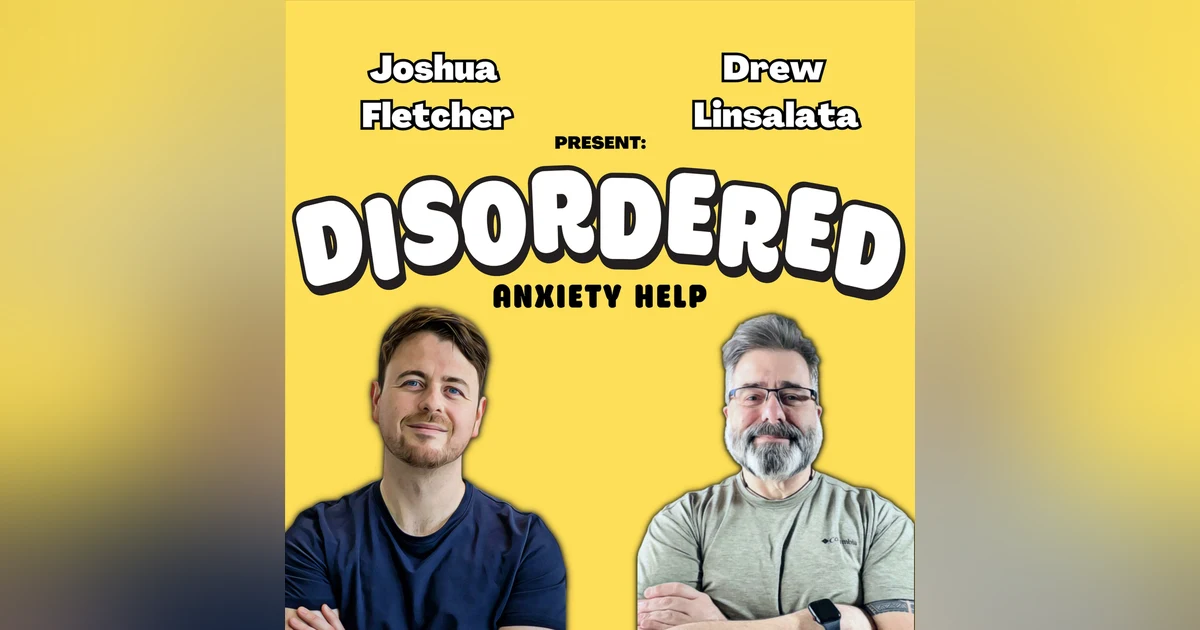
 This week on Disordered, Josh and Drew talk about the all-important attitude shift that has to happen as part of recovery from an anxiety disorder. Recovery is spearheaded by behavioral change but that behavioral change also has to foster an attitudinal shift that moves you from trying to eliminate your anxiety to a consistent intentional tolerance of discomfort that will teach you that you can handle anxiety and don't have to fear it any longer. That's a key step toward decreasing your anxiety levels over time and a shift in attitude is important in this respect.
You'll also hear both Josh and Drew have realizations about the missing attitudinal shift that kept both of them stuck in the early stages of recovery. The guys both come to the conclusion that the "relapses" they experienced were based primarily on relying on technique without allowing that important shift in attitude.
If you're feeling like you're constantly being pulled back to "square one" this might resonate with you.
-----
Want to ask us questions, share your wins, or get more information about Josh, Drew, and the Disordered podcast?
Visit us on the web at https://disordered.fm
----
Disclaimer: Disordered is not therapy or a replacement for therapy. Listening to Disordered does not create a therapeutic relationship between you and the hosts of the podcast. Information here is provided for psychoeducational purposes. As always, when you have questions about your own well-being, please consult your mental health and/or medical care providers. If you are having a mental health crisis, always reach out immediately for in-person help.
---
Disordered Roundtable is coming! Think of it as "Disordered Live", a way for members of our audience to spend time with us in an intimate virtual setting (attendance is limited) to engage in real time sharing and discussion on specific anxiety disorder and recovery topics. To be notified when new Disordered Roundtable sessions are scheduled, sign up for our email list using the form on this page.
When you techniquy something that removes the willful from your tolerance. I have a technique now, and therefore I don't have to worry about anxiety anymore.
SPEAKER_04And I think it does speak to attitudinal shift because sadly, the shift that we're talking about is one that says, oh, I'm doing this in order to experience the most extreme of the sensations and the thoughts. It's an attitude, it's not a technique. And that's the attitudinal shift. I'm going to stop there. I don't want that yet. But that's okay because I think would you agree that that shift takes a while to get to? Nobody just takes, nobody just gets that on day one. Damn it, I didn't panic. I was hoping to go to have the full experience today so you can practice. That's the shift.
SPEAKER_03It's not just the willingness to step forward to it, it's also not seeing anxiety as a failure.
SPEAKER_04Welcome to Disordered. This is episode 10 entitled The Attitudinal Shift. Today we're going to talk about the idea that recovery lies on the other side of a shift in attitude. Because you could be doing all the recovery things, but if you don't do them with the right attitude, or at least a well-adjusted attitude, you could wind up frustrated. I am Drew Linsolata, co-host of Disordered, a clinical mental health counseling graduate student and therapist in training here in the U.S.
SPEAKER_03And I'm Joshua Fletcher, also known as Anxiety Josh. I'm a qualified psychotherapist here in the UK, specializing in anxiety and anxiety disorders, and also a previous sufferer. Yeah, welcome aboard, everybody.
SPEAKER_04Thanks for coming back to listen today. So, should we start with uh a question from the audience because it kind of speaks to this?
SPEAKER_03Yeah, we've been enjoying the voicemail feature, and we've had a brilliant question that ties in with today's topic. Uh, should we roll clip?
SPEAKER_04Sure, let's roll the clip. Let's do it. Let's hear the question, then we'll get into uh today's topic because I think it ties into that. Here we go.
SPEAKER_01Hey, so I'm a super big fan of you guys. I've been following both of you since um my panic disorder started about six months ago, and you've been really helpful in my recovery journey. However, not however, but um, I do have a couple questions because uh I feel like I've hit that point where I just feel stuck. And the main reason is that um when I willfully tolerate my anxiety, it works a lot of the time, but then whenever it gets to a certain intensity, it's like my brain just cannot willfully tolerate that, like when I feel like I'm gonna pass out or when I dissociate, or you know, when I have depersonalization, all those super scary symptoms that I just I hate. Um and so my question is just how or are do you have any tips on how to um get to that point where you're you're able to willfully tolerate everything that you fear because there's always one more thing that my brain wants to latch onto to fear, you know, like how do you willfully tolerate even death? Like, how do you just say, like, oh, if I die, it's okay? Like, that's all good, you know. Like, I just I feel like my brain can't fully recover until I get to the point where it relaxes and says, I can tolerate anything. Um, so any tips on that would be awesome.
SPEAKER_04That was a great question, I think.
SPEAKER_03A really good question. And um I like it when we're held to account. You know, what do you mean willfully tolerating, doing this, doing that? Uh, how can how do you willfully tolerate when there's always something to worry about? And I think that's what we'll dedicate today's episode to. So we'll answer your question with an episode. Why not?
SPEAKER_04Why not?
SPEAKER_03Might as well. Where do we begin, Drew?
SPEAKER_04Well, I think to me, one of the biggest things that stuck out was when she said, um, sometimes it works, and then other times, you know, so that's always a red flag for me. Well, what do you mean it works? And I'll usually come back with well, define works. What does works mean?
SPEAKER_03Yeah, I've called uh when when when you have that, and bear on we're talking about attitudinal shifts uh and the attitude of willful tolerance, and the key word here being willful is that we're always practicing the willful side of it, we're always tolerating it. You don't need practice tolerating anxiety, you you know, you probably do it a lot, but but the willful part is where we need to do it. When you start using terminology like when it I did this and it worked, you're doing something called what I like to call techniquifying. When you techniquify something that removes the willful from your tolerance. I have a technique now, and therefore I don't have to worry about anxiety anymore. But then you like the previous episode, you stop getting the credit, and so the brain starts to think it's a thing. Would you agree with that, Drew?
SPEAKER_04Or do you Yeah, no, I I would. That's 100% where I was going with that. The idea that, like, well, sometimes it works, and you know, it works, meaning does it short circuit the panic or that that high intensity thing that you're stating that you cannot willfully tolerate or you won't? Um, so I think it it this speaks to a lot of different things. Like, I'm gonna, I can do, I'll do this as long as this is the outcome. I'll do this as long as I can. I will be okay as long as it's conditional okayness that we talk about sometimes. And I think it does speak to attitudinal shift because sadly one of the the shift that we're talking about is one that says, oh, I'm doing this in order to experience the most extreme of the sensations and the thoughts. Like I'm doing that on purpose to do exactly what this person is trying to say, well, I can't do once it gets past a certain level. And that's hard, that's a hard pill to swallow. And it's a hard thing to say to people, but that's the attitude we're looking for.
SPEAKER_03Yeah, it's an attitude, it's not a technique, and it sounds it's a by the way, great question again. It's I mean, really good. And it's one I've actually asked. I don't know about you, Drew. I I I remember having a few therapy sessions with Sally Winston, and she picked up on what I call techniquesifying, and she and she actually said, Josh, it sounds like you actually got lucky for many years, you got lucky because you used to be able to say to yourself, Oh, this is just you know a thing, and you gave yourself permission to leave it alone. And but I wasn't practicing that will for tolerance of stuff. So one day, actually, when I got really stressed, life got on top of me, and yeah, it did come back, and suddenly that you know, I I didn't techniqueify the will for tolerance. I wasn't like, oh, I've I've lost my technique that I'd give all the credit to. And that was when I realized actually I've got a bit more work to do. And so I was like, no, it looking back, it's the attitude, isn't it? It's the it's the I it's not just the willingness to step forward to it, it's also not seeing anxiety as a failure. Even in the question we could hear there, you know, oh, do I have do I have to keep doing this for every single thing of anxiety? Well, it's always quite reveal, it's almost revealing of the attitude. I'm not saying you've got a bad attitude, you know, I'm saying, but it's it's the attitude that you have towards the anxiety, and it's a tricky one because anxiety is annoying, it's horrible, it's invasive, it can be consuming, it gets in the way of real life, loving your kids, doing things like that. It's annoying, but that's why the attitudinal stuff is so important.
SPEAKER_04Yeah, and I think you know, kudos to this person for I understand she's struggling at a certain level, but the fact that she's getting to that level is you know a big win right there. Oh, yeah.
SPEAKER_03Yeah, doing very well if that's where you're at. Yeah, fair play.
SPEAKER_04Yeah, 100%. So um, let's not forget that part too. But I think also that that um it speaks to techniqueifying, just like I like that word. That's a really good word. Um, does that mean I have to now I have to learn how to tolerate another thing and a different thing? And then another symptom will pop up. And that says that your approach is I'm learning how to do things as opposed to I'm learning how to move through sensations and thoughts and unpleasant inner internal experiences. So I think um I see that a lot and I use I use the term acceptable bubble all the time. People build a recovery acceptable bubble when they learn how to do things again. I learned, I learned how to go to the grocery store, I learn how to drive down two exits on the highway, I learn how to do the school pickup, I learned to go to dinner. But oh no, now I have to go. There's a family reunion that's you know, six-hour drive away. How am I gonna do that? Because I've no I don't know how to do that. Because you've techniquesified or tried to learn how to do things instead of uh making that shift that says, Oh, my my job is to really learn how to be as anxious as I could be. Which is again a tough sell for sure.
SPEAKER_03It it is tough. Um when you look at the whole looking back, like the main one of the main differences was was was the attitude that I take towards it. Um the attitude one that we spoke about already about being anxious is not a failure. We can maybe elaborate on that in other episodes, but the attitude of this is not a failure, this is an opportunity to for me to rewire my brain, this is an opportunity for me to display courage and compassion for myself, and also this is an opportunity to practice the willful tolerance of uncertainty. And if you practice the willful tolerance of uncertainty, it will answer those questions that you had throughout the rest of that question. So, yeah, I mean they're scary questions. We have to willfully tolerate, you know, death or that. Like, I'm terrified of dying. I don't want to die, you know. Uh there's a boxer I need to watch first, you know, I need to do these things, but it's really like it's just uncertainty. It's like that it gets to the stage where it's like you don't need to apply a technique to everything that scares you, some things you can just tolerate the uncertainty of because there's nothing certain in life. But you know, I bet you're the same person that can get in a car and or cat, or maybe you know, you you can do things that are statistically more dangerous than ruminant ruminating on the fears that you have. No. Um, but yes, it's that attitude, you know. Um, and I remember not having the right attitude, and I think it's really important that we share that, Drew. Like we we're on our soapboxes, but I spent many years with the wrong attitude that be pre-shift.
SPEAKER_04You know, this is so fascinating because people ask me all the time, you know, and I've I've talked about this in the journey that I took, which was many years long through this to before I got to full recovery. And one of the things that happened to me the first time I ever experienced the development of panic disorder and agoraphobia was I was given a Claire Weeks book, Hope and Health for Your Nerves. And I read the thing twice, cover to cover, in 24 hours, felt like she was talking directly to me, and I was better. And then it came back. And people always say, I don't understand. How did it come back? You say it can't come back. Well, because I did not, I did not understand what it was that I was doing. So it was like, oh, now that I know what it is, it doesn't happen anymore. So I'm good as long as it doesn't happen anymore. And I did not have an attitudinal shift. This is the first time that has struck me because I have said many times when they put me in a box, I will not know why I did not apply what I knew the second go-around. I got dragged right down.
SPEAKER_03That's what it's the carbon copy of what happened to me too. Yeah, really. It was like, and I think that's happened a lot with readers of our books, where people read the book and they get the initial attitudinal shift. For the first time, they read something or listen to a podcast and be like, what I've been experiencing is actually not uncommon. I'm not broken. Yes, it's uncommon, but I feel a bit of hope and I feel a bit of excitement, which is a lovely feeling to have. I have that when I read Claire Weeks's books. I haven't read Paul Davis, but that really helped he was the first person to kind of talk about derealization to me. And what I noticed, I actually unconsciously applied an attitudinal shift, which is I started to then do stuff like, well, if there's nothing wrong with me, then I'm gonna stop avoiding. And I had, yeah, about six months, a year of I've got my life back. But the attitudin shift hadn't occurred. Same with my OCDs on my intrusive thoughts. Um it's when I first found out that you know other people have these subtypes of of OCD, people have intrusive thoughts. When I first found out, oh wow, you know, there's a community out there that have this, I it it gave me permission to kind of just leave it alone and not really give it any importance until one day you take it for granted and you go through and suddenly it gets in the way again. Yeah. And it and it becomes a thing.
SPEAKER_04I think there's a a threshold that we all have, and we're all different in that respect. But sometimes just knowing is enough at first. So Claire Weeks taught me that I was not broken and I wasn't dying. Okay, cool. And just knowing that was enough. It's nice that, isn't it? It's nice that when knowing amazing. Like you're not dying, you're all right. Admittedly, I will never forget that. I mean, I just felt like this woman is clearly writing this book for me. You know, that's why I'm a huge fan to this day. And and suddenly it's like, okay, oh, I I did what she told me to do a couple of times, and I discovered that it worked, like it passed, I didn't die, and then everything just sort of faded away within a matter of weeks, I would think. But I was what I accomplished there was I learned how to move through a panic attack and make it go away. That's what I learned how to do. And then when I couldn't make it go away, because I hit my threshold, whatever that was, and everybody has one where the technique breaks down and won't work, or quotes, then that's it. All bets are off. And I went right back down the rabbit hole. Would you say that you I know it's very simplistic, but you techniqueified Claire Weeks. I a hundred percent in retrospect. This is a really great conversation. I'm not paying for the paying you the for this, by the way. This is but you are really helping me. Don't send me a bill. This is like Drew has therapy with Josh today, because I never really considered what the mechanics were. Why did I why did I go down the rabbit hole a second and third time? That's why. I absolutely technique.
SPEAKER_03I'm also I'm also realizing this in the in this podcast episode as well. Like what is it about that? And talking about it's one of the best feelings of my entire life. When I read, after a year of really struggling and feeling alone and on my own, when someone writes yours, and that's what we've tried to do in our books because we know how powerful. Imagine having a feeling so powerful that you go away and write a book about it and create an Instagram account about it and a Facebook group. That's how much we we loved it because we want to replicate that kind of feeling and build upon the works of Claire Weeks and stuff. Yeah, but actually looking back, I remember like, oh, it's back. But for me, it was what if it's anxiety and something else? And I'd lost that attitudinal shift of tolerating uncertainty. Suddenly, okay, I get it's anxiety, and this feels like anxiety, or this feels like OCD, but what if it's that and something else? And I know people with OCD and panic disorder will will definitely relate to that, or with health anxiety, it's okay, yeah. Like I can see it's probably anxiety, but the stakes are so high that if I don't give it my attention, then you know something bad might happen. And that's when you've lost that attitudinal shift. So when people say I'm back, it's relapse. No, you just it shifted backwards. The attitudes that you had has shifted backwards. That's all that's happened. You're not broken, there's no it back, we don't anthropomorphosize stuff. Yeah, it's just it shifted back. Oh god, yeah, yeah, my brain's whirling around now.
SPEAKER_04Yeah, me too. I I cannot like I there's it's like I could hear, you could probably hear the machinery turning now. And I think it comes down to so there's a threshold at which technique breaks down because the technique stops working, but an attitudinal shift, and it the way it looks, by the way, is we talked about it in one of the past episodes where you relay the story of a person. He he walked up the hill, the big hill in Manchester, and upset, or she was upset because there was no there were people at the top of the hill, and she was hoping to do it totally alone.
SPEAKER_03The guy went to the gig. Yeah, he was so afraid to go to the gig and he got to the front because he's been preparing for his panic attack. There was another story like that about the you're 100% right. That's right. And and and it's like annoyed that it didn't happen.
SPEAKER_04Yeah, and I think that is the shift when you get to that, like, oh man, I didn't panic, and I I really wanted to to either see how far I've come or to practice my skills. You are almost inoculated at that point. That attitudinal shift cannot be overcome, or at least not easily, not as easily as techniquesifying. Yeah, so that's where you need to go. And I would add that when people read the books that we write, when people read The Anxious Truth, they love chapters one and two, because it's it's sort of the Claire Weeks part. You're not broken, this is really common, this is what's happening to you. Love it, love it, love it. And then they get to the dreaded chapter three. When I gotta do stuff, start telling people, I know Claire Weeks said acceptance in her Australian grandma, you know, way, which was really great, but now I'm gonna actually tell you the details of what that looks like. And and then some of the sometimes I stop reading, and that's the attitudinal shift. I'm gonna stop there. I don't want it, I don't want that yet. But that's okay, because I think would you agree that that shift takes a while to get to? Nobody just takes nobody just gets that on day one. It doesn't have to be a good one.
SPEAKER_03Yeah, and also well done for picking up the book and reading it. Um, I know people with anxiety are afraid to read about it for fear of being triggered or whatever. So, yeah, if you do that, that's brilliant. But yeah, the attitudinal shift is enormous. Um also, I think again, I think we already mentioned this, but let's get Sally Winston to talk about techniques ifying. Um, and introduce her to the word that we made and get her to talk about a word that she's never heard of. Um can you please talk about this word that Josh made up and he's very proud of? I made up a few, you know, that really were that were that, and um for the OCD community, uh a fixator. You're a fixator, which is brilliant because you've probably got a beautiful creative mind. Um, also if you get anxiety as well, but um you've got a beautiful creative mind, and when you wield that power for good, beautiful things happen.
SPEAKER_02Yeah.
SPEAKER_03Um, but also, I mean, my brain's fixating now. I just realized I left my bin behind me on the table there. That this is going on YouTube as well. Never mind. And uh it's free while you're complaining, and um, but then also you've got like actually that fixator brain can fixate on other things, whether it's an intrusive thought, anxiety itself, sensations, symptoms, or even just recovery, or even just the presence of any anxiety, because I also, you know, I also want to talk about like the attitudinal shift of bringing back perfectionism, that can skew your attitude towards anxiety as well. Any sign of anxiety is a sign of failure, sign that you're broken. And I heard hints of that in the questions. I did you hear that in the question, Drew, from my lovely listener. It was a bit like, oh, do I have to do it for that? Do I have to do it for that? Oh, and it's back. What if and what if then it happens, happen it occurs then? And it's like, well, it's okay. You don't need to eradicate every sign of anxiety, it's fine. Yeah, yeah.
SPEAKER_04No, I I that's that's correct. You're right. Um, I like fixator, that's good. When we open the disordered merchandise shop, we'll have fixator t-shirts, yeah.
SPEAKER_03Yeah, fixator, technique, technique if uh we'll we'll get we'll get them all on. We'll have Craig the Critic T-shirts as well.
SPEAKER_04Conditional okainess, yeah.
SPEAKER_03So we're gonna wear okay.
SPEAKER_04We're gonna have all of our catchphrases, but amygdala. Oh, yeah, amygdala. If we can get that on a t-shirt, that's a winner. The sound somehow.
SPEAKER_03But let's go a little sound chip, like the old birthday cards where you opened it and sounds very practical. Yeah, you can wear the shirt once, don't ever wash it.
SPEAKER_04Yeah, talking of shift, we've digressed. We've completely digressed. I want to talk for a second about, you know, so we we described, and you described in that other episode, what the attitudinal shift looks like. Damn it, I didn't panic. I was hoping to go to have the full experience today so I could practice. That's the shift. Can we talk about courage, which is part of the component of making that shift, which I think speaks to this question also? That you don't get that attitudinal shift without some form of courage. I think that's sad but true.
SPEAKER_03Yeah, yeah. It's uh you definitely need courage to do it. Um, no matter don't compare your exposures or your OCD theme or your panic attacks or your life situation to anyone else. Fear is literally the same in everyone, just the triggers are different. It doesn't mean if you've got a fear of walking to the end of your garden and that makes you feel 10 out of 10 scared, that's the same fear as you know, someone who's walking a tightrope in a circus who doesn't like heights. Yeah, the situation is is is different, but the fear, if you were to measure, is exactly the same. So you need that courage. It's courageous to do that. Don't let old emotionally conservative trope tropes kind of throw you off and let Craig the critic kind of latch onto that. Oh, you can't even do that. Yeah. But make sure that, you know, you're like, okay, this is going to require courage. And it doesn't matter what the situation is. If it scares me, it requires courage.
SPEAKER_04Yeah. And I think, you know, we can't really techniquify courage. So start to, you know, there's really no technique for courage, but I can offer this. When you hear people like Josh and I talk about these things and say you're going to have to be courageous, it's because, like Josh said, we know you're experiencing a hundred percent real fear. And I talk about this all the time. Never let anybody tell you, oh, it's just in your head. No, no, it's every bit as real to you as it would be for somebody who's in actual danger. That's you're overthinking it. Yeah, it's not that at all. You are as scared as anybody who is in actual danger. But we are always talking about doing, being courageous and doing challenging things, never doing actually dangerous things. So it's so important to keep that in mind. If you're trying to find that courage, you have to remember that people who are talking about this sort of thing are never telling you to do actually dangerous things. It just really feels to you, it requires courage because it feels like it is dangerous. But those who came before you on the path, I had to trust Claire Weeks when she said to do that. You know, I have people say in my Facebook group are trusting the people that they see who came before them, who were who displayed some courage and oh, they they were okay, it was okay, I can make the leap. So that can help.
SPEAKER_03It helps, but also shout out to we've got um uh a voice or clip of Did It Anyway here and um that we'll play at the end. But also a good CBT therapist, um my colleague Rihanna has actually not been through it, but she knows what she's doing. And you can put trust your put your faith in kind of the the research and and the and the literature as well. A good CBT therapist who's trained in anxiety disorders, uh you can either way you've got to take the leap into uncertainty anyway, whether it's trusting people that have walked in your shoes or not. There's advantages to following people like Drew and I because you feel like a a kinship. And they're like, oh when we talked about the cave analogy in in a in the threat response episode, it's almost like, yeah, we've been in the cave, it's okay. But sometimes it's even more powerful to just be like, Well, maybe there's just nothing in the cave, and I'm not even gonna give it my attention. Yeah, you know, and it depends what works for you. I'm very d defensive of kind of therapy, but people like to come and work with me because they're like, oh, you know what it's like, but that can actually be counterproductive because it's very different, difficult to step out of my frame of reference sometimes. You know, one person's derealization might be different to someone else's, etc. etc. It builds a trust, but don't think it's it's essential. You can do it. I remember when I my recovery, I don't know about you, but looking back, yeah, the attitude no shift and all there. But my story was different to Claire Week's. Uh my story was different to people like Paul Dave and yours. Uh my story is different to the countless people that have overcome panic attacks, you know, and your story will be different too, and that is yours. You know, use people for influence, but you know, it's yours. Um, shut up.
SPEAKER_04No, I no, I think that's a great point. And I think it actually ties back the attitudinal shift that we were talking about earlier, detecniquifies the process and it makes things a little bit universal so that this particular intrusive thought doesn't become different than the next one. This symptom doesn't become, you start to realize, oh, this is all the same, this is all the same exercise, the same thing, recycled in different themes over and over and over. And it becomes easier. And you start to not easier, but more recognizable. Oh, I remember when I used to be afraid of dizziness, and now I'm afraid of my breathing. But that's okay because I I know what I did with my dizziness, and now I can do it with my that attitude brings you there. And I think that's a really good example. Yeah, like when you make that shift and you use the experiences of people like Josh and I who came before you to inform your decisions, you learn that your experience is certainly unique because everybody's is, but you can start to use the principles that get applied in your specific situation. And I think sometimes what blocks the attitudinal shift is the belief that I need specific instructions for my special story. Your story is certainly special, not denying that, but the shift, part of the attitudinal shift is like, oh, but it's not it's not that special. The principles remain the same, and I can take those with me. Yeah, yeah. Absolutely.
SPEAKER_03That's a good point. Yep. I was thinking, should we just give a few examples? I know for me, uh when we approach doing disordered, yep. We kind of always have in mind how you know creating the podcast that we wished we'd have had, you know, back back then. So let's just give some examples of attitudinal shifts, attitudinal shifts from when you're a very critical kind of fearful place to an example of an ideal. Not saying the ideal, but just an example of an ideal. So should we play a scenario game, Adre? I'll start with a scenario. You answer it and you give me one, and what we can give our own. So very good. Okay. Uh okay. Um, here's one. So you've not been anxious. Here's a scenario. You've not been anxious, or I had a panic attack for three weeks, and your intrusive thoughts have just been bouncing off. You're all right, you feel like you're in a good place. I'm in a good place now. Um you go around to your friend's barbecue, and you're standing near the barbecue, and suddenly you start to get hot. And then the two people you're with, you start to feel embarrassed because you want to run, you know, you want to run away and feel you can feel the panic coming along. It's an example of kind of pre-attitudinal shift, what you'd say to yourself, um, what's the ideal thing to say to yourself?
SPEAKER_04Yeah, that's a that's a great scenario. I've kind of lived variations of that in my recovery journey for sure. I think a lot of people could relate to that. To me, pre-adnitude pre-attitudinal shift would have been oh no. And but oh no is almost a universal, unerasable thing. You're going to have the oh no. So post and pre-shift, you're gonna have the same oh no. But pre-shift, that oh no would have taken root and governed everything for the rest of that day and maybe the rest of the week, depending on how how much it gets stuck into the rabbit hole. Post-attitudinal shift, I would have experienced the uh-oh, oh no. Like I would have had that still, can't get rid of that. But I would have been able to catch that and say, oh, I I know what this is, and I understand what my responsibility is now in recovery. And I I need I need this experience. I'm gonna use this experience. This experience is gonna help me finish this barbecue and learn from it.
SPEAKER_03Oh no, oh yes.
SPEAKER_04I don't know if it was that dramatic, but sure. That that would be the mates just stood there with a beer looking at you like, you're right.
SPEAKER_03Yeah, exactly. So but but even even on a micro avoidance level, you could be like, or step away from the barbecue getting hot. Like you could even take it to the point where like, no, well, I'll let myself get hot. It's okay. Yeah, it's not gonna harm me. In fact, the attitude is this is a challenge, you know, what whatever.
SPEAKER_04You know, from uh and that's a good point because I have been there before where I would I would have the oh no and immediately go for, and I've done that in the car. I would major driving anxiety. I would start to feel warm in the car in January. It's four degrees Fahrenheit outside, and I would immediately begin to roll the window down. Now, pre-shift, I keep that window rolled down, stick my arm out, and try and get cold air in my face to to to counteract the hot. Post-shift, halfway that window is halfway rolled down, and I think, what am I doing? Shh, and I roll it back up.
SPEAKER_03Yeah, yeah.
SPEAKER_04What am I doing?
SPEAKER_03I I did that once on the London Underground. So I'm available I'm evading your scenario question. The London Underground, I I actually got off. I was having panic, there was loads of people on, I was getting claustrophobic. Uh, and I got off at the next station. I was counting down this the seconds to like a get off at the next station, and I got off and I felt really horrible. And Craig the critic was like, Oh, you this, you can't do this, links back. And then I was like, it was just one second, it was like a no, get back on. I was like, Yeah. And actually, I kind of one-upped myself and I walked down the the platform and got onto an even busier one. I was like, I was like, no, screw you, you know, let's go do this. And that's when so you can have lapses in that attitude. Yeah. But I was like, no, I'm pushing this back. This is going back that way.
SPEAKER_04Yeah, it's not that yeah, the attitudinal shift doesn't mean that you don't have doubt and you don't have fear. You do. You just catch it and change. Yeah, you know, catch it and change. I like that. You catch it and you move toward it more rapidly than you ever used to. All right, so I'll throw a scenario at you. Pre- and post-attitudinal shift. You are working hard at recovery and you're making progress, you know, so things are going a little bit better, and you're starting to believe that, oh, this might be a thing. I think I can I can get better. And then for a variety of reasons, you have a wobbly few days, whatever. Maybe you're under the weather or something stressful is going on, and you find that the symptoms feel strong again, and you're fearful all the time. And then you get invited out for a couple of beers with your mates. What's the difference pre-shift and post-shift for you?
SPEAKER_03That's a very good one. So pre-shift will be like, but I've been doing so well, I don't want anything to risk that. So if I go and have a few beers, the last time I had some beers, I got anxious because I didn't feel like I was in control. And also I didn't like, I was fearful of the anxiet of the hangover. Anxiety. And so pre-anxiety shift, uh attitudinal shift, I would then I'd probably been drawn to avoid it because the perfectionist in me wanted to keep the streak going. You must hear this a lot, Julia. Oh, I've been ten days without anxiety. Well, that's not the attitude we want. You know? And now I know that. But pre-attitudinal shift, I wouldn't have said that. Post-attitudinal shift it'd be like, Well, what would non-anxious me do? Well, I like a beer with mates. That sounds really, really nice. So yeah, I go do it. But then my what if voice would be, but what if you get anxious? Yeah. What if? It's a good chance for me to willfully tolerate it. What if you get hung over, anxious and hungover? It's like, yeah, well, well, that's a time to practice. You know, I can't build my life around not being hung over. Now, don't get me wrong, you know, this is me wanting to have some beers with friends, something I personally choose to do. Right. Uh, if you don't want to drink, that's fine, it's literally poison. But if it's something that you know non-anxious you would want to do, then then go for it. Um I think it's really important there as well, is that um, and it's just to repeat something I said in an earlier uh episode, is that anxiety recovery is not measured measured on the accumulation of its absence, it is measured on your ability and willingness to tolerate it, which I think encapsulates the attitudinal shift so well. So, yeah, that pre pre one I would be like, oh no, the beer is uh beers with friends that that might risk me losing my streak. Post-attitudinal shift is might be anxious, cool. What a great time to practice.
SPEAKER_04That's uh yeah, very, very clear, and I can relate to that in a big way. I think one of the things that I enjoy the most is we have lived similar experiences, but when you said, you know, your story is different than mine, mine is different than yours, you're 100% right. And I I start to see where maybe you were a little bit some of your challenges were a little bit more in that inner critic thing, Craig the Critic that we joke about all the time. Mine were probably a little bit more strictly avoidance-based, but in the end, you had to deal with your doubt and your inner critic and your lack of compassion for yourself. And I had to deal with like straight up running, like avoidance. Yeah, yeah. It was interesting.
SPEAKER_03You said in an earlier episode, didn't you said that? I didn't actually realize that compassion was I already kind of had that. I just took it for granted. It was just there, yeah, yeah. Like, yeah.
SPEAKER_04So it's interesting, and I have said that, like no self-compassion. Like, wait a minute, I guess I already had it. Sorry, guys, I didn't mean to say that. Yeah, I wish I could take those words back, but uh yeah, very good. That's the attitudinal shift.
SPEAKER_03I wish we could give you steps on how to do it, but technically you'll get there, and the more we speak about it and stuff. Uh we always like to end well, we we started with a question. We hope we we've answered that question. Um, but uh Drew, do we have uh I think we have a a a voicemail that was sent in, uh is it a did it anyway or a success story? What have we got?
SPEAKER_04I would say I would call it a win. Now I think she kind of got cut off, but it's worth playing anyway, right? So bear with us here because we I did not cue this up correctly, so I'm gonna wing it and hope that I got it right. But uh yeah, let's hear from one of our listeners who's who's doing better and proud of it, I think.
SPEAKER_00Hi, Josh and Drew. Um, it's Sara here. Uh I just wanted to share a big win with you guys. So after years of struggling with agrophobia and panic disorder and basically all anxiety, um I have been having therapy with actually a lady that is a colleague of Josh's, and um we've been practicing with short motorway. Oh, she got cut off.
SPEAKER_03Is that where it cut off? Yeah, what's nice though? What I'm guessing there is that Sara has been doing driving anxiety exposures. Yep. And she's doing really well, but it's also helped her to do with other aspects of her anxiety, and what a great win! Because I found and you must have found this true. If you're doing exposures to anxiety on the motorway or the highway, you are practicing an attitudinal shift. Oh, yeah. Which will help you in other aspects of your life.
SPEAKER_04Yeah, 100%. I think I'm sorry that she got cut off. And Sarah, if you want to re-record, come back to the website and and and give us the whole message, we'd love to hear it.
SPEAKER_03But I have the transcript. Uh Sarah said um I completed the exposure, uh, then on went on to become a millionaire. I bought the LA Lakers, um, and it was all because I purchased yours and Drew's book. Uh, I'd like to redact the compliment to Josh's colleague Miannon. And no, okay.
SPEAKER_04You know what? This is why you think I know you long enough now to know. I'm like, I'm looking at you know the the the back end of the pile like, where's the transcript? Where is this?
SPEAKER_03Don't listen to the chat. I said it up with such convincing Sarah. That's brilliant, and thank you for sharing that. Uh and some as someone who's a driving anxiety, that is brilliant. Did you ever have driving anxiety during it?
SPEAKER_04Yeah, I gotta drive by myself more than like three minutes from the house or 30 seconds to start. No, yeah, yeah.
SPEAKER_03So we we chose that recording today as well because it was like it did kind of it matches the the attitudinal shift, you know. Oh, my anxiety is getting better. It started doing exposures. Bang. You've encapsulated it, Sarah. Um, yeah, I hope I hope it's been helpful today.
SPEAKER_04Yeah, 100%. It's a huge win. Just the part where she said, I've been going to therapy. That by itself is worth the playing. That's a win by itself. So absolutely. Anyway, this was a good one. I think they're all good ones, but I'm biased because I'm a co-host. Hopefully, you guys think it's a good one too.
SPEAKER_03What else? Thanks, Drew. It's always a pleasure.
SPEAKER_04Yeah, it is. I'll come back in a minute as the usual wrap-up, and we'll give you all go to disordered.fm if you want to uh listen to all the episodes and leave us messages and all that stuff. So we'll see you in the next one. Thanks for coming by. Hey, it's Drew. Thanks for joining us for this episode of Disordered. Josh and I both hope that you're finding it helpful in some way. For more information about Josh or me or the Disordered Podcast, find us on the web at disordered.fm. That's disordered.fm. Pop on over and find links to our social media platforms, join our mailing list so we can let you know when new podcast episodes are available, and we'll send you easy ways to ask us questions and share your wins so we can answer questions on the air and share your successes with the community. And if you're listening to the podcast on Apple Podcasts or Spotify or any platform that lets you rate or review, do us a favor and leave us a five-star rating and maybe write a review if you're digging disordered. It really helps us out and we appreciate that. Thanks again for coming by, and we'll see you in the next episode.