
Did It Anyway - Volume 4 (Episode 125)
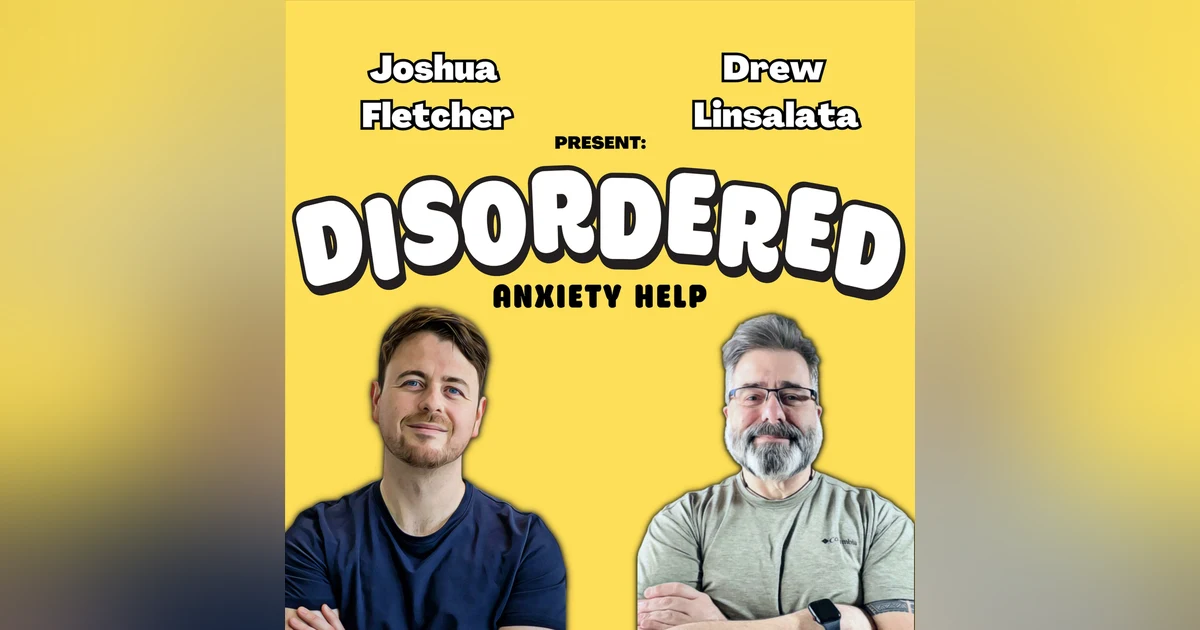


 Apple Podcasts
 Spotify
 YouTube
 Amazon Music
 iHeartRadio
 RSS Feed
 Welcome to another inspiring round of "Did It Anyway" stories, where we celebrate real wins from our community members who chose to move forward despite their anxiety.
In this episode, Drew and Josh share powerful listener stories that illustrate a fundamental truth about anxiety recovery: you can take meaningful action even when you feel scared, uncertain, or overwhelmed. From someone driving to the gym after a panic attack at work, to a listener climbing a boulder wall despite intense fear, to another person attending a job interview while experiencing physical symptoms - these stories show what's possible when we stop waiting for anxiety to disappear before we live our lives.
You'll hear about:
- Breaking the pattern of retreating when anxiety shows up
- Navigating workplace anxiety while still showing up professionally
- Taking on new challenges like rock climbing and learning musical instruments
- Attending job interviews despite panic symptoms
- Managing health anxiety during an actual medical situation
- The difference between an "acceptable bubble" and true recovery
These aren't stories of people who suddenly felt better - they're accounts of individuals who learned they could be capable and engaged with their lives even when anxiety was present. Each story demonstrates core principles from acceptance-based approaches: willful tolerance of difficult emotions, psychological flexibility, and values-driven action.
Whether you're just starting your recovery journey or you've been working on anxiety for years, these real-world examples offer hope and practical inspiration. They remind us that recovery isn't about eliminating anxiety - it's about reclaiming your ability to do what matters to you, regardless of how you feel in the moment.
---
Disordered Roundtables are here! Think of it as "Disordered Live", a way for members of our audience to spend time with us in an intimate virtual setting (attendance is limited) to engage in real time sharing and discussion on specific anxiety disorder and recovery topics. To be notified when new Disordered Roundtable sessions are scheduled, visit our homepage and get on our mailing list.
---
Struggling with worry and rumination that you feel you can't stop or control? Check out Worry and Rumination Explained, a two hour pre-recorded workshop produced by Josh and Drew. The workshop takes a deep dive into the mechanics of worrying and ruminating, offering some helpful ways to approach the seemingly unsolvable problem of trying to solve seemingly unsolvable problems.
-----
Want to ask us questions, share your wins, or get more information about Josh, Drew, and the Disordered podcast? Send us an email or voicemail on our website.
---
Disordered Roundtable is coming! Think of it as "Disordered Live", a way for members of our audience to spend time with us in an intimate virtual setting (attendance is limited) to engage in real time sharing and discussion on specific anxiety disorder and recovery topics. To be notified when new Disordered Roundtable sessions are scheduled, sign up for our email list using the form on this page.
Welcome to Disordered. This is episode 125 of the podcast. We're doing Did It Anyway, round four, where we hear community wins all day long and comment on them as we are wont to do. I am Drew Linsolata. I am a therapist practicing in the area of anxiety and anxiety disorders in New York, in the USA, former sufferer of all the things we talk about here on Disordered, but better for many years now. Thank you very much. An author on the topic, advocate, psychoeducator, social media dude. And as always, I am joined by my co-host across the pond. That is Hi everyone.
SPEAKER_05I'm Joshua Fletcher, also known as Anxiety Josh, psychotherapist based in Manchester in the UK, specializing in anxiety and anxiety disorders. I'm a previous sufferer. And if you can currently hear a thunderstorm, um, there is one raging right now in Manchester. So if you pick that up, then apologies. It does sound pretty cool though. Um, but yeah, uh, what a uh there's no better way to brighten up the afternoon than listening to some uh wonderful Did It Anyways and community wins.
SPEAKER_04You're 100% right. There's nothing to start a Friday morning like listening to people intentionally do really scary things. So how about we get right into it? Let's play an audio one right away.
SPEAKER_05Let's do it.
SPEAKER_04Let's do it.
SPEAKER_07Hi, Drew and Josh. I wanted to share a Did It Anyways today. Um, for some context, about 18 months ago, I started developing panic attacks in my sleep from work, stress, and then had an acute death in the family, which overnight I lost all of my child care for three little children. We all experienced a melee of health physical conditions and illnesses, and then I developed health anxiety on top of it, trying to manage um everything all at once. We moved twice, we sold our house, we renovated a new house, um, I cut back my hours at the stressful job and kept my kids home all summer with me while working through my symptoms with therapy, um as well as listening to this podcast. Um, I today went into back to my job that used to give me panic attacks and still continues to, um, which has been an exposure in itself, but I came in with a plan that as soon as I felt the panic attack, which is always there when I'm at that job and I was there past my ships, and I was stressed out about my workload, um, then I would drive straight to the gym when I got out of work, which is a 40-minute drive, and I worked out, and I'm waiting to go pick up my kids now, and I feel like the load is much lighter. And while I don't feel like I'm ever going to feel the way I did before all of this occurred, I would like to share that it it has gotten a lot better, and the load is getting lighter. Um, I used to hear people say on this podcast that they they felt better, they felt cured, or they they moved on past this. And I don't know if I'm considered cured, but I definitely feel like I um made a lot of progress today and will continue to try to lighten the load. Thanks for all you do.
SPEAKER_04Always a round of applause for our Did It Anyways. That was a great one.
SPEAKER_05Yeah, it was really great. I like what stuck out was um, you know, I'm breaking the habit of retreating. So, and also the the layer of compassion of you know, it's it's a work in progress. I'm at work, I still get panic, but usually I'd go home and I would retreat, you know, very kind of in instinctual behavior to do when we're anxious. Retreat, you know, fight or flight, flight. I want to go back to my safe place. Uh, and then I love the idea of you know what? No, I'm gonna drive 40 minutes to the gym instead. You know, do everything, go against that instinct, do what non-anxious me would do. Um, well done.
SPEAKER_04Yeah, I can't add any more to that. I think one of the things as we go through this episode, and we're gonna play four or five of these, we have some written ones to do. There's always a common theme, and the common theme in the dining anyways, and the reason why we love to share them is these are people who are doing things that they were sure they shouldn't or couldn't do. But as it turns out, they could do them. So, like keep that in mind. If you feel like these things feel impossible, I don't know how that person possibly did it, or you want to find this person and say, but how did you do that? I'm sure that she also thought I couldn't one and one day she thought there was no way she would be able to go to the gym after work, but then she did it, she could do it. So it's the challenging that narrative of I can't or shouldn't do that. That's what you're hearing in all of these.
SPEAKER_05And these did it anyways, and not, you know, oh, I I'm suddenly better or I'm at a place, and you're gonna what we often talk about on this podcast is you know, it's uh it's an ongoing thing. Yeah, you know, this is where I'm at, and I'm celebrating the wins, even though I'm not at the ideal place I'd like to be at. I'd argue that's probably the most important part of recovery is still doing that, giving yourself a pat on the back, not seeing things black and white. Yeah, I'm still having panic now and then, or I'm still having intrusive thoughts now and then, or I'm still feeling uneasy or not how in a place I'd like to be. But despite all that, celebrating your wins is super important.
SPEAKER_04I think that we're probably seeing people too, and I I don't know, I mean, I'm maybe overgeneralizing here, but when people actually take the time to record or send us email about these things, often it's one of the first times that they've ever did. We don't really get like, hey, I'm just checking in with the did anyway, and I've been better for three years, and like I don't panic anymore. We usually we hear people who for the first time, or in the first few times, recognize like, oh my God, I I did it, and then they get really excited about it. And it that's a sign, like if you start to notice, like, wait, I'm actually starting to give myself credit, or I'm noticing that I did a really hard thing and I can I can appreciate that. That's a good sign. And sometimes I think that's what we're seeing too. For the first time, they're turning that corner. Like, wow, I actually did it. I did that. I didn't think I could, but I did.
SPEAKER_05So yeah. Agreed. Yeah. Um, I've got a written a written one. You ready? Yeah, let's hear it. Okay. Uh hi, Josh and Drew. Jade here. You can use my name. I just wanted to share my did it anyway. I've had anxiety and panic disorder since I was 15. I'm now 33, with many years living in relative okayness. This bout of anxiety came out of nowhere and has turned into agrophobia and panic attacks daily. I stumbled on your podcast, and this is the first time I was able to put a name to derealization. Today, I was able to work through my panic attack by just letting it do its thing and carry on doing what I was doing. Usually I would run to my safe space and pace and let the fear consume me. I know what that's like. I broke down in tears after. I just I just did that and was able to give myself all the credit. I also haven't checked my heart rate in two days. Small progress, but I'm taking the win. Thank you for all you do. You've really helped me through a challenging time in my life.
SPEAKER_04Oh, that's really awesome.
SPEAKER_05I can relate to that. I was a pacer. Oh, really? All the adrenaline, all the cortisol, didn't know what was going on. I just paced, I'd walk up and down. I was hyperfixating on how I felt. Yeah, I was a pacer, but you're not a pacer. I don't think I was a pacer.
SPEAKER_04I was um a jitterer. Is that a word? Like I wouldn't really get up and walk around, but I would not be sitting still either. Like I was tapping, I was shaking my leg, I was I was, you know, doing all kinds of gyrations and stuff, but I don't think I was pacing around.
SPEAKER_05So oh yeah, I know. Yeah, I was a I was a pacer. Yeah, no. Isn't that a name of an American sports dude?
SPEAKER_04I was gonna say, well, also speaking of cars, one of the worst American cars ever, the AMC Pacer, just a big glass bubble. I don't know when they stopped making that. But yeah, it's the Indiana basketball team, and it was a car that luckily we don't have anymore.
SPEAKER_05So oh, I didn't know that. Okay, and Pacer, I'm now a Pacers fan. Yeah, um and for context, by the way, Drew and I were supposed to press record like an hour ago, but we ended up talking about cars. Um so yeah, that's one we didn't didn't cover. Cool. What have we got next? Oh well done, but that was that's outstanding. Absolutely, and I love my favorite part of that.
SPEAKER_04Yeah, that part. Like, I did that. I get the credit. Like that was me? Huge. I did oh my god, I did that. Yeah, that's always so nice to see. So thank you for sharing. Um, I'll do a written one. How's that? I'll read a written one. Um what do we have? Hang on, ready? So, hello. This is from Rose. Thank you for sending this in, Rose. Hello, Josh and Drew. You can use my name. I have a no choice, did it anyway. I was I was trying, I I I feel this. Like I remember those days. I was traveling on the oh, she's British. I was traveling on the dual carriageway, and there was an accident ahead, so they closed the road. I was trapped in my car with a friend for over two hours. Oh, that would have been a nightmare back in the day. All right, I was trapped in my car with a friend for over two hours. I started panicking, thinking all sorts of what if the ambulance had to come to rescue me? That's selfish. What if I can't cope and run screaming down the hard shoulder? Can I leave the car and hike across the field home? Like the first half an hour was tough. I knew the initial adrenaline had to get out of my system. I reminded myself the worst thing that could happen to me was a panic attack, and I'm used to them. I ate my lunch in the car and chatted to my friend. By hour two, I was resigned to being trapped for a long time, but I was fine with that. When the road was reopened, I was surprised I could have coped for much longer. In fact, the longer I was there, the calmer I got, which was paradoxical. I was uncomfortable with the anxiety at first. Uh, yes, it was a bit anticlimatic. Nothing happened. I was really chilled by the end. I consider that a huge win. As if I'm ever in that situation again, I know I'll cope. And it was a totally unplanned test. So it taught me that I don't need to have a clear plan when I do things that poke the anxiety bare. Not being scared of anxiety is the plan, no matter what the circumstances. Thank you for all you do. Without listening to your podcast, I would have struggled a lot more.
SPEAKER_01Wow.
SPEAKER_04I don't even know where to start with that one. There's so much good in that.
SPEAKER_05That's excellent. Uh well done. I love um, and it I love that realization that you know anxiety will trick you into thinking the longer you're in the scary place, the more, the, the bigger it's gonna get, the more overwhelming it's gonna become, and you see it like a graph, it's just constantly building and building and building. Uh no, it'll peak pretty quickly and then just downhill from there. And um, yeah, I'm very happy that the dual carriageway was shut that day.
SPEAKER_04I know. It sounds like a disaster, to be honest with you. If this had happened to me back when I was, oh my god, I would have felt the same exact way. Like there's no way through the fields. I love that hiking through the fields to get home, you know, like running down the shoulder, screaming. These are all the images that the fear will put in your head. Like, this is this is what's gonna happen. I'm gonna melt down. What we're seeing here, I think, is an illustration in real in like real life of the bedrock principle under all of the accepting, facing, floating, willfully tolerating thing, which is given, left to its own devices, every internal experience will pass. Every single one, there's no exception, no one ever gets stuck in a happy, sad, disappointed, joyous, panic. They just these are transient experiences. And unfortunately, Rose was forced to find that out. She didn't plan to do that that day. But you know, that thing where, like, oh, if I just if I can surf over the top of the wave, oh look, the wave does actually crash on the shore and then Peter out. I mean, there might be another one in in a little while, but they it's not two hours of like, oh my god, oh my god, oh my god, because she didn't do two hours of oh my god, oh my god, oh my god. She ate her lunch, she started talking to her friend, like, let me do the best I can. So great illustration of why we use things like facing and exposure and all that stuff. This is how it works.
SPEAKER_05This yeah, yeah, and also yeah, no emotion is ever bigger than you.
SPEAKER_04Oh, that's really great. That's really that's true, 100% true. You're always bigger than them.
SPEAKER_05So yeah, even and it'll they'll trick you and whatnot, but you you will always come out the winner, yeah, regardless. Go toe-to-toe. Um, let's have an audio one.
SPEAKER_04Yeah, let's do another audio one. I have one queued up here. So, did I do it right? I did.
SPEAKER_00Hey Drew and Josh, here's James from Australia, uh, but located in Berlin in Germany. Um feel free to use my name. I've just got uh something to share with you, uh, maybe a small win that I've heard over the last uh few uh weeks. I've been dealing with quite a bit of work-based anxiety. I'm uh osteopath in training, and I've uh since I started working in the clinic in my last year of my bachelor's, I've been dealing with some pretty intense waves of anxiety while we're treating patients, and it's been very uncomfortable. Um last week I really just decided to give up the fight and stop trying to fix the anxiety and just let it be there. And the big trigger for me has been firstly treating new patients and secondly drinking coffee. And I love drinking coffee. I worked as a barista for 10 years and I had a new patient coming up. I was a bit tired, and I wanted to drink that coffee, and you know what? I did. I told anxiety, bring it on, do your worst, I'm gonna sit with you and treat that patient. And I did, felt anxious, treated the patient, was present with them, and I did it. So I wouldn't have been able to take that on with that attitude without your guys' help. So thank you for that. And I was also wondering if you guys could maybe shed some light on work-based anxiety for the therapeutic community. This would be very helpful to hear um if other people are on the same boat as me right now because it is uncomfortable. I know crazy critics involved, but it would just be nice to maybe hear about it. So thanks again, guys. Love your work, and take care.
SPEAKER_04Good job, James.
SPEAKER_05That was brilliant, I love that. Two in one.
SPEAKER_04Yeah, the coffee.
SPEAKER_05Yeah, yeah. I I'm nervous meeting new clients, new patients. Um, but you know what? I'm pretty tired. So, what would non-anxious James do? Well, non-anxious me would would have a coffee, you know? That's what I used to do. I was a barista, I love coffee, so non-anxious me would probably drink a coffee right now. And so he did, and then did something, but it's always, you know, it's completely okay to have nerves to when you meet someone new in a particularly in a professional context. Uh and you did a two-in-one there. Billy Mays would be very proud of you.
SPEAKER_04He would. I don't remember where Billy Mays is on the soundboard, but I'll bring him up at some point. Um, I think what's cool here is you know, James said, I used to love I love drinking coffee. He was a barista, he was involved in that culture clearly. And like it just is a good illustration of how being afraid, when we learn to be afraid, and and Josh and I both had this problem, when we learn to be afraid of our own bodies and minds, our own thoughts and emotions, it will it'll kind of trick us into abandoning the things that we really care about and and love. I mean, coffee isn't life-changing, but clearly it was a thing that James enjoyed, and it took it away from him. It will insist, like, yeah, yeah, no, you can't do you can't do anything that will make you feel different. It might make your heart race, you might notice your body more. Like, no, no, we can't, we can't handle that. We can't handle that. So it'll remember that it's taking away things that you used to really enjoy or want to do. So if you need a hint on like what would non-anxious me do, maybe think about what you used to do that you think you're not supposed to anymore. Those are non-anxious you hints to try, right? So yeah. I mean, incrementally, if you used to be a skier and you have to travel eight hours to the slopes, well, you might not be able to do that today. But think of the little things like a cup of coffee or even tea. People love tea, but it does caffeine, so they stop drinking it.
SPEAKER_05So yeah, yeah, very good. Um, and um we can do like a work-based um anxiety episode at some point there, James. Uh, I think work-based anxiety often falls under the umbrella of judgment. You know, I'm afraid, you know, because if you're at work, you're gonna be around people. I've never met someone who doesn't have work-based anxiety where they don't have to interact with other people. Yeah, and so you know, if someone was just working by themselves, they're less likely to be anxious.
SPEAKER_04If you're a lighthouse keeper, that might be the one job. I'm a lighthouse keeper, I work alone. I don't know.
SPEAKER_05Uh yeah, oh yeah, absolutely. But uh usually I would kind of reflect on, you know, for you specifically and subjectively, is it being seen? Is it being judged? Is it being rejected? And maybe unpick that with with with a therapist. Why, what are the what ifs? Why am I afraid? Is it am I afraid to be see be seen as less than perfect? And uh it's good to kind of explore that personally for you. It's it's not just uh, oh, I'm anxious in work, it's what is the threat response telling me I need to be to look out for? And it often it revolves around judgment and personal things.
SPEAKER_04Yeah, you're probably right. I think like workplace anxiety, and we we can do a whole episode of that. It's a good good idea. Like it's normal to be nervous or anxious or you know, apprehensive, especially if you do challenging work, it's demanding work or new, like for James, a new client, he's meeting a new patient for the first time. Like the those nerves are normal. So, yeah, what's underneath it is important, like Josh said, but also in the state of a disordered form of anxiety, you start to really it's the state itself. So workplace anxiety is often like, oh, am I gonna mess this up? I don't want to mess this up. I will, or I want my coworkers to like me, whatever it is, that's fine. But it becomes so focused on because of how I feel, I will mess up. And that is where we start to see the that's the demarcation line. Like, no, no, no, but the but the problem is I'm anxious. No, no, I know. But the person next to you who's anxious at work is worried that they're gonna make a mistake at their job or worried that they're gonna lose their job or alienate their boss or something like that. Your your primary concern usually is how do I feel? And then that's gonna lead to some problem because of how I feel.
SPEAKER_05It's tricky. Yeah, that as well as having a fear of what people think of you. Yeah, that's right. It feels like a double whammy.
SPEAKER_04That's exactly right. Because then when I feel this, well, I don't I wouldn't I do worry about that, but I wouldn't worry about it as much. But when I'm anxious, they're really gonna see how I'm failing. Like, oh, it's like an amplification of that fear of judgment. So it's really insidious, man. It's no cool, it's not cool.
SPEAKER_05Do you want a written or another audio?
SPEAKER_04Let's do a written one.
SPEAKER_05Okay, you will, you will uh what do you got?
SPEAKER_04No, you know what? I you read the last one. I'll read this. I'll read this one. Hose that? Um, we'll just take time. I think you read the last one. Did I? I think you're right. No, go ahead. You read yours.
SPEAKER_05Okay, I'll read mine. Um, okay, this is from Jess from Australia. Hi, Josh and Drew. I wanted to share, did it anyway, with you that will hopefully encourage your listeners too. I've been listening to your pod for a year now, and I've recently found myself feeling a lot better. Well, that's really good to know. I've suffered from anxiety for many years, but since finding you guys and going to therapy, I've been working really hard on doing what non-anxious me would do, working towards my values instead of focusing on anxiety. This follows nicely from on from James's, doesn't it? After being housebound for a couple of years, then only being able to go to and from work, I am so excited to say that I am finally feeling like myself again. If not more so than before. This year I've managed to do many things I never in my wildest dreams thought possible. I've driven myself over two hours to the beach, I've taken taken up learning an instrument, I've gotten my second ear piercings, and I've been to so many epic concerts. This morning, however, I found myself in a panic attack. I've been sick over the weekend and was in so much pain. I was scared to go to work today because Craig the critic told me I wouldn't be able to cope. But I went anyway. I knew that once I got there, I'd get lost in my work, but even if I didn't, I knew the anxiety would pass eventually. After having a small cry with one of my supportive co-workers and focusing on my tasks, it passed pretty quickly. I even went grocery shopping after work and I'm home now, happily playing my dulcimer. I love a dulcimer. Why did you just mention dulcimer now? Anyway, so sorry it was long long-winded. I just want to let everyone know that recovery is completely possible. There are so many days I thought I'd have to live with disordered anxiety forever, but listening to the pod and giving myself the credit has helped me realize that I am a capable human being, capable not only of getting through the day, but of living my best life, even if anxiety shows up now and then. Thank you for all that you do.
SPEAKER_04Oh man.
SPEAKER_05You do have to love a good dulcimer story, though. I love a dulcimer. I just feel like I'm in some medieval tavern drinking mead. I don't know. And so yeah, and some like little troll creature comes over and offers me a quest. And then the dulcimer's just playing and ding ding ding ding ding ding. And I'm like, I just pull down my cloak and I'm like, tell me more. Tell me more. And then he drops a bag of gold coins, and the Dulcim is still playing. I'll shut up now.
SPEAKER_04Yeah, keep going. I'm enjoying the story. So Josh completely co-opts Jess as did anyway. I love it though. Uh but there are also bones, right? There were bones, I mean dice made of bone, actual bones. There's always bones. Yeah, bones. Roll those bones. Yeah. So bones, scrolls, tankered. Tankards got uh goblets, probably goblets. Goblets and goblins. If anybody has a goblet-related did it anyway, please send it in. We need to hear it.
SPEAKER_05So Jess, if you'd like to send us a little clip of you playing the Dolc Smith, that would be fun. That would be awesome. We might include it as a soundbite on the show.
SPEAKER_04Yeah, very good. You know, Jess really learned that that lesson that, like, and I know it seems if you're on the front end of this and you don't have any did it anyways, and you don't understand how that could possibly be, that's kind of normal because everybody starts that way. But that statement at the end, like, I'm capable, even when I'm anxious, is the core of all of this. Like anxiety disorder is that the state is no, I can't tolerate this and I have to change my life over it. But do you? That's all these people have learned. I maybe I don't have to change my life for it.
SPEAKER_05And she got a bit teary with a co-worker. That's still great.
SPEAKER_04Happens, it's okay.
SPEAKER_05Humans have emotions. Yeah, it's so good. You you weren't you weren't even in that state. Jess wasn't like, oh, that emotion isn't allowed.
SPEAKER_02Yeah.
SPEAKER_05Some people that are very critical be like, Oh, I was in work, I was a mess, I was crying. It's like, or I was doing something really brave and I got a bit teary and you know, conf confided in a coworker, then I was back on it.
SPEAKER_04Yeah, I'm guessing just didn't doesn't wake up in the morning hoping to go to work and have a cry, but the willingness to allow that experience if it arises is everything. Like I might not choose that, but all right, and then it was over and I went on my and I love went to the grocery store after that. How do you know you're making progress? Because after the big wave of anxiety, you do more, you don't retreat for three days. That's a good indicator, right?
SPEAKER_05Yeah, similar to our first one. You know, I'm not quite there yet, but I actually I'm gonna go to the gym afterwards, even though I've been really panicky all day. Love it.
SPEAKER_04Yeah, really good. So very good. Thank you, Jess. Appreciate it. Um, we'll do an audio. How's that? We got one lined up. Let's hear it.
SPEAKER_03Hi, Josh and Drew. My name is Renske, and yes, you can use it. I have uh really fun did it anyway. Recently, I started bouldering climbing with my 20-year-old son, who just moved out. My son was really encouraging me, and I felt confident this was gonna be fun. But when I reached a certain point on that four-meter high wall, it felt like I literally hit a wall. I got so scared, my son shouted, Come on, you can do it, Mom! And I shouted back, I know, but I'm scared. I told myself out loud that it wasn't okay to be scared, that I would have uh I would have to willfully tolerate it, and I really tried. I stood there for minutes trying to do it anyway, but nope, it didn't work. I was so disappointed in myself. We continued with another boulder, and then about 10 minutes later, I just thought, fuck it. I started climbing again, and instead of thinking about what would happen if I would fall, I focused my attention on how to climb up. I just went for it and I reached the top without falling. Back on the ground, I was shaking so hard I had to sit down, tears rolling over my cheeks. You know, climbing was never a trigger because I never did it before. But it happens to be scary for me, so it feels like a wonderful exposure, especially be especially because it is something fun and active to do with my son. Um, and that really matters to me. I decided to take lessons starting next week. Scary? Hell yeah, but I'm gonna do it anyway.
SPEAKER_04Awesome.
SPEAKER_05There's lots of good stuff in there, isn't there? Compassion and values, and also you just sound like a really cool mum.
SPEAKER_04100%, right?
unknownLike that.
SPEAKER_05Yeah, it's just like going bouldering with your son, and that's really cool. And I love that. And the fact that oh, you know, you panic the first time, and then straight back on the wall. Yeah, I can do this. I mean, all of that was just layers and layers of brilliance.
SPEAKER_04I think so. And while it may not have been specifically like an anxiety disorder challenge, I mean you're 12 meters. That's that's high, isn't it? 12 meters, 36 feet in the air, whatever it was. Um, so or four, I don't know what it, but either way. So, like, I'm no, no, I'm I'm scared because I'm legitimately doing a scary thing. If I've never been that high and I'm not a climber, then yeah, I'm going to be scared. And oh, that doesn't just dissipate because I'm still 12 meters in the air. But I it's okay. I can still do a thing even though I'm scared because I'm up high in the air and I've never done it before. And that lesson can go into like panic attack out of the blue, air quotes out of the blue. Like, oh, wait, it's just like when I was on the wall, I can move through that.
SPEAKER_05So also you didn't lose control. Amazing, right? Yeah, because anxiety will be like, oh no, you're gonna panic and let go of the wall and and whatnot. Um, bouldering's hard. I've seen like I've got friends that go bouldering and rock climbing, stuff like that. Their forearms and shoulders are enormous, crazy, right? Like, because all the they're doing things that I never do. I mean, I get out of breath reaching for a tin of beans in the top cupboard, never mind. Like put bouldering.
SPEAKER_04I can't go into the top cupboard, I get vertigo and I'm I'm out of breath. These guys are climbing straight up rock faces.
SPEAKER_05Yeah, yeah, massive forearms and shoulders. Um, yeah, and I imagine that if you put some armor on them and then they walked into a tavern and a dulcimer was playing, you would receive another quest. Sorry, I need I need to get out of my head.
SPEAKER_04I these are great, such a great collection of like contributions today. We got Dulcimers concerts, like physio appointments, you know, rock climbing. This is great.
SPEAKER_05Yeah, it's it's brilliant. Yeah, no. I think we got we got another audio, and we play more.
SPEAKER_04Yeah, play more audio. All right, play free bird. All right, well, we don't have free bird, but we have this. Play Wonder Wall.
SPEAKER_06Hi, Drew and Josh. My name is Annie from North Carolina. You can use my name. I wanted to share a dinner, anyways. So for the past year, I have been really struggling with panic disorder and health anxiety. I tend to focus a lot on the physical symptoms like my heart racing, palpitations, which trigger my anxiety even more. But the past couple of months, I've noticed that my job has created even more anxiety for me. So I decided it was time to start looking for a new job, which is really scary for me because having all of the unknowns of going into a new office with new people and interviewing in person triggers a lot of that social anxiety. But today I did an in-person interview and made it through. The whole morning I was panicking, had such bad stress, and my heart was racing. I was noticing all the physical symptoms, checking my heart rate, which I've been trying not to do, but it's a work in progress, and I went to the interview anxious, and I did it anyways. I don't know if I got the job yet or not, but regardless, I'm still extremely proud of myself that I even drove 30 minutes to the office to meet with new people in a new environment because a couple months ago I was stuck to my house, didn't want to go anywhere. And so this was a huge step for me. I really want to thank you guys for all the help and things that you have been doing on this podcast. It has really changed my perspective on anxiety and just life in general. So thank you guys so much.
SPEAKER_04Another good one.
SPEAKER_05That was wonderful. What did you like about that?
SPEAKER_04I like the the contrast of like, or there were two things. The I was a couple of months ago, I was stuck at home. And today we wrote 30 minutes. I know as a former agoraphobic that 30 minutes is a long drive when you were stuck at home just a couple of months ago. So that was really awesome. And I don't know if I got the job, but the win is that I went and I did it and I was anxious and I didn't let that control me. And I I took a shot at it. I hope you got the job, by the way. Let us know. But uh that was really great. It would be super easy for that Craig the Critic, you know, it's Craig the Critic to chime in and like, oh, I didn't get the job, I was so anxious, I blew the interview. No, no, took the win. Love it. Always take the win.
SPEAKER_05I also love the the the focus wasn't on whether or not you know she got the job or the the the success criteria was not that. Yeah, it was just it doesn't matter. I'm really proud that I went and and and so you should be. I think that's really good and uh a big well done from us.
SPEAKER_04I hear you, and for anybody who's like one of those I think common things is people want to go back to work, they start to, you know, they're making some progress, they want to go back to work. It's really okay to do it this way. You may have to apply for a few jobs that you don't get, and then go to a couple of interviews that maybe don't work out, but that's for everybody. So I know people try to do the whole I want to go back to work thing, and then they don't get the first job, and boom, like the failure narrative kicks in, and like I'm never gonna get back to work. No, no, no, you just didn't get one job. Like, take a lesson from this person, yeah. That that happens, yeah.
SPEAKER_05One step at a time, just you know, whether it's just getting out the door or getting behind the wheel of a car or public transport, and then just go to work, yeah. You know, and then and and then or even practice it, and then next thing you know, you'll be back in work, you'll be sat in the corner, the lamp lights going, the dolcum is playing, and you're having a really nice wow.
SPEAKER_04One day you're traveling, you're driving 30 minutes to an interview, next minute you're traveling in time back to the 1300s.
SPEAKER_05I never put limitations on what our listeners can do.
SPEAKER_04Yeah, yeah. If you want to time travel, go for it. That's scary. But like, hey, do it, and then send us a note.
SPEAKER_05Hi, Josh and Drew. I I was really scared of quantum leaping back in time. It was my last thing. Oh, one more. Talking of quantum leaping back in time, you went three F.
SPEAKER_04Oh, what happened? Oh, there you go. Uh, you froze for a second. Um, yeah. Wait, that's a did anyway we'll get when it's excavated. Like, hey, Josh and Drew, I buried this note in this bottle in 1642 and with instructions to deliver it to you because they time traveled backwards and like didn't panic. So I can't wait for that one.
SPEAKER_05I'm well into that.
SPEAKER_04Yeah, that would be really awesome. If anybody has done that, by the way, please send us a did anyway from the future or the past and we will read it. So um how about it, how about we do a you know what? I'm gonna do a little, this is not really a did it anyway that anybody sent in, but I'm looking at a picture from one of my clients who has a giant smile because they flew on their own for the first time in 13 years and sent me a picture landing on the return flight back home. And I mentioned, like, hey, you know, like a little shout-out was appreciated for boy this person. So there it is. I won't, I can't say name, of course. I can't tell you any more than that, but what a great, what a great story. 13 years did not fly on her own, did it wow? Yes, so good. It can happen, right, peeps. So hang in there, like you you can do it too. You'll get there. Let's do a a written one. I will read a written one. Let's go for it. Um, I don't think I can use this person's name because they didn't say so, so I will not. But hi Drew and Josh. My disordered anxiety started a few years ago, and twice I thought I was, quote, recovered. I did scary and hard things, and I apply principles that you teach. I believe I did a good job. However, when I started to feel like myself again and good, I wanted to keep that so bad that I think I started to build my life around things I know and stopped pushing forward. And when a lot of things happened, I fell back into old habits. I'm proud that I recognized that, but also a little discouraged that I wasted time. I'm taking a step back and doing hard things, and I hope this time I will do it again and maybe better. Past two weeks, I had time off my work because it's vacation. And despite wanting to control my environment, I went on a trip with my friend. Four-hour drive. I was scared and thought it's going to be too much for my state right now, but I did it anyway, and I'll take that as a win. My past experiences make taking a leap of faith this time a little easier. Thank you for your work. It helped me in ways I cannot express. This is a great one. This is really good.
SPEAKER_05That's amazing. I love the self-awareness as well. Yeah. Rather than going, oh, why is it back? Why is it here? It's just, ah, I can see and I'm taking accountability. Ah, I can see why it's back because I've built a habit that's around constant comfort and away from uncertainty. Sure. Because I want to hold on to a feeling that I enjoy. Uh, but actually, over time you've noticed the striving for that has allowed the your stress distolerance, your stress tolerance to dissipate.
SPEAKER_04Yeah. And I think being able to see that as everything, because so many times, I'm sure you see it in your practice too. Like, I don't know what happened, I was better, and then it came back. And so many times what we really discover when we look at that is I call that an acceptable bubble. Like I was stuck in this tiny little thing, and that was not acceptable. And I pushed out and I did the things and I did the willful tolerance and I got into a place that was acceptable, and then I stopped. So, what that accidentally says is no, no, no, there is actually a no, there's still a no-fly zone. This much or this more, if it's too difficult, I don't do that. And then life breaks through that bubble sometimes, and then you accidentally draw the conclusion, oh, something happened, it came back. No, no, no. You just pick up again and like go further the next time, like this part did. It was really great. Great. I think this is a very helpful story. Listen to that one again if you need to. Because if you think it keeps coming back, ask yourself if you're living in an acceptable bubble.
SPEAKER_05Yeah, that's a very good one. Well done. Yeah, well done.
SPEAKER_04Thank you for sharing. Excellent. Um we could do an audio. I have one more audio. Should we do it?
SPEAKER_05Yeah, we got time for an audio.
SPEAKER_04All right, let's wing it. Here we go.
SPEAKER_01Hi, Drew and Josh. My name is Steven. I'm from upstate New York, and you can use my name. I'm actually recording this from a hospital bed um as someone from with health anxiety that that can be really scary. And uh essentially I had low blood sugar levels, but you know, I'm managing my anxiety with that, and it's kind of a doing it anyway. Um, you know, this is this can be a serious problem, but I just need to put my faith into the the medical team that's here, and I need to try to, you know, getting anxious is just gonna make it worse. So, you know, respecting that the medical staff here is is I'm in good hands and and yeah, um, I've I've dealt with anxiety um my whole life. Uh my health anxiety started up uh uh back about nine months ago. Uh but you know, I've been trying to manage this and I I knew that you know I was gonna feel sick at some point, something was gonna happen at some point because we're all human and just kind of take it as it comes. So that's what I'm practicing right now. Uh thanks for your podcast. I love everything you do. Thanks.
SPEAKER_04Uh-oh. No applause because I don't want to give applause for Steven in a hospital bed, but at the same time, I think this person is doing something so brave and recognizing in the moment I'm really having to deal with this thing that I was terrified of for so long.
SPEAKER_05He does deserve applause.
SPEAKER_04Press the applause button. Let's do it. I didn't want to be misconstrued. We're certainly not applauding Steven laying in a hospital bed.
SPEAKER_05It doesn't, it doesn't matter what we say. We'll always be misconstrued. Wait, what was that? What did you just say? Exactly. Oh my god. He loves that button. Well done, Stephen. And no, he does deserve an applause because that's it. He's literally going through an uncertain time. I loved when he said, Well, we are all gonna get unwell at some point, and this is the test for me. Um, and I think that's that's brilliant, you know. And you're probably surprising yourself with how you're dealing with it now. And um, we wish you a full recovery. Uh, we've got low blood sugar stuff, and you know, you you're in the right team there, in the right place, and uh let us know how you're doing. Um, but that I that uncertainty, because yeah, we're all gonna end up in that you know in a hospital bed at some point, yeah. And I love the attitude shift of okay, right, well, this is this is this is what's happening now. This is the fear I've had health anxiety, it's now here. Now what do I do? Actually, here's a perfect time to to you know to to practice and trust that I've done everything right, and then lean into that uncertainty.
SPEAKER_04I think one of the good takeaways from this too, and yeah, Stephen, I hope you're feeling better for sure, uh Stefan, is um the like the health anxiety is always future focused, right? And like the specter of this happening, you know, whatever your particular individual's uh fear is in health anxiety, the specter of it happening in the future seems overwhelming. Like, oh my goodness, if that actually happened, it would be terrible. I wouldn't be able to, oh my god, what would happen, what would happen, what would happen. But when you're actually in it, like this person is like, oh wait, but now I'm actually in the thing that I used to worry about so much. And now I'm just gonna have to navigate as I'm in it. It's weird because the anticipation is almost always worse, or the story your brain will tell about how it's going to be is doesn't have to obey rules, it could be completely fictional, it doesn't make it make up anything it wants, but when you're in it, no no no, I have to focus now and and and do what I need to do here. I can handle this situation.
SPEAKER_05100%. Uh how many times do you hear as well, like when disaster or crisis hits, anxious people they almost they're in wonder, they're like, I can't believe I dealt with that like I did, like better than way better than what I thought I would. One because you're already accustomed and trained to function in in in crisis mode. So actually, when a bad thing happens, you're used to that. Your mind and body are in that state. You probably function better than colleagues and loved ones and friends who who don't struggle with anxiety because you're used to that state. But secondly, to echo what Drew said, the your anxiety will lie to you in terms of what it believes your capability is in times of uh in tricky times.
SPEAKER_04Yeah. And when, you know, it's so difficult too. And this is one of those silly things that we don't think about, or when you hear general advice about mental health and anxiety, it doesn't apply in our context. When the scenario is completely just mental at the time, because it's not happening. I'm just thinking about what might happen. It is almost limitless in its ability to create fear and uncertainty and lack of confidence, and it'll be so overwhelming. But when you do have to actually get out of your head, even though a health thing is something happening to you, that's correct. But there's an actual situation in front of me that I can interact with, I can touch, I can, I can talk to the doctors, I can take the medication, I can go for this test, I can, you know, get the results. There is an actual thing I can interact with. It's not just a story in my head. It seems to be infinitely more manageable. This is not to say that being in a hospital with a health issue isn't scary. Like, of course, you would be concerned, you would be worried, you might be frightened. But I can interact in real time with a real situation instead of trying to interact and solve a problem or a scenario that only exists mentally right now. Impossible. You can't ever solve it, a mental scenario, never.
SPEAKER_05But it's an anxiety that matches the situation. Right. People with disordered anxiety are afraid because their feeling doesn't in air quotes match the situation.
SPEAKER_04Yeah.
SPEAKER_05Then put them in a context where the anxiety matches the situation and suddenly things change. The thing that I was dreading so much actually has happened, and I and you hear it in all the did it anyways. I can't believe I did that. Yeah. Yes, because it matched the situation. You know, you you it's surprising. It's a very it's it was a trickster, isn't it? Sometimes, particularly disorder anxiety, and when it melds with your inner critic and all that stuff and whatever, yeah, uh and it creates this illusion. And it isn't, it's a very convincing illusion, but it's an illusion nonetheless, and you can prove your prove it wrong by being brave.
SPEAKER_04I think it illustrates too why we talk about, you know, if we talk about rumination, like we gotta anything but rumination use right in your practice, ABR, but you know, we're trying to walk away from that in metacognitive therapy. We're substituting behavior for thinking so you can learn you don't have to do that. So there's a reason for that because if the scenario only exists mentally, you are trying to solve a fear that is only be created that's being created by an event that's not actually happening. So you can't, how would you know that you're solving it? You can't, because there's no actual feedback other than like, you know, if you have to go to a hot you go to a hospital and then they check you in, and the doctor comes in and says, We know what this is, we got it, we're gonna give some medication. You actually get feedback that says that the solution is happening or the thing is playing out. If it's only in your head, you there is no feedback. The the scenario remains intact, morphs to like you know, get around the solution that you think you're gonna, and the only feedback you have is well, I'm still scared. Oh, so I must not be doing it right. I better, I better think more about this. I better try harder to solve a future fear. So that's why we, you know, well, what about cancer is so scary? I have to worry about it. No, you don't, because it's pointless. You will never solve the problem by worrying about it. So speaking of health anxiety, do we have anything to say about health anxiety? Or will we soon have anything to say about health anxiety? I think we might.
SPEAKER_05Yeah, we sweet to so if the first book in the disordered series, uh the disordered guide to series, um, we're gonna it's gonna be book one of a series of books. But Drew and I have co-written a book called The Disordered Guide to Health Anxiety. Um, the covers just being finished now. We're doing the last edits, and I think it's gonna be a blue cover, isn't it? But we're gonna do all the subjects in the disordered guide to series. We're gonna do health anxiety, we're gonna do DPDR, we're gonna do panic attacks, agrophobia. Yeah, we're gonna do GAD, we're gonna do all these things, and yeah, you can build a little collection on your shelf.
SPEAKER_02It's gonna be fair.
SPEAKER_05Um, but yeah, the so look at we'll obviously give it a big announcement. If you want to be um, you know, the first to hear its uh release date and things, sign up for the to the newsletter, or it'll obviously be on Drew and I's newsletter as well. And um, yeah, we're really excited to get it out there. It's gonna look really nice on the shelf.
SPEAKER_04It's gonna be great. So thank you for everybody for sending in these great wins, victories, learning experiences. We really appreciate you guys. And I know that it helps the other people who are listening. People loved and did it anyways, so we're happy to share.
SPEAKER_05Yeah, absolutely. And if you have your own, go to disordered.fm. You can submit them there, written or audio. We we love them all, and um, it was nice. I was eating my breakfast this morning, and I was just listening, playing through all the questions and did it anyways, and it was um, yeah, so it's nice to do that. So, yeah, keep them coming in. Thank you for the reviews. Really appreciate the reviews. If you have got a moment to leave a Spotify review or an Apple podcast review or wherever you listen, we'd really appreciate that because it helps other people who are anxious to discover the podcast too.
SPEAKER_04Thanks for hanging out with us this week, guys. We'll be back next Friday, I guess.
SPEAKER_05Yeah, have a lovely weekend.
SPEAKER_04Yep, later.