
Death Anxiety w/Professor David Veale (Episode 113)
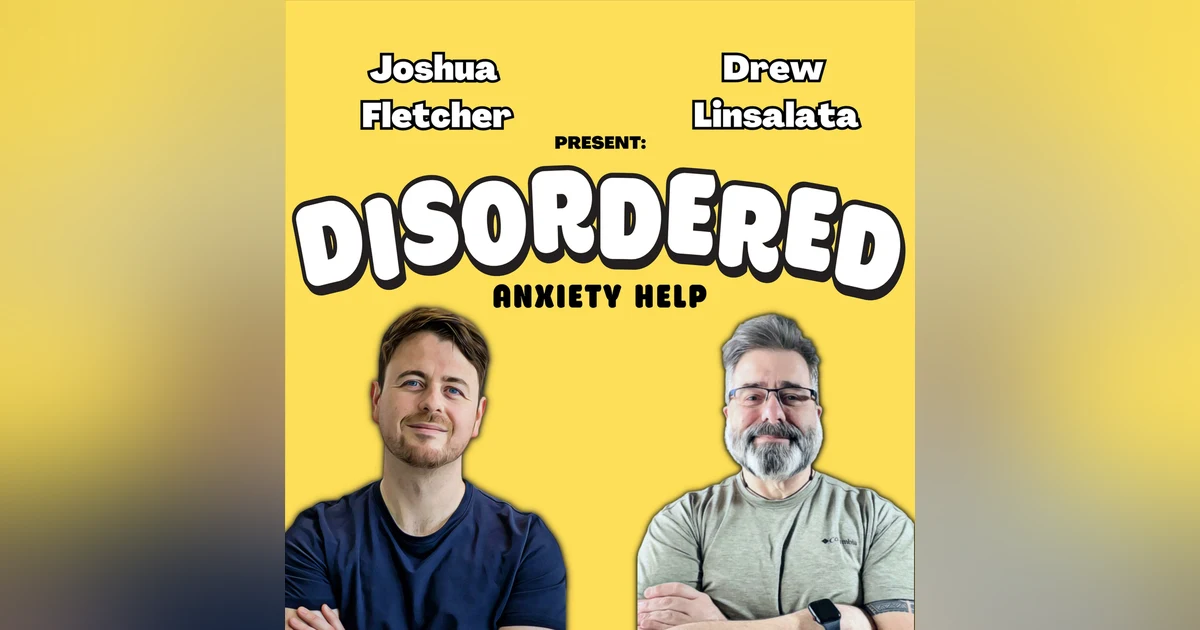

 Apple Podcasts
 Spotify
 YouTube
 Amazon Music
 iHeartRadio
 RSS Feed
 Death anxiety - an obsessive fixation on death, dying and existence driven by intense fear of the inevitability of death - is a very common experience for listeners of Disordered.
This week Josh and Drew were lucky enough to have a chat with Professor David Veale, one of the leading authorities in in the UK on the topic of death anxiety and mental health issues related to death and existence. David helped spread some light and some much-needed humor on this topic that might help you change the way you approach your death-focused anxiety and fear.
The highlights:
Death is in fact an un-solvable problem. This creates discomfort for all humans, and fear is some kind for most humans. That is also unavoidable. Being uncomfortable with death is part of living. Approaching death anxiety means coming to grips with this reality.
We can all experience discomfort around the idea of death because it really is an important topic, however importance and urgency are not the same things. Please keep this in mind. Death might be important, but that does not make it a topic you need to tend to immediately as if it is a current emergency.
Compulsively searching for answers or solutions when it comes to death is a pointless exercise that just makes things worse than they have to be.
Overcoming death anxiety is an exercise is doing what we can do to prepare for death (writing wills, making funeral arrangements, talking about our feelings, etc.), then bring our discomfort or fear with us as we do our best to return to living the best life we can while we have it!
If you are struggling with death anxiety, this episode is worth a listen.
For more on Professor David Veale visit his website:
Find David’s book about death anxiety (co-authored with Rachel Menzies):
https://www.veale.co.uk/news/free-yourself-from-death-anxiety-book-published/
---
Disordered Roundtables are here! Think of it as "Disordered Live", a way for members of our audience to spend time with us in an intimate virtual setting (attendance is limited) to engage in real time sharing and discussion on specific anxiety disorder and recovery topics. To be notified when new Disordered Roundtable sessions are scheduled,visit our homepage and get on our mailing list.
---
Struggling with worry and rumination that you feel you can't stop or control? Check out Worry and Rumination Explained, a two hour pre-recorded workshop produced by Josh and Drew. The workshop takes a deep dive into the mechanics of worrying and ruminating, offering some helpful ways to approach the seemingly unsolvable problem of trying to solve seemingly unsolvable problems.
-----
Want to ask us questions, share your wins, or get more information about Josh, Drew, and the Disordered podcast? Visit us on the web:
https://disordered.fm
---
Disordered Roundtable is coming! Think of it as "Disordered Live", a way for members of our audience to spend time with us in an intimate virtual setting (attendance is limited) to engage in real time sharing and discussion on specific anxiety disorder and recovery topics. To be notified when new Disordered Roundtable sessions are scheduled, sign up for our email list using the form on this page.
Death anxiety is the negative feelings or excessive fear that some people may have about death or dying. It is thought to be what we call transdiagnostic. It cuts across various types of emotional problems: health anxiety, OCD, panic disorder, PTSD, things like that. As they say, nothing is certain but death and taxes. At the other end of the spectrum are those individuals that we're talking about now who really are very anxious and trying to sort out death in their head, but not actually living life now. Fully embrace and accept that this is coming, but now actually you need to prepare for it and live life to the full now.
SPEAKER_02Welcome to Disordered. This is episode 113 of the podcast, Lucky 113. Uh today we're going to talk about OCD, death anxiety, health anxiety, body dysmorphic disorder, all the good stuff. Disorder. Listen to me. Live from New York. It's disordered. So I am Drew Linsolata. I am one of the co-hosts of This Mind Podcast. I'm a therapist specializing in the practice of anxiety and anxiety disorders, a former sufferer of these problems, uh doing much better now, a three-time author on this psychoeducator advocate, dude with a microphone.
SPEAKER_01I'm Joshua Fletcher, also known as Anxiety Josh. I'm a psychotherapist based in Manchester in the UK, who specialize in anxiety disorders, namely panic disorder, OCD, esteem-based stuff. Previous sufferer of uh several anxiety disorders, author on it. You get the gist. Uh, we're very lucky to be joined by another guest today, um, a big hitter in the field, and we love having big hitters in the field on this. Uh, we're joined today by the wonderful professor David Veal. How are you doing today?
SPEAKER_00I'm good.
SPEAKER_01Yeah. And uh David joins us uh from London, which is great, and then we're buzzing to have him on. Uh, for people who don't really know about you, um David, what is it that you do?
SPEAKER_00Well, um, I'm a consultant psychiatrist in cognitive behavioral psychotherapies, which is a bit of a long title, and I'm at the South London and Modelsey NHS Foundation Trust, which is an even longer title. Um, and I'm also so there we have a national specialist service for people with severe obsessive, compulsive, and related disorders and phobias and PTSD. And um I'm also a visiting professor at the Department of Psychology in uh King's College London, and I'm also have a practice at the Nightingale Hospital.
SPEAKER_01See, that was a better introduction than me and you, Drew. We're just we're proper egg in the pudding there. So much better, so much better. Very good.
SPEAKER_02Well, David, thank you for taking time to chat with us today. Always love having an expert on.
SPEAKER_01Yeah, yeah, it's also nice to talk about such an uplifting subject like death anxiety. Uh I think um, but it's a big it's a big subject. We've not yet to cover it uh in the podcast, but it's one that's often requested. Let's start with the basics. So um when you talk about death anxiety and it relating to anxiety disorders and OCD, what might that look like in someone?
SPEAKER_00Okay, well, death anxiety is the negative feelings or excessive fear that some people may have about death or dying, and it can be both in uh about yourself or it could be about a loved one. Yeah, so it could be death or dying, it could be yourself or it could be others. So it's quite a broad topic, and it is thought to be what we call transdiagnostic, it cuts across various types of emotional problems, but especially uh pops up in things like health anxiety, uh OCD, uh, panic disorder, PTSD, things like that. Um, and at one level it's a more obvious thing where people actually spell it out for you know what it is they're afraid of. In others, you know, certainly in research and so on, it sort of cuts across where there's a lot of evidence that uh this is one of the underlying themes that that is very relevant for many different types of problems. Um but you know, it can it can manifest itself in various different ways. So you you could just be spending a lot of time each day worrying about death on your own or someone else's, and um you could be avoiding things that could cause death, which people don't, you know, which you wouldn't typically avoid, perhaps flying, driving, spiders, all that sort of stuff. Uh anything that avoids anything that reminds you of death, like walking past cemeteries, visiting hospitals, medical centres, that sort of thing, watching films, perhaps seeking a lot of reassurance that everyone's safe and healthy or healthy. Uh perhaps sometimes more magical thinking, doing things that you have to, or um prevent, you know, keep you safe, or um compulsively doing things that you believe will keep you healthy and safe, like lots of exercise and over preparing for worst-case scenarios. So there's lots of different ways that it pops up, really.
SPEAKER_01Thanks. You can relate to that, can't you, Drew?
SPEAKER_02Oh boy, that was one of my big things when I was really in the thick of it was I was just gripped. I don't have to tell you, David, you understand this. Like just absolutely gripped. I would be crushed under the weight of the thought, well, I we're all gonna die. Not only me, but my wife, my kids, like everybody I ever loved, were all going. And it would absolutely crush me for a week at a time. And then I would like again on a hamster wheel and try so desperately to find an answer that would make me feel better about that. I don't know what that was supposed to be, but that's what I would do. And it just didn't work out very well at all.
SPEAKER_00Yeah, and of course, as they say, nothing is certain but death and taxes. And you know, obviously tax I can't help you with, but hopefully we can help you a bit with some of the death anxiety.
SPEAKER_02Well tax talk with Professor David DeMiel. Very good, very good. I think one of the things that I find that people ask me all the time is that they will say, but I don't understand. How do you possibly overcome this? Because I am going to die. We are all going to die. How can you possibly handle this? And I'm guessing you hear that question every day.
SPEAKER_00Yeah. Well, the most important thing is be able to live life to the full in the present, without, of course, trying to avoid or control all those thoughts and worries about death or dying. And that means actually, you know, preparing for death, starting with very simple exercises like making your will, writing out your wishes for your funeral, you know, right up to collecting, say, Memento Mori, these are sort of reminders of death. And uh, you know, some people like to lie down in a coffin to contemplate living life as it is now. I mean, there's lots, many, many different types of exercises to actually fully embrace and accept that this is coming, but now actually you need to prepare for it and live life to the full now.
SPEAKER_01Have you done that before, David? Have you said, right, let's your your exposure, your homework is to is to write a will and lie in a coffin. I love it.
SPEAKER_00Absolutely. Absolutely. I mean, to be honest, um, writing a will is actually pretty basic for everybody because if you don't write it, the government has written one for you.
SPEAKER_02It's got one line. That's ours now. That says one line in your government writing.
SPEAKER_00Well, it says where your money or whatever it is is gonna go. But of course, it's not actually the content of the will that's important. Well, it is important, it's the process of doing it that actually helps you to come to terms that this is gonna happen. Um, and we need to prepare for it. Uh, and actually at my own unit, I've just dug a grave. Um where there's a type of memento mori where you can uh selected individuals can actually lie down and um contemplate whether they're really truly living life to the full now because it really does bring it home.
SPEAKER_02Yeah. Oh wow. That's so good. We're getting we right in the deep end on the Monday morning recording.
SPEAKER_01I need to I need to get an allotment. I'm gonna take a grave.
SPEAKER_02So next time I get a little bit too stressed out, I'm gonna I will know what I'm gonna do and go grab a shovel and feel well you can buy cardboard coffins on Amazon as well.
SPEAKER_00The problem is trying to find the right space for them. I mean, another exercise might be to paint your coffin.
SPEAKER_01Yeah, I think there's a room in David's house that you do not want to stumble into.
SPEAKER_02No, the authorities have been looking into it for years. One of the things that I find interesting, I do a lot of act work and like you know, you do that value, people lose track of their values when they're anxious, you get that. And it's like one of the the cool exercises that I love in act is the eulogy exercise. Like, how do you know it's important to you? Well, write your own eulogy. What would you want your best friend to say at your funeral? And when you know when you've uncovered someone's previously unannounced death anxiety, when you say write your own. Imagine you're at your own funeral and they oh the eyes get big and they really tense up. Like, oh, have we not talked? Do you are you focused on death and existence, you know, existence? Yeah, it comes out.
SPEAKER_00So yeah. But actually, things like um there's a journal, the British Medical Journal, which is a very esteemed journal for doctors, um, which actually encourages uh doctors to write their own obituary before they die, um, so that it's fully accurate and up, and then your executor will make it up to date and so they're able to submit it. So, I mean it does happen in real life as well. Wow. Oh I did not know that.
SPEAKER_01Oh well. When you when like are people odd for there'll be people listening to this going, no, this is something I've been ruminating on, fixating on, obsessing about, or you know, maybe in Drew's case, you know, trying to find the answer or solution. Um, is it like an abnormal state to be in, or is it really common?
SPEAKER_00Well, clearly there's a spectrum, isn't there? And there are some people who are doing all the things I've asked them to do and completely at ease with it, and they go to the death cafes and so on and so on. And at the other end of the spectrum are those individuals that we're talking about now who really are very anxious and trying to sort out death in their head, but not actually living life now. So it's definitely a thing. Um, and the the other things perhaps related to it are things like existential anxiety more, you know, the idea that you know, often in OCD, the am I living in a parallel world? Is this truly the world as I know it, and things like that? I'm trying again to it. It's extraordinary the things that as human beings we can uh confuse ourselves with.
SPEAKER_01And again, it wouldn't it sound like you know the quest for certainty what the threat response tries to hijack. Because one of the biggest things we hear a lot from from our community is you know, I know I know rationally I sh you know I I couldn't be doing this, but I just find it really difficult to leave it alone. You know, what what would your approach be to that?
SPEAKER_00Well, so what you're talking about is a rabbit hole, isn't it? And as soon as you start to go down those rabbit holes, we can virtually guarantee to you, of course, that uh it gets darker and darker and more and more difficult to solve, and inevitably it leads to more to stress and a lot of time-consuming and interference in your life. So I think it's really important to try to identify when you start going down that rabbit hole. So it's almost like knowing the cues, because it's a lot easier to get out of it early on, should we say, rather than later on. You know, so it's really important to be able to be aware of when that process begins and really try to understand the function, the intention behind it. Because you know, it's the process, the problem. And it might be in order to try and work out, you know, what's going to happen when I die, or whatever it is. But of course, what we know is that nobody knows, and therefore, you know, the more you try to find out, get answers to unsolvable problems, the more you're just gonna distress yourself and raise more doubts, more questions, because as you say, this is one of the uh problems of uncertainty. And now uncertainty, intolerance to uncertainty, of course, cuts across many different anxiety disorders, but I think it's particularly here where there is one big known uncertainty.
SPEAKER_02Yeah, all right. Sometimes I think the problem is that it is a certainty, like there's no way to wiggle out of this one. But you said before, like people get stuck trying to figure out death. They're trying to figure it out, and there's kind of nothing to figure out other than it will happen. Like that's you land there. And it's hard too because people will understand, like, this is ruining my life. But I I have so many moments to live before this apparently is going to happen, because it's not happening now. Like I cannot, I'm wasting those moments. And they they start to get really down on themselves and what's wrong with me? Why can't I break away from this? But on the flip side, they'll say, but it's the most important thing there is, so it's irresponsible. I should be paying very close attention to this. It's almost reckless to not be paying attention.
SPEAKER_00Absolutely, that is the the the dilemma, isn't it? But the problem is it the key issue, like across many anxieties, is giving up control and being able to tolerate the uncertainty and recognize the limits of your influence and be able to do the things in life which are important to you. I mean, that's the sort of anxiety disorder summed up. Um, but uh that often when there are complexities, it's often best to keep things very simple, I think.
SPEAKER_01We mentioned obviously you mentioned before, and like it's one of death anxiety and stuff, it will overlap with other themes. You mentioned existential and health anxiety. Uh, what are some of the main compulsions or the most common compulsions that you that you see or and that you have seen over the years? What when when those overlap?
SPEAKER_00Of all those different problems.
SPEAKER_01Yeah, so like any unifying compulsions. For me, I always think it's rumination is the main one, but there's other ones as well, isn't there?
SPEAKER_00Yeah. Well, I think it's best to think about these things in a functional way. So um you can think of them compulsions which are designed to undo, put things back to how they used to be. So that's things like the washing or mental cleansing and purifying, things like that, when there is contamination or mental contamination. That's the biggest one, obviously, in OCD. Then we've got all the verification type compulsions, those are the checking ones to try and get more information. Um, and of course, that inevitably increases your doubts and will make you lose your confidence more. Yeah. Then there's the uh compulsions around wanting things just so, just right, a sort of emotional criteria in order to feel just so in some way, yeah. And that's again often in um uh OCD in terms of order and completeness. Um, and and sorry, just going back one for the verification, of course, that the checking ones include all the reassurance seeking and trying to get more information that way. And then lastly, there's the compulsions which are designed more to avoid. Um, so uh things you have to do over and again in order to avoid particular emotions, perhaps. Um so often I think it's often helpful to try and think of these things as the you know, the the not so much the actual content, but the function. Yeah, what's it designed to do? What's the intention behind it?
SPEAKER_02Yeah. I think the the thinking or the mental for me, when I was you know gripped by this, it was a mental compulsion for sure. I mean, there were some physical manifestations, reading, I would be obsessively reading books on the afterlife and spirituality and religion, but it was really more thinking to try to avoid just a horrible, terrified feeling. Like I gotta get away from this feeling and I'll figure it out.
SPEAKER_00So there you were both, as you say, trying to get more information in the hope that you'll get the answer. Aha, someone's gonna tell me. Yeah, and as you say, but equally, um, it can be also about trying to avoid particular emotions like sadness or guilt or whatever.
SPEAKER_01That's interesting to avoid, yeah, particularly with OCD, because of I often say to clients, and I've someone with OCD myself, you know, the the one the one thing I say is, you know, OCD often thrives because it's the opposite of who you are, it'll tap into your values, your guilt, your your sense of self, your morality. Then of course I joke, yeah, but what if I'm the exception, and then around and around we go. Um, but what I would say is like for for a lot of people, whether it's death, anxiety, worried about a loved one's death and stuff like that, it is helpful to reframe it as yes, you don't want to feel anxious, but also you you're trying to avoid other feelings too, like anger, guilt, frustration. And and I think it's a helpful way to f to frame it like that, that this is a what function is this providing for me? Something I I used to have health anxiety a lot, um right now, but yeah, it was it was too I just hated the uncertainty and the and the peril and the frightening thoughts that my brain was trying to that was constantly bombarding me with. Um I think as well what was a game changer for me was that what you just said. It's so counterintuitive. If I put more effort into finding out more and building up my research, research gathering in inverted commas and doing all that, I am chasing the illusion of certainty when actually I already knew, I already had all the tools, but it just felt like that that doing that stepping towards the illusion of certainty is was so addictive.
SPEAKER_00Yeah, and of course it's so easy now, isn't it, on the internet where you just type something in, and by definition, you're gonna get back ambiguous information or more uncertainty or conflicting information in various ways. And uh, you know, we saw that, of course, during COVID, particularly in the early days, where everybody was on the internet trying to find out more and often getting uh conflicting information because nobody knew what the bloody hell was going on. It's inevitable.
SPEAKER_01You missed our uh one of our latest episodes where we're uh talking about putting ice on your vegas nerve and stuff like that.
SPEAKER_02Directly on it, by the way. Like directly on it. Why is it not working? I don't understand something not working. Uh you know, one of the things I think that's tough too is when you say like you're avoiding certain emotions, even if it's just fear, like okay, if it's fear, that's still an emotion. And I think one of the things that sometimes we we miss or we forget, and David, I'm interested in your take on this. You know, if I'm going to allow, if I'm gonna refrain from that like compulsive need to knock down that feeling or get away from it or avoid it or whatever it is, well, I'm left with the feeling. But but if I don't know what to do with that feeling, like what do I do with that feeling? So for me, uh you know, I had to land on like the whole like, well, yeah, one day I'm gonna die, it doesn't appear to be today, so I'm gonna try not to waste today on that. No, fine, but I still had that feeling and I had to bring it with me. What I learned over time was if I bring it with me and I engage elsewhere in my life, I do things that are a little bit more productive, and then that feeling does sort of you know slide off the back end, which is what we know is gonna happen. But sometimes it's just but I don't understand what do I do with that, but what do I do with that feeling? They don't people don't have any idea, like you're gonna have to work with that feeling in some way. There's got to be some emotional processing vocabulary there that you've got to build.
SPEAKER_00The the most important thing I think is often doing nothing and just allowing yourself to experience and notice and perhaps labeling it and being aware of it. But actually the most important thing is doing nothing. And the people who do worst are people who are very intelligent, who want to end up ruminating more and more, of course, in their head. And uh the big the best solution would be to make you very stupid, of course.
SPEAKER_01Sorry, we lost. So David was just suggesting lobotomising people because that will help OCD.
SPEAKER_00Exactly. Yes, that's what he was all about. It's a flippant remark. But the problem is, my experience is the people who are the most intelligent do the worst because they're best at ruminating and um you know, they avoid these emotions and they just drive themselves mad. Really.
SPEAKER_01Yeah, I've done that. I've uh I never say wasted, but you know, I've spent many years of my life doing that. Because um, you know, if you've got half half intelligence like I have, and it's got you out of problems before, when you use that same tool, you know, you to to to the to this, particularly OCD, pure ro stuff like that, uh, or unanswerable questions. It's almost like your ego takes over, like, you know, if I can assemble a shed, I can work out the meaning of life in existence.
SPEAKER_02That's just not what happens, and it's such a hard sell to do nothing. But what do you mean? How is that like just feel it? Just feel afraid? Well, it maybe it's interesting.
SPEAKER_01Why does anxiety come down? And this to both of you, like what when you start living your life, so you let's say you've got death anxiety, health anxiety really acutely, it has all of your attention, then you commit to you know identifying compulsions and anxious behaviors, and you commit to living your life. Why does suddenly the fear come down? Because it feels like you've done nothing to address it, you kind of turned your back on it. Why does that happen?
SPEAKER_00Uh well, because your attention has been focusing on the things which are more important, and your old brain has just been put away slightly, I think, because as you know, your old brain is really devoted to keeping you alive and fight, flight, fawn, freeze, all these things which are absolutely essential when there is an actual threat. But the problem is that the new brain comes up with all these ideas and things which uh you believe are threats when they're not actual threats, of course. So we do have tricky brains. And um this is one of the beauties of being human and what keeps psychologists and psychiatrists and everyone else in business having a tricky brain.
SPEAKER_02That's a good point. I I tend to be like uh a little bit of a nerd or a geek, if you will. I'm not sure which one is proper, to be honest with you. I'll take either, I guess. Like the science of attention and cognition and that sort of I just I I'm knee deep in that all the time. I love it. And it it would appear that the more we learn, like our brains are terrible at staying focused on things. We are probably better off if we our attention goes wide and is looking for different things because that's a survival mechanism. So you have to work overtime, like from an energy and a metabolic standpoint to stay laser focused in the idea of your own death is really hard work. So if you can just let that be and drop that effort, your natural like low attention span, which helps us be aware of our environment, which helps us stay alive, will kind of come back in. So we're not very good at staying laser focused. People that get fixated on these things are working really hard to maintain that focus. In fact, when they find that suddenly they've lost that focus, that's that whole like I I I'm not thinking about it. And then they work so hard to go back to the problem that they think that they're trying to solve. So if you leave it alone, the natural tendency of a human brain to wander into other places is gonna bail you out of the feeling sooner or later. But you gotta let it do that. How's that for some armchair science on a Monday morning? It's better than digging holes. All we've been talking about is digging holes, man.
SPEAKER_01So sorry, I was just ordering a uh coffin or Amazon. Nobody heard anything I said. Everybody's doing this. I think my partner might have something to say about that. What's some of kind of the most you know, when we're talking about CBT, stuff like that, what are some of the most common interventions? So we've mentioned like exposure, confronting the fear head-on. Uh, what other things come to mind, David?
SPEAKER_00Well, when we talk about exposure, I just want to highlight that it is tolerating distressing emotions, but also about testing out to see whether the expectations are actually true or not. And it's very important, I think, to be able to make a prediction and be able to see whether it's true and whether it best fits with a different understanding of the problem. Because I think unless you do that sort of post-mortem, um, it you you're not going to learn as much from what you've done.
SPEAKER_03Yeah.
SPEAKER_00Making sure you do it in a planned way, consistently, regularly, daily. Uh and so on. These are the most powerful ways of trying to help change uh your beliefs and uh your understanding of the problem.
SPEAKER_01And I often say to my clients as well, like, it it's okay to be a death, but how much of your day is it taking up? You know, I'll I'll get the I'll get the thought now and then, and you know, it for my for me it's intertwined with grief. It's very you know, I think it's not surprising, very human that if you've been close to grief and and seeing that, then you know that your threat response and death anxiety is gonna be close to that. But it's about you know how long how much of your attention is this actually getting and how much of it is consuming your day. And or we call it the hamster wheel, just how much of the hamster wheel have even spent sprinting on there and going absolutely nowhere.
SPEAKER_02I think the the thing that you feel is so important will continue to be important. Your health is important, death is important. Yeah, that's all of that is true. I think sometimes that's a thing that people forget to when they're in the middle of it. It's yeah, but it it's always going to be important. Yes, it will always be important, but that doesn't mean you have to treat it as urgent all the time. So it's starting, you know, part of that is learning the difference between what is important and what is urgent. They're not the same thing.
SPEAKER_00Yeah, and and recognizing the limits of your influence and responsibility, uh, in other words, the degree of control you have, because you know, you can live healthily, and I'm very keen on lifestyle, but it's bloody difficult to do, you know, to be able to exercise, to be able to sleep well, to eat well, to be able to be connected with others and everything else. These are really important things to do, and they can definitely improve your quality of life, but it's the a lot of these behaviors are very habitual and they're very difficult to change.
SPEAKER_01Yeah. Start start with one off and say, um, I just want to say as well, when you're looking at this type of anxiety, why is it important for particularly our community, people with anxiety disorders and OCD and maybe things that that go with that? Why is it important to have a specific therapeutic approach? And I say this in reference to a paper that came out recently about particularly in the UK, uh, you know, it's always the UK, you know, don't regulate therapy and see what happens. Um what what um why is it important to have the the correct intervention as opposed to someone just shouting very loudly on YouTube?
SPEAKER_00Yeah. Well, uh we have published something recently on um individuals with OCD who have um had well they've seen OCD coaches who have been unregulated and you know, as far as I can make out, unqualified in various ways. And frankly, they've been emotionally abused, um, financially abused, and lots of other things. Um, you know, if we have a system where people aren't regulated, in other words, that we don't say you have to have your continuing professional development and you have to have supervision and you have to have some ability to make complaints and so on, which can be ultimately uh investigated and if necessary taken off the register, you know, this is what's going to happen. And so, you know, regulation is important. And uh otherwise you're gonna get that sort of abuse and continue.
SPEAKER_02I have a couple of people that I'm working with right now that have been down that road. It's it's heartbreaking, it's actually heartbreaking. And I think one of the things that uh David's paper is really great. I read the whole thing and it's awesome. And I think one of the things when we're talking about OCD treatment, especially with stuff like this, health anxiety, things like these things are so important, and you're struggling with it. And if somebody is saying that they can help you and it's not helping, and then it is turned back on you because you're just not following the instructions correctly, you're you're you're you're questioning me, the guru coach, too much, and you're not fully bought into the unconditional self-acceptance that I tell you will fix you. This is these are hard problems to solve and they take people a long time to work through, and you get there when you get there. So if all I would say is in the context of OCD, especially, if it's if it's not working out for you, it's okay, whether it's a qualified, unqualified coach or a therapist, to wave a flag and say maybe we gotta move on to somebody that I'll connect with better or a different approach. That's okay to do that. Just kind of throw that out there.
SPEAKER_01Yeah, and we have um particularly with OCD as well. It's a very still misunderstood condition. The the vast majority of uh psychotherapists that I know aren't trained in it, and the good ones will say, Well, you know, I'm not trained in it, I'll refer on, and um, I'm trying to build up a database of people actually qualified in ERP or ICBT stuff like that. Uh, but yeah, just because someone can tap into your phenomenology and your experiences because doesn't mean that they have the answers, and this is how and this is to all the listeners as well. This is how and and go check out David Veil's research as well, it's a really interesting paper, and um kudos to the uh to the participants that are willing to share that because I know it's it's it's dredging up horrible things. Um, but yeah, it's just important that you, particularly with OCD, you know, that you have the right um intervention. And uh yeah, I wanted to thank David for for doing that research because I've been banging my head against the wall for ages trying to get more attention to what's I mean it's a very modest little contribution because it's only based upon a sort of qualitative study of small interviews with about uh seven or eight people.
SPEAKER_00So, you know, it's it's a little start, but I think it's important to document it and to be able to look at the themes that are coming out. I mean, as you highlight, you know, you can get bad um bad therapy delivered by regulated professionals as well, but at least there is some recourse if that happens. Yeah, absolutely.
SPEAKER_02Well, what do you say we uh I was gonna oh I'm sorry, Josh, I stepped on you.
SPEAKER_01I was gonna You carry on my American friend.
SPEAKER_02I will very good carry on, me and the hum in my microphone. Sorry guys. Um I what I thought we might do, since we have a super expert dude in front of us here, more expert than you and I, which isn't that hard to do. We have a question from one of our listeners that is right I will add David, is it okay if I ask you the question? Okay, by proxy. So this person, I won't send the the say their name. They emailed us a few days ago and they said, Your content is helpful for the panic attacks and health anxiety, in parentheses, because they can go away or at least become manageable. But I'm struggling to see an end to death anxiety due to its inevitability. No matter how much better I get, I am going to die one day. Is this a normal feeling that people report in the death anxiety struggle? And is there any particular practice or technique to try to become comfortable and accept this inevitable outcome? No pressure. You have about three minutes left. Can you please just solve this person's entire problem? But I did not know this was in our inbox until just now. I was looking and I'm like, wait, let me look at the questions I'm coming out.
SPEAKER_00I think I'm going to go back to what I said right at the beginning. That here is somebody who is trying to sort out death in their head, and there are many different ways of doing that by trying to get newer answers, get more certainty, trying to uh get more information on the internet, um, avoid certain things that remind them and so on. So, what I'm saying is you have to prepare for it, because it is gonna happen as your reader, your reader, your podcast, your um respondent says, therefore, prepare for it. It's gonna happen, and therefore, actually do the things that you need to do that you can do, whether it's right your will, or prepare your funeral wishes and things like that, put them to one side and get on with living. Yeah, put all your effort into living life to the full because there's lots to be done.
SPEAKER_02But I'm still afraid, Professor Real.
SPEAKER_00You are afraid. What am I doing?
SPEAKER_02Afraid is part of living. Ah, that was worth the price of admission right there. That is part of living.
SPEAKER_00It is. I mean, that's part of being human. And if this if you're trying to get rid of emotions, then sure, you perhaps um sometimes taking some medication might help get rid of it or something. But um, it's really, you know, you need to be able to live.
SPEAKER_01Yeah, yeah. Thank you for that, um, David. I was really appreciated that. Uh, you wrote something, you wrote a book, co-wrote a book on on death anxiety and stuff, didn't you?
SPEAKER_00Yeah, well, I wrote it with Rachel Menzies, who's the leading psychologist in the world who's done all the academic work on death anxiety. It's called Free Yourself from Death Anxiety, and it's um published by um uh sorry. It's all right by Jessica Kingsley.
SPEAKER_01Jessica Kingsley. Jessica Kingsley publishes. That's brilliant. And and so, yeah, um great resource there. Uh I haven't yet to read it yet because I've just finished writing my own and I can't look at words anymore. But um, yeah, that's um what was it called again? Sorry, David, remind people.
SPEAKER_00Uh free yourself from death and fighting. I'm afraid, as you know, book publishers like to come up with the most awful titles.
SPEAKER_02I you know, I appreciate I cannot tell you how much I appreciate you saying that. There's the dude that wrote the book that was like, well, I'm kind of cringing at my own title, but I didn't write it, I swear there was the publisher.
SPEAKER_00No, well, but you know what they want to be able to have catchy titles, don't they? It's like the overcoming series. And yeah, sure, you want to have a nice positive title. We've got overcoming OCD, overcoming health anxiety, overcoming body dysmorphic disorder. But you know, it's tough to overcome, and you know, many people still have often residual symptoms. So um it is tough getting over these problems, but I want to give you able to give as much hope as possible because it is possible, but um it's tough. It requires a lot of courage.
SPEAKER_01I love how you cringed when you said free yourself.
SPEAKER_02Yeah, you guys could see the video, that was worth it. That was great. Totally get that.
SPEAKER_01Um you remember it though, wouldn't you? And plus you got these books are up against TikTokers and oh.
SPEAKER_00I'm I'm surprised that people still read.
SPEAKER_02I mean, do they I always find it uh amazing too, because that you know, so many of our colleagues and our friends and our collaborators have written, and especially when they're writing with like New Harbinger or those public those publishers who are so much more academic in the titles and the covers. And I'm like, how is anyone ever gonna find this book? Because it's right next to somebody that's basically saying three fast days to no more anxiety, and next to it is looks like an act, somebody's PhD thesis. Like, but that one's much better. Like, read the thesis.
SPEAKER_00Watch the TikTok.
SPEAKER_02Yeah, yeah, exactly. If you guys go to yeah, disorder.fm slash one one three. I will make sure I have links to the book and and and David's website and stuff so you can see which he's got he's got going on. There's a lot of really good stuff there. So that's really good.
SPEAKER_01Thank you so much for joining us, uh Professor Vill. It's uh it's a pr it was a privilege to meet you. Uh I was I was uh I missed you at the BACP conference a couple of years ago. Um because I was Oh, are you coming to to Glasgow? I'm not, I don't think they'll invite me back. They put me on the they put me on as a keynote speaker and I started banging on about trauma theories uh of how they're not helpful sometimes, and uh I don't think people like that.
SPEAKER_02So they just do you mean you won't be invited back to the conference or the whole city? Does Glasgow just not like you? Is that a private?
SPEAKER_01I'm banned from London. No, no, no. Uh I might do I might go out there actually. Um yeah, but I'm not talking yeah, yeah, yeah. Um no, I'm doing the festival circuit, David. I'm doing I'm doing music festivals this year. I I swear to you, I'm talking about uh third wave CBT at music festivals to a load of people on with hangovers and come down. At Brady Fest.
SPEAKER_03Very good. All right, guys. Thank you, David.
SPEAKER_02We appreciate you again. Welcome to all David Links at Davidlinks at disordered.fm slash one one three. And uh what else? Is that it?
SPEAKER_01Yeah, that's great. I'm gonna go enjoy my coffin. Thank you, David, and have a lovely rest of your day.
SPEAKER_02Very good. Take care, everybody. We'll see you next week.