
When The News Triggers Anxiety (Episode 126)

 Apple Podcasts
 Spotify
 YouTube
 Amazon Music
 iHeartRadio
 RSS Feed
 How do you handle anxiety when the news feels overwhelming?
With constant exposure to current events, political tensions, and global crises through social media and traditional news sources, it's no wonder many people with anxiety disorders find themselves struggling.
This week on Disordered we're talking about the complex relationship between news consumption and anxiety, discussing when avoidance might be helpful versus when it could be problematic. You'll hear about the difference between primary anxiety (normal human responses to disturbing events) and secondary anxiety (fear of your own internal experiences).
Key topics covered:
- Why we weren't designed for constant exposure to triggering content
- The nuanced difference between protecting your mental health and avoidance behaviors
- How news consumption can trigger OCD themes and intrusive thoughts
- The importance of metacognitive awareness in making decisions about news consumption
- Compassion fatigue and the reality of having finite emotional resources
- Practical strategies for finding balance in staying informed vs. protecting your wellbeing
Listener highlights:
- A powerful "Did It Anyway" story about overcoming religious scrupulosity OCD
- Another inspiring update about relationship OCD recovery
- A thoughtful question about wedding anxiety and planning major life events while managing panic disorder
Whether you're someone who doom-scrolls for hours or completely avoids the news, this episode offers a balanced, reality-based approach to navigating current events without letting anxiety make the decisions for you. We emphasize that there's no one-size-fits-all answer – it's about developing the awareness to know why you're making the choices you're making.
---
The Disordered Guide to Health Anxiety is almost ready! We're in the editing and cover design phase, shooting for publication before the holidays arrive. Pop over to disordered.fm to get on our email list so you'll know when the book is released.
---
Struggling with worry and rumination that you feel you can't stop or control? Check out Worry and Rumination Explained, a two hour pre-recorded workshop produced by Josh and Drew. The workshop takes a deep dive into the mechanics of worrying and ruminating, offering some helpful ways to approach the seemingly unsolvable problem of trying to solve seemingly unsolvable problems.
-----
Want to ask us questions, share your wins, or get more information about Josh, Drew, and the Disordered podcast? Send us an email or voicemail on our website.
---
Disordered Roundtable is coming! Think of it as "Disordered Live", a way for members of our audience to spend time with us in an intimate virtual setting (attendance is limited) to engage in real time sharing and discussion on specific anxiety disorder and recovery topics. To be notified when new Disordered Roundtable sessions are scheduled, sign up for our email list using the form on this page.
Hi, Drew and Josh. My name is Amy and I am from Ireland. So I have noticed that I'm experiencing really high stress with everything that's going on in the world at the moment. I'm trying to avoid the news as much as possible, trying to stay off my phone and not go doom scrolling. But I'm seeing it everywhere. I'm seeing it on newspapers, I'm overhearing conversations. You know, there's no way to kind of hide from it. What would your advice be for people with an anxious disposition to protect ourselves from this kind of thing? Is there anything we can do? Or should we be exposing ourselves to it in the sense of, should I watch the news and force myself to kind of try and see what's happening in the world? And you know, when you feel so hopeless, it's really, really hard. It's a different type of stress I'm feeling lately because there's literally nothing you can do, but you're exposed to these huge, awful things every single day at the moment. What's the exposure? If any, what can we do? And hopefully things are going to get better soon, but in the meantime, I think we all need a bit of help. Love what you do, and looking forward to hearing your opinion. Thanks.
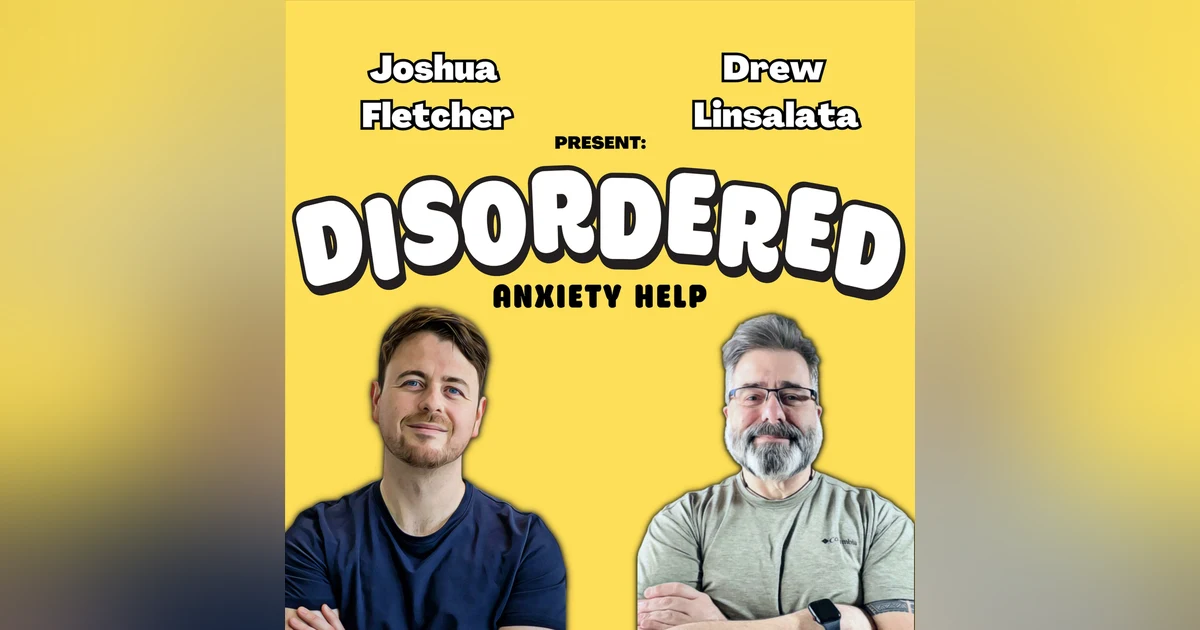
SPEAKER_02I'm Joshua Fletcher, also known as Anxiety Josh, and I'm a psychotherapist and author specializing in the world of anxiety and anxiety disorders. And I am joined by my esteemed co-host.
SPEAKER_03I'm Drew Linsolata. I am also a therapist treating anxiety and anxiety disorders in New York, former sufferer of these things that we talk about here on Disordered, also an author on the topic, podcaster and social media dude, and all that stuff. And yeah, today we're going to talk about the news and when the news riles us up and gets us anxious and gets us stressed out. So thank you, Amy, for sending in that question because I think many people are have that on their mind right now. I don't know what do you think, man?
SPEAKER_02Um, I th I've seen people get triggered by all sorts of things. And when I say triggered, I don't really like using that word, but when they when they find it overwhelming, sure. Um, and it depends whatever's on the news, it could be anything. The the the current world atrocities, tensions, political tensions, wars, you know, depending on where you are in the world, the news might be a bit different from what you see it. Um, and uh can that contribute to anxiety and stress, and particularly when we're in a sensitized state? Of course, it can. Also, I know people with OCD who will be afraid of what they see in the news, and somehow the OCD can latch onto that. Um, it just depends. And I think obviously the news is an everyday thing, and people with anxiety disorders are everyday people. Uh, and we'll explore where that kind of overlaps today.
SPEAKER_03Yeah, I agree. I think um, I mean, I I don't know, I guess I don't mind the word triggered in this context. I mean, world events, the news, just what's going on in the world. Yeah, the world has always been a really difficult place. Unfortunately, we see everything that goes on now. And I think not only do we see it almost in real time, but we get everybody's hot take on it, which is you know, to validate the experience. Like, we were, I do not believe we were designed to stand in front of a fire hose of instant current events, instant, like we want to keep your attention so we have to trigger fear and outrage and anger, and everybody screaming into a bullhorn on their opinion. And I, by the way, people on all sides of these issues feel are feeling really upset right now. So, this has nothing to do with what your politics are, but yeah, I think a lot of people we were just not designed for that kind of input to come at us continuously during every waking moment.
SPEAKER_02It's crazy. It it often brings into the question for anxious people uh who often and they're more than their anxiety, but the anxiety will exacerbate the need to stay true to their values. Uh, I often talk about compassion fatigue with people, so on the news, you'll see lots of horrible things, and then anxious people might feel bad, you know, like, oh, there's a war going on here, there's atrocities going on in this country. Um, there's this politician said this, this person's been assassinated and whatnot. And I often find that you know, for anxious people, they're like, Well, I do care about that, but I'm I'm anxious, so actually I don't, and I'm finding it and going inwards and internal, and it's making me more stressed. And what I'll say is that's absolutely fine. There is no hard, fast rule on your relationship with the news, it's completely okay. And I say the news, it depends what news you watch. It's a TV program at the end of the day. Yeah, it's a publication from that particular newspaper at the end of the day, you know, it's what they choose to show you, yeah, you know, and and if you want to choose not to choose, you know, if you want to choose not to tune into what they choose to show you, that's okay. You know, you don't have to always be informed. I always go with the rule of do what non-anxious you would do. So sometimes I'll just flick on the news, see what's going on, flick off, you know what I mean? Um, but sometimes anxious people, it's they can have a yeah, very difficult relationship with it, whether it's scrolling on TikTok or Instagram or on Apple News on their phone or on the TV or in newspapers. There's very different relationships with it, isn't there, Drew? I found that. Like some people are scared, it overwhelms them, but they can't stop watching it. Yeah, some people just categorically no, like the question sender in and Amy said, I kind of like no, I need to put a boundary there. That's okay. When it comes to the community of this podcast, and it's a great question, where's the balance?
SPEAKER_03Yeah, and well, I think it gets really difficult too because sometimes we've we've talked about this, not all anxiety is disordered anxiety, and not everything is a facing, floating, tolerating exposure problem either. So nobody is required to sit down and like force feed themselves current events through various channels to in order to make sure they're not avoiding, like air quotes avoiding. And I think part of the issue would be that so there's two sides of this, like you said, there's the people who like, no, no, no, no. When I see these things, I get feel a certain way. And since I have declared my internal experiences off limits and unhandleable, I have to shut everything down. I cannot see anything that will trigger a difficult internal experience for me. And on the other side, these things are triggering big feelings and difficult internal experiences. So I watch more and more and more to try to find the thing that will make me feel better about this. I need to find the people who agree with me and hear their outrage at the other side or whatever. And I just keep scrolling. And then at two hours later, I'm not feeling any better. I might be feeling more justified or right, maybe in my view, but I'm still really upset. So the balance to me is well, what if you decide, well, I'm gonna take 10 minutes, pick one media outlet, and see if I catch up on what's going on, and then I'm out. Okay. I mean, that might be a way to, I'm just offering a suggestion here, but you know, finding a balance between like you know, no news whatsoever. Um, especially if you ask the question, sounds like you don't want to do that. I don't want to isolate myself. I do want to know what's going on in the world. I'm just afraid to. That's a good clue.
SPEAKER_02Some avoidances is okay as well. Like if I'm burnt out, I do not put on the news. I am I'm avoiding, yeah, 100%. You know why, and you know why? It's because I am avoiding that internal sensation. I'm trying, I'm having a nurturing day. Now, if I've got panic disorder and I don't like feeling panicky, and I oh don't put the news on, I might panic. Right different. I'll be like, I'll put on the news. I'll be with the feelings that come. Yep, but it's different, it's it's different for each person. But what we will say is that universally the the news can be overwhelming, whether it's current affairs and whatnot, and particularly with the amount of things we're shown now as well. There's lots of things that were shown, and they're very explicit, and everything feels very fervent and intense. Yeah, you know, it's not just a news headline from 20 years ago. You sit there, maybe chat to a family member about it, or a friend or a friend, or whatever. You hear, like you said, you are bombarded with this messy, loud, screaming debates of people having to have to say something about it. Um, I thankfully I don't like to do that. Although you could class this as saying something about it, um, from a you know, from a top-down point of view. But yeah, don't be surprised that you feel overwhelmed when you're seeing shocking events and then all the aftermath and stuff like that. What I'd recommend with with clients and stuff is and if you're not burnt out, but if you're like, oh, I don't like how that makes me feel, I'm afraid of anxiety or I'm afraid of the intrusive thoughts that come with it. Just be like, okay, I've seen a bit. What am I doing with the feeling afterwards? Let it be there. I've stopped now, but let the feeling be there. Don't need to intervene and move on. And that would probably be where I start.
SPEAKER_03Yeah, I would agree with that. If you're on the on the other side where you are scrolling, you're over consuming news and you're having a hard time not doing that, or you're not sure. Should I do I should I stop that, or am I avoiding if I don't scroll as much or if I don't watch as much news? Well, if you're left with a worse feeling when you turn off the TV or you get out of your social media scroll, that's the feeling you got to work through. Because for some people, the anxiety is, oh my God, the world is on fire based on your view of things one way or the other. And there's nothing I could do about that. Or like, I need to keep hearing that what I believe is right. So if I stop, I might be left without the confirmation and validation that I crave on my view. So, like, okay, well, then that's the hard feeling you're gonna have to work through. You said something good though. Like, avoiding triggering things is if you are already in a burnout mode or you're just already stressed, there's other things going on in your life, you come into the news that day already in a difficult internal experience. So, like, yeah, I would 100% like if things are going tough for you, you're having a tough time right now, like turn off the TV. There's nothing wrong with that, it's not avoidance at all. But I think if you're spending your days trying to not ever be triggered and just be calm all the time, well, then I don't want to turn on the TV because that will I can only exist in that state. Then there may be some avoidance. Yeah, it's so nuanced, man. It's going to be individual from person to person.
SPEAKER_02And non-anxious you and people without anxiety disorders, because like as Drew often says, not everything is an anxiety disorder.
SPEAKER_04Yeah.
SPEAKER_02Like I remember like I had a memory of my mum coming home after a really long day at work at a Citizens Advice Bureau, really stressful, doing all she got in, she was just like, Turn the news off. I cannot be bothered with that at the moment. Because she was just stressed, like, I don't want to hear that. You know, it doesn't make her a bad person, just like we all have to live our own lives to. Found that really interesting. But it is a nuanced topic. Um, but could before we get into it a bit more, can we please have something from the community?
SPEAKER_03We totally could. I will say though, that the Citizens Advice Bureau sounds like a Monty Python sketch. Is that a real thing? It is. Is that like the argument clinic?
SPEAKER_02I think it is. I like the Citizens Advice Bureau. It's a very good institution in the UK. I'm sure it is. Let's hear it did it anyway.
SPEAKER_01I'm not gonna say I had my first panic attack because I've had panic attacks before, but it was my first time ruminating on why I had the panic because the intrusive thought went against everything that I believed in. I was like, why am I believing this? Because I'm not religious. I was having intrusive religious thought, and I was like, why is it happening? And because my family are very obsessed with religion, I thought I was going crazy. I thought I was gonna become like my parents. I actually felt trapped because I was like, I need to wait for this to stop in order to live my life. But through your channel, I learned that I just need to live my life, not ignore, but just acknowledge that it is there and do the things that I want anyone. So now I'm going to go and work abroad, which is very crazy to me. I wouldn't have thought that I would be here. So through it all, I did it anyway, and I'm still doing it. Love all the way from Morocco, North Africa. Like these things are not accessible to us here. So I'm grateful that I learned all these things from you. Goodbye.
SPEAKER_02I love that. That was amazing. I it's not often you hear a religious scrupulosity OCD theme from someone who isn't religious. I know. I love it. Right, yeah, yeah. Oh my yeah, and um, because that's the nature of OCD, it's still tapping into values because well, my family are very religious, and I'm very close to my family, so therefore, why am I having these thoughts? Uh, but great awareness, yeah, and great did it anyway. I mean, that's that's so good. Yeah, we need some more OCD did it anyways, throw them in. In fact, if you'd like one now, I would like another okay.
SPEAKER_03Here's a written is this one from Morocco, though? Because Morocco, I don't know if we had Morocco before.
SPEAKER_02We haven't had Morocco yet, we're ticking off all them. I like Morocco. I spent Christmas Day in Morocco many years ago.
SPEAKER_03No, no, couldn't love it, yeah.
SPEAKER_02Yeah, it was 20 degrees. I had my shirt off and I was lying down. I was like, this is Christmas, and then I went and ate uh goat head curry, which was delicious, and then I had a tajin. Um, and then I wanted a beer, but obviously Morocco is a predominantly Muslim country, but they do have beer in a supermarket. I remember being escorted by two men with guns, and I was like, Wow, this beer better be good. Wow, and uh is it expensive beer? Not too bad, actually. No, no, no, no, it's just for like idiot tourists like me. Um cool. Here we go. This one is from Sophie, and it's another OCD, Did It Anyway. Um, hi Josh and Drew. I'm currently in the process of a Did It Anyway that I wanted to share with you guys. My name is Sophie, and you can use my name. I've been suffering with ROCD, that's relationship OCD, for over a year now, and a previous sufferer of other OCD topics. I know many people may set may say this, but my current one feels like the worst ever. Yeah, that's what OCD does, and I've really struggled. Anyway, this morning I was triggered by social media and some intimate conversations with my partner. All I want to do is go inwards and check, find the missing piece, and figure out what is truly wrong. But I'm resisting. The feelings are there, the thoughts are there, but I'm just getting on with my day, and I feel really empowered. I know it will pass. I absolutely love your show and thank you so much for your advice. I recently found a great therapist for ROCD after talk therapy, which felt like I was only ruminating. Advice I got from you guys. Thank you so much.
SPEAKER_03Oh, love it. So hard to not do the thing that that is screaming at you to do. No, no, no, dig in more. Like check that and replay that conversation again. Find the root. Oh, so hard. Yeah, be sure. Do I do I really feel this? Really feel that way. It's is really that was difficult. So good job, Sophie.
SPEAKER_02Not easy. Yeah, and and triggered by social media as well. Is that I mean it loosely falls into today's subject. But yeah, how many people are gonna have their own anxiety disorder conditions triggered by shocking news?
SPEAKER_03Yeah, and I yeah, that's a normal situation. Like that's normalized that. If the news is putting you into a spot where you're feeling a certain way, well, like a lot of anxious people as soon as they open an app or turn on a screen, they may see something that's gonna put them and make them feel a certain way that they hate. So it's kind of normal, to be honest with you. And it's far too common these days, too. I don't want to get off on like a screen rant, but at the same time. Please, please screen that. Uh we'll just say we'll do that in another episode. But I think one of the, you know, Amy in her original question is, well, what's the exposure, if any? Well, the exposure, if we come back to that question, it's always the internal feeling. It's always the thoughts, the sensations, the internal experience. The news is not the exposure, the news is just the thing that triggers that. So if you're wondering what I am supposed to do with the news, whether I'm over consuming or under consuming, and I don't like that. Well, look at the way you feel, and then you have to work through that feeling. So it's not really about the news, like, pay attention to what's happening inside of you, and that's what you're working on learning how to handle. So because I think it's really important. Nobody needs to know how to accept like crap in the world. Like, we don't have to accept that the world sucks. That's not that's like nihilistic bullshit. Like, that's not it. We're learning to accept the way it makes us feel as not being a threat. The feeling isn't a threat, we can handle that, but you don't have to accept crap. Maybe you want to take some action, who knows? Like volunteer or get involved or vote, or I don't know, like whatever's right for you. But we're not trying to accept the news, we're trying to work through the feeling that the news makes. Really important, yeah.
SPEAKER_02Yeah, what about for people like who say, Oh my god, no, I'm I often find that in when people who perhaps haven't listened to the podcast or the principles that we pontificate about. It's like, you know, I've tried everything to get rid of anxiety. You know, I've cut out caffeine, I do this, I don't do that. I I cut off the news, I've done all these things. Yeah, these are the people that like what would you say to someone like that?
SPEAKER_03Well, I think in a way, Amy did mention it in her question. She said, What should us anxious people do to protect ourselves?
SPEAKER_02Ah, protect.
SPEAKER_03Yeah, I gotta protect myself. I have to protect myself from triggers and things that will make me feel a certain way. I would, I mean, again, we have to be careful. In the case of an anxiety disorder, we don't want to do that. Like, that's part of the problem, is like, no, no, no, I can't allow certain feelings or ideas. If you're just if you don't have an anxiety disorder and you would prefer to not immerse yourself in crap for three hours after a long day of work, okay, that's kind of good advice. But if you really see your internal state, your thoughts, your emotions, your sensations as a danger, a threat, or unhandleable, overwhelming, we cannot protect you from you. Like that's a terrible way to try to live. We don't want to try to protect ourselves from ourselves.
SPEAKER_02So it reminds me of the episode we did not so long ago about semantics, the power of words. Yeah. When you say things like, How do we protect ourselves? Yeah, what are what are the connotations with that word protect? What is your brain thinking and believing about experiencing uncomfortable emotions? Yeah, because what's the what's the opposite of well? What does um protect imply? Protect implies attack, incoming damage. But actually, no, for a lot of people it's not incoming damage, it's incoming discomfort that we're afraid of.
SPEAKER_03Oh, very good. Discomfort is not the same as damage, both begin with the letter D. Welcome to this episode of Sesame Street, but at the same time, damage and discomfort not the same.
SPEAKER_02So do you know what else begins with D?
SPEAKER_03I don't know. I can't wait.
SPEAKER_02Derylum. Deryllium?
SPEAKER_03I didn't expect that.
SPEAKER_02Nor did I.
SPEAKER_03Yeah. Uh, I don't know. I think the protection you're right. It it is it indicates an attack, it indicates damage, it indicates threat, it indicates something that is should not ever be allowed. I love when we get pleased with ourselves. How do you people even listen to us? I'm just watching them yuck it up over there in Manchester. But I promise, while we get too silly, like how you feel inside, you don't have to protect yourself from your own feelings. But again, we have to be really careful because you don't have to choose to immerse yourself in stress 24 hours a day, seven days a week. But if you insist that you can only cope and be okay if you're neutral, calm, or happy, you can't allow any kind of discomfort, distress, anxiety, uncertainty, fear, well, then we have to go toward those feelings so you can learn how to handle them because they're gonna come one day, no matter what you do. So we got to be careful about that protection thing. Now I got to protect myself from all this negative energy. Well, if you're already stressed, then fine. Don't watch the news, like we said before, but you gotta not, you can't see your own your own self as the enemy. That's a problem.
SPEAKER_02If you look at things through the lens of recovery, and I always say that word loosely, and so you know, I always think I might ban it until I find a better one. But let's say you have recovered and you're living a good life. A key tenet to that is trusting your metacognitive awareness. Very good, trusting your ability to know why. So it might be no, I do not want to tune into my social media feed and the news at the moment because I'm going through a divorce, my job is uncertain. And um, my pets just died. I you know what? I know top down that I just don't want to look at that now. I need some nurture time for me, you know. Also, though, you might be the same person and you might feel resensitized again, but that metacognitive awareness is there. So you're like, yeah, I'm feeling crap today. I have a panic and intrusive thoughts, and I've been inwards and I've been compulsing, and I feel really on edge, and I feel scared, and all the news is on. Uh actually, what would non-anxious me be doing? Because that's now actually avoidance from my disordered state. Yeah, but I know it's actually healthier and compassionate for me to work on the disordered state because that's exhausting. So I will flick on the news for five minutes, maybe as a miniature exposure and whatnot, because I want to be able to live my non-anxious life again, and it's that nuance, but the universal factor is there is a solid metacognitive awareness. I know why I am doing this, and I think that's what will take you through. I personally have just tuned out of most of the news at the moment, not because I'm afraid of panic, but because you know, I everyone has a limited amount of compassion. You cannot have compassion for every bad thing in the world. Compassion fatigue is a real thing, it's getting worse because we're bombarded with information and everything like that. Um, and so I have to to reserve and protect my compassion that's true for my clients and for my work. You know, if I get after work, if I get home, see the news, new trustees, and I flick over to some trash, that's me protecting my own resources of compassion. And I invite you to do that as well, whether you know you're working, you're a parent, you've got you're you're in a helping profession, you're a nurse or a doctor, whatever. Yeah, you do only have fine resources around compassion, and you're not a bad person. If you're like, you know what, I want to kind of save those resources and tune out today.
SPEAKER_03Yeah, I I hear you on that. I think we can even add a little wrinkle. Like, if you are in a state where, like, well, I don't want to watch the news because I've had three panic attacks today, or my OCD is really in overdrive, and I'm working hard at this, and I understand that like I'm I'm already trying to handle my internal state. Well, then that's a fine reason to not flick on the news. If you are aware enough to know, I have to maybe just sit quietly with these feelings for 10 or 15 minutes because I've been fighting them all day and I've I've been really haven't been doing very well with my tolerance and my acceptance. You don't have to flick the news on to pile more on top. If you already know you're in that state, then but you have to be working on it as opposed to I can't pile on the news because I'm trying to eliminate these feelings and thoughts, and that's only going to make more. Well, that's different. So, as you can see, there really is no one size fits all answer. And like, well, what's exposure for the news, or should we not watch the news? Don't know. Like, I'd have to see what you were doing on any given day and what the circumstance was.
SPEAKER_02But uh and also we must see it from the the lens of news-triggered OCD themes, very common, very common. I agree. Um I remember a huge wave of uh of inquiries and complaints when many years ago there was like a kidnapping on the news, and that triggered a huge wave of news-inspired OCD thoughts. Like, oh what if I've kidnapped someone? What if I was that car, that hit and run person? Yeah, and I just completely forgot about it, you know. What if that was that person? Know that when you're constantly bombarded with news and you're stressed, and you know you've got OCD, so you know you're a sponge sometimes for these kind of things. Yep. Just know that don't avoid the news for that stuff. You can use it as an ERP exercise, yeah. You know, but how do you know maybe this isn't OCD? Maybe maybe this is me. Yeah, well, guess what? We know what OCD is like, we know it's gonna say that. And when your threat response is triggered, it's gonna feel air quotes real. Um, I know a lot of people with OCD have a very strange, convoluted relationship with the news. Yeah.
SPEAKER_03I'll throw another thing. I I think I posted on this, I don't know, maybe my Instagram stories or whatever last week. And it was a little bit, I was intentionally vague because that's part of the point. People who are in the middle of anxiety disorders have a really hard time with discernment. Like we stop, we don't we lose the ability to reliably know when to go with our thoughts and emotions and when not to. We just get dragged by them all the time. So, in terms of like today's topic, current events, the news, that sort of stuff, if you want to try to find out what's going on in the world, okay, cool. That might make you feel a certain way. But the part where you start to scroll through the narrative and the commentary and the opinions, I this is only an opinion here. I have no research or anything to back that up. But what if you just saw what was going on and then sat with your own feelings about that instead of going into the the other part of the stream, which is hard to separate these days, by the way, just telling you what's going on fears harder to find. But I need to learn how to sift through my own beliefs again and my own feelings and know what I need to take action on. Because when we indulge in the constant stream of spin and opinions and debate and screaming at each other and divisiveness, then we we're in that environment where like, well, we're in that, well, well, my truth is true. Everybody's truth is true in the in that stream of current events. So, how do you ever learn that, like, no, actually, your OCD belief is not true? Like, that is it's a nonsense truth. So, if you immerse yourself in a constant stream where everybody is is pounding on the table and saying, My truth is always true, when do you how do you learn to question your own truth? And I mean, and I requote anxiety disorder truth.
SPEAKER_02I uh I that's a really good point. It's a really good point. Yeah, um, and actually, as you were talking, then it reminded me like the news for some people, it can be they can have very complicated associations with it. If you've grown up, you know, you had a complex childhood CPTSD, whatnot. Sometimes the news, particularly this climate, where not only it's the news, but news plus opinion plus opinion plus counteropinion plus counteropinion because whatever, that can kind of tap into some deep stuff there. You're like, God, more conflict, you know, more conflict, more people screaming at each other, more people being right, stuff like that. Um also, really importantly, really importantly, the news might make you feel anxious, and that's completely okay and normal. Right. I saw a parade, not a parade, a March protest go past my flat the other day, and I'm like, I'm really scared because half those people look unhinged, yeah, you know. Um, and I was like, and and then I saw it on the news, and then there was a riot or whatnot. That made me feel anxious. That's not something you saw.
SPEAKER_03I'm like, God, no, that was situational, right? Like that.
SPEAKER_02Yeah, you might you might have seen some horrible footage, makes you anxious. Yeah, there's not that that's because you're human. Yeah, that's not a problem to solve. Primary anxiety, not secondary fear.
SPEAKER_03No, you're right. You gotta be you do have to be careful about that. I mean, that watching the news might some make you uncomfortable because it challenges, and we all are susceptible to this. Maybe when I see things, I I believe a certain thing, or my opinion is a certain way, and I see something that may challenge that. That's uncomfortable too. That would create a sense of uncertainty, or maybe it's identity challenging, or maybe it you're just not sure. Like you're starting to question, like maybe I'm on the wrong track here, or whatever. That's also a normal experience. Yeah, we have to be careful that we don't immediately jump into like scrolling for three hours to get rid of that to confirm. No, no, my belief is right. I better see that all my neighbors are saying it too. It's okay to but that's one of them.
SPEAKER_02A lot of people scroll for hours, and this is a compulsion, a sneaky one, because it gets convoluted with the narrative of exposure. But a lot of people scroll for hours to be okay with it. That's right. And actually, no, you're not being okay is scrolling for it and then sitting with the feeling and doing nothing.
SPEAKER_03That's the exposure. That's 100% right. This is what's going on in the world, news, you know, in the news context. This is what I think and feel about that. Either I'm gonna maybe have a strong opinion, or maybe I'm very uncertain and unsure right now. Can I first be with my own experience before I go to something outside of my skin? Commentators and experts and YouTubers and and people on social media apps to tell me how to interpret my experience? Or can I learn to work through my own experience first? I mean, you may still choose to you know engage in that, but what if you learn to work through your own thoughts first? That's I mean, that's kind of complicated, and I I think, but it is connected to our I think it's connected to our topic because people, anxious people, people in anxiety disorders lose trust in their own ability to to sift through their own thoughts and emotions and beliefs. They we look for outside, we get it, we get the questions. You guys come to us for specific directions on how to be sometimes, or you may be asking your therapist or or any or people on you know in the comment section. That's a an issue. So the news, in a way, is a path into that. Like, well, what if you didn't really know yet how you feel about a certain particular issue? Can you just sit with that? Is that okay? Because if you go in looking to have that feeling taken away from yourself, you might scroll for four hours and then feel worse than you did when you started, and we don't that's silly. So I don't know. Like we could talk about this probably for days.
SPEAKER_02Yeah, though, there's a deep that was an exploration into different uh it depends on your relationship with it. Make sure your metacognitive awareness that's gonna be your friend here. Is this avoidance because of secondary fear, or is this avoidance because you know what's a compassionate thing to do? I've had a hard day, yeah. You know, it it just it just depends, you know. And uh anyone who has a news-related OCD trigger, come on, your stress drug was full, you walked in, the brain needed to latch onto something, boom. Yeah, but how do I know? Don't go down that rabbit hole, right?
SPEAKER_03Yeah, yeah. I hear you, I hear you. Anyway, have we exhausted the news yet? Yeah, we've exhausted the news. We have anything else to go through?
SPEAKER_02No, we've got any community stuff. What are we any good questions in?
SPEAKER_03Um, I mean, we could go through a few.
SPEAKER_02All questions are good. I didn't mean good questions, we've got any questions. That's true. No, they are all good.
SPEAKER_03You're right. Um, I don't know. Do you have anything in particular that you call called up? I mean, I had a couple letters.
SPEAKER_02Uh yes, I did. Yeah, I think I have a written one. Here we go. Yeah. You ready for it? Let's hear it. Um, Josh and Drew. I'm a big fan of your podcast. I have suffered from panic disorder over the past two years and social anxiety ever since I can remember. I have tried lots of different therapists, but found that your tips and advice have been more useful to me in the last year than any therapist I have had. So I can't thank you enough. Thank you. It's very flattering. I got engaged last year, and all and although I'm so excited to marry my partner, the actual thought of a wedding scares me. I've been to lots of my friends' weddings over the past few years and been bridesmaid for a few, and found that the large crowds and the formality of the day really trigger my anxiety and flight response. Even had a couple of panic attacks during ceremonies, thoughts of I'm trapped. On one side, I'm so excited to have a wedding, have all the people I love in one place and don't want to regret not having a wedding because of anxiety, but also really concerned that I may be spending lots of money on a day where I won't enjoy it all because I'll be anxious. I am much better at accepting the symptoms of anxiety thanks to your health, but I'm really struggling with planning a day where I am sure I will feel anxious. Am I setting myself up for failure? Any tips? P.S. Of course you are invited to the currently non-existent wedding.
SPEAKER_03Hey, got invited to a non-existent wedding. I love that.
SPEAKER_02That's lovely. Uh, what do you think? How would you answer that? Uh in-house wedding specialists.
SPEAKER_03Yes, that's me. The my weddings people come to me for wedding tips all the time. Don't do that. Don't take wedding tips from me. But I think it's a really good question because I think it speaks to the no, no, no. I know that I'm not having a heart attack or a stroke anymore, but the fact that the anxiety happened is the bad thing. So I think a lot of this is expectations, like how far away is well, it's not existent yet. So I guess you have some lead time on this. But yeah, I was anxious, but that's okay. I think oh, this is I have struggling with this because it depends. There's so many open variables here. If the wedding is a year away, well, you could do a lot of damage, and I mean that in a good way.
SPEAKER_02In a year, it's from Chloe, by the way. She said we can use her name. I wasn't sure, but yeah, it's Chloe. Chloe's getting there.
SPEAKER_03Yeah. So if your wedding is in three weeks and you're still feeling in that mode where like I I but I want to enjoy my day, and it has to be the best day, and I'm gonna be anxious. Well, you might be anxious because you're still in that state and it's only three weeks away. But if you haven't even set a date yet and you have a year to run up to it, well, keep going, keep working on what you're working on. And guess what? As always, the paradox will be if I try desperately to force myself to have a storybook day at my wedding, and I hope you do have a great day. Of course, it's an important day for you. I'm much more likely to struggle at my wedding. So, like, I'm gonna feel however way I feel, I'm gonna do my best to let it come and go and see what happens, but you gotta practice that. So I don't know, that's it.
SPEAKER_02There's a good level of self, a good level of self-awareness in the question, though. Yeah, I agree. Um, but but you're supposed to be anxious on your wedding day. That's true. Guess what? Secondary anxiety might flare up, but that's okay. Right. But if if your idea is I must have no anxiety, right? I'm spending a lot of money, I want the cost-benefit analysis of my wedding to be spot on where I enjoy every moment. Guess what? You won't enjoy every moment. Yeah, anyone who's ever got married will tell you actually, I was exhausted by four o'clock. In fact, I was bored of speaking to everyone. Oh, um, this and that. Oh, my father of the groom was being a knob or whatever, you know. It it comes with its own variables, but also, and I say this to people, even with people who have managed to get married through an anxiety disorder. Uh, one of my favorite things to do is like get them to bring in the wedding photos, and you can enjoy it not only on the day if you want to, that's right, but enjoy it vicariously, go backwards and be like, actually, no, I still made those memories and I can enjoy them now. It's not about the the pressure of enjoying it in the moment. Yeah, sometimes it's something that you can look back on. Um, it's a completely biased answer because we're invited to the wedding and I love free food.
SPEAKER_03Yeah, so I'm trying to make sure that Chloe plans. Don't cancel the cloak.
SPEAKER_02Come on.
SPEAKER_03Yeah, come on, yeah.
SPEAKER_02Free bar as well, I heard. Do you know what?
SPEAKER_03Is Chloe in the US or the UK? I mean, regardless, I'm gonna go.
SPEAKER_02I have no idea.
SPEAKER_03I have no idea. You know, I'm gonna get a little nerdy with 38 minutes. We got a minute, but there's a thing, there's actually a phenomenon called duration neglect. And it's just another D. Yeah, duration neglect.
SPEAKER_02It's a and you and you had another one before discernment.
SPEAKER_03Discernment. This episode is brought to you by the letter D. It's legitimately Sesame Street.
SPEAKER_02Do you know what else begins with D? Oh no, what dumpling.
SPEAKER_03Are you hungry? Is that what's going on?
SPEAKER_02I think so. Sorry, you were saying.
SPEAKER_03No, I was talking about a thing called duration neglect, which is we tend not to care. We because think of it this way, Chloe. So your wedding is only gonna last however many hours it lasts. In that moment, you are experiencing Chloe. No, I don't mean your marriage, your wedding. Oh, yeah. I know where you go on.
SPEAKER_02Your marriage is a good few hours.
SPEAKER_03Marriage is a few hours a few hours at best. I mean, let's be realistic. No, no, the wedding is gonna take a few hours, right? During that time, you're experiencing Chloe. After that, all you can be is remembering Chloe. Like experiencing Chloe is done, she's out of the picture forever because that event is over. Remembering Chloe will tend to remember based on the peak of the discomfort or pleasure and how it ended. Like this is a thing we just over and over and over. Yeah. So, like when if you go into your wedding or anybody listening, anything like this, and you start to feel that secondary anxiety, if your response is, oh no, oh no, oh no, oh no, you are likely to drive it up to a reasonably high level. And that peak is going to stay with remembering Chloe. So, what you really want is the practice of like, oh yeah, here it is, and deflate the balloon into it, because paradoxically, you're less likely to hit a peak and you go through it faster. And when you have those experiences at the beginning of the day, the rest of the day tends to turn out better. And you end the day knowing, wow, I did a great thing, I had a few anxious moments, I got through it, and I spent a day with my family and my friends, and this was awesome. Now, experience, uh remembering Chloe has a leg up, it's gonna be a good memory for you. So we play a role like, oh no, oh no, oh no, I'm anxious. Nah, that's don't do that. Practice not doing that. No, that was nervous.
SPEAKER_02That's very good advice. Um, you'd be a great wedding MC.
SPEAKER_03Maybe I should do that. Yeah, yeah.
SPEAKER_02If this therapy thing doesn't work out, I can see that everyone's sat there in the chapel, wedding DJ, bride and groom, like really nervous, high vent thing, and you're you're talking about duration neglect attachments and stuff like duration neglect, yeah, exactly.
SPEAKER_03Predictive processing, everybody.
SPEAKER_02Wow, your brain is a meaning-making machine.
SPEAKER_03Let's talk about the prediction in your between your ears, everybody. Like the worst wedding DJ ever. Wait, but I have good songs to play, right? Uh, I can't even find it now. Yeah, I'd have to play. I play that. I I'm more of a Warren G fan. That is true.
SPEAKER_02Regular um, yeah. So if you're looking for people for to attend your, I'm gonna stop. Uh thank you for tuning in. Thank you for the recent ratings on Apple and Spotify. Um, our health anxiety book will be out soon. Uh, it's just being edited because Drew and I can't spell. And we're looking, yeah, we're looking forward to seeing you next Friday.
SPEAKER_03Yeah, we're gonna change all the S's to Z like they're supposed to be.
SPEAKER_02Oh, yeah. Because we don't, yeah, that's what we're arguing about. Like is it the Americanized version or is it the Royal Britannia version? Who knows?
SPEAKER_03Anyway, all right, guys, thanks for listening. We'll see you next week, right?
SPEAKER_02Bye-bye.