
What Should I Say During A Panic Attack? (Episode 07)
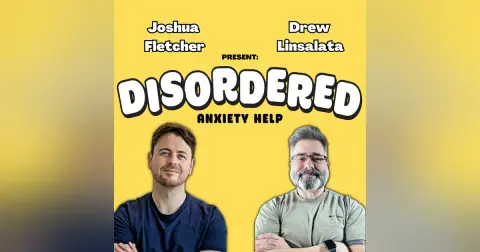

 Apple Podcasts
 Spotify
 YouTube
 Amazon Music
 iHeartRadio
 RSS Feed
 WHAT SHOULD I SAY DURING A PANIC ATTACK?
"What is the best thing for me to say to myself during a panic attack?"
This week on Disordered, Josh and Drew talk about strategies for self-talk, framing statements, action prompts, and non-compulsive ways to talk to yourself during a panic attack or high anxiety spike. The guys spend some time addressing the myth that one needs to be "talked down" from a panic attack and also cover how these concepts can be useful when supporting a friend or loved one that's experiencing panic or high anxiety.
Remember that you're supposed to be scared during a panic attack - that's just the mechanism working as designed. Don't judge yourself harshly or negatively for that, and steer clear of trying to find magic words or phrases that will make it go away. That's more harmful than helpful in the long run.
-----
Want to ask us questions, share your wins, or get more information about Josh, Drew, and the Disordered podcast?
Visit us on the web at https://disordered.fm
----
Disclaimer: Disordered is not therapy or a replacement for therapy. Listening to Disordered does not create a therapeutic relationship between you and the hosts of the podcast. Information here is provided for psychoeducational purposes. As always, when you have questions about your own well-being, please consult your mental health and/or medical care providers. If you are having a mental health crisis, always reach out immediately for in-person help.
---
Disordered Roundtable is coming! Think of it as "Disordered Live", a way for members of our audience to spend time with us in an intimate virtual setting (attendance is limited) to engage in real time sharing and discussion on specific anxiety disorder and recovery topics. To be notified when new Disordered Roundtable sessions are scheduled, sign up for our email list using the form on this page.
For those who want to know like what you should say during a panic attack, we're going to use our personal and professional experience to guide you through it.
SPEAKER_00And so I didn't have a lot of success trying to talk myself through a panic attack. So I didn't do a lot of that.
SPEAKER_01When I told myself it's just anxiety, I didn't say it as a kind of magical spell to make the anxiety go away.
SPEAKER_00And my number one go-to was we've been here before. Like and it's never taken me down. And then I would pretty much go silent.
SPEAKER_01It was often, you know, followed by the silent caveat of you're supposed to feel scared.
SPEAKER_00So to me, it's always the idea that I can acknowledge that you are genuinely terrified, but to remind you that you've been there before and you're capable of moving through that.
SPEAKER_01One of your options is you don't have to say anything, it's completely fine. Welcome to the Disordered Podcast. This is episode seven. And the title of this episode um is named after a question that both Drew and I received. Um, Ollie asks, how to talk to yourself during a panic attack, or what should you say during a panic attack? And what a great episode title that follows on from our last episode. My name's Joshua Fletcher, also known as Anxiety Josh, and I'm a psychotherapist who specializes in anxiety based in the UK.
SPEAKER_00And I am Drew Linsolata. I am a graduate student in clinical mental health counseling, a therapist in training in the US in the state of New York. And then the co-host of Disordered with Anxiety Josh.
SPEAKER_01Yeah, disordered hosts, disordered podcasts, disordered content. It all fits together, man. Yeah, but it all fits together. Yeah, I like that. Um, first of all, before we get into this episode, I think it's quite helpful to listen to the previous episode if you haven't, um, because this is kind of a part two. But for those who want to know like what you should say during a panic attack, we're going to use our personal and professional experience to guide you through it. Um, but always remember you have options. If you have a panic attack, or as we now know it, an adrenaline rush. Um, one of your options is you don't have to say anything, it's completely fine. But if you'd like something to say, or if you're a loved one who wants to support someone who's going through a panic attack, then this is what this episode is for. So thank you, Ollie, for that for that question. Um, Drew, did did you ever kind of talk to yourself through a panic attack? What what what did you do?
SPEAKER_00I was not a huge fan of that at any point. I tried the it's okay, it's okay. This is just I tried some of that stuff, and what I discovered for me in my own experience was my brain was having none of that. So it was ridiculous. It was me trying to convince myself that everything was fine. And it's okay to say that it's not fine, you're really uncomfortable and really afraid. And so I didn't have a lot of success trying to talk myself through a panic attack. So I didn't do a lot of that. Just my brain was not having any of it. It's not fine. Because it's really interesting.
SPEAKER_01Because I only initially when I started out, and to remind myself of the psychoeducation, when I was having a panic attack or an anxiety attack or an adrenaline flood, which is I'd say, I would actually say this is just anxiety. I think it's it did help me. I didn't say it, and this is a very strong disclaimer, and you must remember this if you're listening. I didn't say it as a kind of Harry Potter magical spell to make the anxiety go away. It wasn't a compulsive behavior like, oh, this is just anxiety, and then I two seconds later check if the anxiety is gone, and oh yeah, I've got I've got my magic word, it's gone. No, no. When I told myself it's just anxiety, it was often you know followed by the the silent caveat of you're supposed to feel scared. It's just anxiety. You're supposed to feel scared, you can leave it alone. This, you know, this will pass. I know we were discussing before the episode, it was a bit like we have different different kinds of opinions on that, which is great because whatever works for you works for you. Um, you know, this too shall pass. Yeah, it's a bit of a cliche now, particularly in in social media, but I kind of use that too, you know, kind of it's just anxiety, this too will pass, you know, and then the nerdy kind of because your threat response can only maintain this amount of adrenaline or whatever, just to remind myself of factual stuff as well, um, and being kind, which is what we can kind of look at in this one. So, so what what what did you do during a panic attack?
SPEAKER_00Well, I I you know, just to kind of piggyback on that, this two shell pass thing, I know I pick on that a lot, but you know, I kind of used a similar framing statement. To me, I didn't really call it self-talk or talking myself through. I would think of them as now I can in retrospect, I could say what I was really doing was framing statements. And my number one go-to, like you saying this is just anxiety, was we've been here before. And I would say that not out loud, meant you know, to myself, I would say we've been here before in an almost defiant kind of way. We've we've done this before. Like, and it's never taken me down, and then I would pretty much go silent for the most part with that occasional reminder, we've done this before, you know what to do.
SPEAKER_01Shall we frame then our own? So to answer Ollie's question, or to anyone who's tuned in and wants to help themselves during a panic attack or help a loved one. So remember to kind of bookmark this episode or remember where we where we're at. Drew and I will take it in turns, and we will describe what we did um during an anxiety attack. Now um we'll we'll set the scene, you know. Uh, I'm gonna challenge you first, Drew. You can go first. I'm gonna cowardly learn from your mistakes and and and add to them, um, which is great. Uh so me and uh Craig the Critic will be uh we'll be watching. You remember Craig the Critic? He's always watching. Yeah, and we will be here watching.
SPEAKER_00I'm in, man. You didn't hear me the first time, I'm coming back the second time.
SPEAKER_01Craig, Craig, Craig, whatever your name is. Um yeah, so here's the scenario, Drew. So I am at a holiday camp. Um, I'm with my family, and suddenly I have a huge adrenaline rush. I have this sense of doom, this dread. I have the urge to just rush home, pack everyone in the car, go home, or dial my safe person who is currently not with me, or immediately rush to some kind of safety, or run back to my room and start Googling. I feel like something awful is gonna happen. I mean, I'm actually even convinced that I should ring 911 or 999 because I feel like something awful is gonna happen. You know, I have had this feeling before, but my heart's pounding. I feel spaced out and everything's bright, and I just feel like something awful is gonna happen. Yeah, what would you say to me?
SPEAKER_00It's a really good question. I think the main thing that I would do in that situation is to remind you, because we talked in the last episode how like our logical, rational brain goes offline in that situation. I would remind you that you've been there before. This has happened before, it's not the first time. And I would acknowledge that I know you're really afraid right now, and I know you're really scared, and it feels like something is really wrong, but there never is something really wrong. And even if there was, you would know the difference. And I know that you can get through this if you just let it be there. I'll sit with you, but I know you can do this if you could just let it be, but I know how scary it is. So to me, it's always the idea that I can acknowledge that you're genuinely terrified in that moment, but to remind you that you've been there before and you're capable of moving through that to the other side. Oh, you're capable.
SPEAKER_01You've been here before this is nothing new. No, yeah, you've been here before. Oh, I like that. Oh, I gotta I've got to follow that one. That's a good one. Good. Do you want to get it to give me a oh no? Give yourself a round of applause for that one, actually. We've got that button, yeah.
SPEAKER_00Good job, Drew.
SPEAKER_01Well done. That studio audience there.
SPEAKER_00Uh studio audience just to film before a live audience. Um okay, so I will give you a scenario. So now I am we are out and about. I come to the UK and we are hanging out in Manchester, the thriving metropolis that it is. And I know that you do this anxiety thing because you're called anxiety Josh, but I've never had I've never had a panic attack before. I don't, I don't, I don't know. It's so foreign to me. Cool, whatever you do is great. And I I have my first panic attack, probably because you're doing open mic and it's so poorly done that I'm overwhelmed. But so I'm kidding. Um, but and and suddenly I start to feel all the feelings. I'm depersonalized and it feels weird, and I don't know what it is, and I'm getting more and more afraid, and my heart is pounding, and suddenly it feels like I can't breathe, and I'm sweating, and the place feels like it's caving in on me, and I just want to run. And I I don't know what this is. And I I tell you that maybe there's a problem here, I gotta get some help. Something is wrong with me. What what would you tell me?
SPEAKER_01It's a good one. Uh, I would say. Um let me guess, something feels like something awful is about to happen now, and it probably you probably feel a lot different to everyone around you. And the normalcy of everything is exacerbating your feelings of of terror. You're probably having loads of scary racing what if thoughts, like what if I go crazy, what if I pass out or have a heart attack or embarrass myself in front of everyone? Uh, and what if just something awful is about to happen? Now you're probably thinking, Oh, you know, you know, I'll try and get in your frame of reference here. You know, you're probably thinking, you know, what are these strange symptoms? Have I broken my brain? You know, everything feels weird, and you'll need to have the urge to run away. Now that's okay. This is just adrenaline. It's the same thing that you have on a roller coaster, it's the same thing you have for a first date, it's the same thing before, you know, your nervous medical appointment, but it's just happening at a disordered time. You know, it's just happening here because you've probably been stressed recently, and your threat response is just decided now. When you've relaxed, because anxiety hates any threat to hypervigilance. Uh, you've relaxed here at the open mic, watching me absolutely nail my poetry. And that's absolutely normal. You know, you don't need to fear it. So try not to run away. You know, it's okay to have a dry throat, you'll have a drink in a minute, it's okay. And actually, yeah, this always passes. All feelings are transient. The adrenaline will pump through, and if you don't avoid, you'll feel bloody brilliant. There's nothing wrong with you. You can do this. You know, all this is actually very normal. It doesn't feel normal and it doesn't feel you look around you, everyone's relaxed, they look relaxed, they're they're drinking their Tom Collins and their whiskey sours, and they're you know, they're laughing and engaged with what's going on on stage. What you're still experiencing is normal, you know. So sit here. Don't you dare move, get out of that seat, and I'll knock you out. What you're doing, oh my god, I suddenly turned abusive. No, but that's what I could.
SPEAKER_00Yeah. Oh, really? That totally gets the standing ovation. That was very good. Because I can tell you from my own personal experience, if you had been there the first time I ever had a panic attack and told me those things, we would probably not be sitting here right now. Because I would that would have made all the difference in the world.
SPEAKER_01Absolutely. My own doctor, my own doctor said to me, like, just looked at me worryingly, like, so hold on, you you don't feel like you're in the room, you feel like you can hear yourself uh and you're obsessed with how you feel, and you can't eat and sleep, and you could just see it in his eyes, like, I don't know what to do with him. Like, this guy's gone cuckoo.
SPEAKER_00So the I will ask a follow-up question, I'll put you on the spot a little bit, but so that's what you would say to me. What is your body language to me? When I am because while you're saying all these things, invariably, as the first the person who's having a panic attack or a huge adrenaline flood, I'm gonna question it. I don't know, this doesn't feel right. Like when is it gonna end? It just I feel like it's not ending. So when I start to question and I am in that that really agitated mode and elevated you know energy level, if you will, what's your response to me physically?
SPEAKER_01Well, I'll say the same thing again, but through the modicum of interpretive dance. So I will stand on the table and explain.
SPEAKER_00Why do I ask him questions? Why? Why do I do it?
SPEAKER_01It's a really good question. What I do in my practice here is is I'd I'd I'd show I'm relaxed, I'm not panicking, you know. I that immediacy and those what ifs that are screaming at you actually quite normal. You here's a chance for you to show it, it's not needed here, you know. If you do have to get up and go to the bathroom or whatever, particularly if it's your first one, uh who's gonna sit through that if it's your first ever one? I certainly didn't. Yeah, I was at work and went home, you know. But if there was a me, if there was a Drew next to me or or someone who gets panic, then you know, I'd be like, okay. And reminding them that this doubt is normal. If you listen to the last episode, the doubt is supposed to happen in that mechanism. It's just the mechanism is a powerful, beautiful mechanism. But you know, when you're out and about with friends and family, you just don't really want it to go off. But if it goes off, you can't stop it, but you can influence and can control it in the long term. So yeah, I'll just be relaxed, like, you know. I've had clients in here that I must have seen hundreds and hundreds and hundreds of panic attacks. Um, and yeah, just sit there and like, yeah. Yeah, it's I know it's I know it's not dangerous.
SPEAKER_00Yeah, yeah.
SPEAKER_01What doesn't help is when family members, and I don't know if you hear this, Drew, but like when someone has a panic attack, that's a problem for the family. Like, oh my god, this is something we need to fix. When actually, no, the way out is like, oh, it's just panic.
SPEAKER_00Yeah, you could do this, it's okay. We're just gonna stand by. Yeah. Um, yeah, I hear that a lot. I mean, honestly, I experienced that in my own life because the people that care for us don't want to see us suffer. So if they know that we're in distress, they they want to fix it. And I get that because they love us. But uh, I had to teach my people like, don't do that when you know, because they would, you know, they know you, they live with you, they know you. So, like, well, when you see that I'm struggling, I I will ask you if I need your help, but just just be there, that's all. Like, remind me that I can do this. I I had to tell them to do that.
SPEAKER_01Yeah, I've said that to my friends. I just remind me what can I do? It's like, well, just remind me of the facts. You can't stop the adrenaline from pumping, but you can be around whilst it's pumping. Now, there's a difference here if you're someone who utterly relies on someone to be, you know, if you're monophobic and agrophobic and you have a designated safe person where you feel like, you know, I have to have this person around, otherwise, I can't control my panic. That's different. You've got to, you know, you've got to challenge that on your own because you have always tolerated your panic and you're giving the credit to someone else, and the brain remember remembers that. I can't wait to do an episode on giving credit. I love that one. Um, but in general, it's yeah, just know. And if you're so if you're a loved one who's supporting someone like this is just good enough for me, this is just adrenaline, this is just cortisol. But what about the racing thoughts? Adrenaline, cortisol, and your brain trying to work out where the threat is. It's doing it's trying to help you. It's okay, it will pass. Uh yeah, but my chest feels really tight and my heart's flattering. Yeah, because your posture's going, you your adrenaline needs an outlet, and that's okay. You know, oh, but I feel sick, like I'm gonna throw up. It's like, well, most people who get anxious don't throw up, but even if you do, it's not the end of the world, is it? No one really cares. Um, you know, it yeah, but I'm sweating, or it feels so real. Yeah, that's that's the response. That's what it's supposed to do.
SPEAKER_00Yeah, yeah, just doing what it's supposed to do, you know. But to so what can you say? These are the things that we would say to you if you were with us, that you know, if you were in the middle of a panic attack, you would hear these things from Josh and I. And I think it applies because then you could take those things and and apply them to yourself. So if Josh and I are not with you, which odds are we are not gonna be if you experience a panic attack, then you wouldn't want us stood in your garden, that would be weird. Yeah, that would be weird on standby, ready to go at all times in a little like one-man tent. Um, that would be expensive.
SPEAKER_01We are available for hire, by the way.
SPEAKER_00So But I think you know, now how do you apply that? And you know, we start to get into like, well, what is the role of of this the self-talk, if you will, the words that you use? What is it accomplishing? You know, we're always really careful to make sure that everybody's aware. Oh, Copper just walked in. Uh everybody's yeah, that everyone is aware that you know this is not meant to stop it. It is not supposed to be a shield, it's not supposed to immediately kill the panic attack dead in its tracks, none of that. That doesn't do that. So, what does it do? Is the question.
SPEAKER_01Yeah, yeah. To help you now mention at the start, like another option is don't say anything. It's gonna pass either way. You know, uh, I get to a point now if I have a if I have an adrenaline rush, which is rare, but if I do, I just don't really say anything. You know, I don't even tell the person I'm with or whatever. Um, if it's a particularly like emotional one, because we have other emotions other than panic and anxiety. If I'm feeling emotional and going through stress and I'm going through a lot of hard stuff, and if you're listening at home and then you're having an anxiety attack, completely okay. You know, to just be like, actually, I just need a bit of human connection right now, you know. The last thing I kind of needed was an anxiety attack, panic attack, or whatever. Um, and yeah, you know, but also my you know, my child's unwell, work's horrible, I'm behind on stuff. I've probably got a cold myself. Um, I'm grieving, I'm having relationship issues, whatever, it's okay to be like, you know what, I'm not gonna nail this stuff that Drew and Josh talk about all the time. And I would do that even now, you know, if I'm going for a lot and then suddenly I have that, I'd be like, yeah. But in general, I'm lucky it doesn't really happen much nowadays. But yeah, yeah.
SPEAKER_00And so as long as you use some of those words that we're talking about, if you want to apply them to yourself or whatever it is, and and I like when you said you don't have to say anything, there's no right or wrong in this, really. Uh, and in the end, does the do the words that you choose what is your intention in choosing those words? What are you hoping that they will accomplish? And are the words that you were either being told by your loved one or somebody like that, or that you're saying to yourself, are they informing action? Because I like to think of it as you know, being on a plane, and you know, I'm not a huge fan of being on a plane either, but when I get really nervous, I look to the the flight attendant to the flight crew. If they're not nervous, then that tells me that I don't have. I mean, I'm it's okay, I'm nervous, but like, well, they seem all right, so I'm gonna take my cue from that. So that in a way I use that as sort of my my framing thing, like, oh, the flight attendant isn't is looking fine. G here, he's just doing his job and smiling and talking while I'm nervous, so I will follow that lead and let that inform my actions. Yeah, so my my self-talk will inform my actions. We've been here before, we know what this is, it's gonna be scary. Now, what can I do?
SPEAKER_01Yeah, yeah, it's important. I think it's why, particularly with flying anxiety, I can't stand flying. Um, but I will use that as as my challenge for this year. Um, is that it's good to do something when you're anxious, but it's hard when you sat in a seat with not much to do. That's why it's so good to where your focus goes. So returning to this, what can you do or say during a panic attack? Actually, focusing on your own words sometimes, you know, not as magical thinking again, and I know I'm repeating myself, but you know, like focusing on my magical words to make the anxiety go away. No, it will go away regardless, it will pass regardless. But just like as a for me, I remember at my worst, but but starting to get better, I'd be like, see, same thing again. Look, oh look, my muscles are twitching, oh look, my got a dry mouth, oh, I've got eye floaters, oh my tinnitus is louder than usual. Oh, you know, oh, I feel like this dread and terror. Like Drew says, it's nothing new, but just even just talking that out loud, and then I'd actually coach myself and be like, right, well, and what would non-anxious you do right now? Well, non-anxious me was actually doing the gardening, so well, why don't you use all that adrenaline that you've got to you know dig up some soil? All right, yeah, great, and then um like build a big enough grave to put Drew in. That's what I was doing.
SPEAKER_00This episode's getting dark fast.
SPEAKER_01Sorry, that was I I I like that though.
SPEAKER_00The self-coaching is kind of cool as opposed to trying to talk yourself down from it. I'm going to talk myself through it because that's the way to do it. I don't have to be talked down, I have to be talked through, and I can do that.
SPEAKER_01Yeah, but but but don't do it like Craig the Critic. So what would Craig the Critic say when you have empowered your critics?
SPEAKER_00Craig the Critic, to me, the biggest issue with Craig the Critic when he shows up is you you can't do this. You can't handle it, which is a thing that I hear echoed again. I know you do too, and your audience, like I, but it just feels like I can't, I can't handle it. And that's that's the inner critic sometimes chiming in like you're weak, you've never been able to handle it, or maybe you've been told you're weak, unfortunately. You've had experiences in your past that have taught you that you're weak and incapable and you can't do anything and you ruin everything, that stuff can chime in really hard because you're you're literally doing a very difficult thing by choosing to move through that panic as opposed to away from it or around it. And if if you if Craig the Critic shows up and reminds you that you are generally not a capable person, that makes it even harder.
SPEAKER_01Yeah. And if you're someone who's listened to or you know, read our books or you know, Claire Weeks, whatever, and you you're someone who's confident that you know the literature, Craig the Critic, oh, even better then, because they might go, you might have some a panic attack and adrenaline rush, and all week you might have been prepared for it and stuff, but you're not gonna do it perfectly, and you you're gonna do a few things, and Craig the Critic will be like, see, you there's evidence that you can't do it. You've read all the books and you can't do it. Craig the Critic is an abhorrent person, and you've got to realize that he just talks nonsense, and it will always be a feature throughout this podcast because he always has an opinion. Just remember, his opinion sucks, it doesn't mean anything, and actually he's often wrong. He's just exacerbating these kind of things. So, yeah, just if you get through the anxiety attack and you've tried to do it in a way that you know is going to help your brain, actually your brain would have rewired a bit anyway, whether you did it perfectly or not. You know, an example is I had a client once who was afraid, again, I'll use a park analogy, uh analogy, just an example, uh, where you know they go into the park and you know they they walk in for two minutes and they run home. But then they walk in for five minutes and then run home. Well, by walking in that park for five minutes, you've rewired your brain a bit more than for two minutes, you know. For someone who went to a party and had a panic attack uh and went home. Well, that person, you know, went to another party, had a panic attack, but instead of going home, they kind of just took themselves off to the bathroom a bit. Okay, that's not you know what we'd advise to do immediately, but you've already wired your brain to teach them that you don't need to run home. You've actually localized your kind of area and you're in and you're on your way. So be careful. Craig the Craig will try and criticize you. Also, just emotionally, when people have anxiety attacks, it can dredge up really horrible critic from our past. Maybe it's the voice of someone who's been nasty to you or whatever, and it will be intermingle with all those what ifs. Um, and again, especially that's the time to ignore him.
SPEAKER_00Yeah, and I I think in a way, it it's an interesting sort of adjunct topic. What do you say after a panic attack is almost as important of what you as what you say during, because that's the time that I find that the critic comes out the loudest. Absolutely. And I hear people will ask me things like, Well, I still felt like I wanted to run. Okay, okay, but that's not failure. You didn't get to you don't get to control that feeling. But what did you run? No, but it but clear I must be missing something because I still felt that, and that's the critic coming out. Like, I must be missing something because I didn't eradicate it and feel great about my panic attack. Like, well, who told you that you're supposed to do that? That's not fair. Absolutely. Yeah, so important. Anyway, we've said a lot of words about not saying words, and I think sometimes people will be a little surprised, like, wait, they didn't give me coping statements and they didn't give me, but we kind of did.
SPEAKER_01Sorry, I will can't wait to read our podcast reviews and be like, these two are laden with hypocrisy. Um we hope you've got a lot from this episode. As usual, we like to uh ask questions and not ask, read out questions that we've been asked, yeah. Uh and share some did it anyways. Uh, I'd like to start with a did it anyway if that's okay, Drew. Yeah, let's do it, sure. Um, in the last episode, we had a did it anyway that involved Brighton, and I have another one that involves Brighton. Back to Brighton. Yeah, absolutely. Um, just coincidence. Um, hey Josh, I wanted to share that I have a had a fear of the London Underground for years. So did I. If you're gonna do exposures, London Underground is perfect. Even even trains are a big thing for me, especially if I don't have a seatboat. I went to Brighton the other weekend, got on two trains, and got on the underground, shaking like a leaf. But hashtag I did it anyway. I love that stuff. I did it while shaking like a leaf. You did it with the adrenaline pumping and you went to Brighton, which apparently is where all the success stories end up.
SPEAKER_00So, you know, clearly anybody who's listening, go to Brighton because clearly we get better there.
SPEAKER_01Uh yeah, which I had the end goal is Brighton, apparently. Yeah, uh you had no idea. Superb, well done. Do they have a give them a round of applause?
SPEAKER_00Absolutely round of applause for another trip to Brighton. And for the computer audience. Absolutely. Thank you, Steve. So Mike Good. Did it anyway, as usual, we'll come into my Facebook group. And I love this one, especially because of the way it ends. And this person said, um, wait, where is it? Here it is. Went to the Hard Rock Casino. I won't say where for anonymity. Went to the Hard Rock Casino. It was crowded and very loud. My heart was pounding, legs shaking, and I was very dizzy. But I did it. Stayed for about two hours and even won $50. Come on. Not only did this person did it, she did it anyway. She actually walked out $50 richer than she walked in. That's that is wind all day long.
SPEAKER_01I mean, we're not endorsing the fact that there's money money to be gained by going through exposures, but well done. It sounds like it was super deserved. That I absolutely absolutely love it.
SPEAKER_00If you can find a way to monetize your exposures, you are 100% ahead of the game. So brilliant.
SPEAKER_01I I've got a question, a good question from from a listener. Um, well, the listener and Instagram follower. Uh, and this is from Scott. And Scott says, you know, yeah, I I'm doing all right with my anxiety and panic attacks. However, how do you manage it when you're in a job situation where panic attacks are actually seen as weak, where there is a stigma and taboo by the people that pay me that believe panic and mental health stuff is weak. I thought that's a really good question. You know, where do we st where do we start with that, Drew?
SPEAKER_00And that's its own that could be a whole series of podcasts right there. This is a tough one because uh and maybe maybe it's not the answer that Scott would want. And good question, Scott. Um, but we don't get to control. This is a very like stoic philosophy kind of answer here. We don't get to control that, unfortunately. And we can all work together and try to pool our efforts and and support each other and try to eliminate that stigma and educate people. We should all be doing that. And I think that's part of what Josh and I do. But we don't get to control what other people think. So this is a classic example to me of the idea that, like, well, I I will tolerate the physical sensations of the say the anxiety attack or the panic attack, or I will tolerate the discomfort of DPDR or whatever. But I won't toler, I can't tolerate the discomfort caused by the judgment of others. And that's a line in the sand that I understand that might have real war consequences of your job performance or your assignments, or even keeping the job or your compensation level. But no matter what happens, we come back to like, well, I can handle that. I will handle it if I have to handle it. You don't like it, maybe I will say something to that person and try to educate them or speak up for myself, or but we don't get to control their response. All we can do is control how we respond to their response. That's very esoteric, I think, but I think it it's germane.
SPEAKER_01Yeah, I think I would add like sometimes you've got to play the game. We are in the real world, some people are judgmental, um, and you know, there is still a stigma attached to mental health. The irony is they probably do like mental health awareness week and you know, do all that, but yeah, uh, it's interesting. Um, thanks for kind of being open about that, Scott, as well. Um, what I would say is play the game, you know, and following from what uh Drew said about judgment is that you know a lot of anxiety they can't see. You know, if there's actual threat there that anxiety is, so if if you're hopefully you're not being bullied or anything like that, or because that can happen, but uh in general, it doesn't really matter what they think. If you're trying and having this kind of thing, you don't need to share it with them. Ideally, there might be someone in your workplace that you can share it with, someone you trust, or maybe there's a mental health first aider, or just someone who you know isn't a knob. Um, and that would be really nice to kind of to show that it isn't all under cloak and dagger, isn't all just being discreetly hidden away. Um, but just know that their judgment shouldn't hold weight in your recovery, you know, and you're not gonna get found out if you're practicing your exposures and stuff. You might be get caught out a bit, you know, if you're in meetings, or you might come across as a bit nervous and stuff by them if if you're being spoken one-to-one. That's fine. You know, the aim here isn't to completely eradicate and not show them that, but just know that you can do it on your way. It is a tricky one, it's one that I don't have a definitive answer for. The answer should be, you know, well, let's just hope you know that bosses aren't horrible. Yeah, but if we are in the real world, and some bosses aren't as understanding. Thankfully, some bosses are incredible. I was like to have a boss to be understanding, but if you are in that situation, you know, you have our empathy, and you you know what you have a double pat on the back from us, you're doing well, and you're doing it in that environment. Fair play to you.
SPEAKER_00Yeah, good answer. Thanks, Cap. Should we take one more before we wrap it up? Sure. Do you have a question? I do have a question that I will throw out here. Uh, the question is what are the best exposure exercises for fear of low mood and feelings of panic?
SPEAKER_01I mean, uh this this isn't scientifically um proof. Uh for me, if if you're someone who allows yourself to to drink a wine, then go, you know, just go get hangover.
SPEAKER_02Well, fair enough.
SPEAKER_01Hangover is a good exposure, or stay up all night and not sleep, yep. Or eat a really big meal, you know, to the point, you know, fast food or something, you know, where you feel like groggy afterwards. Yeah, sluggishness. Sluggishness. Uh, there's loads of it in it's called interoceptive exposure where anything to you can do to put yourself into that scenario. Uh, what kind of examples do you have?
SPEAKER_00Well, this is one of those things where Drew answers a question with a question, which is really annoying, but I do it a lot. And sometimes I think, and you by the way, your I think your suggestions are really good, but sometimes well, what are the exposures for fear of a low mood tells me that you're experiencing low mood. So, congratulations, welcome to the exposure. Like the low mood it's oh that's good, yeah, is the exposure. So sometimes people press that applause button now.
SPEAKER_01Already forgive myself a round of applause. Yeah, come on, guys, that's it. Chime in you at the back.
SPEAKER_00And I think in in the end, it's that question is I'm experiencing low moods that I'm afraid of. So can you tell me something I can do to practice low moods without having low moods, so I won't be afraid of low moods? And the best way to practice it is when you have a low mood, take advantage of that and think about the best way to move through that. Now that entails all kinds of stuff, but plus Josh is a I think your suggestions are really good. I mean, you could conceivably do like, well, I can watch a sad movie. I mean, I've heard things like that. We could read a sad book, I can think of sad things to trigger that low mood. You could do those things, I suppose.
SPEAKER_01Yeah, I I came at it from the from the lens of fear of depression, which we'll do an episode on, no doubt. Uh, a lot of anxious people fear being depressed because what they're actually hearing is what if you lose control? What if you get to a point where you lose control? What if this gets to a point where you do something silly, whatever? And uh, lots of anxious people have that thought. Um, and so uh intersective exposure to that as well. Actually, see what happens when you're in a low mood. But actually, Drew has nailed it, you already are in a low mood. Yeah, you know, like it's it's you're probably not feeling great. You have to answer that, ask that question. Um, yeah, brilliant. Yeah, good job.
SPEAKER_00All right, I think we're about at the end of episode seven. What do you say during a pan attack?
SPEAKER_01Yeah, I'm enjoying doing this. Thank you for being my co-host, uh, Drew, and I look forward to many more episodes. Thank you for tuning in at home. Um, if you want to kind of see what we're up to on social media, go follow Anxiety Josh or The Anxious Truth. Um, we're actually doing stuff on our TikTok now. So you can follow us on TikTok and Instagram, which is where we do most of our content, or just chill out, put us in your ears, and uh yeah, listen to more episodes.
SPEAKER_00Hopefully, by the time this episode airs, if you go to the URL at the bottom of your screen, which if you're on YouTube, you see it. Otherwise, you can go to disordered.fm and we will try to put all the episodes there and links to social and all the good stuff. So everybody. Thank you very much. See you back up this week. We'll just see you next week. Hey, it's Drew. Thanks for joining us for this episode of Disordered. Josh and I both hope that you're finding it helpful in some way. For more information about Josh or me or the Disordered Podcast, find us on the web at disordered.fm. That's disordered.fm. Hop on over and find links to our social media platforms, join our mailing list so we can let you know when new podcast episodes are available, and we'll send you easy ways to ask us questions and share your wins so we can answer questions on the air and share your successes with the community. And if you're listening to the podcast on Apple Podcasts or Spotify or any platform that lets you rate a review, do us a favor and leave us a five-star rating and maybe write a review if you're digging disordered. It really helps us out and we appreciate that. Thanks again for coming by, and we'll see you in the next episode.