
Is Anxiety Recovery About Healing ... Or Learning? (Episode 42)

 Apple Podcasts
 Spotify
 YouTube
 Amazon Music
 iHeartRadio
 RSS Feed
 "Healing" is a VERY popular word in self-help, mental health, and wellness circles. For many, this word resonates. For our friends struggling to overcome chronic and disordered anxiety, it can sure feel like there's healing to do.
But what if recovery wasn't all about healing? What if there was as much learning as there is healing in the process? Or what if the healing part doesn't always look the way you think healing looks and feels?
This week Josh and Drew are deconstructing the idea of "healing" in anxiety recovery. Are we saying that healing isn't a thing? Of course not! Everyone gets to pick the syntax and the words that resonate most for them. Surely there is some healing happening in some way. But when healing fuels and drives compulsive or ritualized recovery, or drives one into an endless loop of demanding to feel "properly healed", things can go off the rails quickly. This episode is designed to make you think a bit about the roles of healing and learning in recovery, and how you might be glued to words that aren't always serving you well.
As always, a healthy dose of flexibility and patience is required as part of this discussion and as part of the recovery process as a whole. Never forget that these questions can be confusing, there isn't always a definite answer to be had, and in the absence of patience and self-compassion this kind of thing can accidentally make you feel like you're doing it wrong or that you have to work harder to achieve "perfect" recovery. Beware of that trap at all times!
---
Want to pre-order Josh’s book, “And How Does That Make You Feel?”
https://geni.us/JoshFletcher
----
If you love Disordered and think you might benefit from spending 30 full days in an everyday intensive small group recovery support group led by Josh and Drew, check out Disordered Boost at https://disordered.fm/boost
-----
Want to ask us questions, share your wins, or get more information about Josh, Drew, and the Disordered podcast?
Visit us on the web at https://disordered.fm
Disclaimer: Disordered is not therapy or a replacement for therapy. Listening to Disordered does not create a therapeutic relationship between you and the hosts of the podcast. Information here is provided for psychoeducational purposes. As always, when you have questions about your well-being, please consult your mental health and/or medical care providers. If you are having a mental health crisis, always reach out immediately for in-person help.
---
Disordered Roundtable is coming! Think of it as "Disordered Live", a way for members of our audience to spend time with us in an intimate virtual setting (attendance is limited) to engage in real time sharing and discussion on specific anxiety disorder and recovery topics. To be notified when new Disordered Roundtable sessions are scheduled, sign up for our email list using the form on this page.
Hi guys, I have a question for you regarding healing. I really want, um, like from your experience with the clients that you worked with and other people, and maybe from your own um experience with anxiety disorders as well. What does healing look like? How does it look like? Lately, I have been feeling like there is this like two versions of me in my head. There's like the old version of me who's afraid of everything, who's always in the comfort zone that tells me to not do things and to stay at home and not go out and um not go to the gym and everything. And there's this new version that is not like the old version, the new version that is motivated, the new version that I have been kind of like building for the past few months. And uh, I was just wondering if this is what healing looks like. Is this like the new version of me, the new neural pathways that I have been creating with a new behavior in my head for the past few months? And um it's like a transitional state. Is this what healing looks like? Or are there other forms of healing? Or what do you guys think?
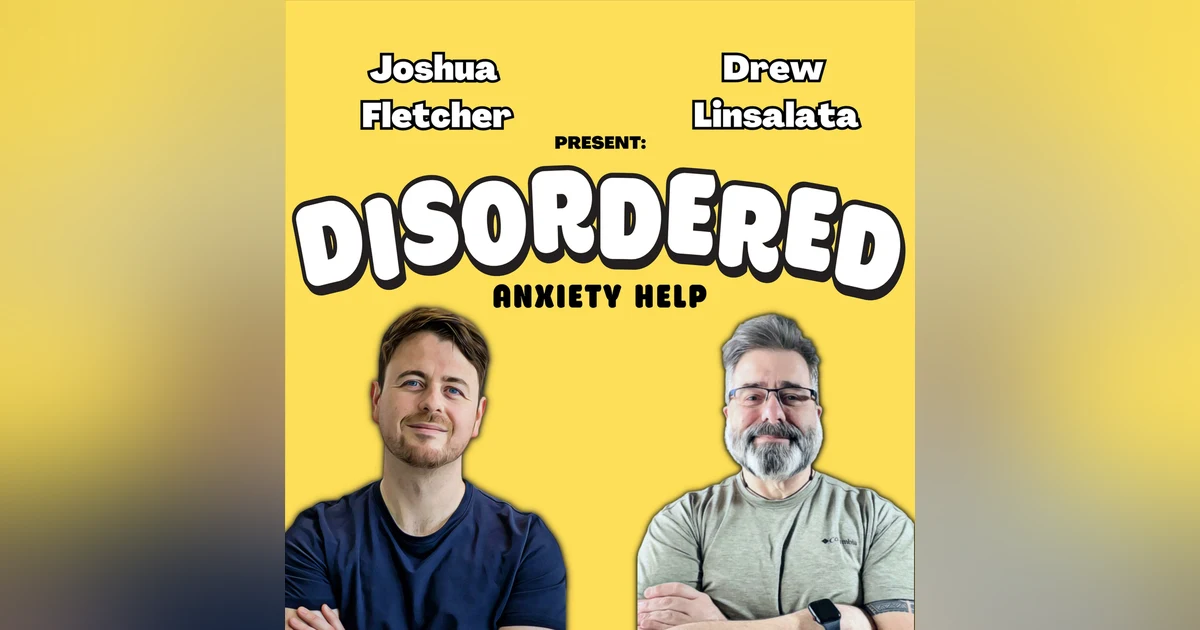
SPEAKER_07Welcome to Disordered. This is episode 42 entitled Healing or Learning. My name is Joshua Fletcher, and I'm a psychotherapist based in Manchester in the UK. I'm a previous sufferer of several anxiety disorders, uh, and I'm an author and podcast host.
SPEAKER_05And I am Drew Linsolata. I am an end stage graduate student, finally, a therapist in training specializing in anxiety disorders in the US. Same gig as Josh, an author, a podcaster, and a former sufferer of anxiety and depression for many years in my life. Today we're on episode 42, healing or learning. What are we going to talk about today?
SPEAKER_07Great question. Uh, submitted by one of our listeners on disordered.fm. If you would like to leave us a voice note or send us um an email, you can do so at disorder.fm. Or if you want to share some did it anyway wins, we've got some excellent ones at the end of today's episode that you should um stick around for. Um it's a really good question. Uh, healing, it's a very common word that's that's used in the world of therapy in the wellness sphere. Um, yeah, we're gonna talk about that today. Uh, what what what do you think about healing and learning, Drew?
SPEAKER_05Uh sometimes this is a tough conversation to have because people tend to be emotionally attached to the word healing. And I'm not saying there's no healing here, but healing to me indicates that something is broken or wrong that needs to be fixed. And I am more of a fan of the idea that recovery is primarily, it's not all or one, by the way, it's not black or white, but I kind of feel like in a lot of cases it's learning. So I might pause it to start the episode that this person who sent in the question, and thank you, has learned new ways to do things. Is it healing? Maybe, but it's definitely learning.
SPEAKER_07It's an interesting one. It depends on your relationship to the word healing and what that means to you. Um as a therapist, I get people that come in and say, you know, I I want to feel I want to heal. And it depends what from. If you you may want to heal from um certain things that where you feel emotionally wounded, um, you may want to heal from traumatic things in the past. Um, it semantics uh are quite, you know, you've got to be quite uh careful with semantics, particularly if you're struggling with anxiety disorders or going through anything. Because, yes, on the surface, when you tell yourself you'd like to heal, I think that's a nice intention to set for yourself, and I think it's a compassionate thing to do. But also look at the kind of connotations around the semantics of the word healing. If you're constantly reminding yourself that I need to heal, I need to heal, then you're kind of inadvertently telling yourself you're wounded and broken. And you kind of reinforce a message there that's like, well, you know, are you broken? Is this wound so fatal, you know, that you have to heal? And it's different case by case, and it's up to you. We will never tell you, you know, that there's no you should you shouldn't heal or you you don't need to heal, etc. But it's a really good topic and an excellent question. And we're gonna discuss it today.
SPEAKER_05Yeah, I think sometimes the imagery around the word, especially in social media circles, I would I would think of it this way: like if you have knee surgery, for instance, there's something wrong with you knee, you've injured your knee and there's healing there. And we'd all agree that there's some healing that goes on. Part of that healing process is the rehab and the physical therapy at the end, which isn't treating yourself like you're broken or fragile. It's it's literally building the muscles back up and practicing and and stretching and pushing a little bit to get back to functionality. That's also part of healing, but sometimes the imagery around healing, especially in wellness or mental health circles online, is only the gentle part where uh we do self-care and we retreat and we rest and we check in with ourselves. That's fine, it's all good stuff. But I think sometimes the word healing can accidentally miss the mark or or lead you astray. Because when we just say things like do what non-anxious you would do, or engage in willful tolerance or surrender or accepting or floating, healing sometimes is completely opposite from that, I think, or the imagery of that is.
SPEAKER_07Yeah. Are you suggesting that uh and it's what we speak about a lot, but are you suggesting that you know when you're anxious, it doesn't automatically equal that you are wounded.
SPEAKER_05Right. Or have to treat yourself like you're in a fragile state. It's seeing in the context of the word healing, which again, if that resonates with you, it's fine, but the context of the word sometimes means I'm broken and I'm fragile, and I have to be you do always have to be kind to yourself, always, but do you have to be treat yourself like you're made of glass when you're in a in an anxious state? We might argue that that's what creates the disordered state in the first place.
SPEAKER_07Yeah, yeah. If you look at it from another point of view, some people where I think it's okay to use this, and by the way, we're not the the overseers and the judges and juries of what you are to use healing. We're just gonna share our our opinions as as professional. It's a discussion, it's not precisely personal experiences. Like I I've used the word healing in the context of grief. I think sometimes when you have unaddressed grief uh or kind of unaddressed kind of trauma that you've repressed and ignored, um, I think you know I've used that, and that's okay. You kind of want to heal from that. That could be logged in with the whole anxiety disorder thing, too. Um, but if you're using the word healing just in the context of trying to get out of an anxiety disorder, I think you've got to be a bit tricky, you've got to be a bit careful there, because a lot of um work that you do around overcoming anxiety is actually purposely kind of making yourself feeling to feel vulnerable, you know. And it's a bit like, oh, well, if I'm going along this notion that I need to heal, and healing equals the absence of anxiety, then you're gonna run into some brick walls there.
SPEAKER_05Yeah, and I think it it's it's a hard conversation to have. Again, like I appreciate that you said we're not here to be the arbiter of what word you should use, but we sec we secretly think it. Yeah, we exactly we hang up with this off-camera, you don't even know what we say, but no. I think you have to be a little bit careful because there is that that idea that like many therapists, even there's a lot of interesting research on this in the field that say, well, we know that things like challenging fear and facing it through exposure is effective, but it feels really bad for me to tell my client to do that. And you know, that's not a healing. I've literally been in arguments about this. That's not a healing modality. Okay, well, what's healing? Well, healing is soothing and make yourself feel better and stop the bad feelings. That's how you heal. So sometimes we can get caught up. And I agree, like healing is a great word to use with grief or or loss or trauma, even anger. Maybe somebody has done you wrong and there's a big nasty wound over that. That has to be healed. I agree with that. But we have to be careful because healing could sometimes imply that you need to be gentle and get rid of those feelings to be healed. What about what about the idea of healing as it's reflected in your your thoughts? If you're if you have anger, if you think negative things, you're not healed. Oh, don't get me started on that. Oh no, I want to get you started. It's too early in the podcast. I want to wind you right up.
SPEAKER_07I I'll answer that later. Sounds bad. Uh I think uh I would invite people to ask themselves, what does healing mean to you? And I'm gonna pitch that question to you, Drew, because if you were to use it in the context of anxiety disorder and stuff, what does healing mean to you? Are you asking me?
SPEAKER_05What it yeah. Um let me put it in my own context. Like if I were to go back in time, I don't think I ever conceptualized my own process as a healing process. Full disclosure. That's not a word that was in my vocabulary. But if I had to go and if you had to, Drew. Right. But if I had to go to cult 45 to your head. Gun to head. Um, how would how would I say healing fit into my process? I maybe that's why I came up with the physical therapy and rehab analogy. Because I feel like healing for me was re-strengthening those life muscles. Like I got to get back out and start living life again so that I recover. And that was the healing for me. It hurt, like, you know, the scar tissue and they're making you stretch and like, ah, you know, listen, I'm sorry I have to make you do this, but it's good for you in the long run. That was that was a healing process for me. That's a good answer. Other people might say, Are you out of your mind? That's not healing at all. And that's okay because that doesn't resonate for you, but it that would for me.
SPEAKER_07No, but it goes along with that that that rehabilitation analogy that you used before. Like, you know, if you if you broke your leg and you've got to strengthen those muscles again, that you could say that's part of the healing process. And yeah, strengthening the the the attention muscles, the strengthening uh going against habits, yeah, neuropathways, things like that. And I know that the the quest the question asker said, you know, is it about neuropathways? Is the new me? If you want to, sure. If you if you want to say, you know what, I feel healed from that tricky time with an anxiety disorder, that's great. You know, that's great. But what you don't want to do is let that feed into like perfectionistic checking compulsions, which are am I healed now? Or actually, I had anxiety at a place where I don't usually get anxiety. Does that mean I'm no longer healed? You know, is there things that I need to address and go inwards and compulsively ruminate and start to just make anxiety the center of my life again? That's where it can play, and this is why the semantics and your association and relationship with the word healing is so important. And that's why we wanted to talk about it today. You know, it's by all means use anything to describe your life, your experiences, your phenomenology as much as you want. But just be careful with some of the semantics. Um, because I think it's important.
SPEAKER_05Well, I mean, I think we can even address, I could hear it now, some of the not the backlash, but some of the comments people might make was well, this sounds really invalidating. Of course, they need to heal. Anxiety itself, panic is traumatizing, panic attacks and OCD, it leaves a wound. And so we're not trying to invalidate that. That's a reasonable interpretation for sure for a lot of people. They feel like, no, no, this has been trauma for me. This has been I'm wounded having gone through this. Okay, that's you're right. And so part of the, you know, the process would be maybe healing those wounds for sure, because it might leave some emotional, you know, scars that you have to get over. There's we're not trying to invalidate that or take that away from anybody. No, just I think in terms of the question that was sent in, which is such an excellent question, is this what healing looks like? Maybe. So be careful about the idea that, like, well, recovery is I have to create a certain feeling that I'm healed. Really, recovery, if we look at the way Josh would do it, say, in in therapy with clients, we care about your ability to function, because that's really what defines the disordered state, also. You know, somebody who refuses to leave their house but doesn't call that impairment doesn't have a disorder. So there's nothing to treat. But if your functioning is back, is moving in the direction that you like, because it's more in line with the way you want to live your life. Are you healing? Don't know. Are you learning? Probably. Are you functioning at a higher level? Definitely. So what it feels like is not almost not part of the process, if you will. Don't get stuck on that.
SPEAKER_07Yeah. Does it feel like if you want to call that journey your you know a healing journey from anxiety disorders? Well, you know, fair enough. And I I had that. Clients will say that, you know, I feel healed, and I'm not going to dispute that or invalidate that. I'm just smiling because I can see someone who's done really well. Yep. You know, um, but yeah, it's just if I think it's when you see the problem here, is this when you see healing as one of the metrics of your success. Right. Because healing is an easy-fully healed now. Healing. Yeah.
SPEAKER_05Yeah, I'm sorry, I stepped on you, dude. But if there's a scar, you can measure that. I can't see the scar anymore in your own.
SPEAKER_07Giving me a scar from stepping on your mind.
SPEAKER_05I completely, completely like trashed my co-host here. But you can measure that because you can't see the scar anymore. We can that's objective. Everybody says oh, I can't even see that there's a scar in your arm anymore. You're healed. But how can you measure the feeling of being a feeling healed? How would you how how would you that's so subjective, right? And emotional.
SPEAKER_07Yeah. Also, just a point to consider. Let's say you give yourself a paper cut, it hurts. What do you do? Do you sit and stare at the wound all day and let it, you know, by staring, manifesting its healing powers, or do you just let your body get on with healing itself? Um, that's just a point to consider. I'm not saying don't do anything, but I'm saying that actually, you know, your your body wants to regulate itself, it wants to have a nice balance between sympathetic nervous system and parasympathetic nervous system activation, and it wants to oscillate between the two as and when when when ready.
SPEAKER_04Yeah.
SPEAKER_07But you know, but when you try to force something, um that can often act as resistance. And yeah, again, just consider what the that what the word healing means to you. And yeah, I we do Drew and I feel a bit more vulnerable, even like we talk about stuff like this, uh, because we know in the wellness sphere the word healing is used quite a lot. Um, and that's you know, it's great if you want to use it, but we also are aware of how anxiety disorders present. And hopefully you feel the same 42 episodes into this already. And I think, yeah, this is just for those people where actually I'm seeing the word healing as part of a metric of success that my perfectionism and Craig the critic is kind of picking up on.
SPEAKER_05Or the word is confusing me, or I'm not like this question am I healed? I can't tell if I'm healed or not. It's interesting. We did edit the question just for length, and the person said, I don't even think I'm supposed to be asking this question. So there was some confusion in this person's mind as to whether or not I probably shouldn't even have to shouldn't even ask this, but I I feel the need to ask, Am I healed? That might indicate that the the the syntax is not the most helpful for you. I have to drop that question on the floor for now. Maybe I don't know if I'm healed yet. Maybe down the road I'll look back and say, Oh yeah, that was healing. That might be a thing that you define retrospectively if you look back. Oh yeah, that was healing. It might happen that way.
SPEAKER_07One of my main mantras in here is something that I swear by, is that you're not broken. And I think you just I think you need to realize that, and I know you probably feel broken, and if you're someone who's really severely struggling with anxiety, I can see why you'd feel like you're broken. But you're not broken. You know, your mind works great. Your body works great. You may have aches and pains or chronic illnesses or whatever, but your body works great. You hear now, you're listening, you're tuning in, but you're not broken. And I really am passionate about that. And I and I get any kind of vocabulary that has the connotations to to suggest otherwise, yeah, you know, yeah, you might you might only be functioning at 50%, you might only be functioning at 90%, but you're not broken. Much like my car, it never functions at 100%. There's always something wrong with it.
SPEAKER_05Damn you, Elon. I I think uh that's a really good point though, too, because what about other situations in just daily life when I'm not functioning that well? Maybe I didn't sleep that well, maybe I have a head cold, maybe I had a fight with my partner and I'm just I'm not feeling it today. I'm in a fog all day and I can't concentrate. Am I broken? No, there's something pressing on me that makes me function at less than an ideal level, but that doesn't mean I'm broken. It's literally one of the first lines I wrote when I wrote The Anxious Truth. You know, the the book that I wrote. And speaking of books, any other books we should know about? The plug.
SPEAKER_07Oh god, if you want to heal, if you want to heal, pre-order. And how does that make you feel? It's out in February in the US and March in the UK. All loads of healing stuff in there. Go check it out. There isn't. Disclaimer. Uh, but yeah, thank you. And thank you to those who have pre-ordered it already. I'm still answering your questions up until book launch. So if you pre-order it, email me or email disorder.fm and I will send you a voice note back. Sorry, carry on, back to healing.
SPEAKER_05It's okay. I think that gets me out of the having stepped all over you before. I fed you a nice plug for your book. So now we're good. We're even.
SPEAKER_07Yeah, and that wound is suddenly. It's covered.
SPEAKER_05It's ELTS. You know, let's go back to healing for a second. You brought up parasympathetic and sympathetic nervous system. I think one of the things that happens in our community is, especially in 2023, I'm calling it the year of dysregulation because that's the catchword now. That's this year's catchword. Dysregulation has displaced narcissism for the buzzword of the year.
SPEAKER_07Yeah, narcissism's kind of disappeared now.
SPEAKER_05But narcissism had a good run. I give it credit. It hung in there for like all of 2022. But clearly, since around June or July, dysregulation is the buzzword. And I think a lot of people in our community feel now they get fixated on, well, I have to heal my nervous system, don't I? My nervous system is broken, it needs to be healed, needs to be re-regulated.
SPEAKER_07Yeah, this is where we do like that. There's just things that are not that it's not backed up by anything like uh, but cool word to take to parties. So if you want to impress people with with with bio biology terms, neurosception, such a cool word. Oh neuro, can we turn that into a voice thing? Like amygdala? Yeah, yeah, we'll do that at a later time. Neurosception. Neurosception. Yeah, uh, it's when your nervous system, so your sympathetic nervous system, this is when you feel really stressed and anxious and panicky, on edge, you know, all the lot with all the symptoms, etc. That's uh that's in a sympathetic state. Uh, and then there's the parasympathetic nervous system, which is the rest and digest. That's when you're not anxious, you're chilled, you're laughing, you're fully engaged for stuff, you're sleeping, you're dozing, you're daydreaming. Uh, that's the fun one. We really like that. Actually, sympathetic nervous system could be fun, particularly if you're an adrenaline junkie and one of the. Yeah, roller coasters or skydiving.
SPEAKER_06Sure.
SPEAKER_07Yeah. Or the stress of something. I like playing like stressful computer games sometimes. Like, oh, you know, that's it. Neurosception is the word that describes the switch between the two. And your nervous system is supposed to do this. Uh, when we call they call it dysregulation when you spend more time in the sympathetic nervous system, and there's people in the wellness sphere, particularly online, so just be careful of this. I'm not invalidating them, it may apply to you, it may not. But if you have an anxiety disorder and fear of fear, just be careful of your interpretation of these things. Yeah. Uh, I've seen things like your nervous system is is permanently dysregulated because your mother never showed you love. Now, there might be a shred of truth in something like that, you know, but in general, Occam's raising here when you have a fear of fear and you're stuck in an anxiety disorder, that's usually the thing first. Yeah. Don't get me wrong, there's layers to everyone, and there's layers to everyone's experience. And if you know, you need to go to therapy to explore attachment, explore stuff that's happened. I spent hours in therapy talking about my own upbringing and stuff. Really helpful, not in the middle of an anxiety disorder, you know, trying to find the miracle thought and trying to get out of it all. Just like, no, I need to address this kind of fear, misinterpretation of fear, and practicing that willful tolerance first.
SPEAKER_05Yeah. That dysregulation word to me, it gets I made a post about it on my Instagram, the.anxious.truth, by the way, if you're not following, um, that attracted a lot of attention and some discussion. It was a good discussion, though. I love my comment section, very respectful and and intelligent. But uh, I feel that the word dysregulation, in the context of our healing discussion today, it it somehow intimates that any negative state has to be labeled as dysregulated. If I'm anxious, if I'm scared, if I'm angry, if I'm anything, well, my I'm I'm all I'm dysregulated. Well, no, you're not. You're you're just experiencing a natural range of human experiences, some of which we don't like.
SPEAKER_07It enrages me though.
SPEAKER_05Yeah, but Leads people to believe that they have to heal their nervous system to get better.
SPEAKER_07I speak to someone the other day. Uh in fact, it was one of the questions that was sent. Someone pre-ordered my book and they sent me a question about dysregulation. And this person has Ockham's razor again, been through a hell of a lot, and they were just having a very human response. I was like, your nervous system is doing exactly what it's supposed to be doing, and it's just responding to all the stress that you're going through at the moment. And this person was going through a lot, and I was like, wow, you know, fair play. And so my answer was that I think rather than trying to fixate or trying to fix yourself through this dysregulation narrative, just take a step back and go, it kind of makes sense why I'm super stressed and anxious right now. Yeah.
SPEAKER_05I mean, this is not to say that because I think that those words feed into the whole like sort of ritualizing hacks that are designed to somehow control your ner your nervous system, a thing that was not designed to be necessarily fully under our control. I'm not saying there are things you can't do. We we breathe, we meditate. Yeah, we there are things we can do, but we have to be careful that we don't try to use those to techniquesify those things. Techniqueify to heal. I can never spell techniqueify, by the way. We need to clarify is there an E in there? Is there a di a dive in? Do we have to call Sally Winston on this and get a rolling word? You can spell track however you want. Yeah, spell check is like, what are you doing, dude? Like this isn't a word.
SPEAKER_06Being a modern-day Shakespeare, that's what you're doing. That's what we're doing here, clearly. I love the word fixator. Doesn't exist. With an O R at the end, you're a fixator.
SPEAKER_07O looks cooler. It does. Yeah, like like neurosception.
SPEAKER_05Can we put a U in it? O U R? Like racantur? That would be even better. Yeah, we could do what we want. Yeah. Anyway, anyway, the point. Let's go down this tangent. The point would be techniqueifying things that you think are nervous system hacks that you hear about online because you have to heal your dysregulated nervous system. Oh, and they can become cocking. Oh boy. They can become compulsive, like frantic. I have to do this. I have to rub my ear to stimulate my vagus nerve when I get anxious or I'm screwed. I want to use a different word. Trying to be family friendly. That's tough. That puts you in a really bad spot because your nervous system isn't always going to respond to the tapping and the rubbing and the ice packs. Sometimes it's just, no, I'm going to do what I need to do right now, dude. And you cannot put an ice pack on your wrist and calm me down, says your nervous system. That's okay if it doesn't work.
SPEAKER_07And you must, I know this is boring, but you must realize that almost everyone in this community does compulsions. And compulsions are bad because it keeps us on the hamster wheel.
SPEAKER_04Yeah.
SPEAKER_07When you start using the narrative of healing, dysregulating, that's just ammo for compulsions. Tap your vagus nerve now, make it go away. But if you sit back and really look back and go, why are you tapping your vagus nerve? I'm doing it because I don't believe I can sit with anxiety. I'm terrified of anxiety itself. Yeah. I'm terrified of the secondary fear that it comes with. So I'm here with my ice packs and my tapping and all that. And all that's teaching the amygdala is that, oh, you're going to he's going to press his button.
SPEAKER_05I'm just so late though. Ready? Should I do it now? I'll do it now.
SPEAKER_07There we go. What great time in that? And uh you did that with a dysregulated uh 100%. That was completely dregulated. Nervous system. Uh but the one you're gonna realize is that that will build up and build up and build up, and then it will tap into your urgency. But remember, it always teaches the amygdala every time you go to try and shortcut that feeling that anxiety itself something to be a problem.
SPEAKER_05Yeah, and that speaks to the healing narrative today. I'm trying to heal by tapping. I have to heal my nervous system. In this context.
SPEAKER_07Yeah.
SPEAKER_05Yeah. It's difficult. You know, it's really difficult. And you know, I think one of the things we should probably acknowledge is when Josh started by saying, and we are both in agreement on this, this is why we get along so well professionally, that you're not broken. I we also have to understand that not everybody that doesn't resonate with everybody. So when people say things like, How is your YouTube channel not the biggest anxiety channel? Well, because this message doesn't necessarily resonate personally with people. A lot of people feel that they are more aligned with healing and regulating, and that's okay. So when we have these discussions, sometimes we already know that discussion is going to be self-selecting. If we if you feel like we are completely invalidating your worldview, we don't mean to do that, but that just might mean that you advocate for yourself and decide this isn't for us. I always like to acknowledge that. You know, please listen to us, please listen to this.
SPEAKER_07We're not to be dogmatic about, just this is just how we we like to talk about the subject from our own experience from a small sector of what is a large spectrum of mental health issues. Oh, yeah, that's true. Very niche, for sure. Yeah, it's very niche. It's niche, niche. Do you say niche in America?
SPEAKER_05I think we I don't know. I say I think I've I go back and forth on that. When I'm dysregulated, I say niche.
SPEAKER_07That's the most American thing I've heard.
SPEAKER_05Yes, I missed the eagle. We haven't had it for a couple episodes.
SPEAKER_07Well, you reminded me to play there, and that's a fully regulated eagle who is healed from every anxiety. The eagle no longer has intrusive thoughts about harming his family and can get on the highway and drive a four by four because it's done everything it needs to do. It's a Hummer, H3, giant gas guzzler. I think we need to when we look at the word healing, and it's part of that narrative of you know, the very soft, compassionate kind of narrative out there. That's fine. You know me, I love a bit of compassion. I think how we shouldn't forget that if you're listening to this podcast and you're going through wherever you are in recovery or whether you've just tuned in or whatever, don't forget how courageous you are and how brave you are at doing all these things. But and another one of the things like you're not broken, you're more capable than what you think. And this is the doctrine that Drew and I will always stand by. Now we can sit here and make a podcast and you know, wrap you in cotton wool and tell you, you know, it's not your fault, and this is all this, and we can get there and we'll see all together. We won't do that, but what we will remind you, and what we always fully believe, is that you are more capable than what you think. You have tolerated everything life has thrown at you so far, up until tuning into this podcast, you've tolerated it. So don't kind of use that factually to be like, all right, well, even if I do feel like I'm wounded and broken, I've got some facts here to show me that I have tolerated everything life has thrown at me from up until this very moment. And it's your life isn't gonna fall apart in the next moment.
SPEAKER_05Right. There's nothing new coming down the pike that's like, we have it the next one won't be the one that breaks me. No, nothing ever broke you. You didn't like how it felt, which is we can certainly acknowledge that. I didn't like how it felt. I know you didn't like how it felt. But how it felt. Oh, absolutely hated how it felt. Doesn't mean you didn't handle it though or tolerate it. And I think, you know, people who are like, well, I like the healing thing because it feels far kinder and more compassionate. I might say that, you know, showing yourself that you are in fact capable, giving yourself some credit, like going and trying to grab some of that strength or bravery that you have denied for so long is kind of a self-compassionate thing to do. It just doesn't look traditionally self-compassionate. Taking a chance on yourself is pretty kind to yourself. Yeah.
SPEAKER_07Um a disclaimer as well, if you're someone who struggles with PTSD, so PTSD is when you've gone through something traumatic and the memories haven't quite processed through your hippocampus in your brain yet. So these people experience flashbacks, you know, very vivid nightmares and huge fawn responses around people. Um do something about that. That's where it kind of goes out of uh goes beyond the realms of say allow your body to regulate itself. Because we believe with anxiety disorders, if you leave your body alone and stop mauling with it and commit to what non-anxious you would do, and stop the inwards threat monitoring compulsing, what you'll find and what you've done seen with all these did it anyways for the community is that the body will regulate itself if you allow it to. Yeah, but but I say a disclaimer with PTSD because sometimes that does require intervention. So that could that literally things like EMDR, stuff like that. If there's a specific traumatic thing that you're going through, or if there's complex trauma, we can take that to therapy. You've got to identify those roadblocks to recovery, and it's up to you whether or not you label that as healing or not. That's completely up to you.
SPEAKER_00Yeah.
SPEAKER_07Um, but yeah, I just thought you can't talk about this without that. But I I mean, generally, if you really just put things in in a in a in one of our nutshells, it's that like leave it alone and watch what the body the body will look after you. You know, we've got some great did it anyways coming up in a bit. And it's pretty much kind of symbolizes what happens when you just realize actually I'm capable of more of what I think, and my body will kind of brain and body will will take me there. Yeah.
SPEAKER_05If I use my volition and override it with my with with my intentions, yeah, yeah, and it's a leap of faith and it's scary and it takes courage, but the lessons out of that are are really valuable. So I agree.
SPEAKER_07Just a flesh wound.
SPEAKER_05Sorry. Does that lead us to one of our first audio did it anyways, which is a good one? Yeah, just a flesh wound. Let's see what what Joshua, another Joshua, has to say. Let's play it.
SPEAKER_01Hey Drew and Josh. My name is Josh also, nice name. Um, I'm I live in the States, um, and my parents live in Germany, which is important for my Did It Anyway. Um, this was actually back in the summer, but I've sort of felt like I've been going back into old habits recently, and so I felt like it was important to look back on this big win that I did in the summer. But I used to struggle a lot with a lot of anxiety surrounding my stomach and vomiting and stomach pain and being very careful about what I ate so as to not upset my stomach, and I really kind of spiraled for a little bit there. Um that was a few years ago, but um definitely crops up every once in a while. And I uh I did it anyways. I actually was flying out to Germany to see my parents, um, and I had contracted food poisoning from a fast food restaurant um the day before the flight. And so I was having quite a few stomach issues, but I I got on that, I think it must have been a 10-hour plane ride, anyways, and I I frequented the restroom quite a bit, but it was a huge win for me. I did it anyway because I was so scared to get on that plane. Um, and even now, a few months later, I look back on it all the time as something I'm very proud that I did. So thank you guys so much for all your help. I love your podcast, um, and I really appreciate everything you guys do.
SPEAKER_07Well-deserved round of applause there for sure. Well done, Josh. Brilliant. That's that's superb. And even then, and what I liked about that is he did it not feeling 100%. Right? And anyway, if you're frequenting the the the toilet on the plane, you ain't feeling 100%.
SPEAKER_05No, you're not at all. And and it's funny because there's so many good things about that. I the one of the things that I really love about uh Josh's story there is I've been struggling lately, and so I went back to an old experience to inform my next actions. Like, that's why I love the success journal idea. Like, this was a good thing to go back to. Like, hey, remember when I flew to Germany with like some bad egg salad in my tummy? And like and I did it, so like it can help him get over the little dip that he's in right now. Very good.
SPEAKER_07Yeah, we hope you enjoyed your trip to Germany, Milan. Well done.
SPEAKER_05Uh I want another did it anyway. How about another one do the audio one? We'll do another audio one. This is a good one, right? Here we go.
SPEAKER_02Hi, Josh and Drew, my name's Phoebe. I'm from Hertfordshire, England, and you can use my name, that's absolutely fine. Um, so I wanted to share with you not just one um did it anyways, but a whole day's worth of did it anyways starting yesterday morning. So it was my one day in the office yesterday. I'd had a really poor night's sleep the night before, um, and I was really trying to talk myself out of going into the office. Um, but eventually made my way to the train station. The platform was absolutely packed. Um, I guess all the anxiety building, but I went on the train anyway, listened to a podcast actually, and um just got my way into London. Um again, usually when I get into London, I normally get an Uber to the to work to avoid the what the 20-minute walk. Um but yesterday for some reason I was just on fire and I walked into the office, got up in the lift, another really scary thing for me to do, and had a really productive four days' work, and then to my horror, I discovered that there were Christmas drinks after work, um, which I just couldn't think of anything worse, but I decided to go along anyway and ended up having an amazing time. Um actually got into the wrong pub originally and um I had to push my way through because it was so packed. I need to discover it was the wrong place. Anyway, um I left and then found the correct pub. Um had an actual alcoholic beverage, which I've not done for a couple of months, and honestly just had a great evening full of laughs and sharing funny work memories uh with a colleague that's leaving, and came home and was in bed at 10 pm, very late for me, but did it anyway. Thanks, guys.
SPEAKER_04Wow, Phoebe was killing it, man. Phoebe was on a roll. What was going on there? I like when she says I was on fire. She really totally was.
SPEAKER_07Unexpected work night out as well. Like, yeah, that's I loved it. You did it anyway, you did what not anxious you would do, and well done. There's so many, so much great brain rewiring there, so much courage. Um, and yeah, I hope you took a lot of confidence from that. Well done, Phoebe. Did it anyway, again and again and again.
SPEAKER_05Like so so relatable, you know, like just regular stuff.
SPEAKER_07Fate was doing it as well. It was almost like fate was like, no, you're not, no, you're not getting on the journey. No, you're not getting Uber. No, no, you're going out for Christmas drinks. No, you're not going to find the right pub. You know, it's like, oh, fine, I'll keep doing it. And look, you're great because you're not broken.
SPEAKER_05Worked out. Well done. Yeah. Sometimes I think those are the best experiences, the ones that life just here you go, you got this now, and we don't have a choice. And suddenly you can discover that, like, even when I panicked, it didn't take me down. And I and somehow I got through that. I ran, I rose to the occasion, and so in whatever that means to you. So love it. We have an email did it anyway. Check that one out. Yeah. I will read this one because this is another good one. This was sent in from Alaska. Hello, Alaska. This might be our first contact from Alaska. I'm not sure. But uh the Did It Anyway is Hello from Alaska. I've been working through an anxiety disorder that began sometime after working through the pandemic as a nurse and the birth of my third baby during that time. Tough work. Um I appreciate all of your content so much. Thank you very much. Last night I had a huge wave of panic out of nowhere. Well, it wasn't actually out of nowhere, it was the culmination of a pretty stressful weekend. I was finishing up making dinner and I felt like I wanted to go down a rabbit hole of doom, Googling and symptom monitoring for the rest of the evening to just make sure it doesn't get worked, which she put in quotes, which was great. Instead, I asked my daughter to teach me her latest gymnastics moves. We laughed and had a great time as I proceeded to do very poorly executed cartwheels across the living room. The anxiety was still there at first and then gradually became less important. I'm so glad anxiety doesn't have to be the most important thing in the room anymore. Thanks so much.
SPEAKER_07More applause for that. Get in. That was so good. Redirecting the attention, doing what non-anxious you would do, trusting that you didn't want to get on the hamster wheel of compulsions, ruminating, stuff like that. And look what happens every time, even though it feels against your instinct and again and it feels dangerous and it's high stakes. Nah, look what happened. And again, your body regulated itself when you stopped messing around with it yourself. And that's I hope that's the message that you take from today's episode.
SPEAKER_05I think so too. You know what I love about that one also? People often say, Well, I don't know. Well, what should I do in that moment? In this situation, it sounds like values took over. Well, I'm a parent, my daughter's in gymnastics, I'm interested in what she's doing. Let's ask her about her gymnastics. And look what it led to. Like the thing that was important to me became more important than what used to be most important, which was how I felt. Great lesson there. Very good.
SPEAKER_06Lovely. Yeah.
SPEAKER_07Uh, I cannot wait. Uh, thank you, true, once more for being my co-host. It's fantastic. Um, and thank you all for tuning in at home. If you've got any did it anyway, submit it to disordered.fm. If you um you can email us or drop us the voice note if you want to ask us questions as well. It might feature your question as a voice note or even as an email question. And if you've got a moment, you'd really appreciate um some reviews on Apple Podcasts or Spotify, because it really helps us. You don't have to do that, obviously, but you know, it would it would it would uh we'd really appreciate any support that you can give.
SPEAKER_05It's been huge beyond our wildest dreams, I think. By the time you guys listen to this, we'll probably be up over 300,000 downloads on a new on a on a podcast that's less than a year old. So thank you so much for the support. It means a lot. Thank you. See you guys next week. Yeah, we're out.