
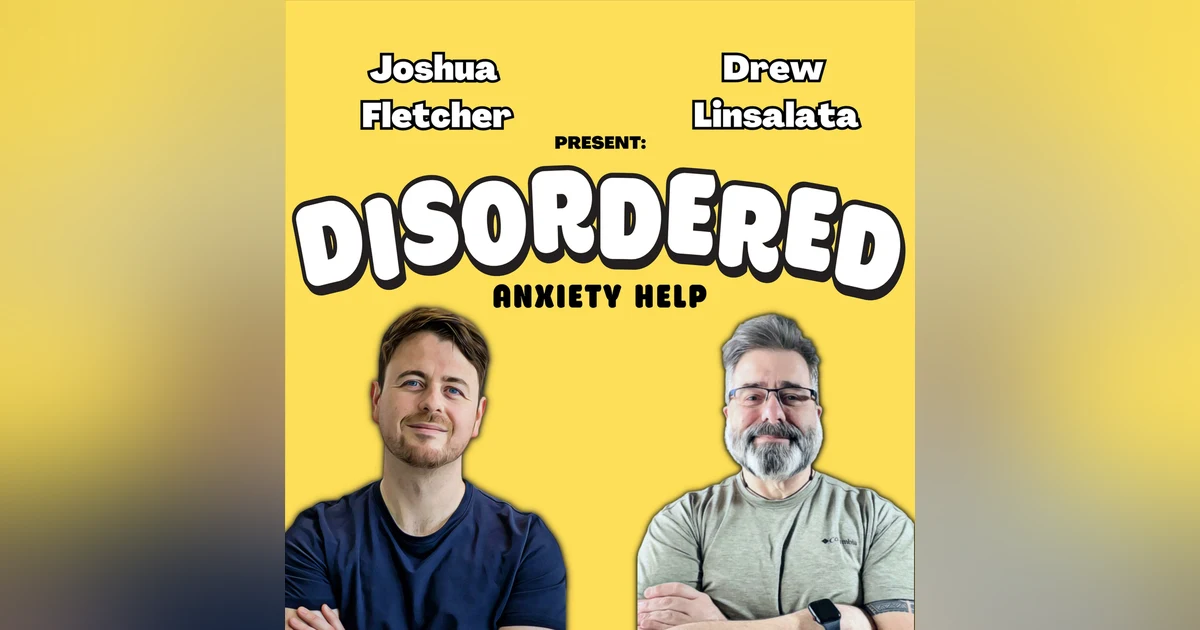
If Its Anxiety .... It MUST Be Trauma! (Episode 111)

 Apple Podcasts
 Spotify
 YouTube
 Amazon Music
 iHeartRadio
 RSS Feed
 This week on Disordered we're discussing the all too common narrative in wellness circles that demands that we ascribe all anxiety or suffering of any kind to unhealed or unprocessed trauma. And while its certainly a good thing that we are more concerned with life experiences than structural defects now, this narrative can be unhelpful or even harmful in the context of anxiety disorders.
All humans experiences crises. Some of those crises remain unresolved and create trauma. In some of those cases that trauma appears as functional impairment long after the traumatizing experiences are over. Some anxious people struggle with this. BUT NOT ALL. It's not automatic. The word "some" is the most important word in this discussion.
When there is trauma in the mix - and not all difficult things in life need to be called trauma - that makes anxiety recovery more layered and even more tricky in some cases, but it doesn't make things impossible. And when there is no lasting functional impact due to "trauma", insisting that anxiety disorders are an unhealed / unprocessed pain problem is a really bad strategy.
Whatever your experiences in life with crisis, trauma, or anxiety may be, this episode is worth a listen.
---
Disordered Roundtables are here! Think of it as "Disordered Live", a way for members of our audience to spend time with us in an intimate virtual setting (attendance is limited) to engage in real time sharing and discussion on specific anxiety disorder and recovery topics. To be notified when new Disordered Roundtable sessions are scheduled, visit our homepage and get on our mailing list .
---
Struggling with worry and rumination that you feel you can't stop or control? Check out Worry and Rumination Explained , a two hour pre-recorded workshop produced by Josh and Drew. The workshop takes a deep dive into the mechanics of worrying and ruminating, offering some helpful ways to approach the seemingly unsolvable problem of trying to solve seemingly unsolvable problems.
-----
Want to ask us questions, share your wins, or get more information about Josh, Drew, and the Disordered podcast? Visit us on the web:
https://disordered.fm
---
Disordered Roundtable is coming! Think of it as "Disordered Live", a way for members of our audience to spend time with us in an intimate virtual setting (attendance is limited) to engage in real time sharing and discussion on specific anxiety disorder and recovery topics. To be notified when new Disordered Roundtable sessions are scheduled, sign up for our email list using the form on this page.
You can pick out the anxiety specialist because we stick out like a sore thumb. We're the only ones not defaulting to inner child trauma unhealed pain.
SPEAKER_02This purposefully vague thing, like you've got to deal with the trauma. What do you mean by that? That just adds confusion, particularly to the compulsive ruminators and the people that are obsessed with anxiety recovery.
SPEAKER_03You have to stop saying that everything is trauma. Not everything that's difficult or creates a bad memory for you is called trauma. You fear how you feel.
SPEAKER_02And so therefore it can become one big hunt, one big simplification of finding a technique to make it all go away.
SPEAKER_03Oh wait, this helps me understand why it's so difficult for me to do the facing, accepting, floating, willfully tolerating exposure thing. So there's an empowerment in that sort of stuff. Welcome to Disordered. This is episode 111 of the podcast entitled Anxiety Recovery. It must be trauma, right? I am Drew Linsolata. I am a therapist practicing in the area of anxiety and anxiety disorders in New York, former sufferer of anxiety disorders and OCD and depression for many years of my life, but better now, three-time author on the topic, social media dude, psychoeducator, advocator, guy with an expensive mic, and co-host of Disordered.
SPEAKER_02I'm Joshua Fletcher, also known as Anxiety Josh. I'm a psychotherapist and author based in Manchester in the UK. Prance about on social media, love doing this podcast and providing valuable insights and psychoeducation to the world of anxiety disorders.
SPEAKER_03Mm-hmm. So, what are we going to talk about today? We're talking about uh it must be trauma, right? It's gotta be trauma. Must be some trauma in there somewhere. Have you looked in your cells, James? Have you looked in your cells for the traumas?
SPEAKER_02Yeah, there's it can there's something that's obviously still in the in the popular sphere quite a lot. Um, I noticed it because I was doing some TikTok videos recently. And always in the comments, or you you hear this well, you can never get over anxiety until you deal with the trauma. Uh, it's very vague. What does that mean? I don't know. I'm someone who's been through a lot of trauma myself. Um, even an anxiety disorder can be quite traumatic. Um, but what this reduction of the trauma, stored trauma, things like that. We spoke about it a long time ago. Um, and it's something that I feel that can get in the way of people with anxiety disorders, you know, get into a good place. Because it makes the narrative around recovery very convoluted, it's very vague, it's very hidden. Uh, I even have discussions and debates with fellow therapists who are not anxiety disorder informed, where this narrative of, you know, all suffering is because of trauma. Um, I personally find quite reductive. Um, and I thought we'd kind of uh talk about it today.
SPEAKER_03Yeah. Uh we did an episode way back when I think it was episode 30, where we sort of talked about the whole body keeps the score thing. But this is a little different because I think this speaks to when you're looking for professional help, like it really matters who you go to. I mean, first and foremost, it matters that you make a connection with your therapist, but you know, their like preferred modality and their theoretical orientation starts to come into play. And I will echo that. In a room full of therapists, you can pick out the anxiety specialist because we stick out like a sore thumb. We're the only ones not defaulting to inner child trauma, unhealed pain. And I've been in those arguments myself all the way back into grad school. You know, arguments are debates, discussions, they're not arguments, they're civil, of course. But yeah, there's a there's a lot of people who go into the helping professions that have a vested interest in the idea that unhealed pain and that sort of hidden psychodynamic, subconscious, under-the-hood pain processing is at the root of everything. And okay, I guess, but in our context, how does that go off the rails? Where does that become a problem?
SPEAKER_02It's confusing for people with anxiety disorders as well, because everyone with OCD remembers their first intrusive thought. And usually it's you're fine, you're just in the garden or messing around, bam, you have an intrusive thought. People remember their first panic attack. You know, it's probably doing something mundane, normal. You know, what's that got to do with unhealed pain from so you I was actually quite content when I had my first panic attack. Yes, I was really stressed, but I didn't like worry about anxiety intrusive thoughts. My stress jug overflowed, and my brain was just like, this isn't sustainable, Josh. Um, and hear it a lot, and I like when you said the default a lot of people's default thought, and I think this is a reductive approach to mental health, is that well, the first place we go is that we explore trauma and then somehow almost magically identifying trauma, and then what we call techniquifying, you know, if we work on the trauma, if we do breath work, we do these things for someone with an anxiety disorder, it can only add confusion to the mix because we're trying to tell people to not techniquify their way, to practice willful tolerance, surrender, etc. But then there's um almost a kind of counterintuitive, contrasting narrative of no, no, you've got to work on echoes the trauma. And I it always confuses me, and and yet it's it's so popular, it's almost like it's it's one of the biggest wellness myths of I'll go as far as say this of our of our generation. Um and particularly, I'm not just singling out certain things, but you've got to look at the research and stuff. There is no empirical evidence to suggest that stuff like trauma is stuck in you and you have to exercise it. There's none, you know. Yes, if you've got PTSD, and some people listening might have PTSD. Um you know, yes, it's when memories aren't properly filed away and they just knock about your hippocampus being really annoying. But when this purposely vague thing, like you've got to deal with the trauma. What do you mean by that? Yeah, that just adds confusion, particularly to the compulsive ruminators and the people that are obsessed with anxiety recovery.
SPEAKER_03I think it's part of the problem starts to be that the the word trauma, the definition or what we what we label trauma has expanded, like you know, feature creep and software, like it just got bigger and bigger and bigger. Where I know that there are people right now, whether they are, you know, qualified helpers or just people with a microphone on social media or whatever, like everybody has trauma. Everything is trauma. We're actually starting to see a little bit of a backlash on that. There are some pretty well-respected clinicians that I really trust who are out there kind of challenging that now. Like, not everything. We have to stop saying that everything is trauma, not everything that's difficult or creates a bad memory for you or leaves even hurt is called trauma. Like it we really started to grossly overapply that. And anything that was a difficulty to me is now trauma that has to be healed. But that isn't necessarily true. And I think one of the things that we run into is if you're if you're gonna say, well, the bottom line here is you have to somehow heal that trauma, heal from that trauma. Implication is, and it's in our context, it's a it's a dangerous or it's a difficult implication, then you'll feel better. Like you'll calm down, your nervous system will regulate, blah, blah, blah, blah, blah. If we heal your pain. But for the, yeah, but for the person, oh, we really do need that. You're right. Hang on. John trying to give me a the pantomime, hit the button. So I think the idea is if you heal your pain, your your unhealed trauma pain, then your system will regulate itself and you won't feel bad anymore. You won't feel the things anymore. But the problem is it's not the trauma that people with anxiety disorders are worried about in the moment. They're only worried about if there is trauma, they are primarily worried about the feelings that the trauma causes. So if you have terrible memories in your life and they come up and your body responds to that, or you have thoughts associated with that, or big emotions that you feel are dangerous and unhandleable to you, the why you have them isn't important anymore. Like just the fact that you have those experiences. So, you know, it's it's we have to be really careful because that promise of like, well, we'll heal your pain and then that will all go away. But then when it doesn't, because you're human and you do experience physical sensations of stress or anxiety, or you do have thoughts that you can't control, you do have emotions that you can't suppress, it's still here. I don't know what's going on. So it's it's really complicated and it leads people into a sort of a path that sometimes they get stuck in for a really long time. Yeah, it's like wait waiting for God.
SPEAKER_02There's no He ain't never showing up. He ain't never showing up, and it's like, but what is it? And you know, I've been down this route before, like in my own personal therapy, and I've been through a lot of traumatic things, a lot. Some I share openly, some I keep keep to myself. And as someone, you know, with OCD and fear of fear, panic disorder, I hate how this feels. And then you have all this narrative, social media, wellness books, even therapists saying, you know, no, we must address the trauma to get rid of this. I bought into it, of course. I'm seeing voices of authority telling me that uh and almost like with such authority, like you have to do this. It's like a very rigid approach, like you have to do this to feel better, and actually just made me feel worse. You know, and that's again another contributing factor as to why I trained and trained in different modalities as well to be a therapist. Disclaimer though, you know, if you've got PTSD and stuff, yes, yeah, it's it's it's you do have you know PTSD specific therapy, things like EMDR, that's where body work, breath work, yeah, and stuff like that, that those could could can come into play and help. But uh this episode's about like stop looking for to try and uh find the root cause of something when actually the cause more often than not is right in front of you. You fear how you feel, right? You fear the sensations, and so therefore it can become one big hunt, one big simplification of finding a technique to make it all go away. Yeah, it's like no, I'm no, it's it doesn't matter. Yes, there's benefits of talking through traumatic things, you know. Humans almost every human will go through traumatic stuff. You know, if you're really unlucky, you've probably gone through a lot, you know. Um but looking at that, maybe you're looking at traumatic things, how it affects your attachment style, stuff like that. You know, people call often call it complex PTSD. Um, I know there's lots of people listening that struggle with the fawn response, the people pleasing stuff like that. Yes, absolutely. Exploring those things and the origins about why that occurs can be helpful. But ultimately, and I think Drew will agree, part of recovery from an anxiety disorder or all these elements of anxiety, is about doing things anyway, with the feelings that you don't like, not disappearing into a room, yeah, saying them out loud, and then leaving the room and you're completely anxiety-free. It doesn't work like that.
SPEAKER_03Yeah, I think that's a big thing. Like what I'm really seeing, especially, you know, working individually with people, is that that thing where like, well, okay, well, well, what do I do with this? Okay, yeah, there have been some things. Like every human goes through crisis moments, and then some of it we might call potentially traumatic, but it becomes traumatic when it leaves a permanent mark that impacts your functioning today. That's what trauma is. Like it impacts your functioning. It's not just I'm sad about that or I'm angry at my mom. That could be trauma, but not automatically. But even when people can start to come to grips, and even in anxiety therapy, the stuff is going to surface because you're not just an anxiety disorder with legs, you're a whole person, right? So even if that stuff starts to surface, the question is often, okay, well, what do I do with that? Well, the way out is always through. You know, processing healing is through the memories, it's through the narratives, it's through those things. No matter what we do, we have to go through it. And if you are full stop the minute you have an emotion you feel is too big, or if you are full stop the minute your body responds to emotions, then how are you ever going to heal that pain, which is a through thing anyway? So even if trauma that maybe lit the anxiety disorder fire, it doesn't matter. The fire is lit. Blowing out the match doesn't put the the fire out. Like it's still lit. And if you are afraid of how you feel or you're afraid of your thoughts, then it's really going to be really hard to process and heal if you if you insist that you should never have scary thoughts, big emotions, or difficult bodily sensations. You can't do it. And we see it a lot in OCD. Working with people with OCD who have been through traditional taught therapy, where the therapist insists we need to find the trauma that that caused your OCD. Uh, my heart goes out to you. If you've been in therapy for eight years, your therapist insists we need to find the logic, the trauma logic behind it. It doesn't work out for you. Like that doesn't work out. There might be some. Yeah. In the moment, no matter what we do, when that storm of thoughts and that obsession hits and you feel so like it's screaming at you to compulse to get rid of that feeling. What happened between you and your and your dad when you were eight years old is irrelevant in that moment. You're only concerned about current safety, and that's just the way it goes.
SPEAKER_02So yeah, it is, it is. And there were upsides to this kind of for the want of a better term, movement. Because it allowed people to for people to talk about things, difficult things, and their vulnerabilities under a title. Uh and it allowed people to come forward and be like, oh, I talk about my trauma and my trauma. It's like a protective word to talk about difficult things. And that I do like and respect that. Uh I'm not saying, and we're both not saying, you know, or kind of invalidating your feelings and experiences. No. No, I hear you. We don't train to become therapists to invalidate experiences. We're here to kind of discuss what's important and anxiety and getting better, you know, from that, or living your back the life that you want again. I'm just saying that sometimes in my opinion, sometimes it's gone a bit too far and simplistic. And also it kind of it's kind of watered down what trauma really means, and it's become this hidden ghost that we have to confront that might not have even been there in the first place. The vast majority of people that go through serious trauma, you know, witnessing murder, being in accidents, surgery, horrible health things, the vast majority of them do not get PTSD. Yeah. You know, it's only a small minority, you know. Uh, does it mean that going through something traumatic doesn't have an impact on you if you don't have PTSD? Of course not. It's gonna have an impact on you. But you know, as humans, we uh we'll go through ups and downs in life, peaks and troughs, magical highs and horrible lows. Um, but you just gotta remember that like you can cope and tolerate with those things. They're just gonna throw up emotions that may be alien, strange, uh, and new to you. It doesn't mean you can't kind of tolerate them as well.
SPEAKER_03Yeah.
SPEAKER_02Um, just just yeah, just be careful. And I say this a lot there, particularly if you're someone on social media, Instagram, TikTok, YouTube, and there's just loads of people going, trauma this, trauma that, trauma that. And you look at it and you see that, and then six years later, you the same person still commenting posting the content, and the same people are still commenting underneath it. Yeah, you know, because they're still chasing God oh.
SPEAKER_03And I just like anything else, like the the trauma, this is, you know, we know I don't want to veer off topic into like a social media rant, but I think it's important because that's part of what's fueling the trauma narrative, I think, for a while, is that everybody has trauma. It's all trauma. I also find that in a world where, in a world like the old movie trip in a world where like everybody with a microphone can declare themselves an expert, when pushed, sometimes the person who maybe doesn't have that expertise will say, Oh, but but I'm trauma informed. I talk, I use the word trauma liberally to know that people have been traumatized. So that means it's okay. I'm I'm trauma informed. I it doesn't mean it does sometimes, it's worse. Like using the word trauma liberally can convince people that, like, well, I'm damaged, I'm broken, I'm never going to be able to recover from this. This is a permanent scar. But it's important to recognize that we all have scars. You may have a scar that you carry, or scars, or memories, or big emotions, or unresolved anger, or hurt. That's fine. But we're trauma really should be reserved for a syndrome that, you know, it's a collection of things that says, oh, I'm really having a hard time functioning. Like if it stops me from living the life that I really want to live functionally, it's not just I'm angry, so therefore I have unhealed trauma. Well, yeah, you're allowed to be angry about bad things that happen to you. You're allowed to be sad about that. You're allowed to maybe have learned certain responses that aren't serving you so well. But we have to be really careful about about calling you know trauma. I have trauma. That's a trauma response. Not everything is a trauma response, FYI.
SPEAKER_02It conflates the narrative of getting better as well. Let's put ourselves in the eyes of someone who's been anxious for so long. They've got GAD, panic disorder, agrophobia, OCD, whatever. And someone comes along and says, Well, actually, you know, you you've probably been through a lot of trauma. Okay. All right. So then they go into therapy and they talk about all these horrible things that evoke feelings they don't like, the same feelings they don't like day to day anyway. Right. They go in and they're really brave and they revisit all these incidents and talk through stuff that's really tricky, you know. And if you're one of these people, well done, you know. Then these same people, they leave the therapy room, maybe after the first time, maybe after the 50th time. And look what happens. One, there's an expectation, do I feel better now? Maybe in some senses that you feel more brave to talk about stuff that you're afraid to talk about. That's that's good. We don't we don't knock that. But what will return are the same habits, the same compulsions, the same quest for certainty, and the same fixation on how we feel. Talking about through trauma sometimes can have the opposite effect in the sense that people with anxiety disorders, and I don't say this as a as a negative, because we've been there, are obsessed with how they feel. So if you go to somewhere that really ramps up, you know, the volume of obsessing about how you feel, don't be surprised or disappointed when you come out and suddenly anxiety is still there because your fear and misinterpretation of it is the problem. Yeah, don't techniquify a trauma exploration, is what I'm trying to say.
SPEAKER_03Yeah, yeah, that's a really good point. I I like to use like okay, so everybody has feelings, right? And for the person who maybe has been traumatized or has legitimate, we'll call it trauma. Yes, I live through traumatic experiences and I am traumatized. I feel because I had these experiences and anxiety disorders, I feel therefore. So like I'm reasoning, like I have a feeling and therefore that must mean something. So like if we leave that part alone, if we don't address that mistake of I feel therefore, which non-anxious people do not do in general, to the point where it like really impacts their lives so so seriously. If we if we leave I feel therefore untouched because all we care about is I feel because every time you feel, you're gonna jump to a conclusion about some sort of disaster or catastrophe or like unhandleability or unacceptability about the way you feel. So we we have to address that I feel therefore part, or you can't do the other part. So you will you forget that. Like that's a big problem. So both can have to happen at the same time sometimes. But you're right. Like often you have to tell somebody, like, if we open that can of worms that you've been either sitting on and don't want to talk about, understandably, it's really difficult to do that, or you didn't even realize that you were holding it back, and now you're thinking, all right, maybe you need to go here. This might make you feel a certain way. So when you start to talk about these things, if you feel like you're getting more anxious or the anxiety is everywhere now, that's kind of normal. Like we'd expect that to happen. You got to know that's gonna happen, right? So yeah, yeah, yeah. This is that's a difficult situation to be in, but not impossible.
SPEAKER_02Yeah, yeah. And again, we're not invalidating experiences. This is you can't get a Of this as well, like because it's such a sensitive sort of topic, you know, everyone has subjective difficulties and trauma. I implore you not to misinterpret my words as you know, those guys are attacking my trauma, they're invalidating my feelings. And I've had that in the past and I very clearly said, no, that's not what I'm doing. I'm trying to help people with anxiety disorders because they get mixed up in all these different narratives. And I'm trying to say to these people that's okay. Uh, but often I get he's invalidating, he's doing this, he's denying things. I'm like, I I I couldn't be clear enough, but okay if that I'm not invalidating your experience, I'm actually saying it's incredibly brave for you to acknowledge that, to highlight it, to visit it in your own time. What I'm saying is if you've got someone who is obsessed with how you feel, trying to comp fix and compulse and find the next big thing, sometimes the word trauma can accelerate that compulsion to find another thing to fix.
SPEAKER_03Yeah, this is the this is clearly a solution. And I it oversimplifies, I hate to say it, but like trauma is complicated. Well, you humans are complicated. Life is complicated, right? There's so many facets and variables we can't possibly track them all. But I think one of the things that it's incumbent upon everybody, we all have this personal responsibility, is like not every word that you can hear on every podcast is going to resonate or apply directly to you. Like this one. You know what? If you're listening to this podcast and you feel like, well, I don't think I have the problem that these guys are talking about. Like, my problem appears to be uh I have been through some horrible stuff and I'm having a hard time getting over it. Okay. Like I respect that, I honor that. We both do, I think. Like we wish you well, but you have to recognize that, like, okay, maybe these, maybe I don't have the anxiety problem that these guys are talking about. Or you may recognize, oh, I think I have both of these things going on. Or you might be the person that says, Yeah, I had a therapist that dug for two years and really hurt me, and I hate the trauma narrative. Okay, you're gonna have to figure out a way to take what you see or hear in a podcast or a YouTube video or a TikTok thing or a post on Instagram. And does this apply to me? Does this work for me? Does it fit my life's circle? It doesn't scroll past, uh get a click out of the episode. Like, it's really important to do that. Not because we want you to go away, but like we can't possibly validate every individual experience that every human listening to us is gonna have, it's gonna vary so widely.
SPEAKER_02So yeah, keep that in mind. Absolutely, yeah. Uh what else was I thinking as well about oh, yeah. So, like just be wary as well of like where you get your resources and help from, you know, don't ever lose that caution. Even with this podcast, you know, I'm not proclaiming we're better than other people, we just simply think it. But like um, like, for example, I read a fairly popular anxiety book. It's been around a few years recently, where the author in the introduction's like martyring himself, like, oh, I did this, I took hallucinogenics and went and found my inner. He's obviously you know done some brave inner work on himself and whatever, then applies that to the human race. He's like, No, this is the only way you can overcome anxiety. Right. So he's gone inwards, he's taken mushrooms or whatever, sat in his shed, gone inwards, and he's discovered that you know he had some difficulties growing up with his parents and whatnot, and found his way through his own personal subjective trauma.
unknownYeah.
SPEAKER_02Then he's trying to commodify that and apply it to the world. Yeah, and he's and he's saying very strictly, if you want to get better, you must find in your body where the where the emotion is stored, which by the way is a misnomer and a myth. There is no evidence to suggest that emotions are stored in the body. None. Yeah, none. Yes, when you're anxious, the body has to process all that adrenaline and cortisol. You probably have really poor posture and whatnot, and we all process our anxiety differently. Mine's my jaw, my ass, sometimes my chest. Does that mean that my dad not turning up to my football games has manifested in my chest? No, it doesn't. It's just how my body processes anxiety. But when you start getting into this whole, you must find the trauma, and this is what this guy was doing. Pinpoint it, breathe into it. It's like it's not the exorcist part two. It's just what we're trying to say is okay, acknowledge where it's at. Okay, this is how my anxiety manifests. Now I'm gonna teach the brain. I'm not scared of how this is. I'm I'm all right. This doesn't necessarily mean anything right now. My stress drug's overflowing. Yeah, just be wary of the authoritative trauma narratives out there that insist that there is no way to get better other than this. Because one, it's dismissive, it causes you to feel worse in the long run if it doesn't work for you. And always, yeah, never lose that skepticism, even with us, even with whatever you're listening, never lose that skepticism skepticism. Um, that martyrdom bit really annoyed me as well. Like, I've done the hard work, yeah, I've done this on behalf of you all. Now follow my teachings. I mean, I thought I had an ego, I do. Whoa, yeah, it fails in comparison.
SPEAKER_03I ate McDonald's for every day for 60 days straight, so you don't have to. That's what that's that. Like, really, but now we're going to apply it to somebody's mental health and life experiences. Whether it's healing trauma or it's recovery from an anxiety disorder, you got to be really careful about that. Like, we're always talking about general principles. But you and I both know that when an individual person walks into your office for therapy, those those general principles are going to look very unique for them, how they get applied. And the same thing holds true. If you have a combined experience where there's both an anxiety disorder and a trauma narrative that are like mixed in together, that's really difficult. That's going to look incredibly individual. So, but it's super easy for the trauma narrative or the popular trauma narrative to use the word heal as a as a verb that indicates there's one way to do that. And be careful of anybody who tells you here's three things that will banish your anxiety forever. And also be careful of anybody who tells you the one thing you need to know about healing your pain. The one thing. Oh, is that all?
SPEAKER_02Oh, yeah, yeah. It's such a complex thing. You just know yeah, that's it. Some guy or so someone in their living room with a nice spotlight and they look great, filter on the face, like, you know, I here's a technique to make it all go away. And I tell you what, I I see why that gets views and likes and saves. Because we're a lot of us struggle. We're desperate to find something to make the horrible feelings go away. I don't know what that feels like. Yeah. Just again, just don't lose your skepticism.
SPEAKER_03Yeah, I think one of the things that makes it important too is that the the word trauma, sometimes when they hear you hear it again and again and again, especially in the narrative of that's trauma response, that's trauma response, that's trauma response. And like there's an almost a uh militant, like anybody who dismisses your trauma, you they are not, you know, that's a them problem. You got to push back against that. I have trauma. Okay, cool. We've come a long way from the days of what's wrong with you to what happened to you. That's awesome that we did that. I need you to believe that, like, well, now I have a problem that can't be overcome and I just had to accommodate it. But really and truly, I think in the work that people like Josh and I do, sometimes when there's that trauma narrative, legit, like that's part of your life story, it helps people understand. Oh, wait, this helps me understand why it's so difficult for me to do the facing, accepting, floating, willfully tolerating exposure thing. Oh, so there's an empowerment in that sort of stuff. It gets part put into the mix and we get to work on all of it. It's complicated. But don't let anyone using that trauma narrative somehow imply that the issue here is that you're just gonna fawn forever. And so therefore, that's the only way you can live, and everybody has to accommodate that, and the world has to know that that's your hurt and and just hold on to it forever. Like, no, that's a terrible narrative.
SPEAKER_02Exactly, exactly.
SPEAKER_03It bothers me so much.
SPEAKER_02I've got uh I've got um I've got a nice example, like a real life example of where the client a long time ago who spent a lot of time in these in these narratives, you know, reading all the trauma books, and um they were uh obsessed that trauma was uh uh stored in their psoas muscle. So was doing compulsively doing psoas muscles muscle stretch exercises and then frustrated why they kept getting anxiety. I was like, yeah, because it's not stored in your psoas muscle, because we sit on a lot of us sit on our backsides all day for work, job, whatever, and we're tense and your glutes get tense and unused. Guess what compensates for it? The psoas muscle. Does that mean that I have generations of trauma trapped in my psoas muscle? Maybe, but Occam's razor says it's probably because I sit at a desk all day and I'm anxious. Anyway, we this is an example of where trauma narratives get in the way of things like exposure, because we were going to do um an exposure in a hospital, and I can relate to this too, but like this particular person was like, I you know, I saw a loved one die in in the hospital. And I'm like, Yeah, that's that's horrible, you know? You know, that's horrible. And it turns out this person wanted to see another loved one in this hospital who had some minor surgery or something. So we met up into to do our exposure, and I said, Okay, well, let's, you know, why don't we you're being brave, let's let's go through to the reception doors. And they were like, Okay, yeah, okay, I'll get to the reception. And they did really well. They were really so brave, and they were doing the exposure, willfully tolerating the adrenaline was pumping, the cortisol was pumping, the derealization was there, the air hunger kicked in, uh, you know, and stuff like that. And then they stopped because about you know, a year of this trauma narrative stuff, I want to go further, but I have trauma here. I'm traumatized. What if it stops being anxiety and panic and becomes trauma? And I said, Well, and this and this is do you know how we are you you often hear me and Drew talk about how your anxiety sometimes isn't special. But I was like, No, you're having a threat response, and yes, it's probably ramped up by your associations here, but it doesn't make the anxiety more special. You can tolerate this, you'll have other emotions too, and allow them to be there. Yes, you might feel scared, but you also might feel teary, you might feel grief, you might feel a bit of anger and irritation, but that's what we do a little bit at a time, and we do as much as we can. And I thought I'd share that as an example of sometimes how the trauma narrative can foster avoidance.
SPEAKER_03Yeah. If you've ever had that, yeah. Yeah, I'm sorry, I stepped on you. The the trauma narrative in clinical circles sometimes will invalidate exposure and acceptance approaches, which we know are like it's not even a question. Like they're the most empirically validated approaches we have for anxiety disorders. But you know, the number one reason, and there's a lot of there's a reasonable amount of research that's done into this, into in the counseling literature and therapy literature, like the number one reason that therapists are afraid to have people do exposure, I what if I re-traumatize or traumatize my number one thing. So if you know, person has is having a problem and like, well, you know, exposure really is the right way. Even the therapists who say, I understand the data tells me that this is this is a good thing to do. And if you do it correctly, it's helpful. No, there's an emotional attachment to I but what if I traumatize, what if this traumatizes the person? No, and exposure is meant to teach you that like your internal experience is never unhandleable. It's a response to what you're going through, which can be really difficult, but you don't have to run from your own heartbeat or thoughts.
SPEAKER_02By that token, though, we'd we we'd avoid surgery. By that token, we wouldn't see a dying loved one. Right. By that token, we wouldn't do like that's trauma. Like sometimes we have to do things that are literally traumatizing. Yeah. And to teach people to not go there, you were actually saying, well, I don't want them to feel uncomfortable. Yeah. In a sense. Now, don't get me wrong, there are exceptions. If you have uh certain conditions, psychological conditions, uh medical conditions and stuff. Yes, okay, we do those things, you know. Um, but I'm just talking in the context of anxiety disorders, uh, fear of fear and stuff like that. We're all about, no, see how either you can tolerate difficult emotions, and the more you can, the more likely is that you're going to feel content and yourself and more confident.
SPEAKER_03It often means that, you know, I've sometimes I've I've tell some of my clients, like, well, okay, well, what does that mean for me? Like, if I've lived through these things and they've left a mark and they can recognize, like, yeah, I'm carrying that with me now. Well, it means that when you know that you have to do it scared or do it anyway, that just became a little bit more layered. So when you're doing it anyway, you not only have I, yes, I have to tolerate my sensations and the thoughts, but like you can now we can kind of bring in like, oh, because this situation reminds you of when this happened, and it's natural for you to feel unsafe in this situation. I know it's not just your heartbeat, I know you just feel genuinely unsafe. So the do it anyway has multiple layers, and depending on which day you're doing it, one will be on top and one will be on the bottom. We don't know, but it just means that the exposure gets a little bit more complicated or nuanced, but it doesn't mean it's impossible or you back away from it because I have trauma, and so I have to just sit on my sofa and be calm my whole life. That's not correct. So that's this we can talk about this. You know, we did no community stuff, we did no did it anyways because this is.
SPEAKER_02No, let's do let's do some community. So we were just ranting, we were just ranting. I think two bros with a microphone. Come on, let's listen to the community.
SPEAKER_03Can I blow your mind? Can I blow your mind for a second? Can it blow your mind? Look it up, Jamie. Call up the i we need a Jamie like Joe Rogan. Jamie, call up that brick flair video that demonstrates drama. Like, we need that. So anyway, but that's it's an important topic, and I think that's it illustrates that we just got right into it and got caught up in the conversation.
SPEAKER_02But we do something you can tell we're quite passionate about, but uh for sure, for sure.
SPEAKER_03Well, I'm sure we're gonna talk more about this.
SPEAKER_02Um, yeah, let's do that. I hope it doesn't do the thing. Or to the to the lovely person who left a review on the podcast. I love my favorite review had uh I've listened to 105 episodes of this, but episode 89, I didn't agree with three stars. Thanks, thank you very much for that. Um it did make me laugh. I'm like, come on, come on.
SPEAKER_03All right, totally fine. You want to give us one star, give us a one star. It's all right. It's it's all good. No, we got a couple of did anyways and a question, so let's run through those really quick. And I'm sure we'll talk about this topic. It's gonna get weaved into every episode at some point, so let's at least listen to this one.
unknownHow about that?
SPEAKER_01Hi, Josh and Drew. This is Karen. You guys can use my name. First of all, thank you for everything that you do. You've been a huge help and extremely interesting, also. I wanted to share an I did it anyway. I just finished it right now, so I decided to go ahead and let you guys know. So last week when I was delivering for Uber Eats, I made a mistake and I panicked, and I went down a big messy road of panic and upset. And I was unable since then to be able to start doing it again, and it has been a week. And I signed one today, and I got an order, and I got myself to the house. I delivered it, I knew what I was doing, and I'm back in the game, and I'm really proud of myself to have come over this. This is very difficult for me. Thanks again, you guys. I did it anyway.
SPEAKER_02Go, Cameron. Oh, it's amazing as well. Uh, and um fair play. Uh, the twist in the story was that she was delivering um Drew's Uber Eats order. And uh the the bike she was on was struggling to stay stay upright because our Drew had ordered uh food.
SPEAKER_03You like some amount of barbecue ribs. I love I love my ribs. I love how she just finished it. It was like a hot off the presses did it anyway, like like a freshly baked donut. Cool. I I love that as well, and a good thing to celebrate it as well. Nice, compassionate thing to do for yourself. 100%. Um, we could do another, let's do a question and then we'll end with the did it anyway. We'll end on like a positive note. How's that? So here's a question. We'll see if we I will throw it at you. I don't think you've heard it yet, but let's see what we got.
SPEAKER_00Hi guys, uh, this is Vinia. Greetings from Amsterdam, the Netherlands. Um, I had a question about anxiety and big life changes. I'm currently having the craziest year of my life. Um, I've just bought an apartment with my boyfriend, and we're starting a new chapter together. Stepping into real adulthood, it feels like. Um I'm also looking for a new job. Uh, all of these things are super exciting, but they're also stressful. Um, it's added with the fact that I suddenly lost my dad this January to an aggressive form of cancer that was unfortunately caught too late. Um, so I'm trying to deal with the grief and the loss of a parent at the age of 29. Um, and also trying to be excited about all these new changes, but it's yeah, it's more difficult than I thought it would be. Uh all of these anxiety symptoms that I had had for a long time are becoming stronger and stronger and stronger, just feeling like I can't breathe or feeling nauseous or dizzy, um, and then freaking out about it, even though I know for a fact it's anxiety. I'm trying to give myself grace to understand obviously these changes are going to make me a little bit more stressed. But yeah, I guess my question would just be if you have any tips on how to yeah, handle anxiety in these moments where I can't really just uh quit and uh go to the countryside and not deal with any of it. I I have a lot of responsibilities at the moment and yeah, heavy things on my mind. And I I was just wondering if you had any tips on how to handle that. Thank you so much for everything that you do. I've been listening for a long time and I really, really appreciate you both. So thank you for that.
SPEAKER_03If there was a question that illustrated this episode, it would be this one.
SPEAKER_02Okay.
SPEAKER_03Okay.
SPEAKER_02Am I been tasked in the great question? Thanks for sending that in. Yeah. Um, first of all, the first point I'd like to address is that you are handling your anxiety, you're just not handling it in the perfectionist way that you want. Uh and the second thing I'll say is this bring your attention to the stress jug. And bear in mind it's positive stress and negative stress that goes in the stress job. You just bought an apartment, you moved in, new life, new change. That's stressful. It takes up your mind's trying to habituate to this new part of your life, you know, and yeah, it takes a lot of time, mental effort, you know. Um, and then also the obvious one, and I'm really sorry to hear you know, you've lost a parent. It's horrible, no, no stranger to that myself. Um, and that's gonna go in the stress jug, you know. What I'm hearing is there is the frustration of why aren't I feeling like I should conventionally be feeling right now? I I've just got a flat, I should be happy. I shouldn't. Your brain's trying to compute two polar opposites, something that you're really happy about, and you've lost your dad. So there is no specific feeling that should apply here. And then the stress jug's overflowed, and then so you're worrying about all the what-ifs and the symptoms and things like that that come with an overflowing stress jug. And then it sounds like you're like getting annoyed at yourself for that. It's like, no, like I think you you like Drew often says, you let your anxious body do anxious body things, and stop getting frustrated with yourself and adding stress when you're not feeling in air quotes, an appropriate feeling for this. No, you're allowed to be in your apartment, feel like shit, and sometimes you're allowed to be somewhere else and feel happy. Just accept all the feelings that come in, don't push them away. Go easy on yourself. There's no correct way to live life, and there's you can't apply an appropriate feeling to stuff, you know. I've woken up on my birthday feeling like crap, you know. Yeah, and yet I've woken up at 3 a.m. feeling really great. Don't know why, just happens. Just dignify it or let it be. Would you add anything to that?
SPEAKER_03I would only add, and and Pinha, we're sorry for your loss, of course, difficult. Um, and thank you for sharing too, because what I want to point out here is she could have asked any tips for handling the loss of a parent, especially something that happened so subtly. We didn't expect it. Any tips for like learning to move into adulthood? By the way, I've been adulting for a while. I highly recommend you avoid it, just saying. But instead, it was any tips for the anxiety. Can you see? If there's an illustration, I'm not I'm not saying that Pinya has been traumatized or has trauma here, can't ever know that unless we knew her. But look at how the focus becomes any tips for how I feel about these things. There you go. So even if it that this isn't about processing the death of a parent, which is certainly a really difficult thing. And everything Josh said is 100% valid. But I always try and remind people like, notice the part where you're having big responses to the things that are pressing on you in your life, whether it's good stress or bad stress, and both stress, and then notice the part where you cross the line into no, no, the problem is the feeling itself. Problem is not the feeling itself. That's the part that we care about. But if all you care about is the feeling itself, then how would you ever work on processing the loss of your dad? So perfect illustration of what we're talking about this in this episode.
SPEAKER_02Thank you for sending that in. If you'd like like Pino or um Karen. Karen, apologies, Karen. I don't have a problem with that. If you want to be like Pino and Karen and send in a question or did it anyway, we need some more audio did it anyways, actually. We get lots of written ones and we read through them. I've saved some of them. I'll read some written ones out in the next session. But yeah, if you've got any audio did it anyways, you want to send in, do that over at disordered.fm. Um, thank you for tuning in and such. We're gonna um, yeah, we've got some Drew and I are gonna be working on an exciting project soon. We'll keep you informed.
SPEAKER_03And uh yeah, thank you. Shall we good? All right, guys, we'll see you next week with something.