
I Have Anxiety and I'm Afraid To Be Alone! (Monophobia) (Episode 029)

 Apple Podcasts
 Spotify
 YouTube
 Amazon Music
 iHeartRadio
 RSS Feed
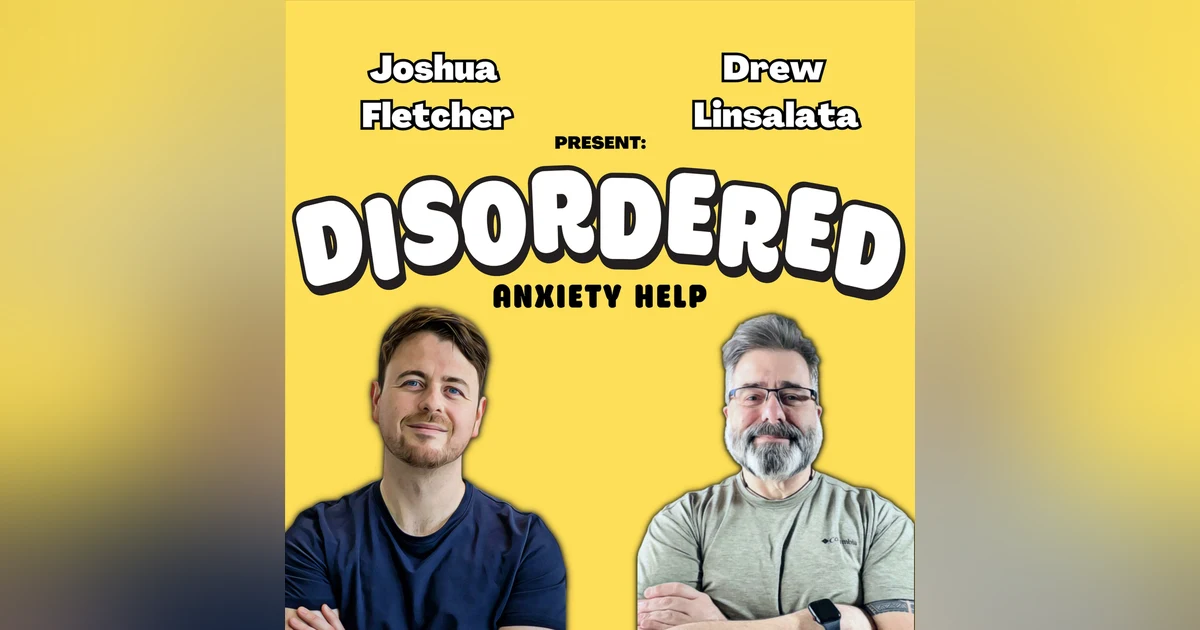
 This week Josh and Drew tackle "monophobia" - the fear of being alone. This is VERY common among people with panic disorder and agoraphobia. It presents most often as an intense fear and avoidance of being left home alone without safe people nearby or as always needing safe people with you before you can do exposures or go into areas where your anxiety might be triggered.
This fear is not a special or "another" fear that you have to overcome. Monophobia is what we call it when you are sure that you cannot tolerate or handle the experience of anxiety while alone and will need to be rescued or saved from that experience. It's another expression of the same fear .... the fear of fear.
In this episode, we talk about the fear of being alone (monophobia) and discuss ways to address it as part of your overall recovery strategy.
----
If you love Disordered and think you might benefit from spending 30 full days in an everyday intensive small group recovery support group led by Josh and Drew, check out Disordered Boost at https://disordered.fm/boost
-----
Want to ask us questions, share your wins, or get more information about Josh, Drew, and the Disordered podcast?
Visit us on the web at https://disordered.fm
Disclaimer: Disordered is not therapy or a replacement for therapy. Listening to Disordered does not create a therapeutic relationship between you and the hosts of the podcast. Information here is provided for psychoeducational purposes. As always, when you have questions about your own well-being, please consult your mental health and/or medical care providers. If you are having a mental health crisis, always reach out immediately for in-person help.
---
Disordered Roundtable is coming! Think of it as "Disordered Live", a way for members of our audience to spend time with us in an intimate virtual setting (attendance is limited) to engage in real time sharing and discussion on specific anxiety disorder and recovery topics. To be notified when new Disordered Roundtable sessions are scheduled, sign up for our email list using the form on this page.
If I had to be home alone, I would go through great lengths to make sure that did not happen. Like really creative life engineering to make sure that I was never left alone. Because I've what happens if I panic or I have I snap? I have severe anxiety if I'm alone. Who's gonna save me? Monophobia is the belief that you cannot cope on your own. I was so afraid to be alone that I literally deluded myself into thinking that my dog could dial 911.
SPEAKER_05I'd be like looking out for signs of potential rescue. Or maybe there's a farmer over there who would dial help if needed.
SPEAKER_02So it's not a different fear. It's not its own fear. It's not, oh, I have this new thing I have to overcome. It does confuse people. Sometimes they get down on themselves and think, oh, I've developed yet another fear. Well, no, it's really kind of the same fear. Welcome to Disordered. This is episode 29 of the podcast. Today we're going to talk about the fear of being alone, otherwise known as monophobia. I am Drew Linsolato, one of the co-hosts of Disordered. I am a graduate student in clinical mental health counseling. Getting ever closer to being a licensed therapist in the state of New York here in the U.S. And uh I am joined by my co-host in the UK.
SPEAKER_05Yeah, I'm Joshua Fletcher, also known as Anxiety Josh on social media. I'm a qualified psychotherapist based in Manchester in the UK. How are you doing, Drew?
SPEAKER_02I'm good, man. What's happening?
SPEAKER_05Um now I'm afraid to be alone. Well, it's great because we can talk to each other, so we're not alone. We're not alone. Uh monophobia often goes hand in hand with agoraphobia or and panic disorder.
SPEAKER_02What's your experience of it? I had it. I had monophobia for sure. Um, I didn't know it was called that. That was a term I learned later on. Um and that's not an official diagnosis, by the way. People think that that's not like a DSM 5 thing, but that it was I was terrified to be alone for even a few minutes. Like being home, home was my safe place, but as it turns out, it was only home with my safe people. If I had to be home alone, I would go through great lengths to to make sure that did not happen. Like, like really creative life engineering to make sure that I was never left alone because I I was afraid that what happens if I panic or I have I snap, I have severe anxiety if I'm alone. Who's gonna save me? Sucked. Yeah.
SPEAKER_05Yeah, I'm I can relate to that. Um I think I wasn't too bad if I was in ho at home on my own. It was when it was going to new places without a safe person for me. So it was like, well, just in case, and this word just in case, it's just phrase just in case. Uh just in case, you know, I freak out, or I or like you say, I need rescuing. So this gets to this place stage where it's so frightening and uncomfortable. I need a safe person there with me. Um, but I don't know why, because I'm, I mean, what are they gonna do? But ultimately, monophobia is the belief that you cannot cope on your own.
SPEAKER_02Yeah. I mean, I I did have those overriding like this is what if it's really a heart attack, or what if I'm having a stroke, or what if I am, in fact, going crazy? I need somebody to call help. Like, I can't to the point where this is a true story. At one point, I was so afraid to be alone that I literally kind of deluded myself into thinking that my dog could dial 911. And that might sound ridiculous. It is funny now. I will laugh at myself, but I I tried so hard to believe I no joke would put the cordless phone on the floor next next to Lexi. She'd be maybe laying on the floor next to me, and I would put the phone down there. And I would try and envision scenarios when some where somewhere I could like at the last second, you know, activate the phone and somehow, I don't know, she would hit the button. That's how bad it was. That sounds insane, doesn't it? Yeah. You've come a long way, true. Dude, I'm telling you, that was not my proudest moment, but I can look back on it now educationally and laugh at it a little bit. But um, yeah, that's how scared I was to be alone.
SPEAKER_05Yeah. Mine was I just I used to do, and that's just something I hear from a lot of people, but I used to do this as well when I'm walking around or uh challenging myself, going to new places, particularly in nature or somewhere rural, I'd be like looking out for signs of potential rescue. A bit like your dog trying to dial 911. It was like, yeah, or maybe there's a farmer over there who would dial for help if needed. Maybe, and hopefully, you know, frantically searching for maybe a couple of hikers that could save me just in case. Um, and then as I got better with it, the little micro safety behaviors came in, like, I wouldn't go anywhere without phone signal. Oh, yeah. You know, just because that and that's a form of monophobia too. It's like, okay, I'm on my own and I'm doing well, but actually, if there's no phone signal, you know, or or I'm not gonna get in this elevator with at l without someone there, yeah. Um, you know, you start to peel away the lay layers of it. But like I said, in in the it's an extreme form, like, yeah, I I just cannot be left alone. Um, and that's and that's and if that if you're going through that, it's very common, but ultimately it's a fear of fear. You know, I don't believe I can I believe that this will get to the point where I'll go crazy or lose control or have a heart attack. I mean, it doesn't happen, you know, but obviously anxiety will convince you that you're the exception to the rule.
SPEAKER_02Yeah, and I think people tend to feel like, oh, I've developed now another thing, especially if you have an official diagnosis or multiple. I've been diagnosed with panic disorder and agoraphobia, or I've been diagnosed with multiple things. And now I also have this. This is a new thing. And it's interesting how like mine really expressed in that sort of textbook way, I don't want to be home alone or be left alone anywhere. And but the the I can't do an exposure where that might save people. I can't face anxiety, I can't go too far away with that might save people. It's the same thing. It's actually the same fear. Like you said, it all comes down to the idea that it will overwhelm me, I won't be able to handle it, and somebody will need to bail me out. So it's not a different fear. It's not its own fear. It's not, oh, I have this new thing I have to overcome. And uh so I think it does confuse people. They sometimes they get down on themselves and think, oh, I've developed yet another fear. Well, no, it's really kind of the same fear.
SPEAKER_05No, I mean my first ever book, Panicking About Panic, I I this is something I use for myself. I look under this term called the anxiety umbrella. And rather than you know, using separate labels and diagnostics to make things sound more complex, um, I just kind of put it all under one umbrella. Like, this is just anxiety, you know. I know we had this conversation an earlier episode. I actually like the phrase it's just anxiety, it's just decided that this is it. Yep. Um, but also remember remembering that you have a phobia of how you feel, and it doesn't matter the scenario. When you have a phobia of anxiety, when you fear fear, right where you are is actually irrelevant. It's only through habit and repetition and it bec becoming a theme in itself that it's that it has become a thing. And this applies, you know, monophobia, agoraphobia, panics or whatever it is. Um what's the way through it?
SPEAKER_02What's the way out of it, Drew? Well, curiously, now you could do monophobia exposures, you know, that's fine. I did do that when I was, you know, start to get committed to the recovery process. I knew that, like, well, I'm gonna have to practice staying home alone. And I would do that, you know, I and that was really difficult. But here's the thing that surprised me. I did not recognize this when I was doing that work. I learned it as I was doing the work. As I got better at all my other exposures, the monophobia got better too. So when I got better at moving through periods of very high anxiety and understanding I could handle it and it's it's gonna be okay. I can deal with this, I can tolerate this. Somehow it was less scary to be home alone. So, you know, that was interesting. It's like it didn't, I didn't have to resolve monophobia specifically. I just had to get better, I had to get better at panicking, is what had to happen. And as I did, uh I started to alone like, oh, even if I do panic when I'm home alone, I can I can handle it, I don't want to, but I can handle it. So yeah, yeah. Panicking on the Long Island Expressway helped me stay home alone. Sounds ridiculous, but it was true.
SPEAKER_05Yeah, no, it makes sense because you you you're actually addressing what the fear is. Yep. If anything, for some people, being home alone is more scary than driving on the Long Island Expressway, depending on how they've rationalized their fear. Yeah, some people might think, well, actually, I could just, you know, put my hazard lights on and someone can rescue me on the Long Island Expressway.
SPEAKER_01Right.
SPEAKER_05But actually, when I'm home alone, you know, uh there's less access to driving. Whereas other people are like, yeah, I've I'll be bored home alone and driving uh would terrify me. Um and if you are someone with driving anxiety, go listen to the driving anxiety episode. It was a really good one. I really enjoyed that. It's very common. But yeah, monophobia is it the way through it is to start to cultivate a belief that you can tolerate this. Um, you've tolerated every anxiety, panic attack that's been thrown at you. You're not pushing it towards the edge, you're not asking for I hear that loads. It's like, yeah, but if I keep doing it, am I not just constantly pushing myself to breaking point? Right. No, you're actually teaching the brain, look, I can tolerate these weird symptoms, these rapid what if thoughts, these horrible sensations. Um, and actually, the more I do it, the less I I get become scared of it. I habituate to them, yeah, but I also start to sow the seeds of a belief that actually, yeah, I I I can just tolerate this anxiety wherever I am. Yep. And it's a very liberating feeling when you realize, ah, you know, now don't get me wrong, whenever you're experiencing negative emotions, whether it's anxiety or sadness or ice or feeling lonely or whatever, it is lovely to have someone around. Oh, sure. But when they become the crutch, a compulsive crutch, that's when you know actually, ah, this this feels like this isn't sustainable.
SPEAKER_02Yeah, that's the difference between, you know, everybody might say, oh man, I really, you know, geez, I sure could use a hug right now, or I'm gonna call a friend because I really need to talk this out, or, you know, hey, can we meet for coffee because I'm just in a I'm having a shitty day? Okay, it's that's fair. That's like an adaptive response that humans would engage in. It's the the urgency. If you feel that you urgently need somebody around and you urgently cannot be alone because something horrible is gonna happen if you are alone, that's that's where you cross into that other territory that we're always talking about. Why have you like the breaking point? If I constantly push myself toward the breaking point. Believe it or not, what you're really doing is you're pushing the breaking point further out, I think. So people would argue, well, there must be an actual breaking point. Well, uh okay, maybe if you want to make that argument that there is in fact a human breaking point, what you're essentially doing is learning that it is so far out there that you are likely never going to get to that. Right now, you think the breaking point is right up in your face, but that's not true. So you're really learning that, like, oh my con my my conception of my concept of breaking point is not accurate at all. Does that make sense?
SPEAKER_05Yeah. Definitely. Yeah, you're nowhere near your breaking point, and just because something feels like it. Right. You know, um also you like other presentations, you're practicing being anxious. Yeah. For a lot of people with monophobia, they've built their life around trying to avoid all feelings of anxiety, all feelings of discomfort because it is exhausting, it feels horrible. But when you realize that, hey, actually, I can tolerate this, you start to address the secondary fear that's added to the cycle. Like, okay, we all everyone experiences primary fear. You know, I'm scared, I'm anxious. But it's the secondary fear for people with disorder and anxiety that's the problem. It's like, okay, I'm anxious, but I need to work out, work on why I'm anxious when I become anxious. Right. And the perfect antidote to that is well, it doesn't matter how anxious I get because I can tolerate it and it will pass. And it always does pass.
SPEAKER_02Yeah. So monophobia is not, you know, it's not a special fear. I know it feels like it is, and it feels like something you develop something else, and everything's getting worse, and I have to work on all these different things, but it's not really that way.
SPEAKER_05Yeah, I think it's important as a therapist as well, it can become symbolic and enmeshed in previous life experiences. So if you're someone who's grown up and maybe you've had um scenarios and issues with maybe abandonment, being pushed away, or maybe you're someone who was never really taught to be independent and autonomous, maybe someone constantly did things for you, or always maybe you're raised by an anxious parent who's constantly um kind of with you or warning you of the dangers out there. That can cultivate a mindset going into adulthood that where we start to harbor these misbeliefs, where actually, oh, I've never really learned that I can cope on my own. Um, and that can play a part for some people. Um, it didn't for me, and it doesn't sound like it did for you, Drew, but I've heard it a lot in here. Um but again, the end result's the same. Right. You know, doing exposures to prove to yourself that you can do that and to challenge these misbeliefs.
SPEAKER_02And I think that's a crappy deal sometimes. And so I love that you brought that up because I, you know, we'll we'll take a little swipe at instatherapy or or pop psychology for for a minute here. Mot me take a swipe? When does that ever happen? I know, yeah. I know, never, right? But um like one of the things that became super popular, I'm not saying it's wrong. I I know it's a theoretical orientation, that's uh that anxious at the attachment styles thing. And so a lot of people in our community started hearing instatherapy posts a lot about anxious attachment and anxious attachment. And oh, that m my monophobia must be my anxious attachment. Well, what Josh is saying is, yeah, if you have an anxious attachment style or you have abandonment issues, it probably makes you more vulnerable to develop monophobic presentation if you develop an anxiety disorder. But that's because you may see yourself as incapable of that. I I am I go to somebody on everything. And this, why wouldn't I go to somebody on this? I need somebody around for this. So it makes you more vulnerable, but it doesn't necessarily mean that you have it's not automatic. Oh, this means I have an I I have to work on my anxious attachment. Well, maybe, but that's not necessarily true in every case of monophobia in panic disorder or agoraphobia. I think it's important to say that.
SPEAKER_05Definitely. One does not equate to the other. Correct. But it can be shaped by it, it can be informed by that, particularly when your rational brain in states of anxiety is trying to work out well, why do we feel so anxious? Right. And at some point it'll be like, well, maybe because you're on your own, maybe something awful's gonna happen and you're on your own, and this may dredge up memories and maybe old, even old safety behaviors that you did for emotional problems outside of a disordered anxiety presentation might come up to. And that's super important. Uh the whys and stuff are you know, like they can be important, but some but the the solution usually isn't. It's like you know, your brain is very neuroplastic, it's very um open to rewiring and habituating to a new scenario. And so, yeah, monophobia is one of them that you can do pretty quickly as well. You start to realize actually, hold on, I'm making more cable. Um people with monophobia, agoraphobia, we usually quite naturally kind of have low self-esteem because it feels like their autonomy and independence has become under attack. Um, sometimes the low the lack of self-esteem can become before the presentation as well. Maybe we've just struggled with self-esteem a bit. We don't have that belief in ourselves that we can do it, but just know that you can, you know, everyone can, they are capable. Um, it's a bit different if you are someone who is living with uh a disability. Oh, sure. Or or you're someone where you actually need care, that's that's completely fine. I wouldn't say that's monophobia or such, it can happen. But talking in general, when you're living day-to-day, you've got an open plan calendar, and then you realize you look at that and go, oh no, I can't do that without someone. Yeah, because I might get scared.
SPEAKER_02Yeah, I think this is one of those, and and if there is that, you know, other factor, maybe past experience or whatever your upbringing, that it does matter, you like you were saying, but this is where the crappy deal comes in. I was talking about how we get a crappy deal on anxiety disorders. Maybe your past experiences did not provide you the optimal opportunities to find your self-efficacy, right? And understand that you are capable. Well, here's one. H here's the opportunity now. This is not the opportunity that anybody wants to have to learn that they're capable. It sure would be much nicer if we learned that on the playground when we were six years old through support of caregivers. But if you didn't, this is where you can learn it. So look at it that way also. It's not a pleasant way to learn it, but this experience can can help you overcome that that self-esteem thing, that self-efficacy problem. It's just not optimal. Yeah. Don't want anybody to have to do that, but but this can be a positive in the end.
SPEAKER_05Definitely. Yeah. Yeah. We s when we strip it back to basics, you know, we always start with our good friend the amygdala. Amygdala. There you go. It starts with the amygdala. The amygdala has been cond temporarily conditioned to warn you that if there's any opportunity where you are alone, you will be unsafe.
SPEAKER_03Yeah.
SPEAKER_05And so it's doing its job. You know, so if if you're like, oh, you know, my my partner is going away for work for two days and I'm gonna be on my own, and that fills you with that whoosh sensation, like, oh gosh, you know, and you feel sick in your stomach and all that, that's the amygdala doing its job. It's signalling to the brain and the body, you know, prepare for threat because I've been conditioned to do this temporarily. Yeah, but as soon as you feel that whoosh, that's step one in an opportunity to rewire it. Because you can only rewire the amygdala when it's activated.
SPEAKER_02That's so that's such a raw deal.
SPEAKER_05It is, it's a raw deal, but it makes the deal that we have. You're right. Yeah, yeah, yeah. It does make sense, it's horrible, but it does make sense. Um, you know, it's almost like if I if it screams loud enough, the amygdala, open its mouth, and then we can, you know, force put our hand in and and rewire it. That's what we gotta do. Sure. Uh, whereas don't a lot of people with monophobia have had the wrong approach. It's it's what can I do to never open the amygdala, to never do that, to never feel scared. And they've built a life full of avoidance and compulsions. And uh we notice, I mean, you could be there for years just going round and round and round because the amygdala thinks it's being helpful. This is the chance to say, actually, no, it's time for me to get better at leaning into uncertainty and practicing being anxious and going with my rational brain.
SPEAKER_02And I think in that situation, and this is a thing I'm sure you hear too. I hear it all the time, like exactly the scenario you described. Like, oh, my safe person is scheduled to travel. This was a big deal when the pandemic sort of ended and everybody went back to work and started traveling again. It was, oh, I had a year and a half of my safe person always with me, and now that person is going back to work, or they're traveling again, and I'm I'm freaking out because they leave next week. What can I do? Well, the first step would be like just recognize acknowledge, like, of course I'm going to be afraid right now. Like instead of thinking I have to find a way to not be afraid, like, no, of course I'm gonna be afraid right now. That's that's to be expected in my situation. That's step one. Yeah, step one, like, yes, of course, I'm afraid. I and then instead of like, well, how can I how can I not be afraid that they're leaving? You're gonna be afraid. This is an opportunity to start to work through that as opposed to trying to fix that. Yeah, be nice to yourself instead of like I I have to stop this. This is not right, it shouldn't happen. Well, it's gonna happen. Yeah, yeah.
SPEAKER_05We heard I like that. It's not not quite monophobia, but when we were listening to um the submitted voice notes that we get, uh, if you want to submit a voice note to us, just log on to disordered.fm. You can also ask a question if you'd like. Um, but I listened to this one this morning and I thought it'd be nice to play today because we like to celebrate the did it anyways on this show. It's nice. Um uh let's let's hear this one just as an example of stepping into uncertainty. Yeah, let's do it. Here we go.
SPEAKER_00Hey guys, I have a double did it anyway for you today. How about that? So, for my entire life, I've had extreme health anxiety, and I've been doing my exposures these last couple of months and wanted to use my doctor's appointment today as an opportunity to practice some of that exposure work. So, yes, I was anxious, yes, I was nervous, yes, my blood pressure was a little bit higher than it normally would have been, but I was able to go to the appointment. I had a great conversation with my doctor, and when I left the office, I thought to myself, all right, that is a did it anyway. But then when I got home, I realized that I was starting to feel some old compulsions come back, like maybe I'll check my blood pressure one more time now that I'm home, or maybe I'll go on Google to find out more about this test that my doctor wanted me to do. And I actually thought to myself, wait a minute, even though I'm not at the office anymore, some of that anxiety has followed me home. It didn't just go away when I walked away, but I've never been able to recognize that before. So I did it anyway again. I had some lunch, I went for a walk, I watched stupid real estate videos on YouTube. And it was a really, really important moment for me in my anxiety recovery because it helped me to kind of be able to crystallize and recognize exactly how sneaky that anxiety can be and what it feels like for me to make decisions under the gun of anxiety rather than with my rational mind. So thank you both for everything you do for your community and have a great weekend.
SPEAKER_05That was great. Superb. Do you know what I liked about that is that you could have replaced everything you did with what we're talking about today. That's how how how'd we go about doing that?
SPEAKER_02Well, I think, you know, this person you would use the concept that they applied, which is, oh, I recognize what this is, and I'm gonna do something different than I usually do. So my favorite part of this was I started to want to check my blood pressure again and go through those all compulsions, and I said, wait a minute, I know what this is. I'm gonna do something different instead. I'm gonna watch real estate videos and I'm gonna engage with the things that are important in my life or I would like to be engaged with. And the same thing holds true with monophobia. I can sit and wring my hands and play through scenarios of disaster, alone disaster in my head, or I can recognize and acknowledge and I'm gonna be afraid because this is challenging for me, and I'm gonna try and take that fear with me and engage in the things that I would prefer to engage in and exercise my tolerance muscles a little bit. That yeah, yeah, I can apply the same exact thing.
SPEAKER_05It's that and that metacognitive awareness of uh I've yeah, I'm watching myself reenact old compulsions here and old habits, and this is super important. If you're struggling with monophobia, I mean let's list some of the old habits that people with monophobia would do. So let's say you're in a similar situation, you're at home, maybe you've done an exposure in the morning and you've come home and you realize actually I'm starting to do it again. So I'm clock watching, I'm looking I'm waiting for the time my children or my partner gets home or my friend comes around for coffee. Yep. Um, maybe I'm you know purposely hanging about in the garden so I can so my neighbors know that I'm there. Maybe I'm looking at my calendar to plan when I'm not going to be alone. Maybe I'm Google searching again for miracle cures about how to overcome monophobia and stuff. Maybe that's become a habit. And actually, why I loved this did it anyway, well done, is no, I I noticed at the point where I needed to change that. Yeah, and have you noticed and you could tell by the end of the voice now, actually, his anxiety began to dissipate.
SPEAKER_02Yeah, I mean, because you're learning at that point in that that micro experience, if you will, like, oh, minute by minute, uh look at this. I'm I'm okay. I'm doing it, I'm doing it. And you know, you're taking that lesson minute by minute. For me, I could tell you that some of those compulsions would have been again, check to see if the neighbors are around. Text somebody. That is a huge one for people with monophobia. Like they even call someone, call somebody. That's exactly right. I'm gonna call somebody. I mean, I know people that literally make sure that they have people in we can do that now because of the internet. I have people in time zones all over the world to make sure that any given time I can I can talk to somebody. Um, because and I've it'd literally been explained because I know that even though I'm in New York and that person is in Manchester, I could text Josh and he could he could call the authorities for me here in New York, you know. So there's a lot of that. I know I can tell you also that I did, and I was agoraphobic, but I would drive to where a safe person was to be and sit in the parking lot. I did that several times. This is a guy who didn't want to get in the car, but the fear of being alone in that moment would override the fear of the driving. I couldn't go far, but I would go a mile down the road and go sit in a parking lot. Wow. Yeah, I did a lot of stuff. Yeah, so wow, embarrassing in retrospect.
SPEAKER_05But I wouldn't say that's embarrassing, I think it's um just an honest and raw account of of what it can be like and how scary fear can be. Because you know, we often sit here and refer to as authorities on the subject, but it's because of times like that. Um, and I've been in very vulnerable situations like that too. And I just want to extend a an appreciation to you, Drew, for sharing that I think um without the caveat of a joke.
SPEAKER_02Yeah, yeah, it wasn't it.
SPEAKER_05I mean being being sincere here, gosh. Yeah, I know. This is I know. Someone tell a joke please. Let's break it up a little bit.
SPEAKER_02There you go. Let's have the screaming eagle we needed. Um let's talk for a couple of minutes about like, because people will invariably ask this. And sometimes I think we miss this. Like uh I get that all the time. Well, my my partner is going away, my safe person is going away. Or I live only at two, you know, I lived a quarter mile from my mom, she's my safe person, and this is okay. They're going on vacation, and I know she won't be there. What do I do? You know, what can I do? And what would non-anxious you do? There you go.
SPEAKER_05And I go listen to that episode. It's a cracking one.
SPEAKER_02Yeah, one of the things is, you know, first of all, the expectations matter. And this applies not just to monophobia, but any unexpected exposure or challenge that life is forcing on you. You know, the expectation really matters. What can I do? And a lot of times that person is asking, give me a thing I can do so that I won't be afraid when she leaves, or that I won't be afraid now. Well, again, start from the expectation, no, I'm gonna be afraid. This is challenging for me. But one of the things that you could do is start practicing now. Like, you know, what do you do when your mom ducks out to the to the shops? Do you go with her? Well, then this time don't. You know, so if what however use the time that you have to practice as much as you can, I think. That's a big to me, that's a big thing. And guess what? You don't even have to practice monophobic exposures if you know you're gonna be alone you know for a couple of days because your safe people are going on vacation. What else triggers you? Go start practicing those things too.
SPEAKER_05Yeah, yeah. And practice living how you want to live, yeah, behave how you want to feel. Yep. Some people become so enveloped in pouring their energy into creating contingencies that they forget actually what would they be doing. And I do want to hark back to the do what not anxious you would do episode because a lot of people often feel stuck in the headlights a bit, like, okay, I'm doing my exposures, but what do I do now? I'm on my own. Well, you're gonna have to discover that because for some people they're like, I I've kind of forgot, I I don't know what to do. Uh, what I would say is don't do anxious compulsions to try and make the feeling go away, but also don't just sit and stare at your anxiety, you don't have to sit there and you know, and we we have spoken about that early on about no, do I sit with it? No, like what have a think about what non-anxious you would be doing.
SPEAKER_04Right.
SPEAKER_05Actually, you know what? There's a recipe I've wanted to make for a long time. Actually, you know what? There's a new market stall down in town I might go and check out on my own. Yeah, because I think in an ideal universe, that's what I would do, and I'm gonna go and do that whilst being anxious, rather than just sitting there and and letting the feelings acutely hit you. I didn't actually do that. I was like, no, this is a behavior and attention problem. And I used to almost simulate actually what I would be doing at home whilst feeling anxious. Uh and I remember particularly at one time where I was I think I was just maybe I'd watch a movie or something, and about halfway through the movie, I found I was engaged in the movie. I was like, oh, my anxiety's actually calmed down a bit. Otherwise, I'd be pacing. I used to pace, I used to scrunch my hands, I used to clock watch, I used to be like, you know, is it gone yet? I'm I'm waiting for the miracle. Like, I'm doing my exposure, is it finished yet? It's like, no, actually, no, I need to look at my behavior. What am I doing here? And it's so important to teach the immaker, look, I I can I can function, I can be a human here.
SPEAKER_02Yeah, that that's true. And I think duration, monophobia is an interesting thing too, because one of the specifics that comes along with that is duration. So if you're gonna do, say, a driving exposure because you're agoraphobic, that driving exposure is planned and it generally has a unknown duration. I'm gonna drive three miles today or for an hour, whatever it is. Whereas monophobia is it doesn't have a duration unless you know, oh yeah, my partner's gonna be back in 10 minutes, they just ran out for something. They had to put gas in the car. Okay, cool. But at some point those things get longer and longer, and the person, the monophobic person can't control that. So, oh no, it was five. I'm okay if they're gone for five minutes, but they're gonna be gone overnight. And I think there's no way I could tolerate it for that long. So they start to rec they they think about it as I can be alone for 10 minutes, but I can't be alone for two hours. Well, why? Like, what makes it that's too long? I I my tolerance will break down and I will melt, or you know.
SPEAKER_05I remember some of the monophobia exposures uh I did with clients in here going going out into Manchester, going out into town to go shopping. Uh and a bit and and we chose shopping because it'd be like, well, this is kind of a normal stuff thing to do, you know. And go shopping, feeling anxious, and then we do things like and I recommend doing this yourself if you are someone who relies on a safe person, go shopping, but why don't you go into a shop on your own and then meet the safe person outside again in five minutes? You know, you don't need to keep peering over your shoulder, whatever. Actually, again, simulate. You probably look at clothes. You you do all these you're doing this for future you. Uh, and then we build that up like okay, let's go to a big shopping mall and meet back at the set at the entrance in one hour.
SPEAKER_04Yeah.
SPEAKER_05So there's one hour of monophobia, you know, without my safe person, monophobia exposure without my safe person. Yeah. And then you build it up and up until you know the ultimate exposure, which meant that I that I set for my clients in the long term is I I think I mentioned this in a previous episode, you know, get someone to drop you off at the bottom of this hill, no phone, no magic water, no nothing, and walk to the top of the hill and meet them again in an hour. And they're like, oh my god, what why would you do that? Because walking up the hill increases your heart rate, you might feel a bit out of breath, you're gonna be on your own, you're gonna do all these things. But ultimately, is walking up a sh a small hill a dangerous thing? No, but it's the perfect exposure because you're getting the credit for it. Your brain's going, oh my god, you literally there's no contingencies here, and it rewires. And every single time, with every client and person I've worked with, they get to the top of the hill, their anticipatory anxiety has predicted they be freaking out, rolling around, calling for a helicopter to save them. Actually, when they get to the top of the hill, they're like, Wow, yeah, this is quite liberating. I might hang out here for a bit.
SPEAKER_02I did it, and that's such a great did it anyway, and that is such a great monophobic exposure. You're you're doing the agoraphobia exposure, you're doing the panic symptoms exposure. And if you are afraid to be home alone, that exposure is a great home alone exposure. Yes, it's not a home alone exposure, but you you are building your your sense of competence that, oh, look, I can handle it if I have these sensations, I can handle this. So if I can handle it at the top of a hill, maybe I could handle it at home too.
SPEAKER_05Absolutely. Yeah, and the brain does that because yeah, you are it's one fear, like Drew did on one of his episodes on The Anxious Truth. It's all one fear. Don't get wrong. I mean, there's like we mentioned before, there's there's other fears as well. Maybe again, symbolically. Yeah, you know, if you're someone who doesn't have good associations with being on your own as well, outside of anxiety and fear of fear, of course, but challenge that too. Yeah, you can lump all them in. Absolutely. Really empowering. Look, look, I did something difficult on my own.
SPEAKER_02And I think with monophobia, for me, it was very important. I think it's important for most people. If you're gonna do those monophobic exposures and practice being alone, the narrative I made it has to change to I did it because otherwise you do start to get trapped in. I made that 10 minutes. I made it. Thank God that person came home at 11 11 minutes because there was no way I made the 10 minutes. No, you did the 10 minutes. Because you really have to understand that the difference what was the difference between you in the eighth minute or in the 138th minute. There's no difference. You're still as capable as you always were.
SPEAKER_05So the semantics are really important. I'm glad you said that.
SPEAKER_02Yeah.
SPEAKER_05Yeah. I encourage I forced myself and I made it. Right. How about I encouraged myself and I did it?
SPEAKER_02I did it, right? And that then that leaves you open to the possibility that if you can do 10 minutes alone, you could do an hour alone. If you could do a la an hour, you could do overnight. So you got to be open to that possibility.
SPEAKER_01Should we go on?
SPEAKER_05I have a I have a fear of um hearing of celebrating people's did it anyway successes. So I'm going to do an exposure now. Sure.
SPEAKER_02Can you read we've got any did it anyway? I I do. This is an email did it anyway. Again, if you go to disorder.fm, you can send us an email message or a voicemail message, ask a question, do a did it anyway. This is a did it anyway. I won't say the person's name. It came in a little while ago, but it's a really good one. Um just sharing a did it anyway. I have sleep anxiety, which was, if you're listening to this, it was last week's episode. Um I have sleep anxiety and I was recently invited to a company golf tournament. I was worried that if I didn't sleep well, I would make a fool of myself. I ended up not sleeping well, but I went anyway and I had a great time. Thank you, freaking Joe. I usually find a nugget in each episode that helps.
SPEAKER_05Well that's I love that. It's short and sweet. Maybe that's your uh kind of superstition for your golf game as well. You probably hit a good round, you're like, I'm never gonna sleep for now I'm gonna stay up all night before every golf game. Yeah, yeah.
SPEAKER_02Sleep makes my golf game worse. But I love that. Yeah, I was worried and I went anyway. This person rolled the dice, and as it turns out, hey, I was all right.
SPEAKER_05I love how that follows on from our sleep thing uh episode, you know, challenging all the oh, if I don't sleep, the world falls apart. Actually, no, you ended up just having fun. Imagine that. Yeah, that anticipatory anxiety can be uh tricky.
SPEAKER_02Um I could put this, I could nail this also to today's episode. So this person may have been tired, not optimal, maybe dragging sometimes, but still handled it and had moments where they they did okay, had a great time. So, you know, I he's not describing necessarily, you know, oh, is it just an eight hours of nirvana on the golf course? There may have been moments where he stagged a little bit, but okay. And the same would hold true with monophobia. Like, oh, look, I got caught up in this movie for 10 minutes. Well, that's a win, celebrate that. And then I was anxious for 20 minutes. Okay, that's okay. It's part of this process. So, you know, don't declare disaster because of the staggy parts. Look at that, look at the parts where you're buoyed a little bit. Excellent. Staggy parts. That's what I think. Buoyed. I said buoyed. That's right. It's a boyed. Oh boy, no, no, this is where we have buoyed. It's buoyed. Yeah, that's the most American thing I've ever heard.
SPEAKER_01I've never even heard that. It's hilarious. I'm just so obsessed with his uh his screaming eagle.
SPEAKER_05I'm I've calmed down from the uh soundboard from Attenborough last week. Apologies about that. Um I've I've calmed it down. I'm just just the eagle of it today.
SPEAKER_02I haven't edited that episode yet. I'm leaving them all in because they were good.
SPEAKER_05Oh, yeah, uh yeah, there were some odd ones.
SPEAKER_02Anyway, do we have any questions from the community? We did. We had a question that came in. This is a really great question. Again, I won't say the person's name. So this person wrote, um, I have a question about safety behaviors. I have some micro safety behaviors that I feel the need to I need to drop, but I'm confused because there are also things that I do that keep me well. So, for example, if I have a big meeting coming up, I won't eat sugar the day before, as that makes me feel rubbish, clearly a Brit, and increases my anxiety. But it's also something that I choose to do to stay well and look after my health. I need advice on what to do. How do I drop it? How do you drop a safety behavior that is also something you do just to stay well? It's a great question, I think.
SPEAKER_05Um what do you think? Why do I what does he what do they mean by stay well? I mean, that's what what's gonna stop you from if you don't have sugar? Well, what yeah, okay. On the big scale of thing, maybe sugar consumption isn't great. Sure. But what's that gonna do in the short term with doing a meeting? For me, I on the opposite. I'm like, I've got a I've got a Mars Place, I've got yeah, I'm like, yeah, I need this short-term energy here because I've got to go and get through this. Sure. Um, it sounds to me like already, by the way, great question, because you've already identified that it's a micro avoidance.
SPEAKER_04Love it.
SPEAKER_05I'd say, well, what happens when you don't do that? Because your fear is what happens when I don't, and the sugar or the lack of sugar intake is actually um take getting the credit. I only got through that because I chose not to do that. Now, don't get me wrong, some people who don't struggle with disorder anxiety may choose to do that. Actually, yeah, I'm not gonna have a sugary drink because I don't want to have sugar crash halfway through and be tired and sluggish or whatever. But if you're listening to this podcast, you know, I'm gonna bet that actually no, I'm afraid they might become too anxious or the sugar might make me feel more jittery or whatever. In that case, I'd be like, no, you can do it. Yeah, um, I you could even replace that question with caffeine. Um, I do talks now, it's really nice. I guess I'd avoid coffee for years. And when I do talks and things now for businesses and organizations or mental health days or whatever, um, I'll have a coffee before I go on. And I feel all jittery and you know, and and I quite like it.
SPEAKER_04Yeah.
SPEAKER_05Um, but yeah, I think you've kind of answered your own question then by by way of actually labeling it as a micro avoidance. Yeah. So maybe I would just play around with that for a bit. What happens if you do? If you you know drop a Harry Bow a few minutes beforehand. Obviously, if you're diabetic or anything like that, don't do that. That's that's different, right? You know, or or do it, you know, if you've got a low blood sugar and you need sugar, have sugar, you know, because I know a lot of you know people with diabetes, they need a slightly higher blood sugar to get through um certain things. Yep, like exercise and stress. But yeah, in general, if you know, if you're gonna do that, actually, go towards what you're avoiding.
SPEAKER_02Look for rigidity, I think. You know, one of the hallmarks of of recovery is the the increase in psychological flexibility flexibility, and what I hear here is rigidity. So, like, no, no, no, I I can't eat sugar because eliminating sugar keeps me well. That's an absolute statement, in a way. Now, again, like Josh said, if you do have a medical condition that's exacerbated by sugar, you have to take care of that. But uh the rigidity there need I would say needs to be challenged. What would happen if you don't have to do it before your next huge business presentation, but you know, have a have a little extra, have some sugar today. And be on be unwell, air quotes, tomorrow. And see what happens when you're unwell tomorrow. I'm not saying that would be a thing you would choose for the rest of your life, but I think that flexibility that says, Oh, it's somebody what happens if it's uh your child's birthday and there's a birthday cake and you want to have some, but I can't because then I'll be unwell, that's rigidity.
SPEAKER_05So yeah, yeah. And I think to add to that, and I oh yeah, we can do an episode on this. When anxiety borrows from wellness culture to get you to do compulsions and avoidance. Oh, that's one of my favorites. Oh, can we do it? Can we write that one down?
SPEAKER_02It's funny, we have been literally. I just wrote it down in the notes for that. We have been hanging on to those for a while since we started this podcast. Yeah, the wellness community, that stuff. That's like, well, we probably shouldn't start with that.
SPEAKER_05But it but it's true because that's your anxiety telling you, persuading you to avoid. But it's true, sugar's bad for you. Why would you do that? Well, yeah, okay. But also, we do many things that are bad for us, you know. But this is why I always go by do what non-anxious you would do. You know, I like a beer on a Friday night. Beer isn't good for you. Guess what? I like it. All right, that's what I do.
SPEAKER_02We are also eliminating in a way we're forgetting the fact that I'm not saying that you should soak yourself in beer or drown yourself in sugar, clearly. However, we're also ignoring the fact that our bodies are literally designed to process those things. So, uh, okay, I won't eat any sugar, so I won't eat a candy bar. Fine, fair enough, but I will eat a banana, and that's fine. I like bananas. And that well, that's fructose. That's better. That's a complex sugar. Yeah, but my body's gonna turn it into sucrose anyway. So it doesn't matter. Like it's we we are literally doing that. So we're forgetting that. I don't want to get into that argument, but we'll save that round. Yeah, we're forgetting that.
SPEAKER_05Yeah, yeah, well, we'll let's do it. Let's do a ranty episode. We will that'll be nice. Um, thank you for tuning in. Thank you for the recent um reviews on Spotify and Apple. Um, that really and some people left them directly on the website as well. We really appreciate the reviews. Um we get more organic reach and reach other anxious people um with the Spotify and Apple reviews. So if you do have a moment, we really appreciate um your time just to leave something, you know, whether it's like these two are idiots, they don't know what they're talking about, or actually you can just really kind of help me. Um, yeah, keep the voice notes coming in, keep the messages coming in on disordered.fm. Go find us on social media, anxiety Josh and the anxious truth. Um, yeah, and uh we're gonna start sending out new. Is that you again? That's me again. I thought I hear it. It wouldn't be a disordered episode without Drew's World of Warcraft account going off in the background.
SPEAKER_02It's my reminder that I'm busy, has that.
SPEAKER_05Thank you for tuning in, guys.
SPEAKER_01Um Drew.
SPEAKER_02Thanks for joining us for this episode of Disordered. Josh and I both hope that you're finding it helpful in some way. For more information about Josh or me or the Disordered Podcast, find us on the web at disordered.fm. That's disordered.fm. Hop on over and find links to our social media platforms, join our mailing list so we can let you know when new podcast episodes are available, and we'll send you easy ways to ask us questions and share your wins so we can answer questions on the air and share your successes with the community. And if you're listening to the podcast on Apple Podcasts or Spotify or any platform that lets you rate a review, do us a favor and leave us a five-star rating and maybe write a review if you're digging disordered. It really helps us out and we appreciate that. Thanks again for coming by, and we'll see you in the next episode.