
How We Got Better (Episode 03)
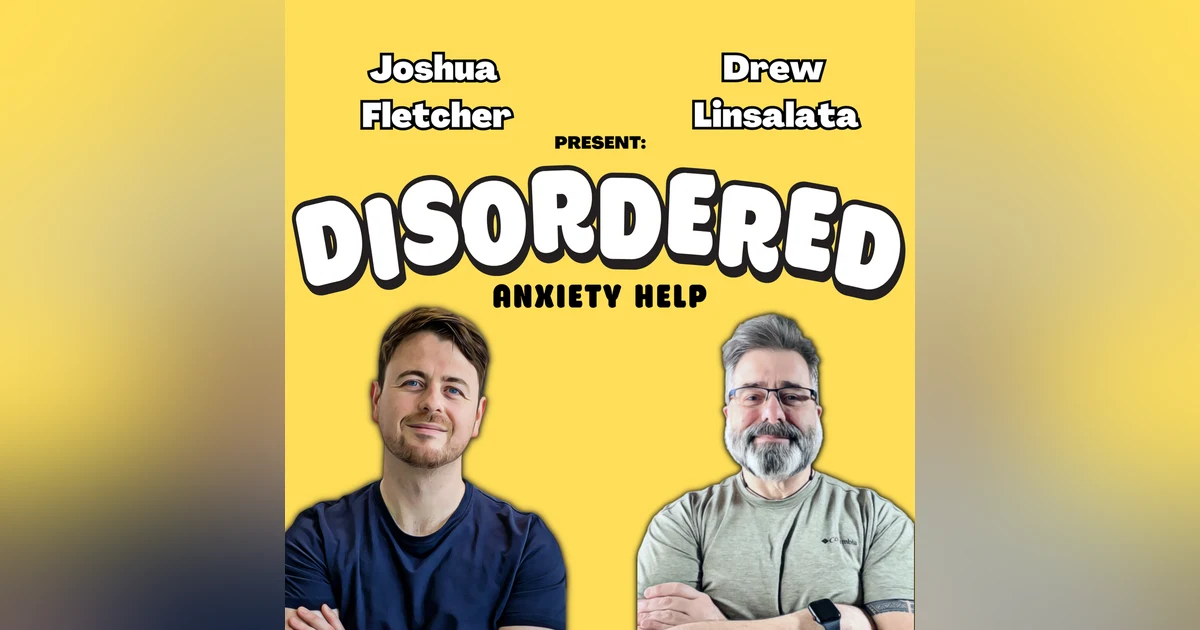
Join Josh and Drew as they share their own experiences of anxiety recovery and what it means to get better when you're struggling with an anxiety disorder.

 Apple Podcasts
 Spotify
 YouTube
 Amazon Music
 iHeartRadio
 RSS Feed
 Join Josh and Drew as they share their own experiences of anxiety recovery and what it means to get better when you're struggling with an anxiety disorder. Common themes in this episode include:
- Eliminating avoidance
- Choosing to willfully tolerate anxiety and the sensations/thoughts that come with it
- Learning that you are capable of handling how you feel - even when highly anxious
- Defining what it means to "get better" from an anxiety disorder
The guys also share listener victories and answer a question or two from the audience.
For more information about Josh, Drew and the Disordered podcast, visit us on the web at https://disordered.fm
----
Disclaimer: Disordered is not therapy or a replacement for therapy. Listening to Disordered does not create a therapeutic relationship between you and the hosts of the podcast. Information here is provided for psychoeducational purposes. As always, when you have questions about your own well-being, please consult your mental health and/or medical care providers. If you are having a mental health crisis, always reach out immediately for in-person help.
---
Disordered Roundtable is coming! Think of it as "Disordered Live", a way for members of our audience to spend time with us in an intimate virtual setting (attendance is limited) to engage in real time sharing and discussion on specific anxiety disorder and recovery topics. To be notified when new Disordered Roundtable sessions are scheduled, sign up for our email list using the form on this page.
Getting anxious is not a sign of being ill.
SPEAKER_00Before I even got to the driving, I had to learn how to get dressed and brush my teeth and comb my hair while I was having a panic attack.
SPEAKER_01But how to get better was learning what was happening in my brain, learning that a lot of this was adrenaline and cortisol, learning about how the threat response works, and just doing it again, doing simple things, but being kind to myself.
SPEAKER_00This often sounds like a very simplistic thing, and in many ways it is, but simple doesn't mean easy.
SPEAKER_01Realizing that despite this being really uncomfortable and really scary, I can tolerate it without avoiding. Yeah, that's that's part of what getting better was for me. Welcome to the Disordered Podcast. I'm Joshua Fletcher, also known as Anxiety Josh, and I'm a psychotherapist specializing in anxiety disorders, and I'm based in the UK.
SPEAKER_00And I am Drew Linsalata. I am a graduate student and therapist in training in the US, New York specifically. This is episode three of the Disordered Podcast. We're gonna tell, we're gonna talk about how Josh and I overcame our anxiety problems. What did we do to we get better? How difficult it is. So it should be a pretty good one. But stick around to the end of the episode, because at the end of every episode, we answer a question and we share some wins. So you gonna want to hang around for that?
SPEAKER_01Yeah, can't wait. And we put each other on the spot as well, asking questions that we uh that we haven't pre-rehearsed either. So you can see our anxiety in full though. Yes, it's completely unscripted.
SPEAKER_00So how did we get better? I'm guessing you get asked this all the time. How what did what is your recovery? How did you get better? What did you do?
SPEAKER_01Yeah, first of all, the most important stipulation to this is that getting anxious is not a sign of being ill. You know, uh getting better is realizing that anxiety is normal, but losing my fear of it and turning off my threat response in relation to anxiety was a big one for me. So I'm someone who struggled uh um with panic attacks, with avoidance, with intrusive thoughts, obsessive, compulsive disorder. Um, do I still get anxious now and then? Yeah, I do. Do I live a very happy life? Yes, I do. I mean, when I was very unwell, I used to avoid everything. I used to ruminate, I mean, I was chief ruminator, honestly. You know, uh my response to everything was just to ruminate. If I work it out, find the miracle thought, get to that secret chasm in my brain where I find I call it inception thinking, where I get to that place, all my anxiety will go away. Then, you know, I realized no recovery for me um was looking back, in the words of you know, um Sally Winston and Marty Seif, was practicing a skill, and the skill was the willful tolerance of uncertainty. So that means not only doing scary things that I didn't want to do or having anxiety, but practicing the skill of willfully tolerating it. And the more I did that over time, the more I decided I started to turn my anxious response off. And when your anxious response starts to turn off more and more frequently, I became a bit more confident, you know. My symptoms started to abate less, so like my muscle tension, my derealization, um, my heart palpitations start to calm down a bit more. When I did the opposite of what I wanted to do for a long time, which is almost embrace the feelings, not I didn't enjoy them, and and I didn't accept them. A lot of people have would have had this said to to them at this point, particularly if you listen to this podcast, you know, accept it, sit with the feelings. No, I didn't do that, I was practicing just willfully tolerating them. Like let's see what non-anxious me would do whilst willfully tolerating them. And this started, I had to start at the beginning, I had to learn to walk again, you know, in the sense that I had to learn to walk to the supermarket. No, I'd done conventionally scary things, I've you know, flown around the world, I've whitewater rafted, micro lighted, done stand-up comedy, spoke in front of thousands, all that before my anxiety disorder. But how to get better was learning, learning what was happening in my brain, learning that a lot of this was adrenaline and cortisol, learning about how the threat response works, and yeah, just doing it again, doing simple things, but being kind to myself, right? Okay, I used to be able to do all these scary things, but now I've got to walk into a Walmart or ASDA, same thing, same thing, just different name in the UK, uh, and buy five items whilst feeling really scared and pathetic. I was like, but learning to do that and also being my friend and buddy during it, and that's a big thing as well, particularly this at the time, you know, young man, very proud, don't want to show weakness, all that kind of stuff. No, just learning that actually I need to do this, but like fit physiologically, scientifically to do this, you know, not it's not just a weakness thing or anything like that. And yeah, just willfully tolerating anxiety and the symptoms that come with it. Uh, that's my long-winded answer. How did you get better, Drew?
SPEAKER_00Well, we have very similar experiences in that respect. And you know, I've talked about this stuff in other areas before, but yeah, it essentially is a similar thing. When you said doing the opposite, it really kind of encapsulates it. So, for me, one one point I'll illustrate is I literally started a lot of my recovery work by learning how to be in my bathroom brushing my teeth while I was in a panic because I knew I was gonna leave the house and go driving to practice. And before I even got to the driving, I had to learn how to get dressed and brush my teeth and comb my hair while I was having a panic attack. Um, so yeah, so it was doing the opposite, as opposed to let me jump back in bed and try to make this go away. I'm just gonna have to keep going and keep going. And uh, you know, the thing I will add to your it wasn't a long-winded answer, it was a really good answer, I think. The thing I will add to that is always I always have to remember why am I doing this? Why am I doing this? Like, what is the goal here? Like, this isn't just being a badass, it's not running it over, it's not being a warrior. Like, I'm literally here trying to learn some lessons through these experiences. So let me just keep note of that, which is really important. And I think it's so important for us to say right at the start that this often sounds like a very simplistic thing. And in many ways it is, but simple doesn't mean easy. This is really difficult work because it goes against your instinct to go towards safety and comfort and soothe yourself and all of those things. So sometimes people hear us talk about this sort of stuff and they'll say, Oh, so what you're saying is you just had a man up. No, no, I'm not saying that at all. Oh, of course not. I did have to learn how to display courage. There we can't deny that that exists. But also, when you say be a friend to yourself and be kind to yourself, I cannot, I regret having written that I didn't have that self-compassion. In retrospect, I see that I did. I just didn't understand the value of it. And I've written that when in some of the books that I've written. Like, oh, I didn't really, I wasn't so big on self-compassion, but I think in the end I was because that was remaining connected to why am I doing this? Why am I doing this? And as crazy as it sounds, the one thing I would say, but how did I get better? It's this is sounds ridiculous to people, especially if they're new. Sometimes we conceptualize overcoming anxiety as a war battle. I have to win this war. And I discovered that the best way for me to win the war was to stop fighting each battle, and then somehow actually won the war in the end without trying to win the war, because it wasn't a war, it was a classroom.
SPEAKER_01Oh, your opponent got bored. But you weren't engaging with your opponent, so it it was it was no longer a battle. Um, would you agree that like when you mentioned about you know brushing my teeth and brushing my hair, despite feeling horrible to prepare for anxious, you know, face the day, it's like you're basically you know you're simulating almost what non-anxious you would do. And for me, for me, it's the same. It was almost simulating what non-anxious me would do, because I learned, and this is a huge part of why I got of how I I got better, is that I know through psychoeducation what we'll try to provide to you through this podcast is that habit with anxiety is enormous. And also, what am I teaching my anxious brain here? If I refuse, if I spent another day not leaving my bedroom, which I spent a very long time not leaving my bedroom, um, because I was too afraid to of everything, really, at the time. I was in a really bad, horrible place. But what am I showing the brain if I got up and brush my teeth like Drew? Or or what if I just go to get on the bus despite feeling horrible? But I got better because I learned that actually these feelings aren't dangerous to me. I learned that these feelings are quite normal for the situation because I got into such a situation where I taught the brain that anxiety itself was bad, or these scary thoughts uh were in in some way something to be feared. So I got better by realizing that one, anxiety can't hurt you, it can't hurt you, it's on it's it's uncomfortable. Two, your behavior means a lot, you know. Three, yeah, thoughts. I know we're talking about thoughts, but just thoughts last time, but like thoughts don't mean anything. You that you you my brain is a rubbish predictor of um events, just because something feels like it's about to happen, it doesn't, especially when you get you're in that anxious cycle, it gets worse, worse at predicting. Yeah, yeah. And the only one it ever got right was, well, if you go out there, you're gonna have a panic attack. And yeah, and guess what? I did, but what I realized, I just well, I want to go and have a panic attack because panic attacks can't hurt me. I real realizing what panic attacks were and the highest anxiety, realizing I could tolerate the highest anxiety or you know, not enjoy it, not be a warrior, not be all James Bond about it, but realizing that despite this being really uncomfortable and really scary, I can tolerate it without avoiding. Yeah, that's that's part of what uh getting better was for me. Am I still scared of stuff? Yeah, yeah, there's some stuff I still have a phobia of flying and things like that, but you know, I'll apply not only is that a fear, you know, a bit of an old fear of fear, but it's mostly just a phobia. Like I don't like spiders and stuff, and maybe at one point I'll I'll approach that. But in general, I live a really kind of happy life now. Where the only time I really consider anxiety or talk about it is when I'm working doing this podcast with you, Drew, or doing social media content, or if I'm working with someone in here, but in my personal life, I don't really think about it anymore. I don't, I'm not afraid of it as such. Um, and that's that's super important, you know. Um, that's how I got better. Stopped avoiding as well, which I'll talk a bit more about later on.
SPEAKER_00Yeah, I've had people say to me in the past, well, do you still have panic attacks, or can you have ski, you know, anxious days? And the answer is sure. I can I I'm alive, so I can have anxious days. Generally speaking, if I have an anxious day, I know it's because I'm I'm extra stressed. Maybe I'm even I'm sleeping even less than I normally do, you know, I'm running myself down. Like those are indicators to me. And that's we talked about yesterday or yesterday in episode two, we talked about that regular anxiety versus disorder anxiety. Now I can recognize it as, oh, there's things pressing on me. So I'm feeling them. Like I'm anxious because there's life. Can I have a panic attack? Sure. I'll have a couple a year, I guess, roughly, maybe, or maybe I'll never have another one again. And people have said, well, then you you're not better because you still have panic attacks. But the answer is just what you said like literally 0% of my life is dictated by how I feel or anxiety. I'm not trying to avoid anything. We all have our fears and our simpliphobias and our quirks, but uh, none of it, I don't, I never ask myself, how will I feel if I do? Or how am I feeling today? Is it okay for me to? I never ask those questions anymore. But I I think one of the things that's that's really important to bring up, I think, is you mentioned number two point you made was you changed your behavior. And for me, it was a huge thing when I discovered, oh, the only way for me to talk to the anxious part of my brain was through my actions. I can't I can't write it messages in a journal. I can't say it words, I can't listen to song lyrics, I can't consume inspirational memes and change the way I think. So a lot of people feel like, well, I just have to change my mindset. And this has nothing to do with the mindset. The only mindset you change is the willingness to start to to go toward these things. But it was the behavior change that led the way. Behavior comes first, thinking comes second.
SPEAKER_01And realizing that disaster doesn't happen when you do that, because a very common thought is that people think they're at their wit's end, that the the the very limit of being able to hold themselves together, and they feel that if I push this a bit further, I may fall apart, things might be awful, the catastrophe might happen. Yeah, and when you find out that that doesn't happen, that's that's very very liberating. Yeah, and I think in our next episode, we'll talk about the threat response. It's really important. Um, but in general, that that realizing that this threat response is has its own limitations and actually your volition can over can over you know over overpower it as such. Um is fascinating. Uh, also I want to bring attention to the fact that you know, that person, when people say to you, oh look, they've not even recovered from anxiety, it's like, well, I I live a very happy life, and anxiety is something that everyone has, you know, everyone in the world. Think of the you know, um Tyson Fury is the heavyweight box boxing champion of the world, and he struggles with anxiety as such, you know, it's not it's not about that, um, but it's all like kind of it's the kind of this isn't a big thing in my life anymore. But the perfectionists, the perfectionists are, and and this is another part of getting better, is losing that perfectionism, it's a paradox. They see overcoming anxiety as a threat to their perfectionism, and that any sign of anxiety is a sign of failure, or the first sign of us to panic or or or or freak out. Yeah, my favorite quote that I made, and this is really self-aggrandizing now, because I think I said this once on a live with you, and I was like, I think it's the best thing I've ever said. I don't want to introduce it early because to create a false sense of wow, this guy knows what he's talking about, until it gets to about episode 30, and I'm like, God, what a charlatan this man is. But um, in general, it's like anxious recovery is not measured. Um, anxious recovery, sorry, anxious recovery is measured by your willingness to tolerate anxiety, not the accumulation of its absence. So if you're someone who's like, oh, I went three weeks without anxiety, but then it's back, that's not anxious recovery. Anxious recovery is me last week out in town doing shopping, I was like, ooh, feel a bit of an adrenaline rush coming on. Uh well, yeah, actually, it makes sense. I've been stressed recently, you know. Um, I've probably had one too many beers the night before. Maybe had a disagreement with a loved one. Maybe that I'm behind on deadlines. Oh, yeah, this makes sense why I'm having an adrenaline rush now. Oh, whatever. Just gonna leave it, just gonna leave it alone, whatever. Willful tolerance of anxiety, and you know what? It's carried on, carried on shopping. Uh, was it an amazing experience? No, but it just faded into the background like three minutes later because I just didn't care, as such. I'd rather it not have been there, but I didn't care. Whereas previously, years ago, it'd have been like, oh my god, the anxiety's back. What if it's back? What if it's worse this time? Run out of shop, get rid of it, deep breathe, suck my thumb, box breathing, try and activate my vagus nerve, all this nonsense. Just like, uh yeah, you know, that's it. The willful tolerance of anxiety. I didn't even think about it up until this podcast. So that's how much I cared about it. Yeah, uh, it just came back to me as a memory then.
SPEAKER_00It becomes irrelevant. It's just another experience of having an anxious day. Like, I'm really anxious today. Okay, well, I guess I'm really anxious today. Well, what can I do? Let me make a plan for the day, let me clear some stuff off my schedule. Then sure enough, like you said, it it often kind of fades into the background. And it's not the focus anymore. How I feel is not the focus. But I think a lot of people feel one thing I would add is you know, I uh I got better by when I stopped trying to get better in terms of defining it as I won't be anxious, I'll stop this from happening. Like it stops happening when you stop trying to make it not happen. It's so paradoxical. And we're gonna use the word paradox again and again and again in this podcast, but because we have limited lexicon. That's the only word we really know. We have we know about six, and that's one of them. So I think the paradox of like it will stop coming when you stop trying to stop it from coming, holds true uh almost across the board. And I think another thing to bring it back to that being kind to yourself and recognizing the the real challenge and that the difficulty here is that willful tolerance does involve some courage. And to you, when Josh says, you know, you learning that the worst case doesn't happen, I would modify that. Either the worst case doesn't happen, or if it does, which is I might panic in the supermarket, you learn that you can handle that. So it either doesn't happen, or even if it does, you can handle it because we handle things in life. But you don't actually know it until you leap off, take that leap of faith into what you feel is the unknown. Because to you, it maybe you're dealing with panic attacks and agoraphobia, or maybe you're dealing with you know OCD and intrusive thought or health anxiety, but you don't understand if I let go, that intrusive thought tells me that I might stab the person next to me in the in the uh supermarket. You know, I can't allow that to happen. You are taking a real leap of faith. Yeah, that people who came before you, and you won't want to take the leap and you'll be afraid. So be nice to yourself. Understand, this is really scary.
SPEAKER_01In your mind, you are you are flirting with absolute disaster, but we know that you're really not, and the people who came before you know that you're not you're leaning into not only leaning into the probability, but you're leaning into the overwhelming probability. The odds are stacked on your side. Can you ever get 100% reassurance about anything? No, you know, um, particularly for me, I've struggled struggled a lot with OCD in the past, and it it flares up now and then, but not really. Um, last kind of trigger had was three, four months ago, and then before that, it was a year before that. Um and yeah, OCD is where it differs a bit to panic sort is that actually what shares a similarity with panic sorrow is that I feel uncertain right now and I want to act to make sure I feel certain and safe. You know, uh so with OCD, there's a lot of this, just this urge, this absolute desire to act on a feeling, whether it's an intrusive thought about something horrible, violent, sexual, just bizarre, you know, um, or just a feeling like if I don't do this, something bad's gonna happen. Yeah. Uh, or it's gonna get worse. Um, I honestly would say, yeah, it that, and the same with having panic attacks or being anxious somewhere, or just being at home feeling anxious and hating anxiety, it's learning to leave it alone. What and trusting yourself that okay, it doesn't feel safe to leave it alone, but I've noticed I'm gonna practice willfully tolerating that uncertainty anyway. Yeah, and this is where the key word here is practice. Because look what happens, you'll find actually oh there was a few times I just took the gamble there, left my anxiety alone, didn't do what it wanted me to do, and now I feel calm later on because of it. For me, I got better because that started to become a good game for me to do. Yeah, it actually I knew I was getting on the right at the right place where I was like, I was kind of looking forward to panicking. I don't know if you ever had that, Drew, but like Yeah, I did in a sick way, like not like not I didn't enjoy it ever, but it was like I enjoyed the feeling afterwards because I could give myself a pat on the back.
SPEAKER_00But this is yeah, yeah, there's a bit of a s for me, there was a bit of a snowball effect. So every time I would allow whatever it was, whether it was a Panic attack or you know a crazy thought, it didn't matter. I I would it would be like another feather in the cap. You see? Again, you didn't take me down. Again, you didn't take me down. And I started to have that bit of a taunting. I like that. I like that. Yeah, you can't. You try it again and you you can't take me down. And that begins to become the default, as opposed to, oh my god, I'm on the edge of disaster all the time. You start to realize like, you you have no teeth. You're scary as hell, don't get me wrong, but you have no teeth, you know.
SPEAKER_01Yeah, I mean that's I mean, that's that's brilliant. I think some of the blocks to it, and I think where we were fortunate, because I was fortunate just because of my circumstance where I felt I just had to do it because I was a carer for someone who needed my help, and I wasn't the priority. But looking back, that was actually a a blessing. Because if it was just me, I don't think I'd have I probably struggled with the compassion to just do it for myself. But where you're gonna struggle here is the is the is the perfectionists and the people who their definition of getting better. Some people's definition of getting better is you never experience anxiety again. I mean, what on earth do you think you do? Are you gonna have a full frontal lobotomy? Yeah, like you need anxiety, anxiety is part of your rationalization process, you need anxiety, or as you'll be walking into traffic off buildings, um drinking bleach, or whatever. You know, you need anxiety there to help you.
SPEAKER_00Um, but look at the really dangerous jobs, they will say, I if I ever stop being afraid, I have I have a problem. They will literally say that no, no, I I need that fear in my job.
SPEAKER_01So, but people get embroiled with an anxious recovery, so like particularly social media and stuff like that, it becomes something that their perfectionism uh and hope attached to like this this panacea of this utopia of never feeling anxiety again. No one feels that, whether we just spoke about conventional anxiety and disorder anxiety. Your threat response, you can't get rid of and you need it. It's integral, it's a beautiful emotion. All you want to do is calm it down and turn it off in situations where you know it isn't needed. That is recovery, yeah. You know, and you'll you'll get a pang now and then. I love going to music gigs. 99% of them, I feel fine. Sometimes I'll just get the odd thought. Oh, what if you what if you panic in this crowd? And I'll be like, no, just remember, be all right. Two minutes later, sometimes 10 minutes later, just like it's gone. Who cares? You know, and that's how I got better. Trust, oh, trusting to give my focus externally at times where all I wanted to do was put it internally.
SPEAKER_00Yeah, that's a big one. Like and we we've talked about that before, where anxiety or you know, disordered anxiety always wants to be the most important thing in the room. Always. And so when you decide I hear you, but I'm not gonna let you be the most important thing right now because there's a gig going on in front of me, or I'm at a hockey game, or I'm playing with my daughter, or whatever it happens to be, it will scream and throw a tantrum and like, no, pay attention, pay attention, this is dangerous. And then learning that, like, oh, oh, even if I didn't pay attention to it, it just sort of faded away into the background. But it was really difficult because I had to make sure I wasn't trying to make it fade away in the background, which is very nuanced. And if you're new at this, it's okay to not understand. Yeah, we're gonna get it wrong and you're gonna fail sometimes. It's okay, it's normal. Like, we'll talk about that in another episode as well. Like, what did you go and everybody thinks like you know, we hear this all the time. Well, recovery isn't linear. Of course it's not. There are ups and downs. Uh in fact, one episode that we could do, which Josh has never heard of before, I'm gonna say it now, is about how recovery was not a straight line for me, but it's not linear, it's not up and down, it's radial. It's like a balloon that gets bigger and smaller and bigger and smaller, but overall it keeps getting bigger and bigger and bigger, and that's your life. Gets bigger and bigger. Radial.
SPEAKER_01Oh, that's a good one.
SPEAKER_00Anxiety is yeah, recovery is not linear, it's not only not linear, it's actually radial.
SPEAKER_01So yes, oh yeah, yeah, it's eyebrow stuff here. Eyebrow stuff. I like that. I'm gonna steal that. When I have clients in this practice, you'll be like, Do you know that recovery is radio? And I've just I've just come up with that right now.
SPEAKER_00But every time you say that, you have to just say TM after that because I'll have to send me a dollar.
SPEAKER_01Yeah, yeah, yeah. Get so yeah, how do we get better? Well, first of all, what's your definition of getting better? Get it accurate, get it uh reasonable as well. Now, some people anxious people might feel a bit deflated when I say that. They're like, Oh, he's telling me that you can't get better. That is not what I am telling. Oh, good point. Yeah, good point. They always I I hear that a lot. Like, I've literally just said, and I know because I can relate to this when I was got getting getting better, it was just that oh no, my threat, my anxiety is picked up on what I've said and just picked out C's just telling you can't get better, you know, yeah. Uh and that's just not true. That's not true, and that's actually Craig the critic coming in saying, You can't do it. What's the point? Actually, no, you can live a very happy life. Most days, most weeks, I just don't even give anxiety, my own anxiety, any thought because it just doesn't bother me anymore with content. I can do things, I don't avoid doing things anymore. I look forward to doing things. That's when I knew I got better as well, Drew. When I started looking forward to stuff, you have when you just like, oh, yeah, start looking forward to doing things, and that was something I couldn't do when I was really anxious. It was always trepidation and sense of horrible foreboding.
SPEAKER_00Yeah, I'm with you, man. That's you're right, and it's probably important to reiterate that. We're not saying you just have to learn to put up with it for the rest of your life. So I'll just be like this forever. No, it does change, you just have to stop trying so hard to make it forcibly make it change. But when you stop trying to make it change, then it does change. So, no, you don't have to put up with this in this form forever. That's how we're saying it.
SPEAKER_01Yeah, the best one that to finish to wrap that up is that uh what recovery looks like in 10 seconds. Uh client, you came in here years ago and he was psyched up and he struggled with panic attacks, he struggled with agrophobia, things like that. And he was gonna go to a music festival as well. We'll talk about gigs and things like that. So he said, uh, he he psyched himself up. He's like, I'm ready, I'm ready for the panic attacks now. Bring it on, bring it on. He goes to the music festival, he stands near the front of his for his favorite band, and he's anxious, but he's not having the panic attacks, and so he comes in disappointed that he didn't have a panic attack. And I said, And there it lies. You were willing to have one, and when you are willing, attitudinally, is that even a word? When your attitude is the yeah, yeah, an attitudinal shift, that's as well again, and how you get better when there is an attitudinal shift towards experiencing anxiety, your brain will rewire itself. So this client walked in, he's like, I'm ready now, I'm ready for the anxiety, I'm ready for this, let's go, let's do it. He's been practicing up to this point, by the way. It's not just like uh yeah, I'm ready to do that. It's a lot back to backstory. Uh, and he got that, and he was disappointed he didn't have one because well, I psyched myself up and didn't have one. I was like, Because you're telling the brain, I'm ready, I don't fear you anymore. And the brain just doing exactly what it's supposed to do. It's like, okay, well, this obviously isn't a danger anymore, so I'm gonna stop warning you.
SPEAKER_00It's the willingness, so that's another good episode that we'll do. They have you know, you hear the word acceptance and tolerance. There is no acceptance and tolerance without willingness, I might in my opinion.
SPEAKER_01Yeah, well we'll we'll ask uh Sally and and yeah, and and Marty on, you know, I'm sure they've been having sleepless nights waiting for us to invite them on the podcast.
SPEAKER_00So oh, yeah, I'm sure. Yeah, yeah. They're inside my window right now, looking in, like do we do we have any um successes or questions? We can do sort of a did it anyway. I will take this out of my Facebook group because it's a good one. This was only from a day ago.
SPEAKER_01Love a success story.
SPEAKER_00It's always good, and you know why I like this one? Because it is it will seem small. So if you're at the re the beginning of this journey, I'll use the word journey in this episode. Every every little thing matters, right? So this is I won't, I I guess I won't say the name, but this was posted in my Facebook group. I'll I'll respect the privacy and say this person said, I got out of bed and did not run back to it. I was able to go to the bathroom and I didn't have a panic attack. I was able to watch funny dog cat videos and genuinely laugh for 20 minutes. I was able to hold a conversation with my brother for around 30 minutes about serious topics, despite the DPDR, depersonalization, panic, oh no, here we go, feelings. And she just ended it with achievements with a big, you know, like the fist bump.
SPEAKER_01Oh, I love that.
SPEAKER_00That's huge. They seem like small things, but those are huge things.
SPEAKER_01Well done. I've got one to share. That's brilliant. I love that one. Oh, love that's a good good start to that, isn't it? Uh hi. I have struggled with agrophobia and panic disorder for six years. I could have could never walk anywhere in fear of having a panic attack or not being able to get home. After having months of high-intensity therapy, today I have actually walked with my daughter to where her school is for the first time ever. Something I thought I would never be able to do. And more important, most importantly, this last sentence feeling very proud of myself. Good. Because Carl the Critig would say, Well, you can only you're a mum, you can't do all that. No, you should feel proud of yourself. That's you went toe-to-toe with fear. That's current, that's courageous, that's bravery. Bang on, bang on. Well done.
SPEAKER_00Awesome job. Good job, everybody. All right, we'll wrap up episode three.
SPEAKER_01Yeah, that sounds good. Let's get some like applause music for future ones as well, like rapturous applause, rather than me and you just going, that were good. You know, like let's get some really horrendous kind of way.
SPEAKER_00Somewhere I have, I can start randomly playing sounds. There's applause somewhere in this, all this equipment I have in front of me.
SPEAKER_01But yes, really cheap in the podcast with with that 100% in that. Yeah, let's do it. Uh yeah, thank you. Anyway, play that after your jokes.
SPEAKER_00Right. That's exactly what landed right there. But thanks guys for coming by for episode three. Hope you come back for episode four. We'll do it again.
SPEAKER_01We'll see you in the next episode, which will be entitled The Threat Response. Yes. Have a nice evening.
SPEAKER_00All right, see you guys later. Hey, it's Drew. Thanks for joining us for this episode of Disordered. Josh and I both hope that you're finding it helpful in some way. For more information about Josh or me or the Disordered Podcast, find us on the web at disordered.fm. That's disordered.fm. Pop on over and find links to our social media platforms, join our mailing list so we can let you know when new podcast episodes are available, and we'll send you easy ways to ask us questions and share your wins so we can answer questions on the air and share your successes with the community. And if you're listening to the podcast on Apple Podcasts or Spotify or any platform that lets you rate a review, do us a favor and leave us a five-star rating and maybe write a review if you're digging disordered. It really helps us out and we appreciate that. Thanks again for coming by, and we'll see you in the next episode.