
Anxiety Recovery: Who Gets The Credit? (Episode 09)

 Apple Podcasts
 Spotify
 YouTube
 Amazon Music
 iHeartRadio
 RSS Feed
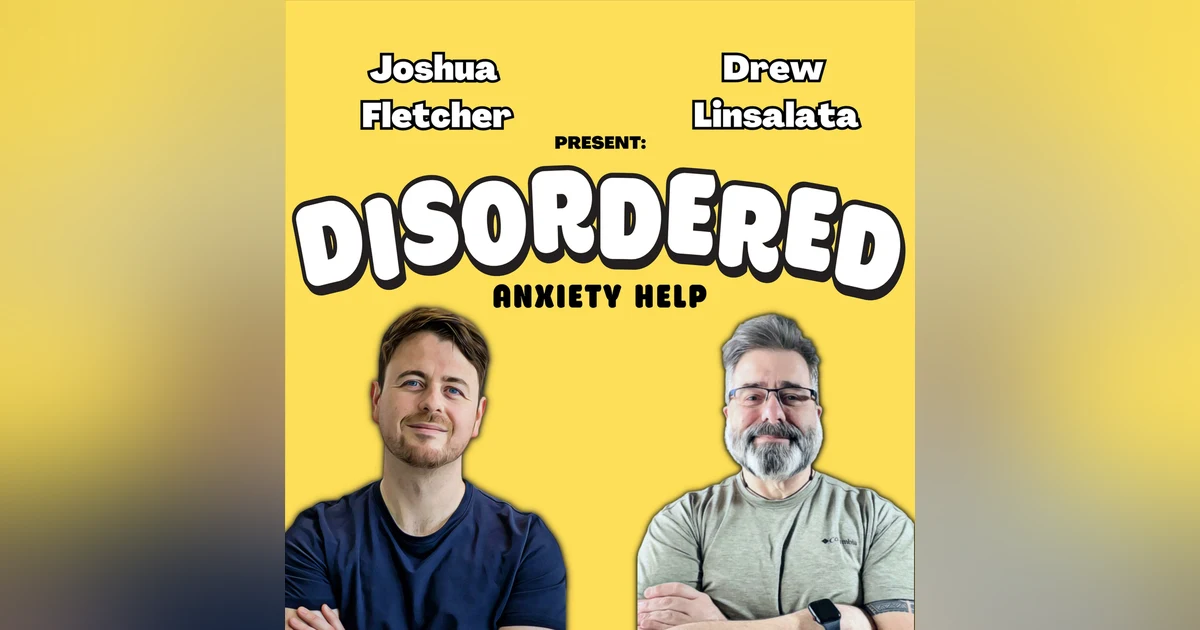
 In this episode of Disordered, Josh and Drew discuss why recovery is so dependent on learning that when you handle anxiety, fear, and uncertainty, YOU GET THE CREDIT FOR DOING THAT. Recovery hinges on seeing, then dropping all the safety devices and rituals so you can see through actual experience that YOU handled the discomfort without needing anything or anyone to save you.
The guys talk about the idea of unconditional OK-ness, and learning that in all the time that you've been searching for tools and techniques and methods for managing your anxiety, it's always just been you getting the job done. All those other things deserve no credit because in the end, you are all you need and you are capable even without all the magic things that you think protect you.
-----
Want to ask us questions, share your wins, or get more information about Josh, Drew, and the Disordered podcast?
Visit us on the web at https://disordered.fm
----
Disclaimer: Disordered is not therapy or a replacement for therapy. Listening to Disordered does not create a therapeutic relationship between you and the hosts of the podcast. Information here is provided for psychoeducational purposes. As always, when you have questions about your own well-being, please consult your mental health and/or medical care providers. If you are having a mental health crisis, always reach out immediately for in-person help.
---
Disordered Roundtable is coming! Think of it as "Disordered Live", a way for members of our audience to spend time with us in an intimate virtual setting (attendance is limited) to engage in real time sharing and discussion on specific anxiety disorder and recovery topics. To be notified when new Disordered Roundtable sessions are scheduled, sign up for our email list using the form on this page.
One of the big messages is getting the credit.
SPEAKER_00I did a hard thing. Nothing else saved me.
SPEAKER_02A lot of recovery is not caveating it with external things that get the credit for your bravery and courage. The brain will rewire itself when it show when you show it, you can willfully tolerate the discomfort and the uncertainty that the threat response throws at you. What we're really passionate about, though, is about you getting the credit or tolerating uncertainty.
SPEAKER_00But ultimately, you want I'm okay, even if, as opposed to I'm okay as long as. And you're left with no other conclusion to draw. Like, oh, even without conditions on my okayness, I can handle this. Takes a while to learn that though.
SPEAKER_02Welcome to Disorders. This is episode nine, entitled Who Gets the Credit? My name's Joshua Fletcher. I'm a psychotherapist and author specializing in anxiety, and I live in the UK.
SPEAKER_00And I am Drew Linsolata. I am a therapist in training and a graduate student in clinical mental health counseling, and I live in New York in the US. Welcome.
SPEAKER_02Welcome to Disordered. Uh Drew, you said you wanted to start with a Did It Anyway today. Um for our episode, Who Gets the Credit? Um, yeah, let's do let's flip things on its head. Why not? We're the bosses, we're the rulers of our own dip.
SPEAKER_00Do you know you know what we want? We know what we do, what we want to do. That's right. Yeah.
SPEAKER_02So start by celebrating the wins of some of people out there, some of our listeners.
SPEAKER_00Sure, sure. Hang in there, people. We're gonna get really radical. Do did it anyway to begin the podcast? So I have one. Again, name withheld to protect anonymity, unless you ask us to say your name, which we'd be happy to do. This person says, I had an overwhelming panic attack eight weeks ago. Last time I had one was 25 years ago. My biggest fear since this one is the fear of losing control. But since finding a new way to interact with my panic, I'm kind of accepting letting it watch over me and do nothing. I'm new here, but with the knowledge now and all the information I'm getting, I'm learning. So that is a little achievement for me, and I'm really proud of it.
SPEAKER_01A little achievement. No, that was a good achievement. Big achievement. Well done. That's not achievement. That gets applause.
SPEAKER_02I'm a big uh fan of the do nothing as well. Yeah. In a world full of 10 anxiety busting tips, you know, to stop a panic attack in its tracks. You can't, physiology, you can't do that. Just well, you know, this adrenaline rush, it's there. Don't really need to do anything and trust in myself to let it to let it pass. Well done to you. Well done.
SPEAKER_00Keep in mind the last part. I'm a little, I'm really proud of it. Because as Josh reads his did it anyway, because we're going to come back to that when she says, I'm really proud of that.
SPEAKER_02Yeah. Yeah, because because Craig the critic would be like, What? You've been 25 years without a panic attack and now you haven't won again? Or you must be doing something wrong. Yeah, he's a nasty PSOB. Absolutely not. Craig the critic. Craig the critic would be like, Oh, yeah, no, you didn't. Compass that compassionate side is really good.
SPEAKER_01Yeah.
SPEAKER_02Um, whilst whilst we sharing did it anyways, I thought now um which again, which was gonna suit this episode really nicely, um, because it's super important. Um, so I'm finally ready to share my own hashtag dinner anyway. I developed panic disorder about one and a half years ago. It got really bad for a while and had to stop working because I could barely leave the house. I've made some major steps since then. I've been working my regular hours again for three months now, traveling there by public transport. I feel fine during the day most of the time now, but I still get really anxious at night. I have most of my panic attacks at night, and because of this, I am afraid to sleep alone. So, if my boyfriend was out late with his friends, I used to go and sleep at my parents' house. However, used to is is the key word here. I've been practicing going to bed alone for a while now, finding comfort in knowing that he will join me in a few hours, but it's the beginning of my exposure fair. Yesterday, my boyfriend went on a trip with a friend, and he'll be gone for a week. So last night I slept alone for the first time in one and a half years. Not only did I not have a panic attack, doesn't matter if you did, but yeah, I wasn't even that anxious. It's it wasn't like the anxiety was telling me it was going to be. Thanks for all that you do, guys.
SPEAKER_00Love that, love that just worthy of applause for sure.
SPEAKER_02Superb. Our studio audience. Oh, they've had they've had their weetabicks this morning. Well done. You know, they're on it today. Um I love that because both of those stories the people got the credit, and this is what we're gonna talk to you. It's a really important episode when Drew and I were discussing kind of mapping out these episodes. We're gonna make sure that our first ten were were kind of um integral to the foundations of the message that we want to convey. And one of the big messages is getting the credit. Um, what do we mean by getting the credit, Drew?
SPEAKER_00Yeah, getting the credit is so when you hear these two did it anyway stories, which are so inspiring and I love, it's great because people shared it because they recognized that they did a hard thing. And what you'll notice is not in either of those stories stories is and I and I I'm gonna go down that road. You guys know me by now. Uh, I didn't, and I got my lavender oil and I and I was good, and I did my tapping, and nothing bad happened. It was I did a hard thing, and look, I did it. So, who gets the credit? I got the credit. I did a hard thing. Nothing else saved me. That's so important.
SPEAKER_02Yeah, because a lot of recovery is not caveating it with um external things that get the credit for your bravery and courage. Should we have a quick fire round, Drew, that we've done in the past? Yeah, let's do it. Quick fire examples. Always a fan. Okay, yeah. Uh, I went for a walk, but thankfully I had my GPS on my phone to show me that I could get back to my car just in case I had a panic attack.
SPEAKER_00Yeah. Um, I was driving on the highway and I started to feel really panicky, but luckily I had my water with me, that cold water. So, you know, I had to use that.
SPEAKER_02Yeah, I was having a panic attack at home, but thankfully I had ice cubes and cold water. I really, really hate this one. I had ice cubes and cold water and put it in my sink, and I put my face in the water, and thankfully, I could calm down.
SPEAKER_00Yeah, yeah. Um, the another one, and this is always people that have the purse full. Women always say, Oh, my my purse full of anxiety fixes. You know, luckily, you know, I got really nervous, but luckily I had my my essential oils with me or my scents, you know, they calm me down.
SPEAKER_02I used to have those too. The rescue remedy and the and and the floral smells and the lavender oil and stuff, just in case I panicked. Yeah. Um, I I had anxiety on holiday, but thankfully my partner was there to help calm me down just in case I panicked.
SPEAKER_00Yeah, or uh an analog to that is you know, it I got the intrusive thoughts were so loud and I was so terrified. Luckily, I was able to call my mom and she she, you know, she was able to kind of talk me down. Another safe person theme. Yeah.
SPEAKER_02Oh, I'm trying to think of some of my own now. Um I had a few. Oh, I had to go into the city center for work, but walking around, I always have to have my pack of sweets. I'm not diabetic or anything. I just just in case my blood sugars dropped and I couldn't handle it, I have my sweets just in case.
SPEAKER_00Yeah. Um, I have one that a lot of people don't think of, and it it has to do with us or people like us. You know, I was so nervous when I had to go do the school pickup run, but luckily I popped in my AirPods and I listened to a disordered podcast while I did it and and I made it. We become we we get the credit when we don't deserve it.
SPEAKER_02Yeah. Well one I mentioned in like episode one, I think, you know, um one that I used to do. Uh I went to the movie theater, but I sat on the end just in case I panicked.
SPEAKER_00Yeah, or or I mapped out the traffic before I went to make sure I didn't go during too busy a time. Thankfully.
SPEAKER_02Oh, yeah, that's a big one.
SPEAKER_00Yeah, I've seen that one too. I did that. I used to do that.
SPEAKER_02Yeah, that and and and traffic lights, stop signs, stuff like that. People hate that kind of stuff.
SPEAKER_00Yeah, but I took a route that Dino doesn't have lights, you know.
SPEAKER_02Oh wow, yeah. It's it's what what it will make you do, and this is why this episode so uh is gonna be so important. I'm just trying to think of some other ones I did now. It's quite fascinating, isn't it? It's um oh my mobile phone. Oh you know, I'll go for a walk through the woods, but I need my mobile phone just in case an emergency happens. Yeah, it's like, well, okay, that's good to have a mobile phone if there's an emergency, but what's the probability of me having an emergency on a walk through the woods? You know, like you know, people did this pre-20 years ago and since the beginning of time. Yeah, you know, you know, the you know if it was that essential, we'd have all died out a very long time ago.
SPEAKER_00You know, where are the woods too? I mean, where I live, I mean you're in Manchester, it's a relatively urban place too. So, you know, where are the woods? There is no place on Long Island I can go into woods that are so far that I wouldn't hit a road in 15 minutes. So yeah, that there's that. But another thing that I think becomes a uh that gets a lot of credit is magic thoughts or words. You know, luckily I I had my guided imagery tape with me, tape. Oh yeah, yeah.
SPEAKER_02And the tapping thing that you mentioned before. Now, some people if if you do tapping and things and you find that helpful, you know, fair enough. You know, we're not we're not gonna stop you for that. But I mean, in the what we're really passionate about though is about you getting the credit for tolerating uncertainty. Because if you want to rewire the amygdala, amygdala. There he is. If you want to rewire the amygdala and also to shut up Craig the critic, it's Craig the critic, then you need to be getting the credit. What I mean by this is that the brain will rewire itself when it showed when you show it, and you can build up to this, but when you show it that you can willfully tolerate the discomfort and the uncertainty that the threat response throws at you. So, for example, if you know if you did go on holiday but you never left your partner side, first of all, well done for going on holiday if you were scared, but secondly, the brain is now teach being taught that yeah, but you did it, but Craig the Critic says, but you can't do it without your partner.
SPEAKER_03Yeah.
SPEAKER_02Me going to the movie theater, I always used to sit on the end, and when the NC wasn't available, I used to get really anxious. So it'd be like, Who gets the credit for going to the movie theater? Well, the NC, not me. If if I'm Drew and I'm driving in my car and I start to panic, but then I grab my bottle of water, who's getting the credit for me sitting for Drew sitting through that the bottle of water, not you, you know, and this particularly applies to disordered anxiety. Now don't get me wrong, we all have vices and stuff, that's fine. But when it's something that's in the way of recovery from disordered anxiety, it's something you have to challenge. And you can relate to that, can't you, Drew? Like well.
SPEAKER_00Yeah, 100%. Uh that was definitely my lived experience for sure. And it's funny because I I like to use a term called conditional okayness. And that is, you know.
SPEAKER_02I like that.
SPEAKER_00Yeah, yeah, that's where where Craig the Critic comes in and says, like, well, yeah, sure, okay as long as. So if you if you are using the phrase as long as, then you have created conditional okayness. I'm okay as long as. Now, don't get me wrong, if you're starting from dead scratch, and let's say you are agoraphobic and you are housebound, getting out with a safe person and a bottle of water is way better than not getting out. Way, way better. Well, I mean, Josh and I would both tell you, do that. That's a way if you have to start that way, there's no crime in that. But ultimately, you want I'm okay, even if, as opposed to I'm okay as long as, which means we have yeah, we stop dropping those. We have to slowly, and everybody does it little by little. You don't do it all in one day. It's okay. You know, you find all your little crutches and safety devices and magic items and magic words, and you begin to slowly leave them behind. And you're left with no other conclusion to draw. Like, oh, even without conditions on my okayness, I can handle this. Takes a while to learn that though.
SPEAKER_02Yeah. I just thought of another one I used to, the um, and I hear this quite a lot. Uh, I went to the restaurant, but before I went to the restaurant, I looked it up on the internet so I could map out where the bathroom was, where the fire exit was, and requested a table that wasn't in the middle of the restaurant.
SPEAKER_03Yeah.
SPEAKER_02Just in case. But then again, so it if you are brave enough to actually go to the restaurant, or if this is your first time going to the restaurant and you suffer and you struggle with this type of anxiety, yeah, then well done for going to the restaurant. You've already started to wire your brain very well. Yep. But if you're in that habit that I used to be in, or a bit like what Drew used to do, it's notice the little micro avoidances happening there. Yeah. So you've challenged the macro avoidance, which is I can't go to the restaurant, and then it becomes a micro avoidance when it's I can go to the restaurant as long as I have my magic bottle of water and I'm near the toilet and I go at a certain time and whatnot. When actually it's what's the second bit you said, you was brilliant. It's not as long as it's even if even I can go to the restaurant even if I'm sat next to the wall and have to ask people to move. Yeah, even if I am anxious, and and that was a big one for me and my recovery and a lot from what my clients have to go through. It's like, well done for doing the macro avoidance, it's superb. Yeah, if if you need a crutch or a vice to get yourself from you know from A to B to start your journey with exposure stuff, yeah, then yeah, you're still getting some of the credit, but the aim is to is to try and get most, if not all, of the credit.
SPEAKER_00Yeah, all the credit is really important. And I think for me, one of the reasons why another term that I use all the time is the acceptable bubble. If you don't put yourself in a position where you have to take all the credit, then recovery becomes a little bit fragile and your progress is a little bit fragile because life will rip away your conditions sometimes. You won't be able to plan where you sit, you won't be able to completely plan everything out, you won't have your safe person. Life is going to take them away from you. And then, or some days they just won't work as well. I mean, I had plenty of days where the cold water was did nothing, but it always did nothing. But in my why is it not working?
SPEAKER_02Why is it not working to be? I found the fix now. Yeah, you know, if I if I just say I I'm an anxious warrior and I can get through it or whatever. Yep. Well, actually, it's interesting because we had this discussion, didn't we? In the in I think it was two episodes ago, where it's like I used to like it's just anxiety because it used to help. But I think at one point it did turn into a kind of technique. Yeah. Where actually I'm saying to myself, this is just anxiety, but actually it's not working now.
SPEAKER_00Yeah.
SPEAKER_02You know, that actually what would happen was I'd lost the temporarily lost the ability to willfully tolerate it. Yeah.
SPEAKER_00And I think in a way, that's why sometimes when we get to talk to as many people as we do, which is certainly a privilege, you hear those re those patterns come out. Like you everybody will find, and me too, I the same same things. Like you would find a thing, this is the thing, this is it, and it's really awesome for a few days, and then it's not again. And then there's discouragement and frustration, and like it it stopped working. I don't understand. Like it didn't work this time, and then it gets shattered. So you can accidentally build sort of a bubble that's a little bit fragile, that fragile is based on what's acceptable or conditional for you. And then when that gets shattered just because the universe doesn't care about your bubble, then you're you know, it's not fair because then you start to feel like, oh, I'm doing it wrong, I'm failing, I'm back to square one. That's not true. So it's way better to strip away all the stuff, even though that's harder and sounds much colder and and tough.
SPEAKER_02It's it's very human behavior to try and find a tool or a technique to help fix something. And this is where a lot of people with anxiety kind of get it wrong, is that they don't they fail to realize that in all that energy and resources trying to find the tool and technique to get better is that they don't realize that they are the tool and technique. You are the technique to get better, you are the tool to get better, you've just not given it a chance. You've because then it's usually due with self-belief and and again like that self-compassion. I possibly I I can't possibly sit through all that panic and anxiety or intrusive thoughts, or I can't possibly tolerate that, I can't possibly detach from my worries with GAD or social anxiety. Um no, you are, and part of big part of recovery is realizing that it's you, you can do it, and you've survived your entire life up until this point. So even if you're thinking I don't really feel like that, Josh and Drew, I've kind of got more evidence to suggest that you have been the tool to get through it, and you know, uh discover that for yourself. Just try it. That's what I say to my clients. Just try it. Try and talk to that person that you're scared of. Try and challenge your boss. Try and go to that place you've always avoided, see what happens, and you'll find that you're the tool. But do it without those magic objects. Uh we do love a magic object, don't we?
SPEAKER_00We do. Everybody loves a good magic object. I might suggest that you stop calling people tools, but that's okay. Yeah, like just saying. Uh I know, I know you guys ignore what Josh is saying.
SPEAKER_02You're a tool.
SPEAKER_00I meant it to be compassionate.
SPEAKER_02I wanted some piano behind it. I wanted some like one of those really cool things where the camera keeps turning and I'm looking all pensive and real. No, no, I've just been calling you tools all the time.
SPEAKER_00That's you know, that is that's state-of-the-art marketing. That's another episode. Um, no, I I think there there's truth in that for sure. And you know, using tools is is really okay. But it the the thing that sucks about that is you might not believe that you are everything you already need. And that sounds very woo-woo, but it's true. You are already everything you already need.
SPEAKER_02100% true.
SPEAKER_00Here's the thing. Oh, look, we're family unfriendly for a minute, but here's the crappy thing about you can beep it out. I will totally beep it out. You're right. I'm editing this.
SPEAKER_02I've always wanted it. I've always wanted beeps in there.
SPEAKER_00Oh, we're gonna have beep. I'll beep that. I will totally beep that, yeah. Um, and then I'll leave this part about talking about the beep, which makes it very much even better. So one of the crappy things about this process is that you don't believe in yourself until you do the things that you believe you can't do. Like, and anxious people, and a lot of people, this is a life thing, not just an anxiety thing, wait to feel like they believe it before they act, or they wait to, I just have to get my head around this. Like, no, your head never gets around it until you do these things. That's a it's terrible. It's a chicken and egg thing. You gotta do the things first before your head really gets around them for the most part. So you can hear all the psychoeducational material and sort of understand it and like, oh, okay, I uh this sounds about right, but you're never gonna fully, fully take it on board until you actually do the things and get the credit.
SPEAKER_02I remember actually there's another one that was doing public speaking, which I still find frightening, but it's kind of nice. But for years I I could only do it with beta blockers in my pocket, and yeah, I never ever took the beta blockers, or maybe once or twice. But just knowing the beta blockers were there, the Xanax was there, you know, all these or the diaze pan was there, my my magic object was there until I remember the first talk I did without any of those magic objects, and yeah, the anxiety was probably higher, but my god, that feeling after doing that talk. I was like, oh my god, that's that was well worth it. I got the credit for that, and it wasn't an inanimate object resting in the bottom of my bag or my coat that I'd given all the credit to, undeserved credit. Yeah, do you ever do you have any stories like that?
SPEAKER_00Oh geez, and I've talked about this before. I drove around with a with Xanax for years. And look, I'm no pharmacist or chemist, but I'm guessing pharmacologically that was worthless because it was baked in the summer and it was frozen in the winter and it sat in my car for years, and I never touched it, but yet it was a little bit of a of a crutch for me. And then I remember the time that I I I finally ultimately forgot about it. So I can't say that I had a day when I just threw it away and claimed my freedom. I had a day when I realized, oh, I forgot it was even in there, and I threw it away, and that still felt good. But I do remember one particular day when I had to go to the office and I would take it with me, even though I was so stubborn and would never ever take it. I'm not I'm not faulting anybody who does take it with the way. So you'd never take it with it.
SPEAKER_02I would never take knowing that it's there.
SPEAKER_00Just knowing that it was there. I I would have told you helped me. But I remember one day I had to go to the office, which I was terrified to do, and I would always take the bottle of Xanax with me. Uh, or sometimes I would literally take one because intrusive thoughts about potentially unwanted suicidal ideations. So you only take one to protect me from me. Wow. So there's multi-laying. All the things going on. Multi-lay. And then I remember the day I left the house and I forgot to take it. And I got to my office and discovered I don't have it. And in that moment, I'm pretty proud of that decision. I said, okay, well, let's just see what happens if I don't have it with me today. And I got home at the end of that day. And you can't go back from that. You cannot go back from that lesson. I'm like, oh.
SPEAKER_02You got the credit.
SPEAKER_00Yeah. And I f I mean I didn't plan it that day. It just sort of happened, but that sort of changed things. I felt less dependent upon it. So that was great. But again, I never took it.
SPEAKER_02Get getting the credit for it. That's why it's so important.
SPEAKER_00Yeah. I think uh I would like to add to that though. People will sometimes feel like they're failing if they have an escape plan or they have thoughts of escape. You can't not think thoughts. That's we we're gonna talk about that a lot. So yeah. Yeah, you will have an escape plan and you will think thoughts about escaping. That's okay. That's not failure. Notice that you don't act on them. And then at some point, when you don't act on them again and again and again, then it's time to actually dismantle the plan, leave the components behind. But it's okay to have that plan. You can't not have it. It would be impossible to not think things.
SPEAKER_02Yeah, I I get claustrophobic, and when I'm in a gig, sometimes I will map out a plan to get out of the crowd.
SPEAKER_03Yeah.
SPEAKER_02Um, I very rarely leave the crowd. And I kind of embrace the claustrophobia now and then.
SPEAKER_03Yeah.
SPEAKER_02Or I just find a nice happy balance, which is I just don't really like being in crowds. I don't think it's uh an anxiety disorder thing as such. It's just I just physically don't like it. Some people don't like it, you know. Just like some people are shy, some people are, oh I I just don't really like lots of people in my personal space. That's okay. Um, but at the same time, yeah, you can't stop the thoughts of wanting to escape because that's literally your threat response by doing what it's designed for. Yeah.
SPEAKER_00So when you hear us say, make sure you get the credit, you're not failing if you think of other things that will get the credit. That's okay. Just take the lesson of reality. Well, I didn't use the pills, I didn't use the whatever the lavender oil. I didn't call my mom. I didn't I didn't do those things. Okay, I'll I'll think about them next time too. But I again I didn't do it. Again, I didn't do it. And then if there are magic devices or people, then you can start to say, okay, I'm gonna leave them behind. Do you remember gladiators? Um, well, I I'm a little older than you, but I'm not old enough to have been an actual gladiator. I think gladiators, but maybe it was just the UK show. No, we had them here. They were called they literally called it a Mercury. Gladiators. That's what it I clearly missed something good.
SPEAKER_02It loads loads of really ripped um adults in spandex suits.
SPEAKER_00Um they do all kinds of crazy like athletic competition things, obstacle courses and the wrestling and the gauntlet. Yeah, yeah, yeah. We had it here. We called it American Gladiators.
SPEAKER_02American Gladiator, yeah. Well, naturally, we had it here. It was it was presented by the footballer John Fashiony. And um, he at the very end of all these athletic events and all that, if you you had to race against you know your opponent and whoever won, whatever, and the very last um obstacle was something called the travelator, which is like an up an uphill thing on a conveyor belt going against you. So not only are you running uphill, you're running uphill on something that's going towards you, like like like running the wrong way up an escalator, right? Really hard. And I use that as an analogy for when doing exposure therapy for agrophobic people trying to get the credit um in my practice. And there's this one hill near Manchester, and I must have sent so many of my clients up this hill. Uh and and they say and they're really frightened to go. I was like, okay, well, your homework is to walk up the hill, okay. Take the safety objects that you want, whatever, just walk up the hill. Okay, and they walk up the hill, like, yeah, great. Now let's be honest, how do you feel? I was like, it was good, but you know, I was I was I was holding on to my water, my my my my my beta blockers, uh, and I had my boyfriend or girlfriend or partner on speed dial, or my dad lived around the corner, and you know, just in case, you know. Um, yeah, that's what I heard. Like, oh my dad actually lives down the road, so he could get me just in case something bad happened. I was like, okay, now of all those magic objects, which one are we removing for next time? Uh okay, I'm gonna remove the bag of sweets or whatever it is, my rescue remedy, whatever the object, because it can come in any form, and then do it again, you expose it, and slowly you're getting more and more credit by removing these safety objects until the travelator, right at the end, the gladiators, get getting to getting to the end. And the last one was walk up the hill with no safety objects on a day where your father is not working down the road, yeah, with no mobile phone, no water, obviously hydrate before you go, but you don't need anything. Go there, get dropped off, they're not waiting for you at the bottom of the hill, and walk to the top of the hill. And almost every time they do it, the fear is in the anticipation, not the actual event. Yeah, and by the end of it, they get to the top of the hill and they feel like Rocky. Yeah, they're like, Yeah, I'm Rocky. I got to the top, and I'm all I feel more proud of myself because I got the credit. Yeah, it was no nothing so you know stupid. I I remember one actually, one client, she she used to um find give credit to strangers. Well, if something bad happened, I could have asked that fisherman over there, or I could have asked um you know the man who lives in that house just in case something bad happened. And actually, this hill or why it chooses hills because very you know isolated, quite quiet. Yeah, and uh she almost got to the top, and then there was a stranger just there, and she was like, her reaction was literally, no, I wanted the credit for all of it. And I was like, that's when I know you've nailed it. Yeah, that's when you know it's good, right? I was almost at the top of the hill, I had no safety behaviors, and then and I was like, you know what? Well done. Yeah, that's it's that attitude that will help you recover.
SPEAKER_00You hear that too with the people who will say, like, I went out and like, damn it, I didn't panic. Like they're angry that they didn't panic. That's when you know, like, dude, it doesn't matter that you didn't, you were fully willing and asking for it. You win.
SPEAKER_02It it's the attitudinal shift, yeah, which I think we should actually talk about next as part of the the famous 10. Is that one of the biggest changes for me and most people overcoming anxiety disorders is the attitudinal shift, yeah. Not what's happening in the mind and body, the at just the what is my attitude towards this?
SPEAKER_00Yeah, that'll be a spicy one that it's basically bringing on whatever it is, I'm gonna handle it. So, and but you get to that attitudinal shift by having experiences where you can get the credit. I mean, look, you know, we joke about amygdala all the time. But in the end, you really have to back it into a corner because it is stubborn and it is fierce and it will keep coming and keep arguing and keep giving you all the reasons why you should doubt things. And in the end, you have to back it into a dead corner where it can draw no other conclusion than oh, I'm wrong. There was no water, no mints. By the way, can I just say that I I love the fact that there was a fisherman in that story? Like I you just have fishermen walking around in Manchester.
SPEAKER_02Lots of canals around DC in the northwest of it.
SPEAKER_00And I have the, you know, he has the yellow flicker and the hat, like I get the image, but um, you know, so you gotta have those.
SPEAKER_02It's more like sat down cross-legged with a uh Burberry cap on and roll rolling the biggie, but yeah, that's everything.
SPEAKER_00But you have to have those repeated experiences where your amygdala can form no other conclusion than nothing saved us. Nothing. You didn't listen to me at all, you didn't obey me at all, and we wound up okay? All right, thanks, man. And that's when things begin to change. Then your attitude begins to shift. It's a big deal. Absolutely. Excellent. Great conversation, man.
SPEAKER_02Did you have any questions for for today?
SPEAKER_00Yes, I had a question. Um, where did I put the question? I literally had a question. I didn't write it down. Hang on. Let me go back to my phone. I try to write it in the notes so I don't have to go and back. Let's see. It was. Oh, here we go. The qu I had it in the wrong place. The question that I got, and this is when I asked my Instagram people uh last week if they had questions for us for the disordered podcast, and someone asked, How do I help my body regulate after a panic attack? Which is a really there's a million variants of that question. It's a very common question. How do I help my body regulate?
SPEAKER_02Um you help your body this my answer to this question is different for stress than it is for panic attack. If someone says, How do I help my body regulate when I'm stressed? I would say take time out for yourself, activate your parasympathetic nervous system, which is your rest and digest response, by purposely switching off from work, having boundaries, maybe having a hot bath, getting a massage, putting some TV, doing something you enjoy to prevent stress. Last episode we talked about the stress drug, you can stop the stress drug from filling up when you know you you can help yourself regulate when you feel yourself stressed and all that. To answer the question kind of verbatim, which is how do I help myself regulate after a panic attack? For me, I don't know what you drew, you don't, you leave it alone, it will do it itself. Stop trying to get involved, and there's a lot of nonsense on social media recently about you know regulation and and all that stuff. Like your body has always regulated itself up until this very moment you're listening to this podcast with us two self-righteous, sanctimonious uh idiots. But but so if you've done that, but remember like you you don't need to get involved during that time. When you're stressed, yes. In the middle of panic and fear and a misinterpretation of fear, leave it alone.
SPEAKER_00I love that. You don't have to get involved, it's brilliant. You don't, you have no business in that process. You don't need to get involved.
SPEAKER_02It's a bit like if you have a headache, I pop two paracetamol and just let my body get on with it. Yeah, do I pop the two paracetamol and sit there and just try and get involved with the headache for 20 minutes? No, yeah, because my body will sort it out, you know, it's it's designed. Um, and your and your nervous system switches all the time between sympathetic nervous system, parasympathetic nervous system. It's called Neurosception, which again we mentioned last it's the name of our rock band. And uh yeah, and uh what was the name? What was the name of the first album that we uh Thrice Thrice Ferment Fermenting Kimchi, our debut album from Neuropace? It'll be a blast and bree and burning man soon. Goodness. Um, but yeah, uh in in general, yeah. My advice as as a therapist, as an expert in this kind of anxiety, don't get involved.
SPEAKER_00Yeah, I I I don't have anything to add to that. Well, I do have something to add to that. I would say number one, it's a trick question. How do I help my body? It's not a question that even needs to be answered. That's just a that's a question that your amygdala, your threat response is insisting that you ask. It does not need to be asked to begin with, because Josh is right. And I would like to also point out, along the lines of what Josh said, that when he talked about, you know, in a stress situation or general life situation, doing things that are good for you and help you manage your stress, blah, blah, blah, all real. All behavioral things. Take a hot bath, get a massage, unhook from your phone for a while, right? Read a book that you love. There is no parasympathetic nervous system button or switch that Josh told you to hit. Don't press on your neck, don't tap on your cheek. That doesn't work that way. So your body is switching back and forth between sympathetic and parasympathetic. And sometimes we get really caught up in those messages of regulation and somehow hacking things that are beyond our control.
SPEAKER_02Oh, biohacking. Yeah, you gotta don't get me started on that.
SPEAKER_00If you want to activate your parasympathetic nervous system, act like it's already activated and then it will follow along.
SPEAKER_02Bang! There you go. If you want to do it, act like it's activated and it will. This is why every time someone goes to the movie theater when they're anxious, 10 minutes in, yeah, they forgot they're anxious. Yeah, same with a comedy show, music, anything where they commit their attention external, you will get there by acting it out. Almost like fake it till you make it. I hate that phrase, but actually it it it holds credence with a lot of behavioral psychology.
SPEAKER_00It does. Act like you want to feel kind of matters.
SPEAKER_02Yeah, it really does, rather than waiting and and and and monitoring, threat monitoring for it to pass. Um, so yeah, don't get involved. You trust that your body will get involved. Again, if you've got chronic conditions and stuff, particularly if you're steroid dependent and stuff like that, yeah. It's a bit different. That's fine. But in general, don't get involved. Yeah, you know, yeah, yeah, that's that's really, really important.
SPEAKER_00Love it. And yeah, it's funny before I guess as we wrap up, because we've gone about it long enough. But even when you talk about going to the movies or a comedy show or a concert, yeah, those are true. Even in crisis situations, how many times have you heard people in your community say, you know, oh my goodness, my son fell off his bike and he broke his ankle, and I had to take him to the emergency room? And I was okay.
SPEAKER_02Oh, yeah, they always do. You are brilliant in crisis.
SPEAKER_00Yeah, in crisis, you are brilliant because there's something in front of you to deal with, and so you do, you become not important anymore. Amazing how it works.
SPEAKER_02You might suck at going to a supermarket, yeah, but trust me, I'd I you would be great when it was crisis. 100% crisis more. Yeah, also, as a last one as well, sure. When you talk about instatherapy and getting the credit, which is the name of the episode, yeah. Be careful about the techniques that you see on social media. Um, in my opinion, you know, things like putting ice cubes on your wrists and doing all these things and lying, they're not practical, they're not helpful, and there's a hundred reasons why putting ice cubes on your wrists as a countdown for panic attacks is not a good idea. I get flack for this, Drew.
SPEAKER_00No, me too, all the time.
SPEAKER_02And it's like, and it's like, but no, because then what happens when you say you, I don't know, you go on a on the desert holiday that you always wanted to go on, and you and your and your partner on camels and you're riding across, and suddenly you have a panic attack. Hey, there's no ice cubes here because you you never got the credit for tolerating it.
SPEAKER_00Yeah, and you know, that's really important. I know, I literally know people that developed a safe zone that was dependent upon how long either ice cubes in a in a plastic bag or those frozen packs that you can put in a cooler. How long will that stake hold? If I I know I can be out for about an hour and a half, and then I have to go back home because my ice will not be cold anymore.
SPEAKER_02And that's the ice cubes get all the credit, right?
SPEAKER_00And so that's a terrible place to be. Now, is that better than being homebound? Yes, it is, of course, but that's a very fragile place to be. And then they wind up frustrated.
SPEAKER_02So you're stuck at the first step in stone, then you a bit like yeah, and all this and also you get you. It's about you. This is what this podcast is about. You, yeah, you get it, you deserve the credit, you know, and and get your power back because anxiety disorders take away your power, and you're allowed to get some of your power back.
SPEAKER_00Yeah, take it. It's it's still there, it never went away. You just you're just not looking at it anymore. So yeah, anyway.
SPEAKER_02All right, thank you for tuning in to disordered. Yeah, I appreciate it, man. Um, I'm looking forward to meeting up again, Drew, for episode 10. Thank you for tuning in. If you want to follow us on social media, um, I'm at anxietyjosh, and Drew is at the dot anxious.truth.
SPEAKER_00Yeah, the.anxious.truth, yeah.
SPEAKER_02Yeah, and um, yeah, we'll catch you soon.
SPEAKER_00Yeah, check it out. And uh, of course, everything is on our website at disordered.fm. So all the links are there. Go check it out. See you next time. Hey, it's Drew. Thanks for joining us for this episode of Disordered. Josh and I both hope that you're finding it helpful in some way. For more information about Josh or me or the Disordered Podcast, find us on the web at disordered.fm. That's disordered.fm. Hop on over and find links to our social media platforms, join our mailing list so we can let you know when new podcast episodes are available, and we'll send you easy ways to ask us questions and share your wins so we can answer questions on the air and share your successes with the community. And if you're listening to the podcast on Apple Podcasts or Spotify or any platform that lets you rate a review, do us a favor and leave us a five-star rating and maybe write a review if you're digging disordered. It really helps us out and we appreciate that. Thanks again for coming by, and we'll see you in the next episode.