
Anxiety Recovery: Relapse ... setback ... and reversion (Episode 022)

 Apple Podcasts
 Spotify
 YouTube
 Amazon Music
 iHeartRadio
 RSS Feed
 This week on Disordered Josh and Drew address the topic of setback or relapse. What is it? Does it even exist, or is a "setback" just another experience along the way to recovery? Of special note is the concept of "reversion" which frames this issue not as failure or return of some anxiety monster, but as a return to hold habits. Did you get triggered and fall back into old habits? No problem! You're human like everyone else and this can happen to all of us. When you see that you're back in those old habits, now you can make new choices and "get back on that horse".
Being triggered or feeling intense anxiety after having a long break is certainly discouraging and disappointing. You're allowed to have emotions about that. Just don't set up permanent residence in "It's back, I'm powerless, and I've failed" land. That's not fair to you.
-----
Want to ask us questions, share your wins, or get more information about Josh, Drew, and the Disordered podcast?
Visit us on the web at https://disordered.fm
Disclaimer: Disordered is not therapy or a replacement for therapy. Listening to Disordered does not create a therapeutic relationship between you and the hosts of the podcast. Information here is provided for psychoeducational purposes. As always, when you have questions about your own well-being, please consult your mental health and/or medical care providers. If you are having a mental health crisis, always reach out immediately for in-person help.
---
Disordered Roundtable is coming! Think of it as "Disordered Live", a way for members of our audience to spend time with us in an intimate virtual setting (attendance is limited) to engage in real time sharing and discussion on specific anxiety disorder and recovery topics. To be notified when new Disordered Roundtable sessions are scheduled, sign up for our email list using the form on this page.
If you feel like you're having a relapse or it's back, you've lost the willful in willful tolerance.
SPEAKER_04I don't like the word relapse because it's an indicator that somehow it happens again or it comes back. It's not it came back. It's just well, you're having experiences that human beings will have sometimes.
SPEAKER_02And then one day, yeah, you know, I had a panic attack. And I didn't like it. I lost my confidence and my willingness to tolerate it. And then I started falling back into old habits.
SPEAKER_04And you forgot how scary it was. And so you just revert back to the old habit. Oh my god, this is so scary. I gotta go get away from it.
SPEAKER_02Keep going. You're gonna start old habits, you can't stop that, but you can always intervene, stop, turn, and make a new path that's not gonna get you all boggy and muddy.
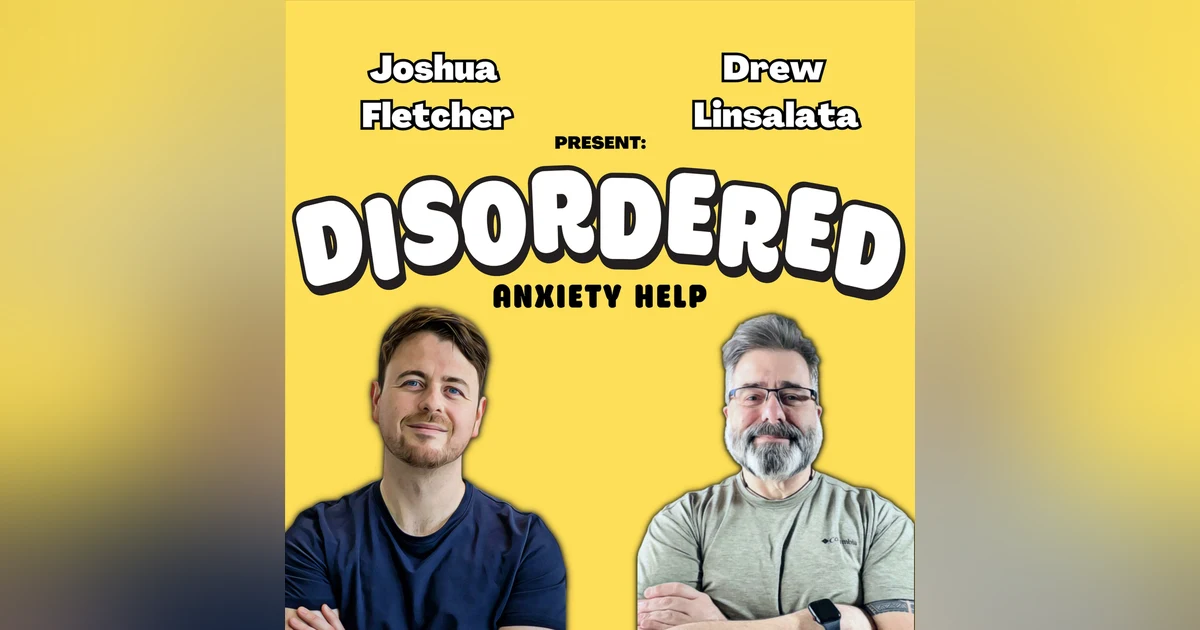
SPEAKER_04It's not a relapse upon which you have no influence. You do. Welcome to Disordered. This is episode 22 of the podcast, and today we're gonna be talking about setbacks, relapse, and what I call reversion, which is a popular topic in our community. I am Drew Linsolata, one of the co-hosts of Disordered. I'm a graduate student in clinical mental health counseling, a therapist in training, an author and podcaster on the subject of anxiety disorders, and I am in New York.
SPEAKER_02And I'm Joshua Fletcher. I'm a psychotherapist based in the UK. I go by the social media name Anxiety Josh. And I yeah, specialize in working with anxiety disorders and a previous sufferer.
SPEAKER_04Oh, I should have said that. Yes, previous sufferer. Anyway, welcome back, dude.
SPEAKER_01How you been? Good, busy as always, but that's okay.
SPEAKER_02Did you ever have prolonged periods of, oh, I feel like I'm on top of my anxiety now, and then suddenly, oh god, I I'm having a relapse, setback.
SPEAKER_04I'm not sure that I would ever say that I would I said I had would say that I had a setback or a relapse, but I was disappointed when I wasn't as anxiety free as I was hoping that I would be, which I knew was unrealistic. But you know that thing where you hope for it anyway? I did do that. So yeah, so yeah, to me it was just like, oh yeah, I kind of figured it would be like this. Okay, keep going.
SPEAKER_02Yeah, yeah, no, I I I think I had like a uh relapse setback, um, which was great because I could learn where I was going wrong, and um I'll explain that today. Yeah, and and it kind of led me to subscribing to the you know the way of willful tolerance, because basically, in a nutshell, if you feel like you're having a relapse or it's back, or oh my god, my anxiety is here worse than ever, or I had the mother of all panic attacks, you've lost the willful in willful tolerance.
SPEAKER_04Yeah, yeah. Actually, it's funny when we did the attitude shift, we keep going back to that one. Yeah, of course I had a relapse. I literally wrote my first book about it. I I suffered with this three times, and the second, the third, second and third time were were would be called relapse. That's where we discovered I was techniqueifying the Claire Weeks thing and and all that.
SPEAKER_02Yeah, that was a good episode. If you're not listening to that, go listen to the attitude ship. Yeah, go listen to the attitude shift.
SPEAKER_04But um, yeah, I'm with you on that. Uh relapse is a thing that people either will struggle and say, Oh, I was doing so great, I was feeling better, I wasn't having any anxiety, but then I had a panic attack. So now I'm back to square one. We we hear the word setback, relapse, square one. Uh, and that's what we want to talk about today. It's either that it happened to them and they're declaring relapse or setback, or that they fear that it will happen. That's another, we've got to talk about that today. The fear of relapse is in the community.
SPEAKER_02Also, I just hate the word relapse. Can we just bin it? Yeah, me too. But keep it in the title. Yeah, we'll keep it in the title. Why do you think the word relapse is not helpful?
SPEAKER_04Well, I mean, relapse is a clinical word and it is used in clinical circles. That's true. So we're not we're not gonna be able to totally bin it, I guess. But I don't like the word relapse because it's an indicator that somehow like it's an external force or that the the focus is on if it happens again or it comes back. And I don't like that. It's not an it, it's not it came back. It's just well, you are having experiences that human beings will have sometimes, and that so I I don't like it. It it it indicates it's it sort of gives up the person's power and influence in a way.
SPEAKER_02Well, I had a relaxed. Yeah, for me, it sounds a bit like kind of accusatory as well. Or maybe that's just me. I don't know, you know.
SPEAKER_04A little bit, I don't disagree with that.
SPEAKER_02A little bit, yeah, yeah, yeah. Um, but yeah, I don't like it. I think it's more like uh I've lost the enthusiasm for the willingness part of willful tolerance, and that's what happened with me. And actually, you're right, I techniquified. If you've not listened to the Attitude Shift Podcast, we talk about this um and getting the credit episode. It's um we talk about this concept of techniquing, which is a word that I created. So if I die, please submit it to the dictionary and give me credit so I have some form of legacy. I made a word, yeah. Tell the word the world your story, yes. Yeah, I want it on my tombstone. Stop techniquing and compulsing.
SPEAKER_04Technique.
SPEAKER_02Yeah, stop techniquing and compulsing. Um, that would be my that would that would be my team. Anyway, yeah, we did something called um techniquing and yeah, uh Drew said, you know, he techniquesified Claire Weeks. For me, I techniquified the phrase it's just anxiety from my first book. Um I wouldn't say it was a technique to begin with, it was a reminder, it was like it was a reminder to say, it's just anxiety, I don't need to engage with this, I don't need to change my behavior. But over time it started to become kind of empty words because I got used to not being anxious, literally. I went years without ah, not really that bothered. If anxiety struck again, once maybe a month, I'd be like, oh, whatever, it's just anxiety. But then life got in the way, I got really stressed as things happened, and these little sneaky kind of safety behaviors started to sneak back, you know, to come back in again. I started to slowly fear anxiety again without really noticing it. But looking back, I started to do all these behaviors just in case I got a bit anxious, and then one day, yeah, I you know, I had a panic attack and I didn't like it. I lost my confidence and my willingness to tolerate it. Um and then I started falling back into old habits and or reversion, which is what Drew says, which I love. But um, and yeah, that's that's kind of what I did. How would you describe reversion, Drew?
SPEAKER_04Reversion, excuse me, I think is a powerful concept, but I've started to use that word more because it the way I started to frame things after, you know, we have the privilege of talking to so many people in such a large community that the pattern becomes so apparent. Like, okay, we always know that our primary goal is not to feel better. That's a happy secondary effect of practicing willful tolerance and surrender and all the things we talk about. But then you do start to feel better over time. That's great. That's the happy secondary effect. And you forget how scary and impactful those feelings can be because you're not in them anymore. And then something happens, your stress drug overflows, and like it happens to you, and life will overcome your coping strategy sometimes, which is why I don't like to focus on coping for anxiety, because life will overwhelm your coping sometimes. You'll get triggered, you might have a panic attack that you haven't had in eight months, and you forgot how scary it was. So you revert back to the old way. And that tracks when we talk about you know the neuroscience that says or it suggests that we don't unlearn old experiences, we build new pathways next to the old pathways. But those old ones, avoidance, fighting, retreating, hiding, are still there. And so you just revert back to the old habit. Oh my god, this is so scary, I gotta go get away from it.
SPEAKER_02That's that's all it is. The neuro the neuropathways, the old neuropathways that that's still there, you know. If you ever heard this song, or maybe it's I don't know if it was British or American, but here's a test of your uh neuropathways when I um when I wake up and I will walk that yes, that song huge here.
SPEAKER_04And that's a neural pathway song?
SPEAKER_02Yeah, because every time I hit when I hear the words when I wake up, I'm like immediately the entire song is played in my head. Fair enough through because of the old neuropathways.
SPEAKER_04That's how our brains work, and you don't erase the old ones, we just we build new ones along.
SPEAKER_02They just get tired. No, and they get well, they get tired, and you know, I I always use the field analogy, which is um, you know, you walk across a field of tall grass once and you've created a neuropathway, but it's not a very strong one, and actually it grows back. It doesn't you weaken it's it's it's uh it's pointless. But if you walk across a field of tall grass several times over the same path, you actually create a stronger neuropathway. Now, if you leave that old pathway alone for a while, yeah, it kind of grows back a little bit. You can still see the remnants a tiny bit, but yeah, you can create new ones. Um, a good analogy for an anxiety disorder is that when it comes to habit, is that you're walking over the field of tall grass, but you're walking through a bog, but you can get through the bog because that's tolerance, and you can tolerate the bog and you can come out the other side, but you feel tired, you feel exhausted, and you feel messy and horrible. So, what I say is that yeah, keep walking across the field, but then we're here to say you can just make a new path around the bog, you can create a new habit, and it makes it a lot easier. But because the old path is there, because there's no resistance to stop you with it from the tall grass, I'll just go through the bog again. And then we get annoyed that we're there. Uh, it's just like, no, keep going. You're gonna start old habits, you can't stop that, but you can always intervene, stop, turn, and make a new path uh that's not gonna get you all boggy and muddy.
SPEAKER_04Yeah, and I think that's why the words like relapse that indicate that it's outside of my control, it came back like you have no control over that. Well, you might not have any control over how you're gonna feel in a given circumstance, but that's fine. You can you're gonna feel what you're gonna feel, but you do have a bit of a choice. Once you've discovered, like, oh, I went back into the old hiding habits and ruminating habits. Okay, that's you're human, you're allowed to do that. So now what can we do? It's not a relapse upon which you have no influence. You do, you know, it's not easy, but you do. So there's still power there. There's your progress was not erased, you just reverted back to those old pathways. You went back through the bog again. It seemed faster at the time, or or it seemed like the better choice at the at the moment, and then you discover, oh, this wasn't the better choice. Okay, keep going, like Josh just said. It's all right, keep going, you can handle it.
SPEAKER_02I had one too many beers the other night, and I walked to my old house. Admittedly, it's around the corner from my current house, but I was just like, Oh, why did I come here? Because it's the old neuropathways, yeah. Sure. And it just switched to that. I was like, oh, well, then I will now switch back to the new ones and go to my other house. You know, after I have stolen the furniture from the garden of my old house. Naturally. Well, because you know the garden gnomes and everything.
SPEAKER_04Like, they're mine. You know, we can laugh, but that's actually probably a really good analogy because all right, you had a couple of beers, maybe one or two that you shouldn't have had, or whatever. And I have the pictures from the next morning to prove it, by the way. It was not pretty.
SPEAKER_02There was nine of us in that bathtub, anyway.
SPEAKER_04But uh, you know, in that situation, so you'd had a little bit to drink, and so your psychological flexibility and your ability to make decisions was sagging a little bit, like it would have been if you were really stressed or upset or emotional. Yes, your brain just picked a different pathway in that moment. That wasn't a crime, it wasn't you being weak, doing something wrong, ruining everything you've ever done in your life. Yeah, yeah.
SPEAKER_02Well, I noticed it now, even if I get anxious now, uh the old habit of checking, compulsively checking to see if the anxiety is there. And I have to metacognitively and compassionately say, Oh, there's an old habit there. You know, when you what I like about the mindfulness crew is that you know, teaching things with a kind of intrigue, with with the positive inquiry, with a oh, I wonder why I'm doing that, as opposed to, oh, I'm doing this again. I can't stop checking, I can't stop being anxious, I can't stop obsessing. Well, that's not really your voice, it's the voice of yeah.
SPEAKER_04Or should I should we you're not on it today?
SPEAKER_02Are you Drew?
SPEAKER_04I know, I'm I'm lagging ready here. It's the voice of the critic.
SPEAKER_02There you go. Lord D hell, your neuropathways are my neuropathways are on strike this morning. Yeah, yeah. Yeah, if you can't see uh Drew has been uh sniffing glue. Um the last 11 minutes. He's having a relapse. He's reverting back to old behaviors. Uh shouldn't joke about that, but yeah, there we go. Um yeah, and so yeah, it's a lot of it does rely, particularly when you're looking at setbacks and relapse, on that self-critical voice. Because the person who's kind to themselves will immediately get back on track. Yeah. But the person who gets frustrated and angry with themselves and turns into Craig the Craig and listens to everything that Craig the Craig says, then you're gonna be stuck in a wrestling match and you're gonna be batting the horn its nest.
SPEAKER_04Yeah, I think that's an important point about you know, setback or relapse with square one or whatever you want to call it. You're gonna get frustrated. You know, you're gonna get a little bit angry. That's normal, but it's then you it's the digging into that. And now I'm just gonna beat on myself. This is it's ruined, my recovery is back to square one. I can't do it right, I can't get it. That's not the part, that's not required. You don't have to go down that road. You're gonna feel whatever emotions you feel, but prolonging it by wanting to talk about how everything is ruined, you know, you'll have that thought, express it if you have to, but don't get don't camp there. Get up and keep moving.
SPEAKER_02Yeah, you've got this. You've come, you've come far. Also, don't rely and switch on old compulsive behaviors. This is the mistake I did, and I know it's something that I hear a lot, is that I look at what I did to make myself feel better last time and try to replicate it, which is actually a macro safety behavior. So I'd go and pick up loads of anxiety books again, spend hours and hours and hours because I felt like I've missed something. What have I missed? When actually I only just missed a little bit, right? Just a little bit, like, oh, I missed the willful bit. I've I'm out of practice tolerating anxiety, it's not nice because I've been doing so well. Um, it kind of struck me off guard a bit. I was like, oh, I'm a bit out of practice on this now. And and I reverted to some old behaviors. Um, but I don't need to go and hire out a library and start from podcast one of disordered. No other podcast about anxiety exists. I definitely don't need to go and fill my brain with silly misinformation, um, you know, from other places. I don't need to, and if you look back at our previous episode, I don't need to start to obsess about the anxiety to get better again. You didn't miss anything, and if you did, it's only a little bit. Yeah, you missed a little bit and get back on the bike.
SPEAKER_04Yeah, I think and I what I try to tell people is that they were like, Well, what how do I get through this now? How do you move through it? How do I handle it when you have a setback and it feels like you're back to square one? And you know, if you ask yourself the question that I might ask you, which is, well, what were you doing, doing, what had you changed that was moving you in a direction that you were really happy with? Oh, I was practicing my surrender, I was tolerating more, I was disengaging, I wasn't listening to podcasts all day long, I was trying to just live my life. Okay, so you've you you've veered off cars, you're doing the old stuff. Like, just start doing that again and be nice to yourself while you do it. Like, it's interesting, just go yeah, go do the things that you oh, but that's that feels really hard and scary. Yep, it used to be really hard and scary, remember? Just you can handle that. So don't ever lose sight of that fact. If you're talking about relapse or setback, it means you've already done hard things before. You you've shown yourself capable of doing them. So, like, lean on that, give yourself credit, do them again. Yeah, still hard now, but you know, you could do them. Yeah, yeah.
SPEAKER_02Also, anxiety is the doubt response. So you will doubt everything that you've done in the midst of of threat, and it will it will suggest so many things that maybe you've missed or got wrong and all the catastrophes. There that this is definitely the point not to ruminate because it's just sprouting nonsense. But if you listen to it constantly, it's gonna convince you that the problem is way more complex um than it actually is. When again, I always put it down to this you've lost the willful bit, you know. The whole point is to be scared, and I know I've said it in a previous episode, but you know, I'll say to clients, you know, what have you done this week? Oh, I've had a great week, I've not been anxious once. You know, well, I'm not interested in that. What have you done this week whilst being anxious, please? Yeah, and usually this when people have come in with relapse or it's back or setback, it's like, oh yeah, I forgot that I used to do that as homework, right? And now I'm no longer doing it. I'm just I I've I've kind of formulated this idea that I've beat it and it and it disappears forever. Well, no, you can anxiety doesn't disappear forever because everyone has anxiety. You need it, yeah. You know, it's the it's your threat response, and yes, your stress drug might fill up and it might start misfiring again. But recovery is I can deal with a misfiring threat response if it appears at any time in my life. But if you're disappointed and see it as a failure and create the critic, uses it as a weapon to hit you with, then it's already signaling where the problem is and what we need to work on, if that makes sense.
SPEAKER_04And no, it does make a lot of sense. And I think sometimes we have to come to the, and this is a crappy realization, but we have to face the reality of what life really is. You're gonna get triggered at some point. And that's why I said earlier on like life will overwhelm your coping skills. What life will overwhelm your recovery sometimes. And I think the reason why we use terms like relapse so often, like in clinical work and in the in the research literature, is because people who are have come through the other side of an anxiety disorder are likely always going to have some propensity to move back to old habits sometimes. So when we get really stressed and triggered and you know, we're under the gun, we might experience that more intensely than the person who never had a disordered state of anxiety. But we can try to pretend that you can erase that and it won't ever happen to you, but that would not be fair to you. So expect that once in a while, even far into my recovery, I might experience the same old feelings that I used to have. That's that's expected. Expect it and then know when it happens that you're not failing. It's just, oh yeah, I have to do that thing again that I did a year ago, eight months ago, two years ago, whatever it is. And I'll do it now.
SPEAKER_02Looking back at my own kind of stuff as well, and this is really important. What's getting all your attention? Yeah, if I you know, like if you've decided to give all your attention to it, you you have to understand your own role in the anxiety cycle. You know, so take DPDR, for example. You know, I had de realization for years and then it went away and now it's back. I'm like, okay, now you know the principles. What have you done in response to it being back? Oh, I've compulsively checked, looked for it, avoided, changed my behavior completely in response to it. I was like, hmm, okay, no done wrong, you know, I'm not heartless at sometimes, you know, anxiety is uncomfortable, it can be scary. But you've got to look at your behavior and be like, well, what have you done in response to it? Actually, yeah, if so, if you've changed a lot of your behavior, your day-to-day non-anxious you behavior in response to a symptom of anxiety, what's that teaching the amygdala? What's teaching what's it teaching the threat response that's always monitoring and watching you? Going, well, hold on, you know, Suzanne here is completely changed in response to this symptom that she's had before. It must be dangerous. So I'm gonna keep letting her know and amplify that symptom because it could be a potential threat. And you and that's where you're on the hamster hill. It's oh, it's always there. The symptoms are always there. How do you make them go away? Let them be there.
SPEAKER_04Yeah. And I I think when you were making progress, because again, you wouldn't, if you wouldn't be talking about SEPEC if you hadn't made progress, you were learning how to do less for your for your anxiety, and then when you felt it again, you immediately started trying to do more for your anxiety again. Like that's in a nutshell what starts to happen. Like you you were getting better and experiencing a change in the quality of your life because you were learning that it was okay to do less about it. And then when it came back, yeah, do I need to do something about this? No, no, no. Remember, you were doing better because you stopped trying to do so much for it or about it. That's okay, I just need a little reminder, which I think leads to like I hear people say all the time, like, Oh, I'm having a big setback. I have to go back and listen to this, I gotta listen to more podcasts. Well, do you? I mean, if you're lit, if you're doing it as a reminder, like, oh yeah, that's right. Remember when Drew and Dross Josh said I have to just tolerate again? Cool. But don't think, oh, I have to go right back to the beginning and I gotta I gotta start listening to episode one of the you know, disordered again. Well, maybe not, you know.
SPEAKER_02Yeah, absolutely, yeah. You know, just you go easy on yourself because you'd have re remember you remember most of it. Yeah, just have to think I've think about right, okay. When my threat response is calm, what what if I missed it? Ah, yeah, I see. I see what I've done there. What what if I missed there? Right. Also, as you were talking there, Drew. But you know, I was thinking it's a real human thing to want to fix something and pour your energy into it. Yeah, it's what we do. Yeah, it's what we do. And it it this is only one of the few problems in life where it's counterproductive to do that. So if you've actually in a good place and you've been using that wonderful part of being human, you know, that the if I give my attention and focus to a problem, I can solve it. That's great. Keep doing that, but don't do it for this.
SPEAKER_04Yeah, yeah. We need a sound effect for the word paradox because that's these come up again and again and again. It's one of those instances where our incredible problem-solving capability that exists between our ears and this amazing brains of ours becomes a weapon instead of a tool.
SPEAKER_02Yeah, it's like picking a spot or you know, trying to overly do your hair. And you can never get it right and all that kind of stuff. Just leave it alone. Yeah, it's okay. That's fair. You know, if you if if Drew punches me in the arm, I can stare and focus on the pain, or just be like, nah, it will it will pass. Sure. Or I could laugh because you can't punch it at all.
SPEAKER_04I'm like, there's a little too much respect in that. Where is the dress happening? I was annoyed for a minute.
SPEAKER_02Yeah, the anxious truth is that you punch like a child.
SPEAKER_04Like a child, like an angry child. Probably even miss your arm, you know, like just flailing.
SPEAKER_02But uh even Craig the Craig doesn't comment. He's like, That's so so pathetic.
SPEAKER_04I can't even weigh in on this, I just gotta leave it alone. So um let's talk for a second about let's segue a little bit from setback and relapse and reversion to the fear of setback. This is an incredibly common thing that I hear in my community. I'm guessing you hear it in yours too. The fear of setback, your community of weird truth. I'm doing so much better, but I can't stop thinking about what if it comes back. Well, has it come back? No, but I but I can't stop thinking that it might. How is this different from fear of depression? Thank you. It's not. How is it different than a fear of anything? It's and my my assertion on this topic is it's not different. Oh, you you so you can boil that down to oh, oh, you're thinking. Oh, that's right. I'm thinking. Uh sorry, that was uh one of those notifications I should have turned off. Um, so I can't stop thinking about it.
SPEAKER_02Someone from your community asking, but what if I have a setback?
SPEAKER_04Yeah, it's uh and I it's such a common thing that I wanted to address it today. I understand you might you're doing good, you're doing better, you're you're you're practicing, you're making progress. And I get it, it's been such a hard road, and you're so happy to be feeling better and doing better and getting your life back that you're gonna have that thought. Well, I hope this lasts. Like I hope it doesn't come back. That's normal to have that thought. It's just then they get stuck in the loop of I keep thinking that. How do I stop thinking that? What do I what what happens when you think it's gonna come back? I can't stop thinking it might come back. What would your response to that be?
SPEAKER_02Well, it is back. If if you're having the fear, what if it comes back? Then you're anxious.
SPEAKER_03Yeah.
SPEAKER_02Uh yeah, that that that is that is the anxiety. So you are tolerating it arguably at its worst.
SPEAKER_03Right.
SPEAKER_02You are anxious, you're giving anxiety attention with compulsive rumination. So when people say like, you know, yeah, like uh, what if it what if it comes back and then they're thinking about it all day and worrying? Well then it's back because you're spending all your day worrying. You know, that's that's the thing. The content doesn't matter. This is the thing, it doesn't matter. And again, I always shout out to the OCD crew, yeah. But my thoughts are so high stakes because my brain is making me feel that way. No, the content actually doesn't matter, it's the threat response that makes it feel important. Um, at the core of this is a fear of, well, I won't be able to cope. Well, of course you'll cope. You've coped with everything.
SPEAKER_03Yeah.
SPEAKER_02You know, you sat here now, you've coped with everything that life has ever thrown at you, and you're still sat here listening to us two idiots talk. And that's what's really important. But uh ultimately it's it's it's the same phrase. It's what if this gets to the point where I can't cope? Well, that isn't gonna happen, you know, and if it was gonna happen, it would have happened the first time.
SPEAKER_04What makes it particularly insidious? This cycle gets so so twisted and so frustrating because you are literally telling me that you're doing better. You are coping, you're coping better, you're handling, you're surrendering, you're navigating every single day better than you used to, but you're you're getting stuck on the idea that you might not be, you might stop doing that while you're doing it. It's as if I was very worried that I would never learn to play the guitar, and I would just keep worrying about that actively out loud and ruminating on it while I'm playing a concert at Madison Square Garden. Like I'm literally playing the guitar, worried about I might forget.
SPEAKER_02See, I think you've got I think you've missed a trick there, Andrew. I think no, that is anxiety. They're not what if I go back? You are back. Yeah, if you are having that, you you are back.
SPEAKER_04In the moment where you are in try in a triumphant moment, if you will, it's literally going to tell you that you are not and make you super anxious.
SPEAKER_02Yeah, and therefore it's that the willful tolerance of uncertainty is that well, you're not willfully tolerating uncertainty. If you're sat there going, what if I go back? What if I end up there? Well, you're already anxious. Also, what I hear as well is oh, you're already anxious. I'm not tolerating it.
unknownRight.
SPEAKER_02Just do it willfully. Um, but what I also say is that people think that for those with panic disorder, especially, or you've had a really tough time with OCDs, that they, what if I feel as bad as I did the first time? Or what if there's some secret, horrendous form of anxiety that I'm yet to experience. Yeah. You know, and I get sucked into it. Well, no.
SPEAKER_04Yeah, you I mean, from a psychological standpoint, you've already experienced the worst it has to offer, which is, you know, it's okay to be told that assurance is a good thing. But yeah, yeah. What if, and you know, like so much of this in that situation where you're triggered by the thought, what if it comes back? First of all, you're allowed to care. People think, well, how can I just not care about my recovery? Of course you care. You're allowed to care. Yeah, it's important to you. You want a better life. Of course, that's normal. You you're allowed to care. But in that situation, you are rolling the dice. I don't, I can't, I don't know. I guess I'll have to deal with it if that were to happen.
SPEAKER_02And see it, it's just another what if. This what if is no different to any other what if. But how are you responding to this one? Actually, I'm giving this what if more attention.
SPEAKER_04Yeah, I'm gonna dig into it as if I can prevent it by digging into it.
SPEAKER_02Yeah, and and for me, it my advice would just be you know, the old CBT cliche, which is what if so, what? I'll deal with it. Yeah, or even so what? I'll willfully tolerate that too.
SPEAKER_04Yeah, whatever. Well, what if I feel bad again? Well, even if you feel bad again. I I'm I am a big fan of even if as opposed to the so what. Yeah, I like that.
SPEAKER_02Even even if.
SPEAKER_04Even if. Even if I feel all right, well, I don't know. Even if I feel bad, I'll handle it like I did just did. So well, like it, don't want it. Okay, it's fair.
SPEAKER_02Also, I think it's worth talking about kind of those who see this relapse, reversion, and setback as symbolic, as of some form of failure. And these are the perfectionists who I know we have a lot who listen to the podcast, but they're they're they more associate shame with going back. Like maybe they're surrounded by family members who are joyous because they're in a good place. And I've I you know, I hear these heartbreaking stories all the time and have done over the years, you know, like my whole my family is so happy that I'm in a good place, which is which is great, but then they'll also be told, but when you're suffering, the family suffers too. It's like, no pressure, lads. Yeah, yeah, yeah. Yeah, thanks. That's no pressure on me, then. Yeah, um, you know, or just kind of people who are just perfectionists, maybe they're from very emotionally conservative families, and you know, they find that they have better connections with people when they are deemed as air quote strong. Um and they feel, but then you know, if the anxiety comes back, it's some kind of mark or slight on them. Um, they will definitely see kind of a lack of willful tolerance or setback as uh on top of the symbol of I have failed. Yeah, uh, and they're the tricky ones as well. You've not failed. If anything, if you know if we have the magic paradox button, you are failing at being nice to yourself. Yeah, oh, oh, oh, ooh, that was good. Failing at compassion, yeah. You suck at compassion, kind of manipulating you into being kind to yourself.
SPEAKER_04Yeah, you want to be perfect at something, be perfectly nice to yourself. That's a good one. Yeah, sure. I dig that, yeah, that's a thing. And I think the family pressure is a real thing, and then they sort of internalize that. You know, I'm gonna I ruin it for everybody. You hear that all the time. That's a heartbreaking one. And the family probably means well, but I get it. That will add pressure. And then we are also immersed. If you're watching us, there's a really good chance, if you're listening or watching to us, there's a really good chance that you're also involved in in mental health information and anxiety recovery information on social media, where often, and I won't, I'm not gonna say that there's any malicious intent here, but the idealized image that is sold online of what good mental health looks like. What does recovery look like? It looks like I'm dancing while I make my dinner because I don't have intrusive thoughts about this anymore, or I don't, they're not bothering me. Cool. That was that person in that moment, you know, trying to give you some hope, but that doesn't mean that's what you're gonna look like all the time. So there's also very unrealistic.
SPEAKER_02Makes me think of that. Did it anyway? We got that on the voice now.
SPEAKER_04We do. You want to hear it? This is a good one. I want to hear it. Yeah, this is a really good representation of what winning looks like, even though you might be tempted to call it failure or setback. Ready? Here we go. Let's play this.
SPEAKER_00Uh, I want to tell you about uh so I did it anyways. Um, my son graduated from high school, and I went to the uh ceremony, and it was about an hour and 40 minutes of hell being cramped in this gymnasium with a thousand other people, but uh stuck it out, never got up and left. But I kind of broke down after uh leaving the high school, but uh it was one little victory for me because I was able to make it through the ceremony and then followed that up with uh going to a restaurant to celebrate his um graduation as well. So it was a rough day for me, but I did it anyway. Awesome.
SPEAKER_02Love though. Congratulations, my man. That's excellent. Uh what I love is that not only did he stick around in a stressful environment practicing his will for tolerance, he didn't kind of white knuckle and run home. He was like, no, we go again. Yeah, and then he went to the restaurant.
SPEAKER_04That that was my favorite part too. I broke down after the graduation ceremony, but I still kept going.
SPEAKER_02It reminds me of that anxiety hangover voicemail that we had about kind of you know, uh I've I've been very anxious and I need to go home and recharge for several days. And no, no, keep going. Yeah, go go and eat steak. I know I know or or any food of your choice.
SPEAKER_04Yeah, but yeah. This is great. Because you could see where this could be interpreted as I struggled during the ceremony, and and that perfectionist thing and perfectionism and recovery, I was supposed to be so joyful, it was my son's graduation, and I couldn't access joy. And no, no, no.
SPEAKER_01No, no, he didn't say that, did he? He was like, Yeah, I didn't, but I learned something today.
SPEAKER_02And he was compassionate to himself. Yeah, well done. Yeah, he wasn't going, Oh my god, you know, I wasn't one of the whooping, annoying, abhorrent parents, um, trying to kind of out whoop the other parents whilst I live vicariously through my child. No, there was just I'm there and I'm trying my best, and I'm actually arguably you're one of the bravest parents there because you wanted to be there. Your anxious response didn't, but you're like, No, I want to be here for my kid, yeah, and for me, and I want to go and then I'm gonna do this properly. Yeah, it was tired, you know, and did all of that. Um, I'd question when you said I had a you know, I I broke down. Well, you you you just got emotional, right? You break down, right? You just got emotional, collected yourself, nothing wrong with that. Completely normal, completely natural. Yep, and then you went to and you went to the restaurant. Um, I love that. Thank you for sharing that voice now.
SPEAKER_04Yeah, it was great. Um, re and remember, it also actually describes the ups and downs. I mean, with the the act of willful tolerance or surrender or floating, whatever the word you're gonna use, it's gonna feel okay sometimes. It's gonna feel crappy sometimes. You're gonna have ups and downs and different emotions on the micro level in each event, like this graduation, and on the macro level in the long picture of your recovery. So be careful about well, I'm a little bit down in a down cycle right now, it's relapse. Oh, maybe not.
SPEAKER_01So I think that's wonderful.
SPEAKER_02I think that's really wonderful. Well, on the topic of willful tolerance, I had a some questions on the website, Drew. Good. Uh submitted at disordered.fm. Um, and there was um, I had a couple of questions, and um there's two questions that uh I'm gonna read them both out, but they're based on the same question. Um hi jot Drew and Josh. I have a question when it comes to exposures. How do I do mine when I'm not afraid of going out or driving or even mingling outside with total strangers? But I get anxiety just staying at home when I'm comfortable. I mean, it can just come anytime at any point, um, which is interesting. And now I'm gonna follow that up with this a very similar question just so I can say I can't um answered them both. And the second question, which was kind of similar, so I'm gonna put but put them together is Hydra and Josh. Hello from Canada. Hello. First off, I just I wanted to say thank you for everything you're doing. I look forward to my Friday mornings at work when I get to listen to you. That's really kind. I've struggled with an anxiety disorder for eight months now. I started with what I think was my first panic attack in an engineering lab at college because the electrical equipment I was working with, I initially was terrified that some type of electric field would hurt my brain. I went home sick and ended up calling paramedics that night to assure me I wasn't in immediate danger. I was unfamiliar with the symptoms. They started a three-month spiral of health anxiety, nocturnal panic attacks, and constant uneasiness. After countless blood tests, brain scans, and doctor visits, I believe that I'm okay. This is just anxiety. Nice one. What I'm currently struggling with is just a constant feeling of unwellness. There aren't specific settings such as driving or social gatherings that make it worse. It just seems like a constant rubbish feeling. Head pressure, blurred vision, heart racing, etc. It happens at most points in the day and it happens every day. I know that I'm perpetuating it by constantly thinking about how bad I feel, but I'm confused to where to go from here because it's pretty hard just not to think about it. This doesn't seem like other types of anxiety where I can do exposures to rewire my brain. Since my brain is more of just a constant feeling of unwellness. Very similar to the first question. I'd love to hear your advice about how to deal with not being anxious about anything in particular. I can see myself getting through this thanks to you guys and your recovery stories. I just don't know the best way forward. Uh yeah, well, how do we answer that, Drew? Well, anxiety for no reason, and I don't like it.
SPEAKER_04Yeah, and that's fine. It may have had a reason, but interestingly, this is you do have a reason. You're at this point anxious because you feel anxious. And I think that happens in both those questions. I might point it back to like this is almost literally the one of the definitions of disordered anxiety is that it's self-perpetuating it the state itself is problematic for you. So the person who has a hard time being home in their safe place, what or what other people might say, agoraphobic would say I'm in my safe place. Well, how come I'm anxious or I panic at home? Like that there's nothing, there's no trigger there. Well, yeah, the trigger is that you might panic somewhere. And I think the same goes in the second second part. Like, well, I'm not anxious about anything in particular. No, you're anxious about how you feel. So it's not uh I I would my first answer to that is be careful about there's no trigger, or I don't know why I'm anxious. Well, you're anxious over being you're anxious about how you yeah, yeah.
SPEAKER_01And and I would bet, I bet my bottom dollar.
SPEAKER_02I'd bet that the trigger is you've been compulsively body checking, body scanning as an anxious safety behavior, and realized oh, I don't feel a hundred percent. And that is the trigger because when you don't feel a hundred percent and you don't feel your optimum self, that triggers anxiety, which triggers more rumination and body scanning and and compulsive checking.
SPEAKER_03Yep.
SPEAKER_02Uh the compulsive checking of feelings, the compulsive checking of symptoms, and this applies to both. It's a really good question, by the way. Yeah, but when you say there's no trigger, well, there is, you just don't like being anxious. Right. What's really good though is that maybe it sounds like that you've both done really well at the fear of acute fear. Oh, well, I I won't avoid things because I can deal with acute fear, but what the next thing you need to work on, which is the more insidious one, is that now I'm dealing with a fear of simmering fear. And I've and I love and I've had to do that too. I don't know. Did you did you have to do that, Drew? Like, yeah, okay, I won't avoid, I can do the mega scary things because there's like an outcome to it. It's quite relatively short. Whereas actually, when I'm sat at home trying to eat materios, that's a simmering fear that I'm giving a lot of my attention. So your next task is how good am I at willfully tolerating simmering fear?
SPEAKER_01Yeah.
SPEAKER_02Because I don't like it. So I'm gonna get little triggers now and then because I don't like it. I actually fear it.
SPEAKER_04Yeah, and and I think that is the next step. And in the end, it's like, well, I don't know how you would how I would not think about it. That's that's not fair. You don't get to choose what to not think ever. We never get to choose things to not think. So of course you're gonna think about it, of course you're gonna feel it, of course you can care about it. What are you doing about it? So that's very subtle because whether, regardless for both of these two people, what happens when you feel that and you notice, oh, I have that feeling now that I don't like. What's your next thing that you do?
SPEAKER_02Yeah, where's your where's your attention? What's your behavior doing?
SPEAKER_04Right. Okay, I'm gonna have to bring this with me. I don't like it, it's it's disruptive. My attention keeps going back to it. That's okay. The win is in is catching that and breaking that. If you've got to do it a hundred times in an hour, okay. That's that's okay. That's the practice, that's the win.
SPEAKER_02I love that. The win is in catching that and breaking that.
SPEAKER_03Yeah, right.
SPEAKER_02You might have to do that 50 times, 100 times. Yep. The worst thing you can do is oh, it's still there, it's not going away. Oh, still there, it's not going away. Which I would guess that that's kind of what's happening right now, just given our experience. Um, can I share it anyway? Sorry, I'm I'm hogging the mic.
SPEAKER_04No, it's all right. We always love to do it anyway.
SPEAKER_02I love it. I I read this one before, submitted on disorder.fm. Oh, by the way, thank you for all those who've been leaving uh podcast reviews uh on Apple Podcasts, on Spotify, and some people have left some on the website, which I really appreciate. We do read them all. Um the ones on uh Apple's podcast really help us because it helps us with the algorithm stuff. Spotify star ratings are always welcome. And we just really appreciate the ones on the website as well, if you want to do that. Um, if you have put one on the website and you do listen to like on Apple, we'd really appreciate if you uh copy and paste them as well. You don't have to, you know, it's just something that you know I want other people to see how wonderful your review was. Here's my submission for a Did It Anyway. Hi, my name is and I have followed both of your work for about six months now. And I feel so grateful that I found you as your advice has changed the way I approach my anxiety far better than any other podcaster or mental health professional. That's very flattering. Thank you. Thank you so so much from the bottom of my heart. Oh, as for my success story for this week, I visited my best friend out here in California last fall and suffered a traumatic medical incident, which was compounded by the fact that I felt alone and isolated from my friends and family and partner, who are all on the East Coast. Despite having a trauma response of sorts to this place now, I hopped on a plane today and flew across the country to visit her here for her Bachelorette weekend. Despite suffering through anxiety symptoms for days and sometimes feeling panic in the final hours leading up to the flight, the panic spells got shorter, and I even relaxed enough to sleep on the plane, which I never do. I'm feeling grateful to myself that I hashtag I did it anyway and got to see my best friend again under far happier pretenses.
SPEAKER_04Oh, good. That's awesome. That needs some applause.
SPEAKER_02That's really good, wasn't it? I love that. Uh well done. I mean, just well done. I just think that's lovely. What what a response. There's a willful tolerance. Um, great did it anyway. They're all great did it anyways. You know, it doesn't matter how small what it is, send them in, you know, and your questions, but we love the did it anyways as well. Uh the dream is to just have an episode one day of Disordered where we just sit and read Did It Anyways out for an hour.
SPEAKER_04And it would be so easy. It would be the laziest episode we ever do, but also fun.
SPEAKER_02Yeah, yeah. And we start to do them in different voices and stuff now.
SPEAKER_04We will dramatically reenact them for you.
SPEAKER_02Or if you or if you leave them as a voice, if you leave them as a voicemail, we can just play them even lazier. Yeah. And we just and we could just be like a food critic. Like, yeah, that was good.
SPEAKER_04Sure. I remember that if you do leave us an email or voicemail, just let us know if if you want us to say your name. Some people really like to hear that or they want to get acknowledged publicly, otherwise we won't. So um, but otherwise, we love all of the submissions, the comments, the reviews, the questions that did it anyway. It's all great. It's great when you guys participate.
SPEAKER_01So, yeah, thank you very much for tuning in. Unless you have anything, Drew.
SPEAKER_04Sorry to no, hopefully we covered relapse, setback, and reversion. Give you guys something to think about, get back on your feet, you could do it, and thanks for hanging out with us.
SPEAKER_01You know more than you think. And you're capable of more than you believe. Very good. See you in the next one. See you later.
SPEAKER_04Hey, it's Drew. Thanks for joining us for this episode of Disordered. Josh and I both hope that you're finding it helpful in some way. For more information about Josh or me or the Disordered Podcast, find us on the web at disordered.fm. That's disordered.fm. Pop on over and find links to our social media platforms, join our mailing list so we can let you know when new podcast episodes are available, and we'll send you easy ways to ask us questions and share your wins so we can answer questions on the air and share your successes with the community. And if you're listening to the podcast on Apple Podcasts or Spotify or any platform that lets you rate a review, do us a favor and leave us a five-star rating and maybe write a review if you're digging disordered. It really helps us out and we appreciate that. Thanks again for coming by, and we'll see you in the next episode.