
Anxiety Insights w/Dr Sally Winston and Dr. Martin Seif (Episode 94)
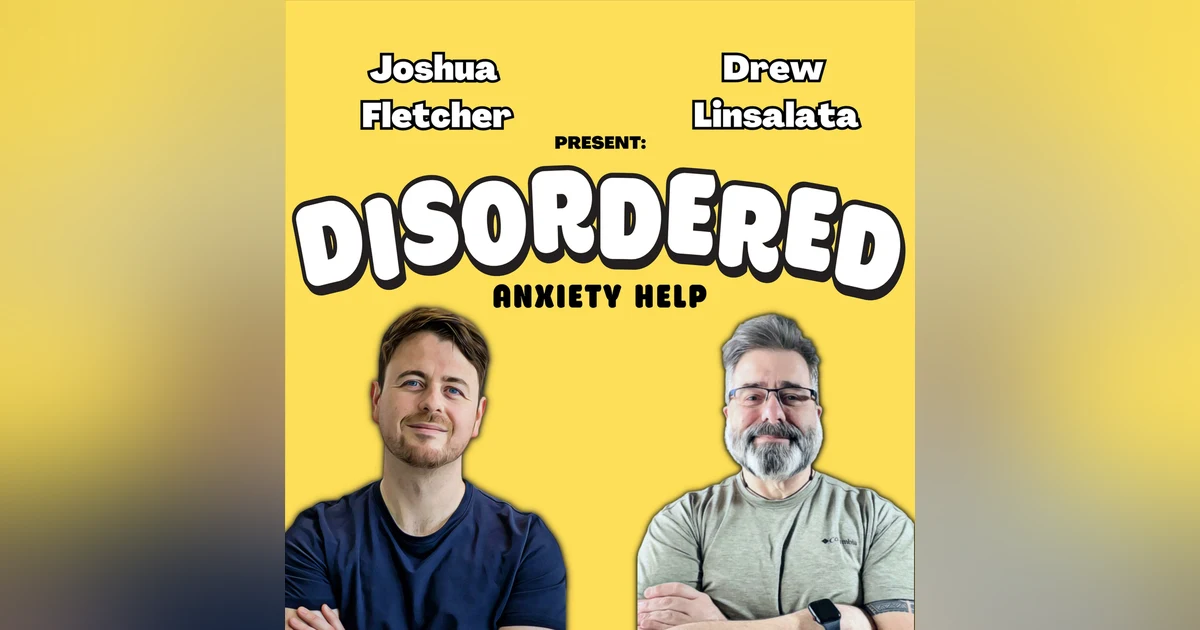

 Apple Podcasts
 Spotify
 YouTube
 Amazon Music
 iHeartRadio
 RSS Feed
 This week on Disordered we're having a good old anxiety Q&A session, except the people answering the questions are legends in the area of anxiety disorders!
Drs Sally Winston and Marty Seif are here this week to take questions from our listeners and to share some of the insights they gained over years of working with anxiety disorders.
There's a reason why Sally and Marty are looked up to by so many in this field (including us!) so tune in to learn from two of most well informed and experienced anxiety experts on the planet today.
---
Disordered Roundtables are here. Think of it as "Disordered Live", a way for members of our audience to spend time with us in an intimate virtual setting (attendance is limited) to engage in real time sharing and discussion on specific anxiety disorder and recovery topics. To be notified when new Disordered Roundtable sessions are scheduled, visit our homepage and get on our mailing list.
---
Struggling with worry and rumination that you feel you can't stop or control? Check out Worry and Rumination Explained, a two hour pre-recorded workshop produced by Josh and Drew. The workshop takes a deep dive into the mechanics of worrying and ruminating, offering some helpful ways to approach the seemingly unsolvable problem of trying to solve seemingly unsolveable problems.
https://bit.ly/worryrumination
-----
Want to ask us questions, share your wins, or get more information about Josh, Drew, and the Disordered podcast?
---
Disordered Roundtable is coming! Think of it as "Disordered Live", a way for members of our audience to spend time with us in an intimate virtual setting (attendance is limited) to engage in real time sharing and discussion on specific anxiety disorder and recovery topics. To be notified when new Disordered Roundtable sessions are scheduled, sign up for our email list using the form on this page.
What you've been thinking is nonsense. Your wise mind knows that. And you get a little glimpse, and then you feel huge relief. Usually what happens is you grab for how did I do that? How do I get there? What did I do to listen to wise mind? Where's wise mind? I mean wise mind, and the glimpse is gone.
SPEAKER_02The whole idea of making wise mind the loudest voice, anytime it becomes a screaming match, you know you're going in the wrong direction. False comfort and worried voice are going back and forth. If I slow that down, then I can get back to my common sense, which we would call wise mind.
SPEAKER_00Observe all of the voices, gently shift your attention rather than to squish or quiet the what if and the response to the what if.
SPEAKER_03Welcome to Disordered, uh, a very exciting episode we've got for you today. Um we'll be joined shortly by two of two big hitters in the anxiety disorder world, and personally two of my heroes in the work world as well. And um I'm really flattered that they'd join us. Uh I'm Joshua Fletcher, also known as Anxiety Josh, and I'm a psychotherapist who specializes in anxiety, much like our guests today.
SPEAKER_04And I'm joined by uh I'm Drew Linsalata, also a therapist in the state of New York, who also specializes in anxiety like our guests today. And I'm gonna echo everything that Josh said. Like, these are people I definitely look up to in the field.
SPEAKER_03These are the people, these are the people that we're um I got the term willful tolerance from, all these really helpful terms. We talk today about uh panicogenic relaxation, we talk a lot about the voices of worried voice, false comfort, and wise mind, uh, which are the three kind of voices that uh Sally and Marty uh conceptualize in in the anxious mind. Yeah, you've got your you've got your worried voice, which always begins with what if. False comfort is what you do to immediately try and get rid of anxiety, but it's false comfort. And wise mind is what Drew and I often talk about on the podcast, which is where we try to use our metacognitive mind, our rational mind, to see what we're doing that keeps anxiety disorders in a loop.
SPEAKER_04Yeah, so in case you haven't figured it out, our guests today, and we'll get to them in a minute, are Drs Martin Seif and Sally Winston. If you're listening to the podcast, there's a really good chance that you've read one or more of the books that they co-authored together. And they've written uh they their latest book is about anticipatory anxiety, they've written Needing to Know for Sure, Overcoming Unwanted and Intrusive Thoughts. But here's the cool thing about them they don't just write for you, they also write for us. So what every therapist needs to know about anxiety disorders should be on every therapist shelf. I have it, well, I have the ebook copy. Josh has a fancy hardware.
SPEAKER_03I've got I've got I've got the hardback copy. Yeah, yeah, yeah. It's annotated notes, stuff like that, and I uh walk around throwing at every therapist I can see.
SPEAKER_04Very good. So we had a nice chat with them. It this is a little longer episode because the chat itself went about 40 minutes, but there was so much good stuff in there. It is packed to the brim with valuable information. Anything else to add before we get cooking? The interview? No, let's get into it. All right, and then we'll come back and wrap it up at the end. So here we go. All righty, we'll try it again. Second take. Um, joining us today, Marty Seif and Sally Winston, Legends in the Field. If you're listening, you've probably read at least one of their books. And and Josh, he's here too.
SPEAKER_03Yeah, I I I'm tagged along.
SPEAKER_04So thanks for coming, guys. Appreciate it. Um, we have a bunch of questions from the audience. People were eager to ask you things, but before we do that, Josh, do you do you have anything in particular you want to throw out there?
SPEAKER_03I just say it's it's a real honor to have you on the disordered podcast. Uh, two people I really respect. Uh, your book, What Every Therapist Needs to Know About Anxiety Disorders, is something I run around the UK with and um assaulting therapists with the hardback copy uh and telling them to read it. Uh I yeah, it inspired a lot of my work as a therapist, and it's an honor to have you here.
SPEAKER_01Well, it's very nice to know that I you're the one, you're the one person probably who bought the hardcover copy and you're putting it to good use.
SPEAKER_03Yeah, yeah, absolutely. And you know, it stays in here and it's it's part of my repertoire and resource library of me as an anxiety therapist. So it's an honor to have you on.
unknownThank you.
SPEAKER_04I think it's important to say that because while the people listening to disordered are people generally that would be on the client side of therapy, we read what you write too. Like therapists turn to Dr. Swinston and Cy for guidance. So, like it's not just you guys that dig them, we do too. So, uh right, enough fanguring. What should we get into? Do you want to answer some questions, or is there anything in particular you guys want to throw out before we get into it?
SPEAKER_02I just want to wish everyone a happy new year and uh let's look for a peaceful and uh reduced anxious anxiety year.
SPEAKER_04Uh disordered is a feel-good podcast, it always has been. So I asked our Instagram community over the weekend what questions they wanted to ask you guys, and we we got more than we could probably answer. But this one is the one that I thought was maybe the well, there's a couple here. Um, I like the one about wise mind because you guys have written about wise mind, needing to know for sure. I think is where you does that. I'm not sure if that's where you introduced wise mind, but the question that was asked by the audience was how do you make wise mind the loudest voice in the room? And then how do you stick with that?
SPEAKER_00So that's that's a great question.
SPEAKER_04It's a good question, right? I love it.
SPEAKER_00Well, let me let me start by saying that uh you can't just stick with it. Uh getting better really has to do with having glimpses or moments when you grasp what we're talking about. And then usually what happens at the very beginning, anyway, is that you you have a moment in which you suddenly get it that that that uh what you've been thinking is nonsense and your wise mind knows that, and you get a little glimpse, and then you feel huge relief, and then usually what happens is you grab for how did I do that? How do I get there? What did what did I do to listen to wise mind? Where is wise mind? I need wise mind, and then you get you get all effortful about staying with wise mind, and the glimpse is gone. And the the the it is moment by moment building your awareness of what wise mind is, which is really basically common sense, uh, without all the distortions and and mistakes that people make when they're anxious. But it it's grasped in little bits.
SPEAKER_02You know, Sally, I think it's a great answer. Let me tell you my first thought when when you uh threw that question out. The whole idea of making wise mind the loudest voice um speaks to some of the issues that maybe people need to grapple with in some way. Because anytime it becomes a screaming match, you know you're going in the wrong direction. Okay. So essentially, I always thought it's a good question. I never really spent a lot of time thinking about it, but I always thought of wise mind as a soft voice in some way. And the fact is that we know that anything to do with anxiety, we talk about that a lot, um, is effort works backwards. And I think that's what Sally was mentioning when you're talking about something that's effortful. Um, when you try to do something in the internal anxious world, effort works backwards as opposed to the external world, where if I pick up this computer mouse and put it here, it takes effort. Um, if I want to do well in an exam and I study, it takes effort. When we're dealing with anxiety, effort works backwards. So essentially what we're trying to do is listen to the wise, our wise mind, which again, I'm going to repeat what Sally says. It is essentially common sense. So, what makes it difficult for us to connect with our common sense in these experiences? Because, and the part of the answer is that when we get anxious, we have an altered state of awareness that we call anxious thinking, in which our sense of reality seems to be different. We are very aware of threats, we're hyper uh vigilant to threats, our notion of um of probability and stakes and odds, and what are the dangers or chances of this happening? We don't, we we're we're we have a lot of difficulty figuring those things out. So part of it is to recognize wait a second, I'm getting away from my common sense. Let me try to slow down and get back to my common sense. Okay. Meanwhile, you know, false comfort and um, you know, worried voice are going back and forth. But essentially what you're trying to do is say, wait a second, if I slow that down, then I can get back to my common sense, which we would call wise man. And as Sally said, it's not there forever, it's not there for a long time. It's moment to moment. I got it, I don't have it, I have it, I don't have it. That's what we're looking for.
SPEAKER_00Yeah, it you it in a way it's about being able to observe all of the voices and to gently shift your attention rather than to squish or quiet the the what if and the response to the what if. It's more about letting that be there and gently turning to something that's more in the present moment, that's more uh sensory than thinking, that's more where you are not all entangled with the content of the what if and where you're it you're not in the middle of that commentary. It's more about standing back from that back and forthing and just being able to have it on a different channel in your mind without feeling like you have to listen to that channel.
SPEAKER_02So, so you know, so to continue with that to some extent, would you agree with this, Sally, that essentially when people start to re start to connect with their wise mind, it doesn't mean that that worried, voice, and false comfort are silenced. It means that they that either that they become somewhat more in the background or they become less meaningful. People can say, well, those are thoughts that I don't have to really pay attention to in some way. And part of the way of imagining this is I know it's silly to think of it, but suppose our thoughts about being worried and comforting ourselves, suppose they were in a language we didn't understand, we would just hear noise going on. And we could still get back to our, we don't have to quiet that down in order for us to make contact with our um with our common sense and our wise mind.
SPEAKER_00I think another, I agree with you completely, and I think uh something to add to this to clarify it a bit, is that a lot of times when people read self-help books, whether it's ours or somebody else's, they they are looking for techniques to fix things. And we try so very hard and and and often fail because we offer ideas and they sound like techniques, but this is not really a technique. It's a it's a shift in attitude, it's a shift in your relationship with your experience, it's not a technique. And if you're busy trying to get wise mind to please be the loudest voice in the room, your attitude is not what we're looking for, because what it what we're looking for is a willingness to observe your experience, not get entangled with it, not fight with it, not add the fuel that makes everything worse, which is the struggle. And it it isn't a technique, like if you're having what-ifs, then find wise mind. This is your technique to do. That's without the nuance that we are trying to convey. And it's very hard to convey that nuance, and it's very easy to miss it while you're reading.
SPEAKER_02And it's not so easy to write a self-help book with no or few techniques, in a way. And we have both Sally and I, since we co-author things, we've struggled together with some of the editorial input from the publications who say, We're the techniques, we're the approaches, in a sense, and uh it's always been a particular problem. But I want to go a little bit more with what you're saying, Sally, because Sally, I'm pretty sure Sally brought this up. She said that essentially what we're asking people to do is make two significant changes. Really, a change in their perspective and a change in their attitude. And the perspective, just to formulate it again, although we've sort of stated, is essentially a metacognitive perspective. If someone has the ability to say, right now I am thinking so-and-so, right now I am feeling anxious, right now I'm having an anxious thought, right now I'm having an anxious intrusion, right now this that's a metacognist, sometimes use mindful. We tend to use, prefer the word metacognitive just for it's not worth it why, but but we know what we're talking about. The ability to observe oneself and to say, this is what's happening. And if you're very anxious, rather than living in the anxiety channel, even to be able to say, wait a second, I'm having anxious thoughts, you at least jump out of the channel and you're in front of the TV set. It's not quite as bad. It gives you some sort of perspective. So that's the first change, the change in perspective. The other one is a change in attitude, it's Alexis. And essentially, anxiety wants us to avoid. It's an uncomfortable experience that feels like danger, and we have a sort of a natural desire to run away from it. The problem is, whenever we avoid, we're also reinforcing it. So it's a self-reinforcing policy. So the change in attitude is to say, let's see to what extent we're able to lean into anxiety as opposed to run away from it. So those two major changes essentially um overarch most of the things that we talk about in our books and most of the most of our approaches to the treatment of anxiety.
SPEAKER_03And it's something that Drew and I often propagate as well. Um when I was reading your your your book, and I love I love the book, like I've stated, what every therapist needs to know about anxiety disorders. Uh every anxiety therapist, particularly of who of of this ilk, will will have a phrase. I often I've pinched yours, which is um, you know, we practice the willful tolerance of uncertainty. But how many times, Drew, do we hear, yeah, but what do I do? I'm like, we're practicing a skill. Yeah, but what do I do when I'm anxious? No, no, no, we're we're practicing a skill. You you you as soon as you're anxious, that's step one. So you're doing something, and step two, how good are we at learning this willful tolerance of uncertainty? Because that's where the good stuff happens, and it's what I had to do as well when I was in the midst of OCD, panic disorder, agrophobia, the the whole lot. Uh, and Drew uses the term surrender as well, which is also one that I sometimes use.
SPEAKER_00Let me concretize it a little bit uh because uh uh sometimes this helps with that, trying to get across what that means. Um and the the lack of effort that we're talking about. Yes, but what is that? How do you do that? Let's say that you're driving in the car and you have an unwanted thought and you want to get rid of the thought, which is the natural thing that happens if something is in your experience, you want to get rid of it. But there's actually two ways of going about turning on the radio. One of them is maybe if I turn on the radio, it'll drown out the thought and I won't be thinking the thought. And the other way of turning on the radio is while this bizarre thought is in my mind, I might as well listen to music. And those two are they look exactly the same. You lean over and you turn the dial to, well, I guess dials don't happen in cars anymore, but you turn on the radio. Um, but inside you, there's something extremely different going on. One is while this is happening, I will proceed. And the other one is in order to get rid of this experience, I'm going to try this. That's the difference between attitude shift and technique and technique that tends to work backwards. Is that a little more clear?
SPEAKER_04It really is. I can't help but smile because we're literally you're reeling off past episodes of this podcast as you both speak. Just we we've had full episodes on exactly all of these things, the attitude shift, techniqueifying things. Like it clearly there's an influence here, and I appreciate it. I think one of the things that Marty, you really pointed out, which I think has got to be a big deal because you guys have written such great books, and but when you can't give people step one, do this, step two in a in an environment that we're in right now, which is full of hacking and tips and tricks and biohacking and like where the help doesn't come in the form of prescriptive steps that you do, get up at 4 a.m. and face the sun for like 22 minutes, then how do you get the point across? I mean, it's very different if you're going to work with a client in session as opposed to when you're addressing a large audience, one to many in a book. So, what kind of how have you dealt with that? Where, like, no, yeah, but we're not writing step-by-step books.
SPEAKER_02Are you talking about in the book or in our individual practice?
SPEAKER_04Well, I guess it's almost a comparison. So, in in the book, I mean you can write a book a certain way, but in an individual practice, when you get a client that comes in and says, Okay, I read the book, but there were no steps in the book, what do you do? What do you tell them?
SPEAKER_02Well, you want to start, Sal? I mean, I don't know if I have an answer to it, but I find it that much easier, you know. And I I I I practiced for a long time before I started writing books, and I found it very difficult to essentially organize all the thoughts that I have. One thing I that I that I have about therapy, organizing them in a book form, which has a beginning, a middle, and an end. And you know, self-help books are very repetitive, also. You know, you say what you're gonna say, you say what you say, you say what you said, and then you go on to the next particular topic. But I feel with patients it's really a lot easier because essentially they ask a question, and I realize most of the time I say, look, let's let's start at the end. It's always to be it's always easiest to start at the end. And I tell them where we want to go, and we just plot out steps together that allow us to get to the point of where they want to go. And I essentially try to say, Well, you're doing something, not what you should do, but what do you do? Because if they were doing it correctly, they certainly wouldn't bother coming to see me. And I say, wait a second, let me explain to you the issue there, the problem there. What do you have to do in a certain way to not do that, to get to where to where you want to be? Again, we're talking about the same concepts. Number one is a kind of a metacognist. Oh, I didn't know that I did that. Oh, do you think I do that? Yeah, well, check it out and see in some way. And the other part is to tell someone, since avoidance is essentially the primary um um uh main maintenance maintain is avoidance maintains anxiety in probably the greatest way. You say to someone, do you realize that's an avoidance? You realize what you just did is an avoidance, and they recognize it and they say, Well, what can you do instead? So I find it a lot easier to deal with it in meeting with someone where I actually see what they're doing. Go ahead, Sally.
SPEAKER_00You I know you have important stuff to say, but that's I'm always listening to you, so I forgot what I was gonna say. But but but but the other piece is that if it's still incredibly difficult for somebody to stop avoiding or face a fear or have a thought or experience doubts, then they haven't grasped the main uh point. And the main point is that what you are thinking is distorted and nonsense. In the case of OCD, it's nonsense. In the case of G A D and Social Anxiety, it's distorted. And until a person actually can see that what the problem is that they're presenting to themselves is not an accurate representation of truth, then they are still struggling at some. Level. And if they can see that there's something about this the narrative that they've constructed or the story they have about what's going to happen or what might happen or what could happen or what they are capable of handling or not capable of handling, if they can understand those pieces of it, then very often the need to compulse or avoid or reassure or check things simply subsides because they're realizing that it's based on a notion that this the thing that raised their anxiety level is not how it seems, that that anxiety is a trickster, that what they've been responding to as if it's danger is simply distress. And so making that distinction way before you start pushing people to do things, way before you get to the place where you are, you know, screaming, but I can't, you have to have a different relationship with the anxiety arousing, or in the case of OCD, the shame arousing, guilt arousing, disgust arousing, whatever it is that's making you feel bad, you have to you have to understand that differently in order to marshal up the courage to go ahead and let go of your avoidance. Does that make sense?
SPEAKER_04Yeah, or at least be willing to at least accept the possibility that I can't and this is real and I have to get to the actual content, might not be a thing. Because what I find is like it's really hard to say, well, I want to get to wise mind and I want to learn to accept and float or whatever terms I like to use, but I also want to hang on to the idea that I actually do have to solve this particular content that anxiety is throwing at me. Can't can't serve both masters at the same time.
SPEAKER_00That's a good point. And again, within different disorders, the the anxiety, the distress call can look like factual things that problems that must be solved, but pretty much all rumination, all round and round thinking, all compulsing, all analyzing, all digging, all efforting to fix it, um, means that you have taken seriously something that is distorted.
SPEAKER_02I think it starts probably when I think it starts when people say acknowledge that they're spinning their wheels. It starts with that. That's the the first wait a sec. That yeah, it starts with that.
SPEAKER_00Um you cannot solve too much, too much thinking with more thinking.
SPEAKER_04Josh, you got something to say? I'm sorry, yeah.
SPEAKER_03I was Drew and I have had this kind of we we did an episode on it a few months ago, but um with kind of um wise mind, false comfort, worried voice in mind. What do you do you think that pretty much every anxiety disorder, whether it's panic disorder, OCD, GAD, um, all have an obsessive compulsive element? Are all anxiety disorders obsessive and compulsive?
SPEAKER_00No. No, I think uh I have I have some well let's see.
SPEAKER_02Can we just define our terms? I think there you go. I I just want to say something. I I thought you're asking, I thought you were leading up to the question are all anxiety disorders essentially ruminative? Because back and forth does not necessarily mean OCD, but it means back and forth in some way where there's a okay, go ahead, Sally.
SPEAKER_00Yeah, that back and forth is present in most in most anxiety disorders, most uh and and most OCD as well. But but there's a difference between um OCD and the others, in the sense that the um in OCD, the what if, the worried voice is essentially speaking nonsense. And in GAD and most of the anxiety disorders, it's an exaggerated version of something real. So that so that in GAD, what you're trying to do is tolerate uncertainty. Uh, you can't know what the future will bring, you can't um in you can't know for sure that you're going to be able to tolerate something that's might happen, and so on. But in OCD, I think it's really important to take a look at the bizarre thing that that came into your mind that you got all involved in, that you created a narrative out of, you need to be able to say, no, that that's actually not worth even thinking about. So it's not a matter of uh of simply distorting how likely something bad is to happen. It's something that is made up in by whole cloth in your imagination. And what you have to change your sense of that so that you can actually resolve the doubt and say, no, it is not true that there that it's that there are germs on that thing when there's no reason to think they're germs on that thing. Um, so it's a very, it's it has a different twist to it with OCD, but the structure, the up and down, up and down, up and down, that is the same across all the disorders. But the the the the the the nature of what it is you get entangled with is different.
SPEAKER_04What if what if in GAD there's nonsense too? And what I mean by that is what if what if G A D is nonsense also? So like I I get what you're saying in OCD, the content of the trigger is is not it's nonsense. It's it's just story, it's not right. Whereas in GAD, well, okay, people say, Yeah, but this is real, my life is actually real. The nonsense is the strategy you think will work to address that content. That's nonsense. So it maybe it's not that I just just a thought that popped in my head as you were talking.
SPEAKER_00Well, the the the downside of it, the accept or cope part that we talk about, you know, the what if and then accept or cope, what if and then accept or or cope, that stuff. Um that I think absolutely it's the it's the the way the strategy or the co the coping skill, people call it a coping skill, is rarely an effective thing. It's usually something that just sort of hacks back the anxiety, and then the anxiety just comes right back. And most coping skills, as Marty was saying, have some element of avoidance in them.
SPEAKER_04Very good. Well, it does lead us to another question. You kind of walked right into this one. And if you don't want to answer it, because I know sometimes this gets controversial in our in our field, but somebody asked a question about ICBT and and your thoughts on ICBT. You were talking about how OCD is is nonsense, it's junk, and there's doubt, and you were really speaking to a lot of that in a way. You guys do you guys have opinions on that? We lost Marty, but he'll be back. A little bit.
SPEAKER_00Oh, bye, Marty. Hope you come back soon. Yes, um, I think ICBT is a legitimate treatment. Um, it it it emphasizes what's called the front end, how it is that you created the nonsense and all the ways in which you have tricked yourself into thinking you have something you have to deal with urgently and necessarily. Um, and so it it is working primarily at the front end. Pretty much all metacognitive work and our work is also working at the front end, um, although we have uh, and that is in terms of OCD primarily. Um ICBT is not a treatment for generalized anxiety disorder, it's not a treatment for social anxiety or panic, it's very specific to OCD. My belief is it's quite legitimate. It's an about um treatment without requiring um uh explicit exposure-based exercises. It is not treating um, it is obsessional doubt is treated as something that is resolvable as opposed to in ERP, exposure and response prevention, it's treated as something that must be tolerated. So that there are significant differences in the model, but I think it's legitimate and I think it's not that far from the work that we've been doing all these years. I think it's pretty easy to integrate that together. So that's what we do. I think if you're learning ICBT as a therapist, it's very complicated to sort of drop some of your former assumptions and think about it as a different model because it's a different model of what OCD is. It's not say it doesn't see OCD as a phobic or fear-based model, although there's plenty of anxiety involved, but it sees it as a distortion in the way that you your beliefs and cognitions. And so it sees uh inferential confusion to use the word as the primary um driver of OCD, whereas that doesn't exist so much uh in the other anxiety disorders, although it exists to some extent, but it's not validated to any of the other anxiety disorders. Does that make sense? Is that clear? So there's absolutely no hostility. It's a little bit different. It's not as different, it's very different from ERP. It's not as different from our work as you might as you might initially think. We don't even mention exposure until like chapter eight, because we want people to understand.
SPEAKER_02Now we wouldn't even be talking about exposure, quite honestly. Because a lot of the questions that we get from I get, and I think Sally does also from readers of the book is I just want to know, am I doing this exposure thing sort of right in some way? And I say forget about that. Just you know, whatever you're doing, it's fine. Okay. That's yeah.
SPEAKER_00The problem with exposure very often is that it's white-knuckled exposure. It's just trying to do the thing or tolerate the thing without sort of grasping that shift that we're talking about. ICBT is one way of producing that shift. And that's uh that's how I look at it anyway, of course, because you know, that's you know, I think Claire Weeks actually got it all, you know, a long, long time ago. But uh, but um yeah, I think it's it it is it is not compatible with strict ERP. That is not a compatible, they are not, you can't mix those two together.
SPEAKER_04Love it. So that leads us to, I think, which is a it's a related question. And this one is I think this is a universal question, really. This person said it feels wrong or slash uncomfortable to leave thoughts alone. So how do I deal with that? And this is it all ties together, right? Yeah, it feels so uncomfortable to leave my thoughts alone.
SPEAKER_00Right. And the first thing is that the person doesn't get what a thought is. A thought is not a fact, it's not a warning, it's not a signal, it's not something that requires anything, it's a thought, you know. Just the same way as what if I turn into a banana is a thought. You know, it's a thought, and yet sometimes thoughts come with that that thing we call a whoosh or an affect of some kind that's attached to it, and it makes it feel like it's more than a thought, like it's something else that is demanding that you take care of it. And and so where I would start with that person is all the way very back to the beginning, that uh, you know, highway 95 doesn't make me anxious. My thoughts when I'm driving are what make me anxious, uh, and and to go all the way back to one's relationship with what is a thought, what isn't a thought, and and sort of at the very, very most basic level.
SPEAKER_03But what if it's my intuition? I'm doing an example here of what my clients might say. How do I know it's not my gut telling me something's wrong?
SPEAKER_00Marty, you're very good about why we shouldn't trust our guts. Why don't you talk about it?
SPEAKER_02I always trust my gut. Um, look, um it goes back to the idea that um I think you used the word Drew. You said anxiety talking anxiety is a trickster. Claire Weeks used to say it's a bluffer. Okay. Um, I tell people, most people when they're growing up, their parents tell them, trust your feelings, trust your emotions, follow your feelings. And I say, and now you're in therapy, and your therapist is telling you, when you're anxious, don't trust your feelings, go the opposite direction, those feelings. As a matter of fact, it's a leap of faith to do the opposite of what your feelings are telling you. Because the what those quote quote unfeelings, and I like to use the term, I say anxiety is not a true feeling, it's a pseudo-emotion. It's a pseudo-emotion because it's not an emotion that really wants to make contact with anything. All it wants to do is to protect itself, and it protects itself by getting you to avoid the situation that uh you're trying to experience in some way. So, in a sense, when it when when you're feeling anxious and you're saying, my intuition, my gut says to do X, you know that that if you want to work on your anxiety, your job is try to move towards non-x or the opposite of X in some way. And I like to when I'm doing when I'm in front of a group of people, I like to do a big chart with the wish and say, okay, and you're choosing, you're choosing to go this way, and I put this is an LOF. That is your leap of faith. Okay, it's a leap of faith that this is anxiety because it feels just as real that it's actually uh um a danger, but you're you're gonna stay with it anyway, in that sort, and you're gonna try it out and see how it goes in some way. I I I want to go back to a little bit more to the question that Sally answered so well, and just sort of summarize in the fact that what we're really talking about people's misunderstandings about what thoughts are in some way, as that when someone says it feels bad, I feel bad leaving a thought, it's the image that comes in my mind is like you're walking down the street, you see this lost puppy, and you say, It feels bad to leave it there in some way, or like a baby on the street in some way, and they say, It feels bad to lead it in some way, and so we're comparing puppies and babies to to thoughts in some way, and try to make it clear that they're very, very different phenomena, and people have profound misunderstandings about thoughts that really need to be addressed and looked at.
SPEAKER_04But and then the question is uh again, the literal question was but it feels so hard to do that, or it feels dangerous. I people who will say, like, but if I leave that thought alone, that feels like I'm taking a big risk, it feels dangerous, and usually the answer is correct, yes, that is right.
SPEAKER_02Right is is that it's it bluffs you into thinking you're in danger when you're not, and that anxiety is discomfort, not danger, but the arousal mechanism, it's a false alarm system in some way, and our brain is not sophisticated enough to make that determination at that time, and there's a lot of reasons why that's true. But the fact is that at some point you need to kind of say, I'm gonna figure out a way to outbluff the bluffing of anxiety.
SPEAKER_00The the other piece is that sometimes it's not so much that it feels they will say it feels wrong because the issue is not about danger, it's about being a bad person or thinking a thought that one should not allow to be, you should roar up and be, you know, be righteous and get rid of the bad thought. And if you let a bad thought alone, that must mean you agree with it, and that must mean that you're a bad person. So where that's present, you have to again be very clear that intrusive OCD type thoughts that are unwanted represent the opposite of who you are, not who you are. And allowing them to be there is simply saying, I I will not get involved in fighting with you because I know that you are nonsense, and if I fight with you, I'm gonna get stuck, and if I fight with you, I'm gonna get all involved in this. It's not random what gets stuck, but it's not important.
SPEAKER_02Yeah, I mean, yeah, Carl Robins used to say it is irrelevant but not random.
SPEAKER_00Right, right. So that so that if the issue is it feels bad means I'm condoning the content of this thought, then they are in no way understanding what an unwanted intrusive thought actually is. Right. And so you go right back to the beginning.
SPEAKER_04Otherwise, it wouldn't be unwanted or intrusive if it was who you really were.
SPEAKER_02But it also speaks to the notion of going again. You you reminded me, Sally, when you said going back to the beginning. You have to you have to let people know, wait a second, we have lots of thoughts, lots of thoughts. We have lots of thoughts that we're in control of, so I can sort of make a coherent sentence now, okay? And we have lots of thoughts that we're not control of, and at times we love that in some way, because that's the function of that's how creativity comes around. You know, you don't sit around and say, Oh, I'm just gonna have a creative thought now. Okay, it they pop up and sometimes it's great, and then we have lots of thoughts that make a lot of sense, both controlled and uncontrolled, and we have lots of thoughts that don't make any sense at all, that are just junky in some way. And sometimes a junky, uncontrolled thought comes up, and we are somehow offended at it because we don't like the idea that this thought has popped up, and therefore starts the process of what we're talking about with an unwanted, intrusive thought that seems to verify the worst thoughts we have about ourselves in some way.
SPEAKER_03Very good. One of the questions I hear, well, we hear quite a lot, um, and this is applies more to say people are anxious all day, every day, they have a fear of fear, that secondary fear that you guys offer that that you talk about, which is really helpful. Um, probably the most common question, Drew. I don't know if you get this a lot. So these are people probably usually a long time, anxious every day, spent a lot of time compulsively threat monitoring, ruminating, trying to solve and fix their anxiety. And it's become such a habit that they don't know what to do and forgot what non-anxious them felt like or what they did. And the question we always ask is, yeah, but what do I do when I'm anxious? And particularly for people who have been anxious for a long time and have forgotten to be what non-anxious them were, could because they're basically kind of obsessed trying to fix and solve how they feel. What do they do, Marty and Sally? I'm gonna leave you with that doozy.
SPEAKER_00Whatever's next, right? It's not whatever if you're eating your sandwich, you take the next bite. If if it's time to go and you know, set your alarm clock, you set your alarm clock. You do whatever's next. Your body moves in the world as if you weren't anxious, and meanwhile, you you are aware that there is either physical sensations or mental stuff going on on channel three. You can be quite aware, but not entangled with either the sensations or the thoughts or the experiences of anxiety, and you simply do whatever is next. Um, one of the problems is that people think that they have to stop what they're doing and do something else in order to fix or get rid. Of or cope with, or whatever the words are that manage their anxiety, and actually it's incredibly ordinary.
SPEAKER_02You know, um, Sally, let me just say something. I'm I'm really glad I got the opportunity to speak after you because it gives me a chance to think about some things to say about this. Um, but let me just mention two things. First of all, um, Sally and I are, I remember when we started writing about in our textbook, one of the things we say is that the word anxiety is such a broad meaning, has so many different meanings for us, that it in sometimes it really obscures the state of what's going on. So a person like that, I think I would say, you know what, let's forget about the word anxiety. There is no word anxiety. I want you to describe to me what your experience is like now and before and afterwards, and we'll talk about what your experience is. We're not going to use the word anxiety because my sense is that someone who is anxious all the time goes through a variety of different things that uh and and I have no idea what they are, and sometimes I think I know what they do it, but they're describing it. I'm completely wrong about it in some way. So I like to dispense with the word anxiety in a situation like that. And uh, and I had a second thought. Oh, I know the second thought is that people who are not going to use the word, who are chronically anxious, chronically anxious, whatever that means, very often it's it's scary for them to feel less anxious in some way. They've habituated to a high level of arousal. And I'm old enough to know when biofeedback first came out, maybe in the 1980s or maybe the 1880s, I don't remember, around that time or somehow, and people were hooked up to various biological measures and they were they were actually showing the measures, a certain percentage of people would start to panic. They would actually start to get increased anxiety because they were not used to the lack of tension or stress in their body. They felt they were losing control. There's some people, the same sort of people who don't like to take a sip of wine or take a benzo because they feel they're losing control in some way. So um, my sense is that you have to uh go back to what Sally said, step by step, whatever comes next, whatever emerges, that's what you have to treat in some way. And there's a wonderful book that we quote in um, I think our latest book by Anne Lamont, Bird by Bird. And she says, How do you write a book, bird by bird? Quotation from how do you do anything, bird by bird, one by one, follow what's there, pay attention to what's going on.
SPEAKER_00And you don't have to know the whole journey when you're driving at night, you just have to be able to see as far as your headlights and keep going. Um, and that's a good, I love that quote. Um and uh you know, I think the other piece is that people who are feeling chronic all the time, anxiety, are living in a state of anticipatory anxiety, they're living in imagined futures, and they're not living in the present moment at all. And that's why I say if you took if it's time to take your next bite of your sandwich, take the next bite. Because what you want to do is get into current moment-to-moment sensory activity, physical stuff, real stuff that's going on because they're spending almost all their time in anticipatory states. And that means their musculature is tense, they're probably breathing in an anxious way, and they're producing all kinds of sensations and uh anticipatory uh stories that they then feel like they have to problem solve about, and then that's where the ruminations come in. Um, so the their orientation in time is extremely important. Um, and where are they in time?
SPEAKER_03Uh, can I do it's I remember reading your book a while while it was really helpful for my recovery many years ago and kind of inspired me to become a therapist in the sense that over here, over here, a lot of therapy is for anxiety disorders is very misinformed and misguided. Uh, I remember reading uh the term that uh what Marty was talking about before about um I love that when you you habituate to a heightened sense of anxiety. That was definitely me, and it felt dangerous to not be in that sense. Um, and as I was recovering and habituating to back to my normal air quote self, uh, it would feel like a threat in itself. And I remember you you gave it a name, I think it was called panicogenic relaxation. I remember taking a big marker and going because I remember going into this flotation tank trying to force relaxation. And I did get to a relaxed state, and then the next second I'm flounding around in this salt water because I'm like, I have not experienced this level of relaxation for so long that it became a threat, and then I had the immediate whoosh, and I was back in again, and then OCD kicked in, and I had a two-year-long uh kind of battle with OCD, a very sneaky pure O version of OCD dementiophobia, where I thought I was losing my mind, uh, and it would it would envelop and enmesh itself with panic disorder, very, very sneaky. But yeah, I remember that term, and just even having reading terms like that, you know, like well, if you can habituate to a heightened sense of anxiety, you can habituate back, and that's kind of what uh I like to say to my clients and stuff, and what I did myself.
SPEAKER_02Good story, nice story.
SPEAKER_00Yeah, very good. I'd like to tell your story to someone actually while you were while you were talking, I was saying that's just such a great story. I'm gonna share it with someone if you don't mind.
SPEAKER_03Well, that's good because usually stories involving me involve the police and controversy and those things.
SPEAKER_01Many are those stories, I'd like to hear those. I'll tell those.
SPEAKER_04You gotta hit the end recording button first. So but uh I we're gonna run out of time. I could talk to you guys all day long, and I I appreciate you taking the time. But um, yeah, I guess great questions from the community and great answers, and like I could listen to you guys talk all day.
SPEAKER_03Will you come back on and and and maybe talk about a specific subject if we if we come around to it?
SPEAKER_01Because we'd love to have you back and uh you're gonna hurry because I think I'm losing my memory. I oh hardly. You you spoke better than I did, that's for sure.
SPEAKER_03So yeah, we can both still work a camera and audio. So there we go.
SPEAKER_00That's fine with me. If we do it together, then I get a chance to hang out with him a little bit.
SPEAKER_04I tell them before you done it, before you decide that I said two birds with one stone, it's win-win, right? So very good. All right, guys. Thanks for coming along. Um, we appreciate you both. And uh just stay tuned, and Josh and I will wrap it up, or I'll wrap it up afterwards. But uh yeah, thanks for listening. Okay, we are back. We're actually days after we recorded. That's a little behind the scenes. BTS at Disordered. Like we're doing the intro and the outro a couple of days after we recorded the actual interview, which I don't know about you, dude, but like it I could have talked to them the whole day.
SPEAKER_03Yeah, I love other friends as well. You know, they're just friends, they chat, they like the doing these things. Um, people are really passionate about this type of anxiety. Um, I love how what you take away from that, particularly is thoughts people like overestimate the importance of thoughts, you know, and some thoughts are just thoughts, just some come with a threat and it gives the illusion that they're more important, but it doesn't mean they are.
SPEAKER_04I think, yeah, in that situation, we did an episode on that. I don't remember what episode it is. Just thoughts. It was one of our early episodes, if you guys want to check it out. But uh yeah, I mean, I think the concepts that you heard them talk about should be familiar with you if you've made it through 93 previous episodes of this podcast or know any of the work that Josh and I do, but we'll have them back for sure. I mean, I feel like it's a privilege to be able to just email those guys and like, hey, you want to chat? And they're like, Yeah, sure. So, like, that's really one of the I think that might be one of the great accomplishments of my my time behind a stupid microphone in this field is making those kind of friends and being able to ask them to come on. And it's really awesome.
SPEAKER_03So Yeah, and it's nice to see the friendship that they've had over years. Maybe we should become friends.
SPEAKER_04Nah, screw screw you. No, it really is very it's very heartwarming. They genuinely enjoyed just being on camera and talking to each other, and that's why we didn't really even talk a lot during the interview, just to just wind them up and let them go because they have a lot of time. Yeah. Anyway, guys, I guess that is it for episode 94, our interview with uh Sally Winston and Marty Steve. Anything else you want to add or what should we tell them?
SPEAKER_03Oh, thanks for tuning in.
SPEAKER_04See you next Friday. We'll be back next week with some topic that we now are gonna figure out and record it. So um, if you want to participate in the podcast by sending us a voicemail or an email, did it anyway, ask a question, go to disorder.fm, check it out, get in our mailing list so you can be notified when we do more disordered roundtables, which are nice little small group chats on particular recovery topics with Josh and I on Zoom. We're out.